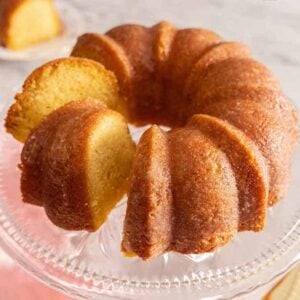
Butter Cake Recipe
This butter cake recipe makes a tall, golden Bundt cake with everyday pantry ingredients. Soaked in a hot vanilla-butter glaze right in the pan, it stays moist for several days!
Equipment
- Electric or stand mixer
- Mixing Bowls
- Bundt pan
- Saucepan
- Cooling rack
Ingredients
For the Cake:
- 3 cups all-purpose flour (360g)
- 1 teaspoon salt
- ¾ teaspoon baking powder
- ½ teaspoon baking soda
- 1 cup unsalted butter softened (227g)
- 2 cups granulated sugar (400g)
- 4 large eggs room temperature
- 1 cup whole milk (240ml)
For the Glaze:
- 5 tablespoons unsalted butter (70g)
- ¾ cup granulated sugar (150g)
- ¼ cup water (60ml)
- 1½ teaspoons vanilla extract
Instructions
For the Cake:
- Preheat the oven to 325°F. Butter and flour a 10- to 12-cup Bundt pan.
- In a large bowl, whisk together flour, salt, baking powder, and baking soda.
- In a large mixing bowl or a stand mixer fitted with a paddle attachment, beat the butter and sugar at medium speed until fluffy, 3 to 4 minutes, stopping to scrape sides of bowl occasionally. With the mixer on low, add the eggs, one at a time, beating well after each addition.
- With the mixer on low, gradually add the flour mixture to the butter mixture alternately with the milk, beginning and ending with flour mixture, beating just until combined after each addition. Spoon the batter into the prepared pan.
- Bake for 1 hour or until a wooden pick inserted near the center comes out clean.
For the Glaze:
- Right when the cake is out of the oven, combine the butter, sugar, and water in a small saucepan. Bring to a simmer over medium heat, stirring constantly. Cook, stirring constantly, until opaque and slightly thickened, about 2 minutes. Remove from heat, and stir in the vanilla.
- Pour over the cake in the pan. Let cool for 15 minutes. Invert the cake onto a serving plate, and let cool completely before serving. Store the cooled cake covered at room temperature for up to 5 days.
Notes
- Soak the cake while it is hot so the glaze is absorbed into the crumb. You don’t want the cake to cool too much, or the glaze won’t soak into it.
- I switched to inverting the cake onto a plate instead of a wire rack. The plate catches any glaze that wasn’t fully absorbed instead of running off.
Nutrition
Calories: 506kcal Carbohydrates: 71g Protein: 6g Fat: 23g Saturated Fat: 14g Polyunsaturated Fat: 1g Monounsaturated Fat: 6g Trans Fat: 1g Cholesterol: 117mg Sodium: 302mg Potassium: 91mg Fiber: 1g Sugar: 47g Vitamin A: 741IU Calcium: 58mg Iron: 2mg