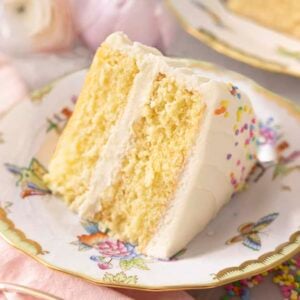
Vanilla Cake Recipe
This delicious Vanilla Cake Recipe is so easy to make from scratch. With only a handful of ingredients, you can have this light and fluffy cake in no time.
Equipment
- Electric hand or stand mixer
- 2 8 inch cake pans
Ingredients
For the Cake:
- 2½ cups all-purpose flour (300g)
- 2¼ teaspoon baking powder
- ¾ teaspoon salt
- 1⅔ cups granulated sugar (333g)
- ¾ cup unsalted butter softened (170g)
- 3 large eggs room temperature
- 1 tablespoon vanilla extract
- 1 cup whole or low-fat buttermilk room temperature (240mL)
For the Frosting:
- 1½ cups unsalted butter softened (340g)
- ¼ teaspoon salt
- 5 cups powdered sugar (600g)
- ¼ cup heavy cream or whole milk plus more as needed (60mL)
- 2 teaspoons vanilla extract
- Sprinkles for decorating optional
Instructions
For the Cake:
- Preheat the oven to 350°F. Butter and flour or lightly grease two (8-inch) round cake pans with baking spray, and line the bottoms with parchment paper. Wrap the outside of the cake pans with baking strips, if you’d like.
- In a medium bowl, sift or whisk together the flour, baking powder, and salt and set aside.
- In the bowl of a stand mixer fitted with the whisk attachment, (or a large bowl with a handheld mixer), beat the butter on medium speed until smooth. Add the sugar and beat on high for 2-3 minutes until light and fluffy, scraping the bowl down as needed.
- Reduce the speed to medium and add the eggs one at a time, scraping down the bowl between each. Add the vanilla and mix on high until combined, about 1 minute.
- Reduce speed to low and add the flour in three batches alternating with the buttermilk. Once almost combined, remove the whisk attachment and fold in any remaining butter and flour by hand using a spatula. (Do not overmix the batter!)
- Divide batter equally between the prepared pans and bake for about 30 minutes or until the edges pull away from the sides of the pan, and a toothpick inserted in the center comes out clean.
- Allow the cakes to cool in the pan for about 10 minutes, then invert layers onto a cooling rack, remove paper and set aside to cool completely.
For the Frosting:
- In the bowl of a stand mixer fitted with the whisk attachment, (or a large bowl with a handheld mixer,) beat the butter and salt on medium- high speed until light and fluffy, about 5 minutes. Reduce the speed to low and gradually add the sugar one cup at a time, adding in 1 tablespoon of the cream between each addition. Once all of the sugar is incorporated add the vanilla and increase speed to high for about one minute.
- Spread one cup of the frosting over the first layer of your cake, add the second layer and cover the top and edge in buttercream. Smooth or finish with rustic swoops or a spiral pattern.
Notes
- Tap the cake pans lightly to ensure that there are no large air bubbles in the batter. Once you can fill the pans and spread it out evenly, gently tap it on the counter four or 5 times. This is the same technique I use with macarons and cheesecake—it helps to burst any large air bubbles trapped in the batter.
- How to tell exactly when your cake is done: Listen to your cake. The cake layers have finished baking when they are quiet. If it makes a crackling sound when you put your ear close, it needs another minute or two. You can also look for the sides to pull away from the pan. Once they start separating, the structure is set, and the cake layers are ready.
- If your cake is dry, it was likely overbaked. Your oven may run a bit hotter and bake faster. Next time, start checking it about 5 minutes earlier.
- If your cake is dense, the batter was likely overmixed. Continuing to beat the batter after the flour has been incorporated will develop more gluten. This can cause the cake layers to become dense or tough. Also, make sure you check the expiration date on your baking powder. Old baking powder can be less active, which will cause the layers to rise less and be denser.
Nutrition
Calories: 750kcal Carbohydrates: 99g Protein: 5g Fat: 38g Saturated Fat: 24g Polyunsaturated Fat: 2g Monounsaturated Fat: 10g Trans Fat: 1g Cholesterol: 144mg Sodium: 329mg Potassium: 95mg Fiber: 1g Sugar: 78g Vitamin A: 1213IU Vitamin C: 0.2mg Calcium: 93mg Iron: 2mg