This post may contain affiliate links. Please read our disclosure policy.
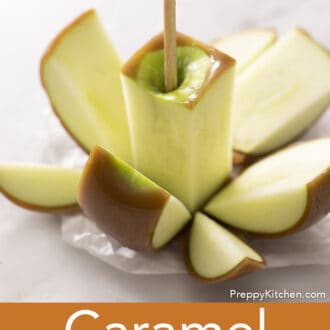
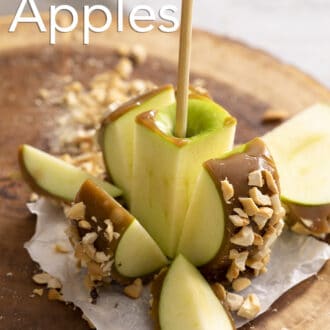
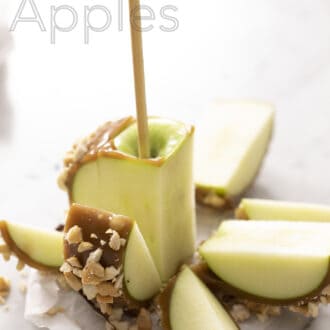
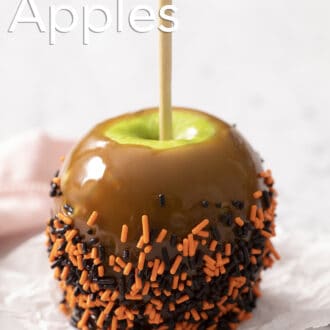


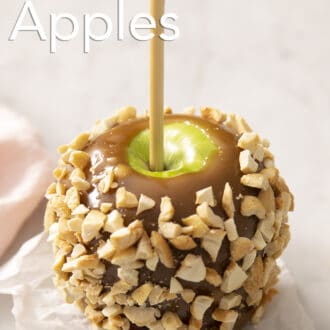

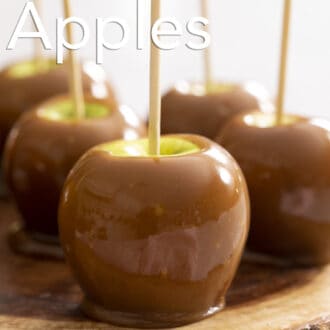
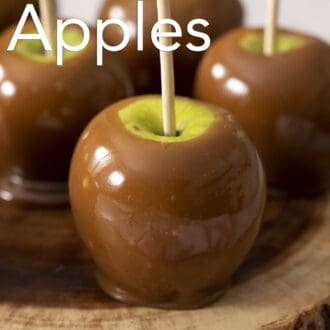
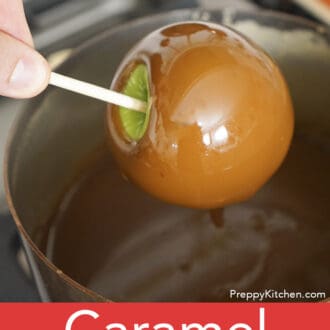

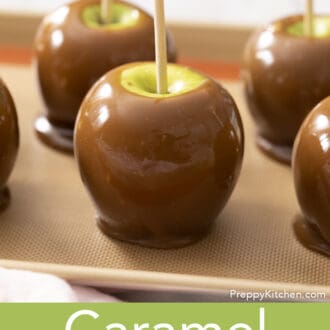
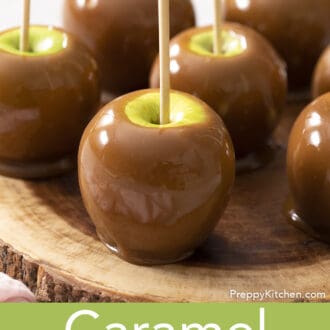
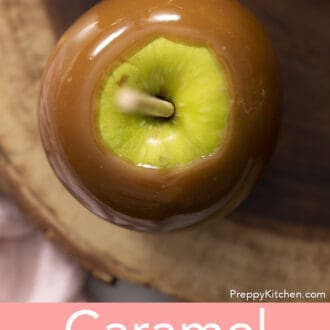
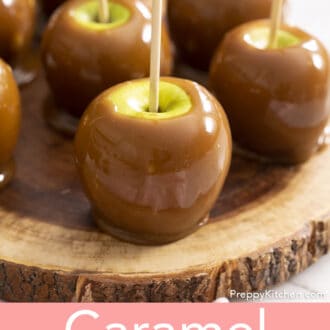
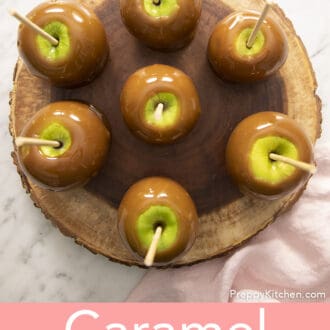

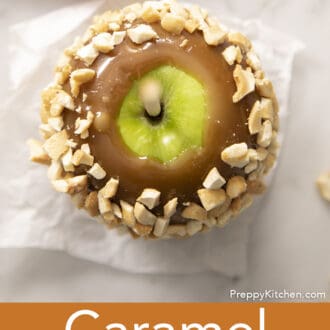

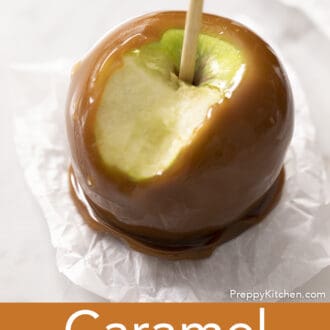

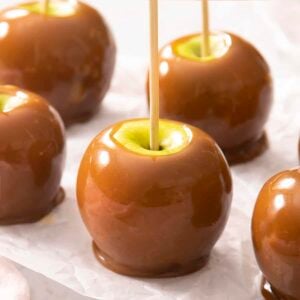
My Homemade Caramel Apples are coated with a soft, chewy brown sugar caramel. Cooking the caramel to 248°F and using my apple prep steps keeps the caramel from sliding off, so they can hold your favorite toppings, or enjoy them plain!
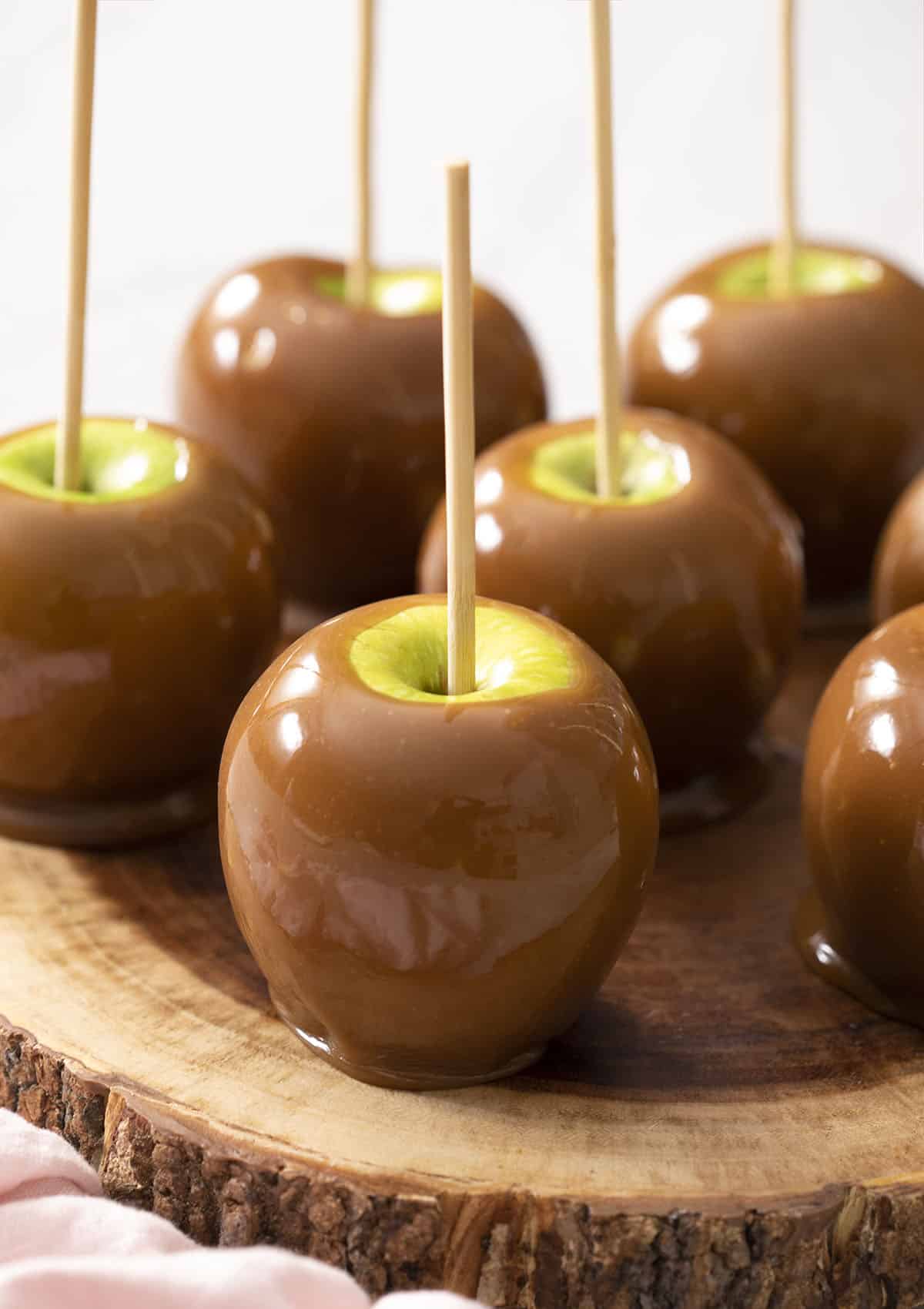
I love making caramel apples during apple season, and I’ve been using this recipe for years! This batch makes 8 apples coated in a soft, chewy brown sugar caramel, perfect for sharing or stashing in the fridge to snack on for several days.
Over the years, several of you asked why your caramel came out too thin or slid off the apples, so I retested it. I adjusted the corn syrup to make the caramel slightly thicker, cooked it to a slightly higher temperature, and worked out the apple prep that makes the coating stick every time. These caramel apples are perfect plain, or you can add your favorite toppings!
“I use Peter’s caramel typically for caramel apples, but John’s homemade caramel is the best there is! The corn syrup works perfectly!”
J
Key Ingredients
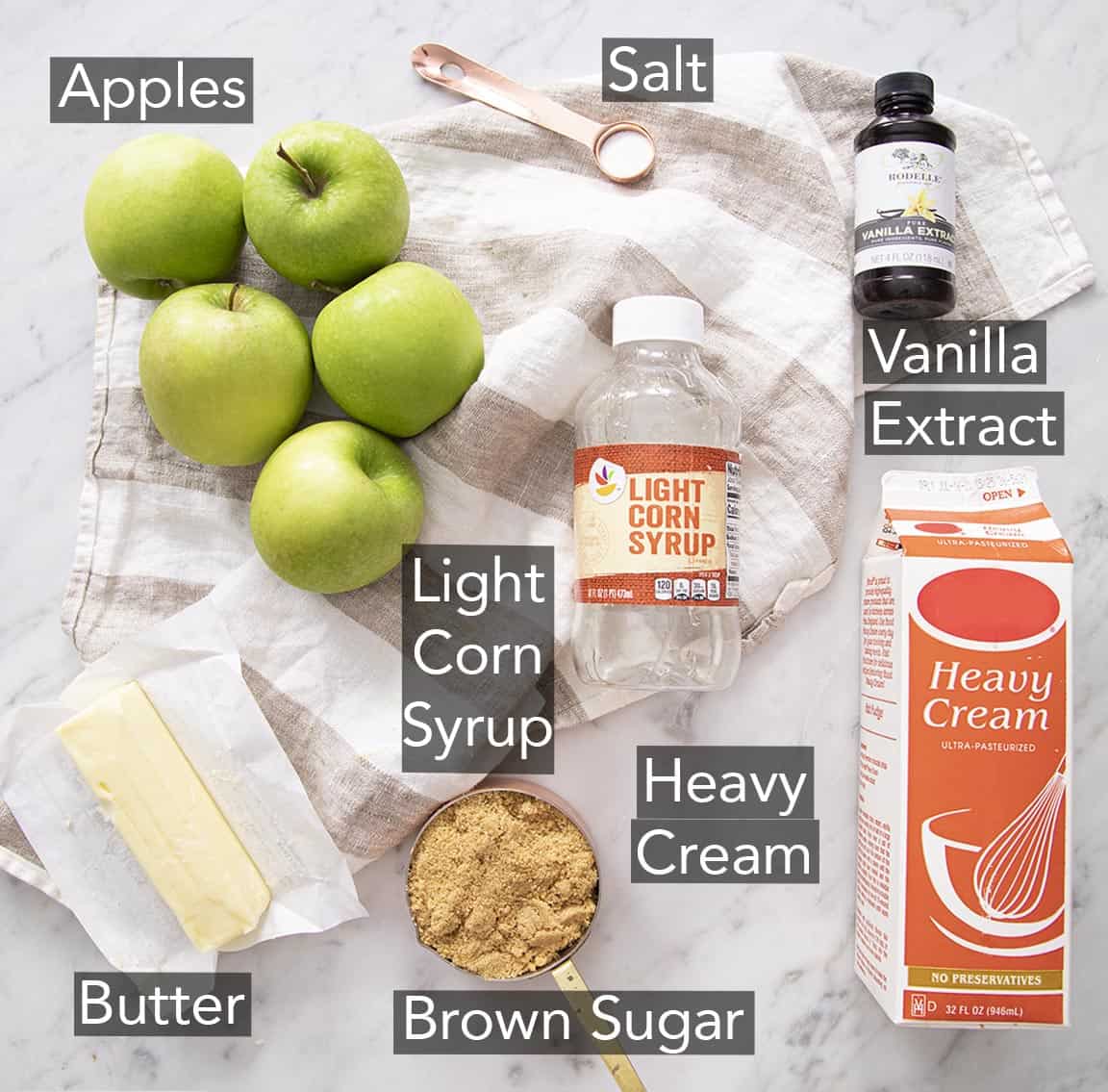
These are the main ingredients you need to make caramel apples. You can find the full list of ingredients and measurements in the recipe card below.
Apples — Granny Smith apples are my first choice because their tartness balances the sweet caramel coating, and they are crisp in texture. Honeycrisp apples work well too. Pick small to medium, firm apples with no soft spots. Big apples are harder to dip and decorate.
Light brown sugar — the coating uses a “cheat caramel” starting with brown sugar instead of caramelizing granulated sugar. Brown sugar has molasses in it, so the caramel gets its deep flavor without waiting for white sugar to caramelize. It’s a similar method to my homemade chewy caramels! Dark brown sugar works too if you want a richer flavor (your coating will just be darker). Pack it firmly in the measuring cup or weigh it (see my guide on How to Measure Ingredients Correctly).
Heavy cream — it gives the caramel body and a velvety finish. Half-and-half and milk don’t have enough fat to make as thick a coating. I have tested this and found that half-and-half can work in a pinch, but the coating takes a bit longer to cook since there is more water to evaporate. Whole milk is too thin for good results. One reader commented saying they had success with replacing the cream with full-fat coconut milk for a dairy-free version!
Light corn syrup — this ingredient is essential to keeping the coating smooth and chewy. Corn syrup is a glucose syrup (invert sugar), and it gets in the way of the sucrose (sugar crystals) in the brown sugar recrystallizing as the caramel cooks and cools. It also adds body. Many readers ask if they can skip it—the answer is no. When I retested this recipe, I found reducing the corn syrup slightly made the caramel a little thicker, which fixed the thin coating some of you experienced in the original recipe. But skipping it altogether made the coating far too thick and chewy when cooled, and the coating would crystallize on occasion. If you have another form of inverted sugar like golden syrup, you can use it. But don’t replace the corn syrup with honey, maple syrup, or another liquid sweetener that isn’t glucose-based.
Butter, salt, and vanilla — unsalted butter adds richness, and the salt is measured separately so you control the flavor. Salted butter is fine in a pinch; just skip the added salt. Vanilla, such as my homemade vanilla extract, goes in off the heat after the coating is cooked.
Tools You’ll Need
A few tools are essential to successfully making caramel apples. You can find details on the exact type I use for each tool in my Essential Kitchen Tools & Utensils guide.
A thermometer — honestly, this recipe works or fails based on the temperature of the caramel, so I don’t make it without one. I prefer a digital instant-read thermometer for the best accuracy, but a candy thermometer that clips onto the side of the pot works fine too. Check it in boiling water first to make sure it’s working properly: at sea level, it should read 212°F when the water boils (it will be lower at higher altitudes). If it’s off, shift your targeted 248°F temp for the caramel by the same amount.
A tall-sided, heavy-bottomed pot — the caramel bubbles up a lot, and a heavy base keeps it from scorching. Make sure your pot can hold at least 4 quarts of liquid to ensure the caramel doesn’t bubble up over the top.
A wet pastry brush, a wooden spoon or silicone spatula, apple sticks, and a lined baking sheet — these tools are needed to finish making the caramel and coating the apples. You can use parchment paper, wax paper, or a silicone mat to line the pan. Just make sure it’s non-stick (don’t use foil because it clings to the caramel).
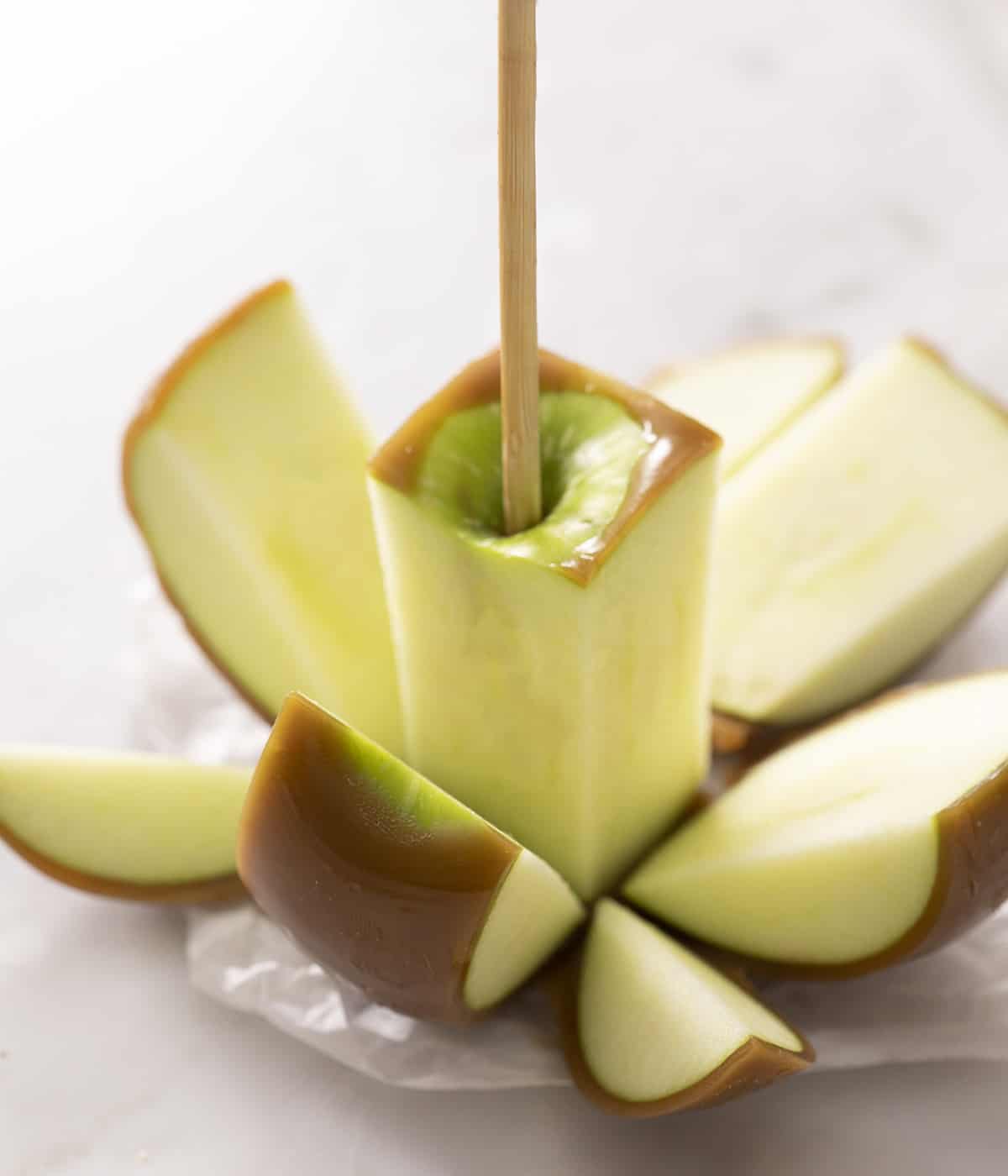
Pro Tips For The Best Caramel Apples
Gather the tools for making homemade caramel before you start. Once you put the caramel ingredients on the heat, you shouldn’t step away from your stove until it is ready. So, make sure you have a stirring utensil, candy thermometer, pastry brush, and small bowl of water ready and nearby.
Pop any bubbles in the caramel coating. While bubbles in the caramel won’t affect the flavor of your caramel apple, they will affect the look of the apples once the coating sets. It’s really easy to pop the bubbles by lightly blowing hot air over the coating with a hairdryer or heat gun right after dipping. You can also use a toothpick, but the hot air will make a smoother finish.
How to Keep Caramel from Sliding Off Apples
Most store-bought apples are coated in wax to keep them fresh, and caramel can’t grip it. When I dipped a scrubbed apple and an unscrubbed apple side by side, the caramel on the unscrubbed one slid straight down into a puddle at the base.
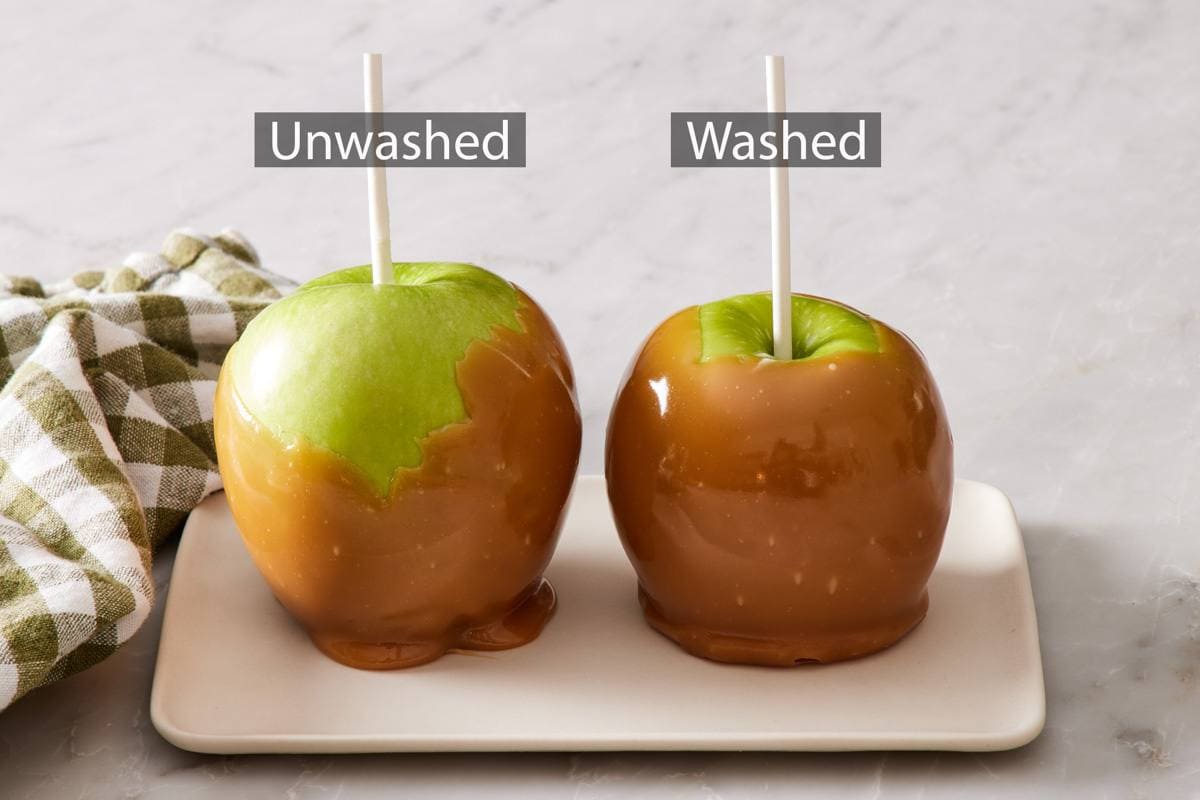
Scrub off the wax. Rub each apple hard under hot tap water while you scrub it, or soak them in hot tap water for about 5 minutes first. Scrub the apples with a paper towel, a textured kitchen towel, or a new non-scratch scrub pad. Hot tap water does the job (you don’t need anything hotter, or you can soften the apples). Some apples have a plant-based coating instead of wax, and I’d scrub those the same way. If you are using freshly picked apples, give them a good wash to remove any dirt.
Chill the apples. Remove the apple stems, push the sticks into the stem end (about halfway in, not all the way through), then refrigerate the apples. The caramel sets faster on cold fruit!
Dry them right before dipping. Cold apples can sweat when they come out of the fridge, and that condensation on the surface is enough to make the caramel coating slip off. Wipe each one just before it goes in to ensure it’s dry.
Why I Cook the Caramel to 248°F and Dip at 200°F
Sugar syrups set firmer the hotter you cook it. Below about 245°F, you’re in the soft-ball stage; roughly 245 to 250°F is firm-ball, and past 250°F you’re making hard-ball candy. I take this caramel to 248°F, in the firm-ball range. That’s high enough that it doesn’t run off the apple, and low enough to stay chewy once it’s cooled.
My original recipe cooked the caramel to 235F, but many readers have issues with it being too thin or staying runny. When I retested it, I increased the temperature and discovered that raising the target to 245-248°F made the coating more stable and easier to dip.
Don’t go past 248°F. It turns too firm and unpleasant to bite. I accidentally pulled a test batch off the heat at 250°F, and it still worked but was slightly chewier than I preferred.
Let the caramel cool to 200°F before dipping. Straight off the heat, it’s too thin to stay on the apples, and it can soften the exterior of the fruit. I tested it cooling to 180°F, but I found it was far too thick to smoothly coat the rest of the batch after dipping the first two chilled apples. I found that at 200°F, it clings but still flows smoothly over the apples and doesn’t cool down too quickly. If it gets too thick at any point, you can very gently rewarm the caramel over low heat.
How To Make Caramel Apples
Here’s the method with my process photos for making caramel apples. The exact amounts and full instructions are in the recipe card.
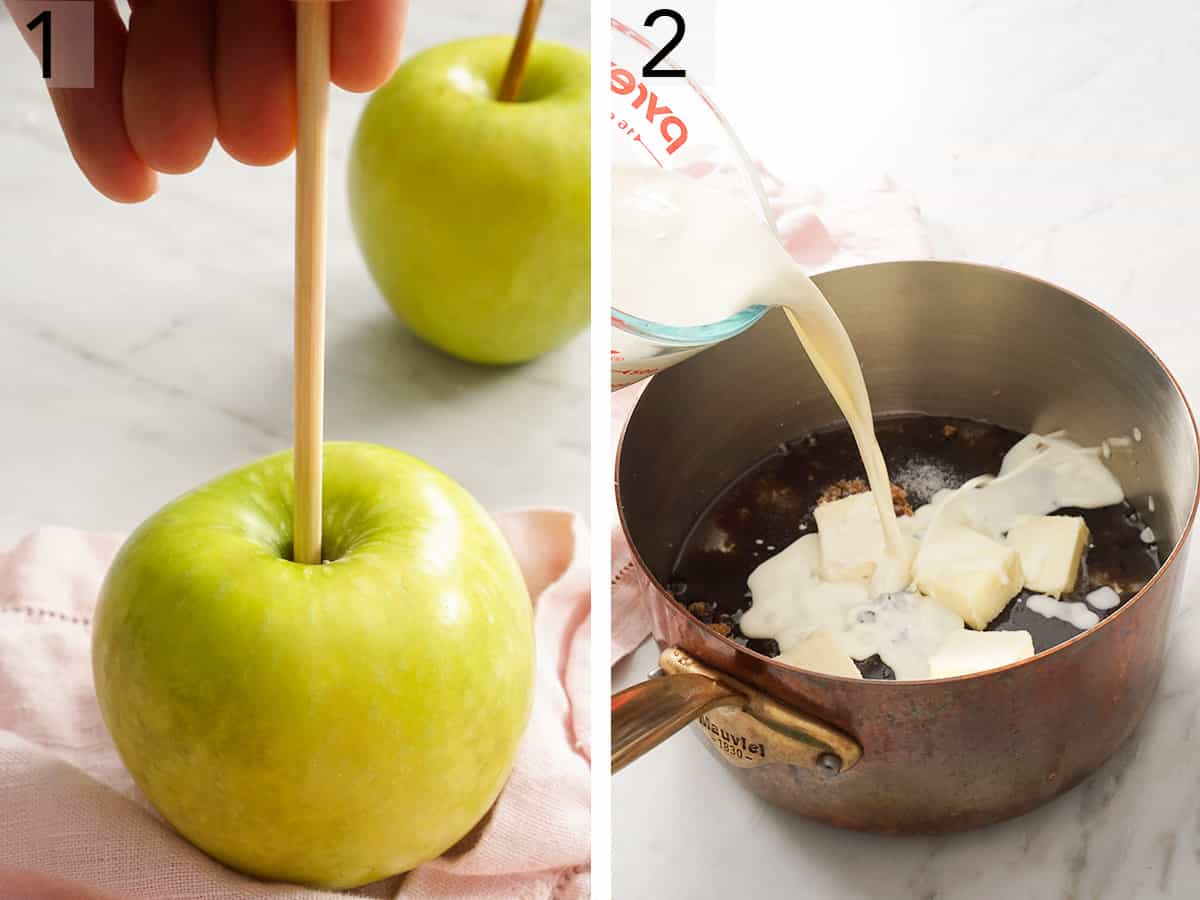
1. Prep the apples: After thoroughly cleaning the apples, push a skewer or caramel apple stick into the stem end of the clean, dry apples. This creates a “handle” that you can hold when dipping the apple into the caramel. Refrigerate the prepared apples while you make the caramel.
2. Cook the caramel: To a large, heavy-bottomed pot (at least 4 quarts with tall sides so the caramel doesn’t bubble over), add the brown sugar, cream, corn syrup, butter, and salt.
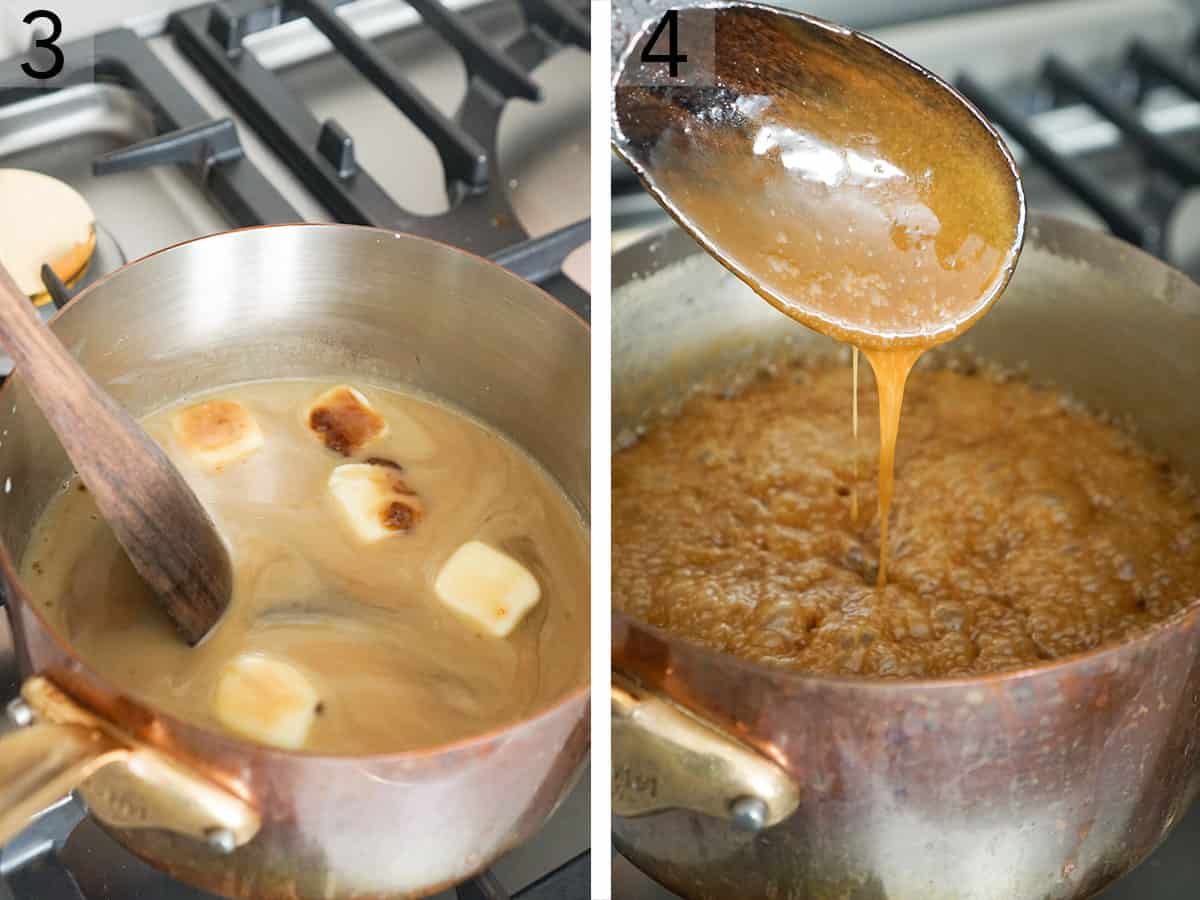
3. Cook over medium-high heat, stirring frequently with a wooden spoon, until the butter has melted.
4. Attach a candy thermometer to the side of the pot without touching the bottom. Or just have a digital instant-read thermometer on hand. Continue to cook the caramel without stirring, but brush any sugar that may collect on the side of the pot with a wet pastry brush. Cook until the caramel temperature reaches 245-248°F. Remove from the heat with the thermometer still attached. Carefully add vanilla extract and stir. Now leave the hot caramel in the pot to cool at room temperature down to 200°F.
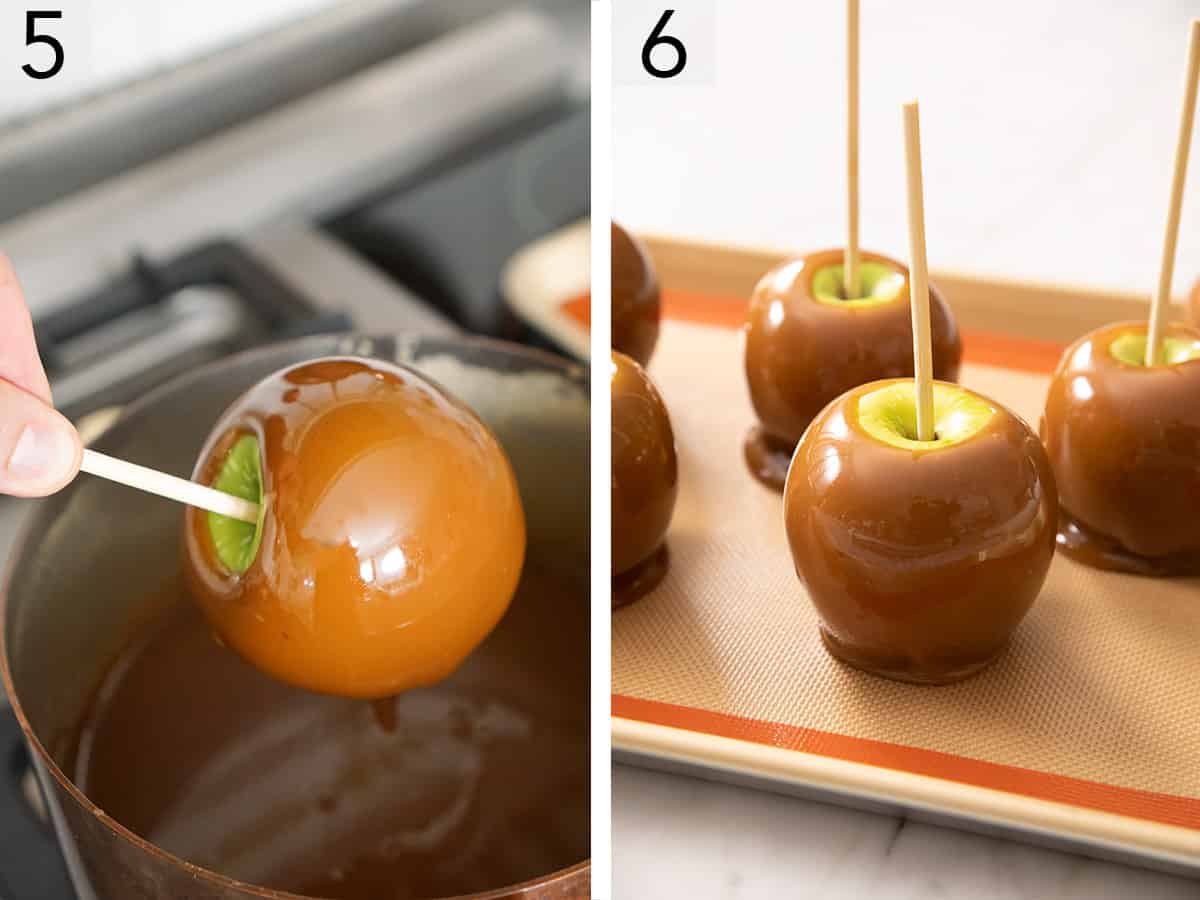
5. Dip the apples: Meanwhile, prepare your workstation for dipping the apples. Line a large baking sheet with a nonstick material like parchment paper, a silicone mat, or lightly grease the sheet with butter. If you plan on decorating the apples, set the toppings out—decorating needs to happen immediately after dipping! Once the caramel is cooled, dip the apples into the caramel and let the excess drip off.
6. Let them set: Place each dipped apple on the prepared baking sheet to set for about 15 minutes. If you want plain caramel apples, you’re done! If you plan on decorating them, do so right after dipping the apples. Sprinkle with your favorite toppings, then let them set. For chocolate, drizzle it on after the caramel has set.
Troubleshooting
The Caramel Slid Off or Pooled at the Bottom
Check the apple first. Wax is the usual cause, or condensation left on a chilled apple can make caramel slip too. Be sure to scrub the apples, then wipe the chilled apples dry before dipping.
If the caramel never reaches 248°F, it will stay thinner no matter how well you prep the apples. If it did cook to the right temperature, make sure the caramel has cooled to 200°F.
The Caramel Is Too Hard
It went past 248°F. Every degree over firms the caramel, which is why I pull the pot the moment it hits the target (between 245°F and 248°F is fine, if you’re worried about going over). In the test batch that I pulled at 250°F, the coating was chewier than I preferred.
If you have the apples stored in the fridge, let them come to room temperature before serving them. Cold caramel will be much firmer.
The Caramel Turned Grainy
Sugar crystals seeded the batch and caused the melted brown sugar to recrystallize. That usually means corn syrup wasn’t used because the invert sugar will prevent crystals from forming. Even with the corn syrup, I brush down the sides of the pot with water occasionally until the candy thermometer goes in. This way, if any big crystals of sugar are clinging to the side of the pot, they dissolve before the caramel reaches temperature.
The Caramel Got Too Thick to Dip
That’s normal toward the end of a batch after you’ve dipped several cold apples, especially if you are going slower. I set the pot over low heat and bring it back to 200°F, stirring gently, then keep dipping.
Gourmet Caramel Apple Toppings
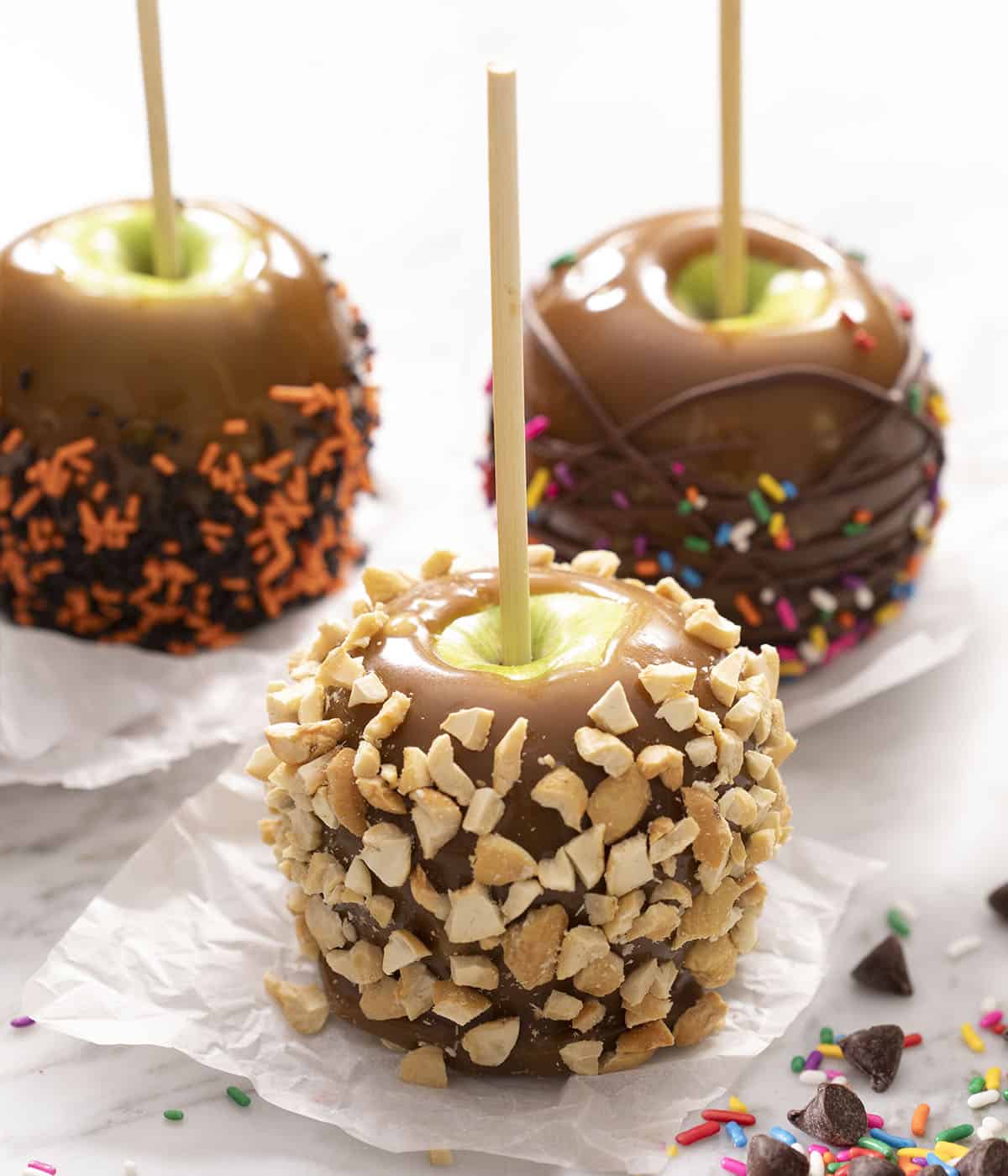
To make gourmet caramel apples, press toppings onto the caramel while it’s still tacky. Some of my favorite options:
- Chopped nuts: roasted salted peanuts, toasted pecans, or toasted walnuts
- Crushed pretzels, cookies, or Oreos
- Mini chocolate chips, mini M&Ms, or chopped candy bars
- Sprinkles or toasted coconut
- Crushed toffee for a crunchy, buttery shell
Melted white, milk, or dark chocolate is the exception: drizzle it on after the caramel sets. For a smoother look, pop any bubbles with a quick pass of warm air from a hair dryer or heat gun right after dipping.
Caramel Apple Recipe
Equipment
- Candy thermometer
- Large Pot
- Apple stick (wooden), or thick skewer
Ingredients
- 8 small to medium Granny Smith Apples (2½ to 3¼ pounds, 1.1 to 1.5kg)
- 2 cups packed light brown sugar (440g)
- 1½ cups heavy cream (360mL)
- ½ cup light corn syrup (120mL/175g)
- 3 tablespoons unsalted butter
- ½ teaspoon salt
- 1 tablespoon vanilla extract
Instructions
Apple Preparation:
- Remove all stems from apples and wash them by rubbing the skin vigorously with a paper or kitchen towel in hot water to remove the wax coating.
- Push an apple stick or wooden skewer into the stem end to create a handle. Make sure the apples are dry, then refrigerate the apples to help the caramel set faster.
For the Caramel:
- In a large pot (at least 4 quarts so the caramel doesn’t bubble over), combine the brown sugar, cream, corn syrup, butter, and salt. Place over medium heat, stirring frequently with a silicone spatula, scraping any sugar from the sides of the pot, until the butter has melted.
- Attach a candy thermometer to the side of the pot (or have an instant read thermometer close by). Cook without stirring, while occasionally brushing any sugar that collects on the side of the pot down with a wet pastry brush, until the temperature reaches 245-248°F, 18 to 20 minutes.
- Remove the pot from, heat but leave the candy thermometer attached. Add the vanilla (be careful as the mixture will bubble up), then stir to combine. Set aside to cool for 10 to 15 minutes until the mixture reaches 200°F.
Dipping the Apples:
- While the caramel is cooling, line a large baking sheet with parchment paper, a silicone mat, or lightly grease the sheet with butter. (If you plan to decorate the apples, have your toppings ready as well.)
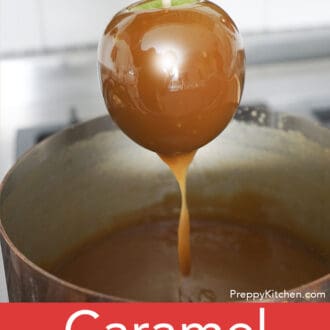
- Once the caramel cools down to 200°F, wipe any condensation from the apples before dipping. Tip the pan slightly so that the caramel collects on one side. Dip an apple into the caramel so that it covers about three-quarters, rotating it 360° to coat all sides. Pull the apple straight up by the stick and hold it over the pot for about 10 seconds, shaking and turning it gently so that the excess caramel drips off. Place on the prepared baking sheet to cool for about 15 minutes, to allow the caramel to firm up. Repeat with the remaining apples, working quickly to dip all of the apples as the caramel will cool and thicken as more apples are dipped.
- If desired, you can roll the apples in chopped nuts or sprinkles before the caramel sets. Or let the caramel set and drizzle them with melted chocolate.
Notes
- Use a wooden spoon or silicone spatula to stir the caramel. Wood and silicone don’t conduct heat well, so they won’t affect the temperature of the caramel or burn your hands while you stir.
- If the caramel gets too thick to dip or smoothly coat the apples, gently rewarm it. Reheat the caramel on low heat until it reaches 200°F once again, which is the ideal temperature for dipping.
- Don’t waste leftover caramel! Pour it onto parchment paper and shape it into a fairly uniform log by rolling it up in the paper. Once the caramel has cooled completely, cut it into smaller pieces and enjoy delicious buttery caramel candies. Or, wrap each one in some parchment paper to eat later.
Nutrition
Have you tried this recipe? Tag me today!
Mention @preppykitchen and tag #preppykitchen!
How to Store Caramel Apples
Refrigerate them. Caramel apples with sticks inserted need to be refrigerated. The stick can carry bacteria into the core of the apple, and the moisture between the caramel and the apples can cause spoilage. Bring them to room temperature to serve so the caramel isn’t too hard to eat.
Keep them covered. Uncovered caramel pulls in moisture from the air and gets sticky.
Gifting. Once the caramel has set, slip each apple into a clear treat bag tied at the stick with ribbon, and tell whoever gets one to keep it in the fridge.
Frequently Asked Questions
I don’t recommend it. Corn syrup is what keeps this caramel from crystallizing and gives it enough body to hold onto the apple. It also helps keep the caramel at the right chewiness once it’s cooled. Honey or maple syrup aren’t good swaps because they tend to crystallize on their own.
Yes. Keep it covered at room temperature for up to 24 hours, then warm it gently over low heat to 200°F and dip as usual.
You can, but you will need a bigger pot (a Dutch oven would work well), and the cooking and cooling times will be different. Rely on your thermometer instead of a timer to know when the caramel is ready.
More Dessert Recipes To Try
If you love apple treats, try one of these dessert recipes next:
- Apple Pie — my classic apple pie is the perfect fall recipe to make with the rest of your bag of apples.
- Apple Crisp — brown sugar baked apples under a crumbly crisp topping is such an easy fall dessert.
- Apple Turnovers — drizzle these flaky pastries for a twist on caramel apple flavor.
- Apple Bundt Cake — this spiced apple cake is coated with an easy caramel sauce for a similar flavor profile.
- Baked Apples — this super easy recipe brings the same brown sugar and butter flavors to whole baked apples.
If you’ve tried this caramel apple recipe, then don’t forget to rate it and let me know how you got on in the comments below. I love hearing from you!