This post may contain affiliate links. Please read our disclosure policy.


My Pumpkin Roll recipe is made with a thin, spiced pumpkin cake rolled up and filled with a fluffy cream cheese filling. Use my tested tips for a cake roll that doesn’t crack and holds its spiral when you slice it.

A pumpkin roll (also called a pumpkin log or pumpkin Swiss roll) is a thin sheet of spiced pumpkin cake rolled up hot in a towel, cooled, then unrolled, spread with cream cheese filling, and rolled again. The spiral looks hard to do, but it’s really all about timing: the cake needs to be rolled up the moment it leaves the oven and left until completely cooled.
I retested this recipe to show you just why the timing matters. I tested rolling the cake hot and cooled, unrolling it while warm and fully cooled, and making it in different pan sizes if you don’t have a jelly roll pan.
“This is by far the most delicious cake I have ever made; not only is it beautiful to look at, but the texture is amazing. The ratio of spices is perfect. I have made it several times, and it’s always a great hit with our guests!”
Johanna
Key Ingredients
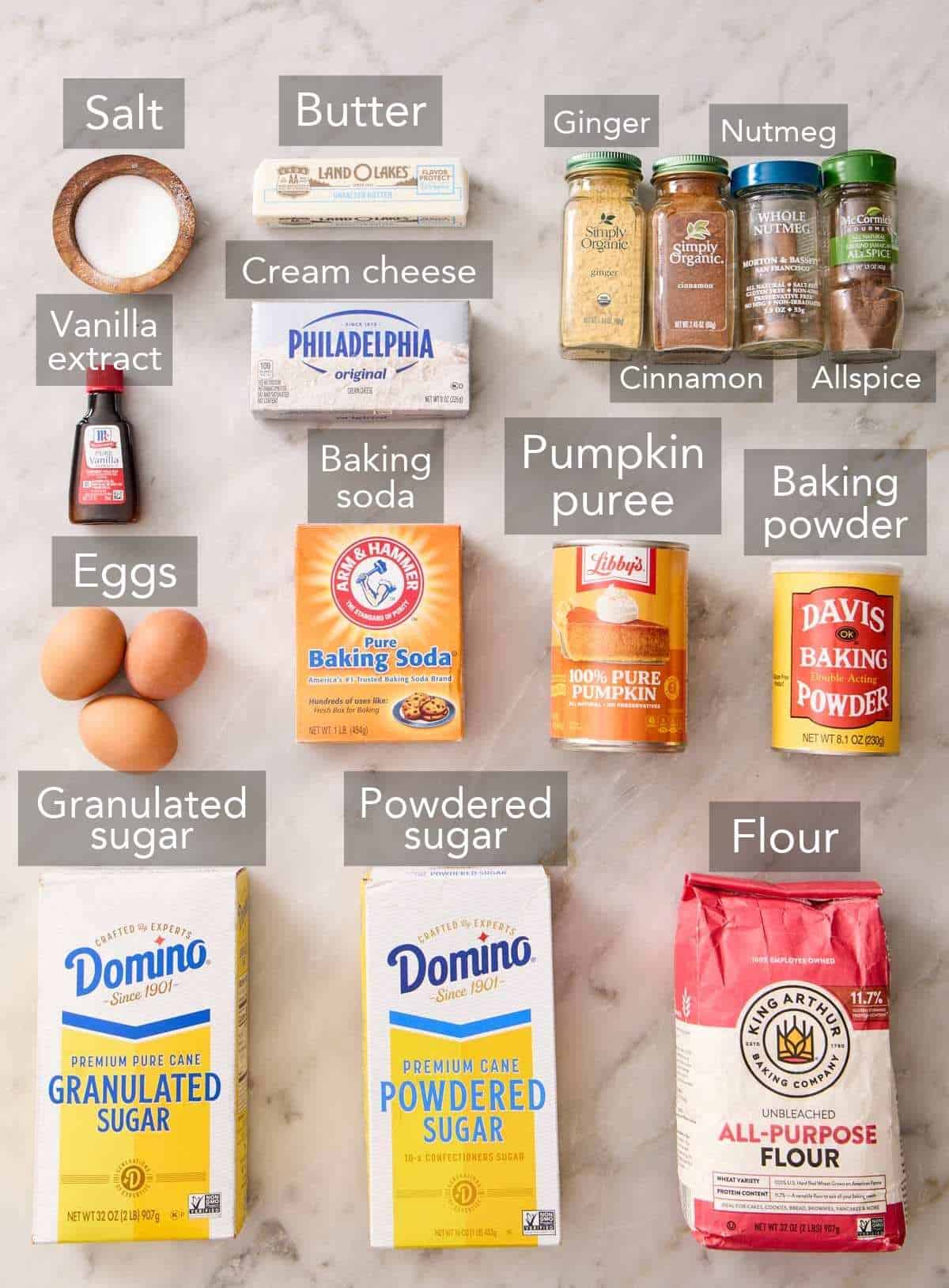
These are the main ingredients needed to make this pumpkin roll. The full list of ingredients and measurements is in the recipe card below.
Pumpkin puree — use canned pure pumpkin (I used Libby’s), not pumpkin pie filling, which is already sweetened and spiced. You won’t use a full 15-ounce (425g) can, so you can use the extra to make pumpkin scones or freeze it for later. Homemade pumpkin puree can be used, but it is wetter and needs to have some moisture removed first: blot at least 1 cup by spreading it onto a few layers of paper towels, let it sit for 10 minutes, then scrape it off and measure out ⅔ cup. (See my pumpkin chocolate chip cookie recipe for step-by-step instructions.)
Spices — I use cinnamon, allspice, ginger, and nutmeg to flavor the cake batter, but you can replace all four spices in total with 2 teaspoons of pumpkin pie spice if you’d like. My homemade pumpkin pie spice has a slightly different balance of spices with more ginger, less allspice, and the addition of clove, but it is a very delicious swap in the batter, leaning a bit more spicy and earthy than heavily warm from cinnamon.
Eggs — the cake has no butter or oil. It gets moisture from the pumpkin puree and some fat from the egg yolks. Whisking room-temperature eggs with the sugar until they are slightly lightened gives the cake structure when mixed with the all-purpose flour, baking powder, and baking soda, and helps it bend without breaking when you roll it.
Cream cheese and butter — for the filling, use full-fat blocks of cream cheese (I used Philadelphia), not tub-style spread, and unsalted butter (I used Land O Lakes). When I’ve used tub cream cheese, the filling is too soft and squeezed out of the ends while rolling it up. Soften both until a finger easily leaves an indentation when pressed (see how to soften butter for doing this in about 10 minutes or less). If you have salted butter, the filling will be less sweet (see Academy: Salted Vs. Unsalted Butter).
Powdered sugar — it sweetens the filling and provides a non-stick coating to stop the hot cake from sticking to the towel. If you run out, make homemade powdered sugar with just two ingredients.

Pro Tips For The Best Pumpkin Roll
Measure the flour correctly. With less than a cup of flour in the batter, an extra spoonful makes a difference, so weigh it or use the spoon-and-level method. See how in my How To Measure Ingredients Correctly guide. When I accidentally packed the flour into a measuring scoop, adding more than it needed, the cake baked denser and split as I rolled it.
Parchment paper tips: Measure a piece of parchment paper large enough to overhang an inch or two on the edges (a 12×16” sheet works fine, if you have pre-cut sheets). This will make removing the cake from the pan easier and safer since you can use the excess as handles to lift the cake out. For an extra smooth release and to keep the parchment paper in place, spray the pan with non-stick spray before placing the parchment. For more parchment basics, see my guide on how to line a cake pan with parchment paper.
How To Make A Pumpkin Roll
I’ve highlighted portions of the recipe in step-by-step process images with instructions for making this pumpkin Swiss roll. You can find the full set of instructions in the recipe card below.
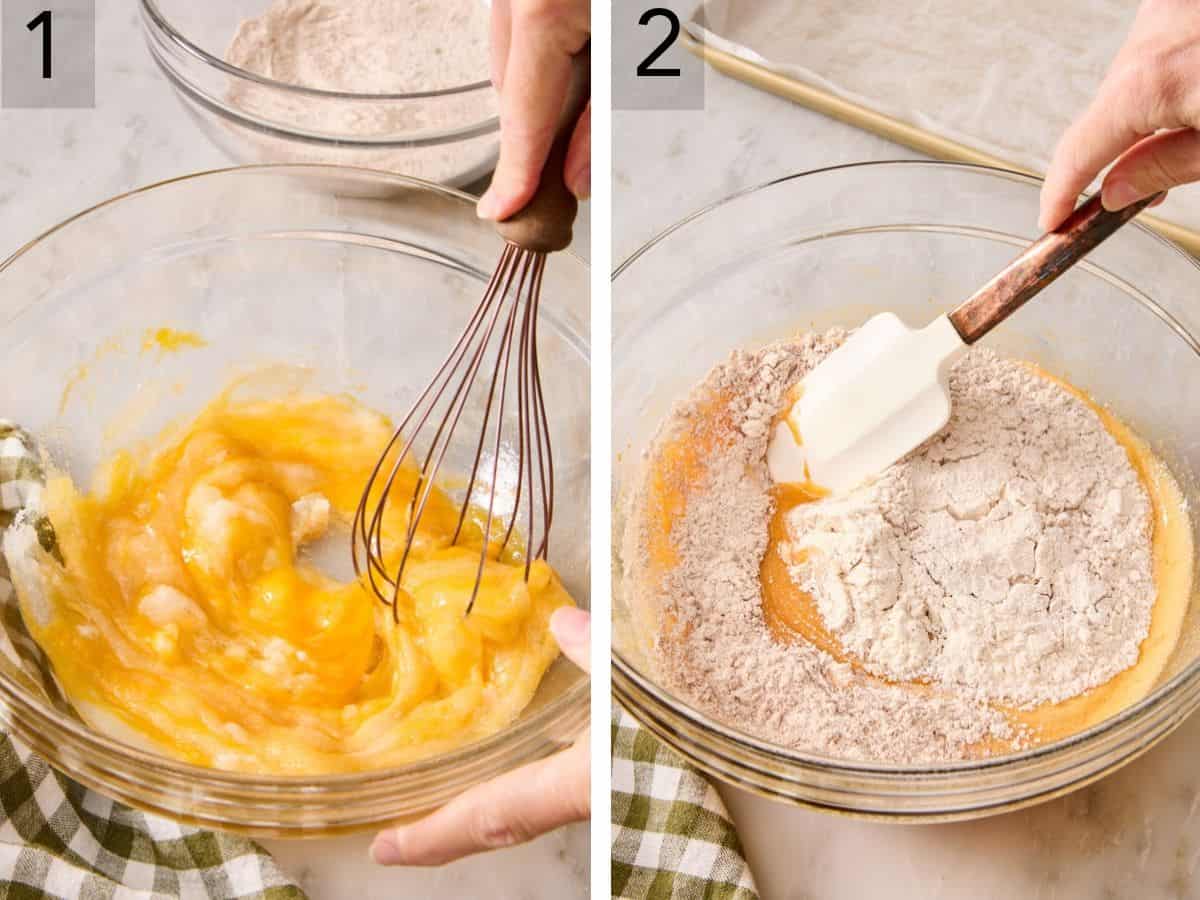
1. Sift the dry ingredients—flour, salt, baking powder, baking soda, and all four spices—together and set aside. Then combine the wet ingredients by whisking the eggs, sugar, and vanilla together until pale and smooth, then mix in the pumpkin.
2. Fold in the dry ingredients just until no flour shows; hard stirring knocks out the air the eggs trapped.
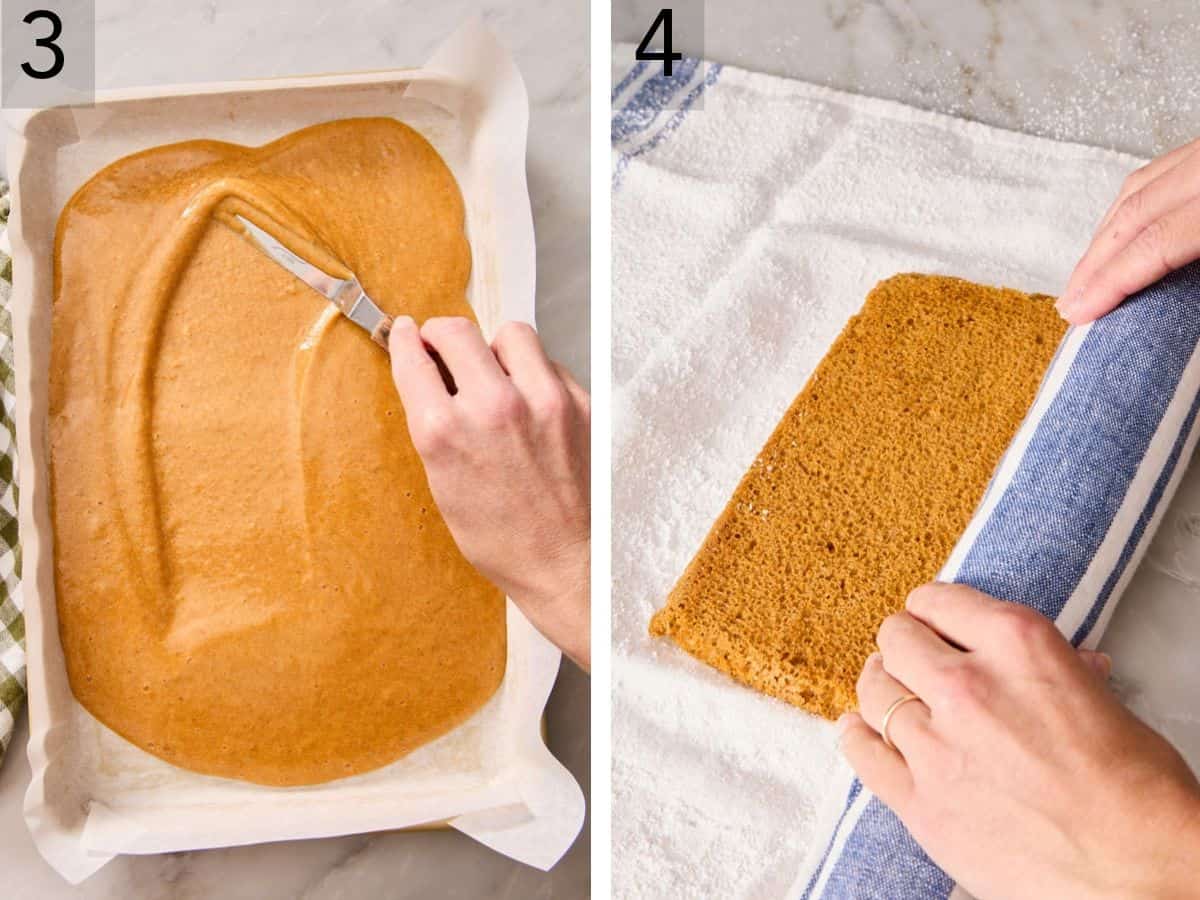
3. Spread the batter into the lined jelly roll pan with an offset spatula and make sure it fills in the corners. It looks thin, but it puffs as it bakes, and the cake should be on the thinner side to roll up well. Bake for 13 to 15 minutes, until the center springs back when pressed lightly. I like to check it at 13 minutes, because a dry, overbaked edge is more likely to crack when rolling it.
4. While the cake bakes, sift some powdered sugar over a thin, smooth tea towel. The moment the cake is done, lift it out by the parchment, flip it onto the dusted towel, and carefully peel off the paper. Fold one end of the towel over a short end of the cake, then roll the cake up tightly with the towel inside so the layers can’t stick together. The hot cake sets in a curl as it cools, which is why it rolls up again later without breaking. Cool it seam side down on a wire rack, and wait until it is completely cooled before unrolling it. When I’ve unrolled one with a still-warm center, it cracked. (See below for more about my test and how to prevent cracking.)
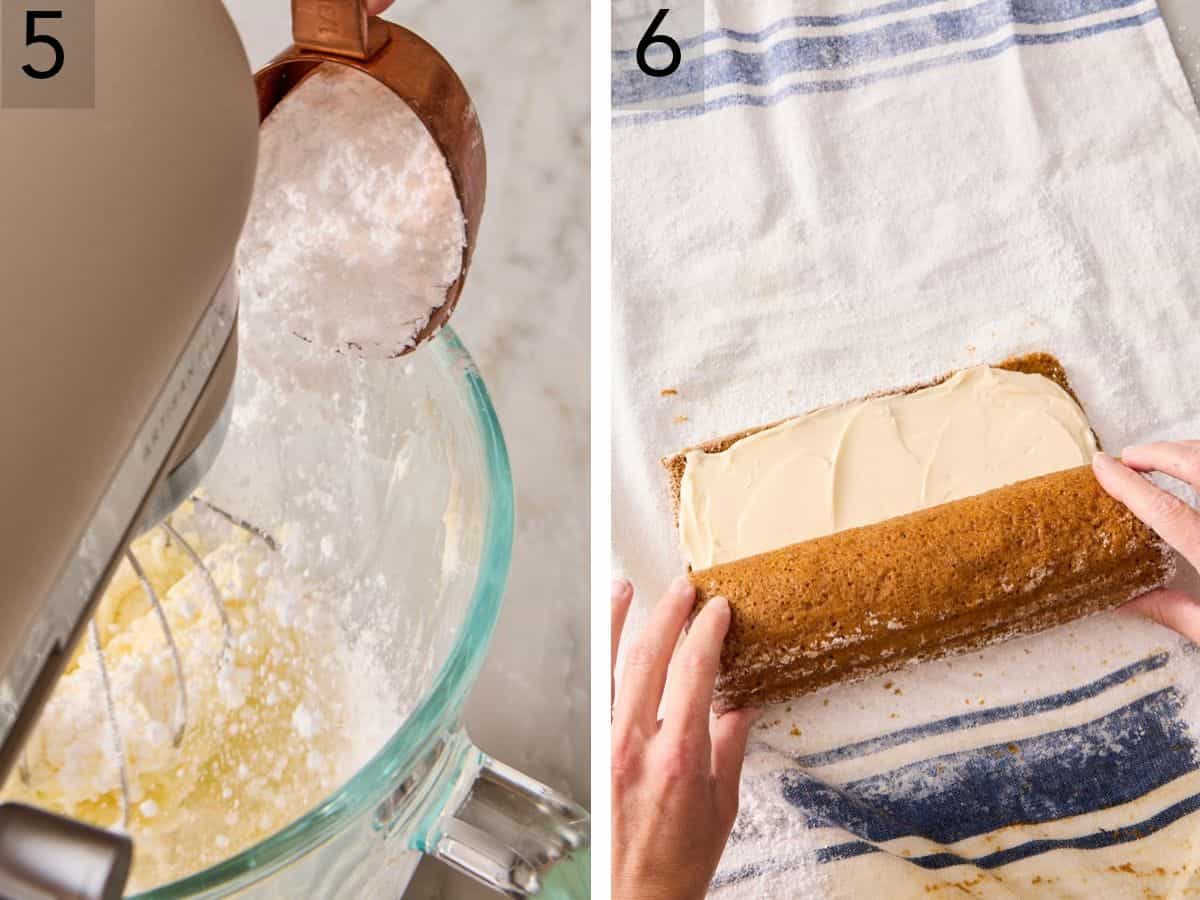
5. Once cooled, make the filling. Beat the cream cheese and butter on medium for about a minute, until combined. Add the vanilla and sifted powdered sugar and beat for about 2 minutes, until fluffy and light. The filling should be fluffy and spreadable but stiff enough to hold the spiral, so if yours is loose, chill it for 15 minutes, then beat again, instead of adding sugar. It’s far less sweet than my cream cheese frosting, but it also doesn’t have to have as much sugar for structure since it’s a filling, not holding cake layers or decorative piping.
6. Unroll the cooled cake (it will keep a curl at the end), remove parts of the towel covering the cake, and spread the filling evenly over it, leaving ½ inch bare on the short end where the roll will finish. Leaving this gap prevents the filling from squeezing out since rolling pushes the filling toward it. Roll it back up from the same short end you started with, peeling the towel away as you go. Cover loosely with plastic wrap and chill for at least 1 hour for clean slicing. Dust with powdered sugar and trim the ends before serving.
Troubleshooting Two Issues: Cracking or Sticking
A cake roll cracks when the cake is too dry or not the right temperature for rolling or unrolling. Overbaking dries the cake out, making it less flexible, so keep an eye on it and check it at the early end of the time range.
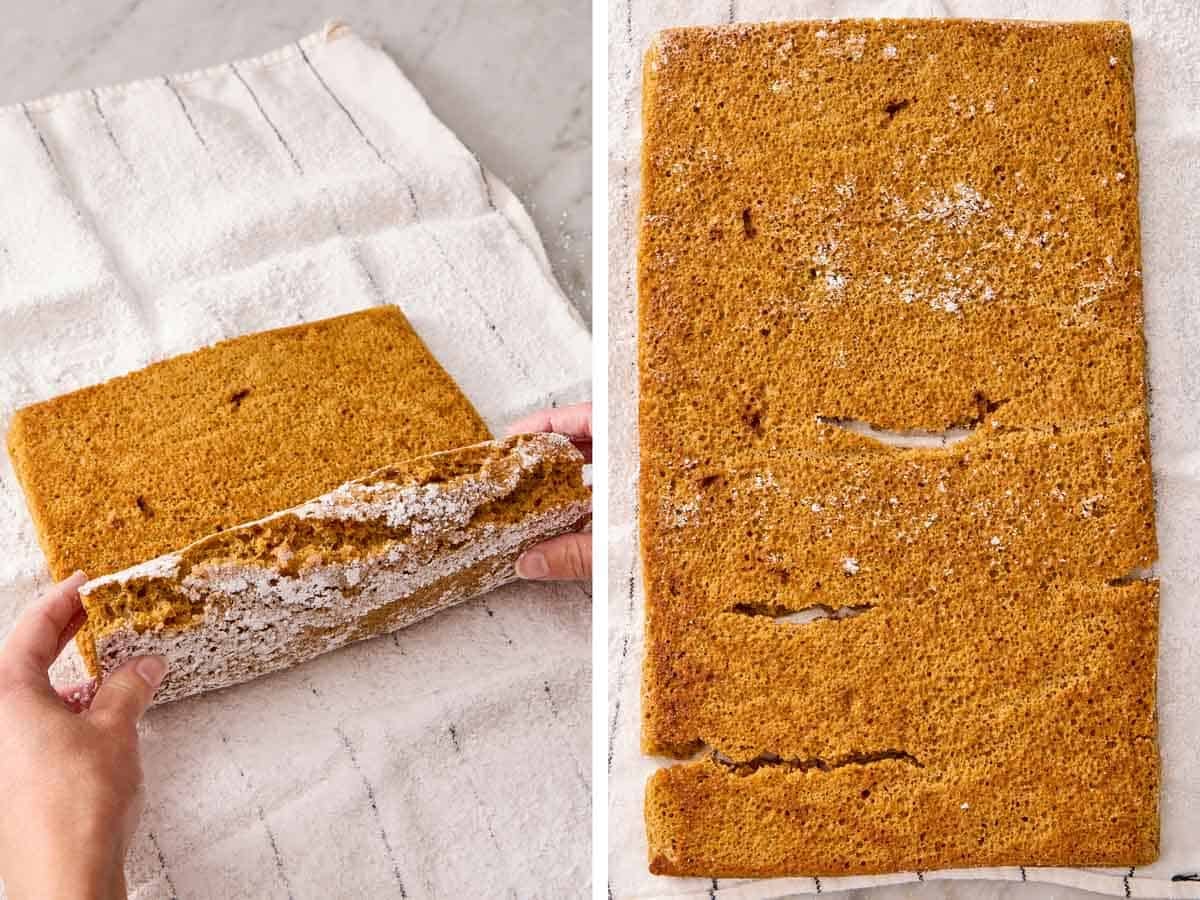
Cooling the cake before rolling causes cracks because the crumb sets flat and is firmer at room temperature. I tested this, rolling the cooled cake without the towel so you can see the cracks form. The cake broke and cracked along each bend as it was rolled up.
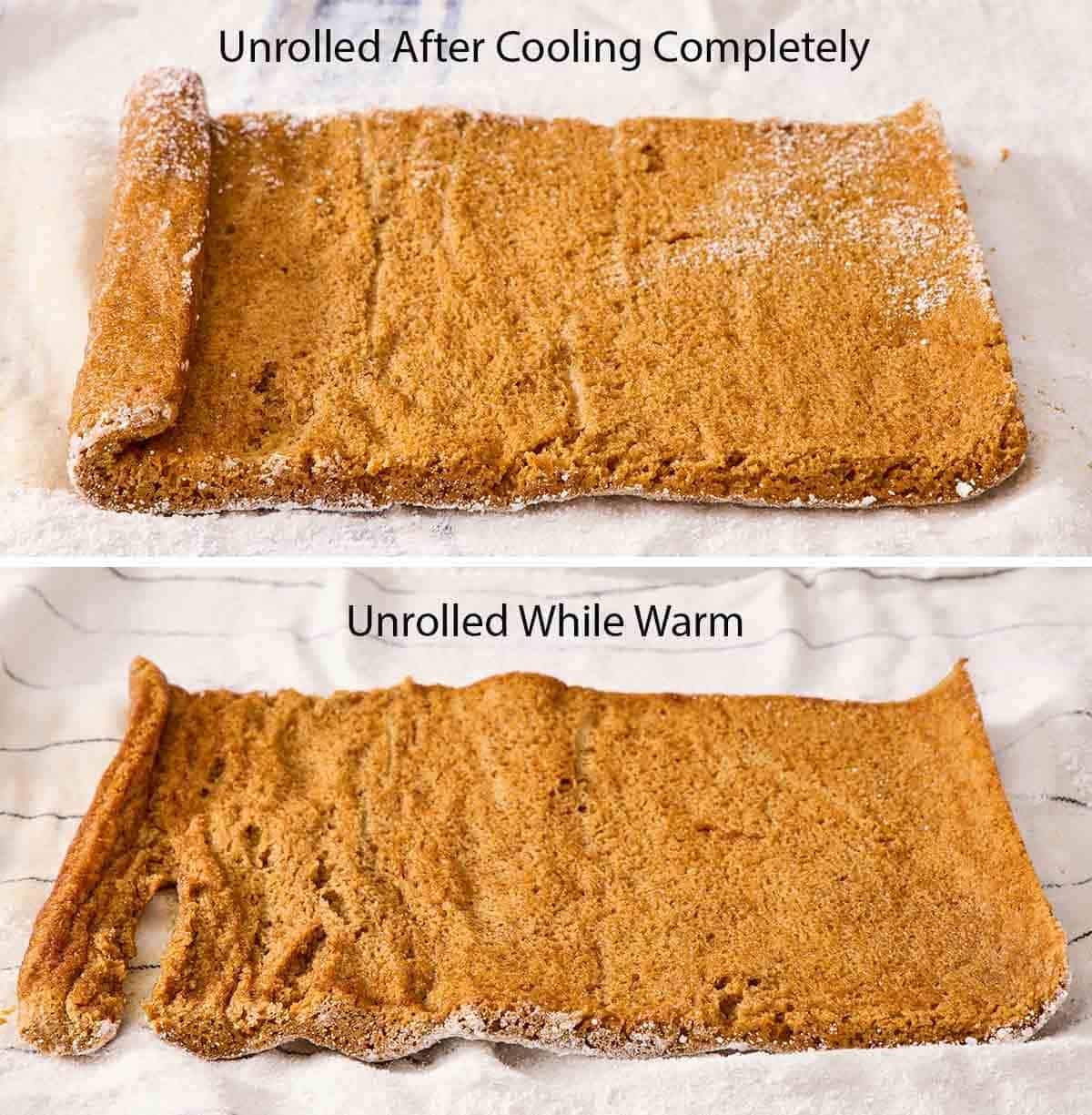
Unrolling it while it is still warm also cracks because the crumb hasn’t fully set. When I tested this, I let the cake cool for 1 hour. The cake cracked most significantly at the end where the rolls started because it was at the center and takes much longer to cool off. It was still quite warm, and the crumb hadn’t set, so it pulled apart when I unrolled it. If you aren’t sure if your cake is fully cool, insert an instant-read thermometer into the center (go through the open end of the towel). It should be no warmer than 80°F.
A cake sticks to the towel because it is either underbaked, the towel was too lightly dusted, or it had a texture. If it’s underbaked, the cake will be soft and sticky and not sturdy enough to release from the towel. If the towel isn’t dusted well enough or it’s too textured, it will grip onto the cake, tearing as you unroll it.
Cover the towel edge to edge with powdered sugar and use a sifter to dust it evenly. When I’ve spooned the sugar on instead of sifting it, the clumps melted into hard white patches. Also, use a smooth tea towel; terry loops or heavily textured woven towels will grab the cake.
Can I use parchment paper instead of a towel?
You can, but I prefer the towel. Parchment traps steam against the warm cake, and when I’ve rolled one in parchment, the surface turned tacky, making it more prone to stick and tear when the cake is unrolled. Sugar-dusted cheesecloth is a better backup.

Pan Sizes
Using the right pan bakes the cake at the correct thickness and size so it’s flexible enough to roll tightly into a full spiral.
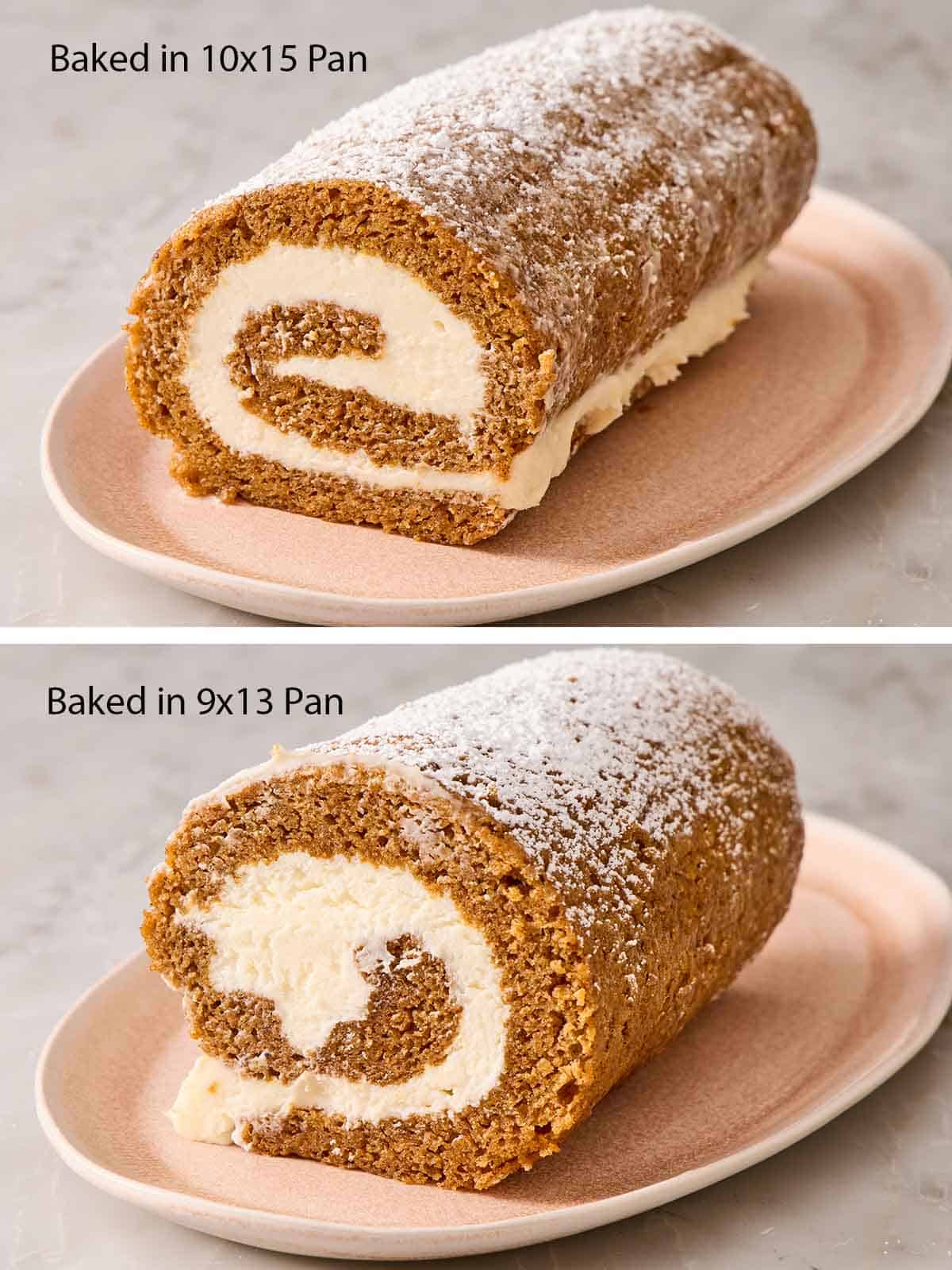
10×15 inches. I call for this size, also called a jelly roll pan, in the recipe. Just like my carrot cake roll, rolling from a short end makes a 10-inch log with more turns, so you get a more defined spiral in the center when you cut it. Rolling from a long end will create a longer, thinner roll, but it won’t spiral much once the filling is added.
9×13 inches. A quarter-sheet pan has a smaller surface area than a jelly roll pan (117 sq. in. versus 150 sq. in.), so the batter bakes a thicker cake, takes longer to bake and cool, and rolls into a shorter, wider log. I tested this recipe baked in a 9×13” rimmed baking sheet to show you exactly how it turns out. It took 16 minutes to bake and 3 full hours to cool. It cracked slightly on one turn when rolling it up because the cake is thicker and less flexible, but it didn’t fall apart. While a jelly roll pan is better, if you only have a 9×13-inch pan, you can use it with good results.
12×17 inches. This is a half-sheet pan and about 30% larger (204 sq. in.) than the jelly roll pan. Using this pan will spread the batter too thin. When I baked it as written, the parchment paper was hard to peel off the thin cake without tearing it. If you want to scale the recipe up, increase everything by a third and it will bake like the jelly roll pan version. You can either roll it up by a short end to make a thicker 12 inches log and 12 larger slices (like my Swiss roll). Or, roll it by a long end like my yule log for roughly 16 smaller slices.
For other pans, see my Baking Pan Sizes & Conversions guide.
Variations
Spiced filling. Beat 1 teaspoon of pumpkin pie spice or cinnamon into the filling with the powdered sugar.
Chocolate hazelnut. Spread a thin layer of Nutella over the cooled cake before adding the cream cheese filling.
Ganache, caramel or stripes. Drizzle the assembled roll with chocolate ganache or caramel sauce. Or lay strips of parchment across it or place a lace doily on top before dusting it with powdered sugar, then carefully remove them to leave a decorative design on top.
Pumpkin Roll Recipe
Equipment
- 10×15-inch jelly roll pan
Ingredients
For the Cake:
- ¾ cup all-purpose flour (90g)
- ½ teaspoon baking powder
- ½ teaspoon baking soda
- 1 teaspoon ground cinnamon
- ½ teaspoon ground allspice
- ¼ teaspoon ground ginger
- ¼ teaspoon nutmeg
- ¼ teaspoon salt
- 3 large eggs room temperature
- 1 cup granulated sugar (200g)
- ⅔ cup canned pumpkin puree (160g)
- 2 teaspoons vanilla extract
- ¼ cup powdered sugar (30g)
For the Filling:
- 1 (8-ounce/ 226g) block cream cheese at room temperature
- 1 cup powdered sugar sifted (120g)
- 6 tablespoons unsalted butter room temperature (80g)
- 1 teaspoon vanilla extract
Instructions
For the Cake:
- Preheat the oven to 375°F. Grease a 10×15-inch jelly roll pan with butter or baking spray and line with parchment paper. Use a large enough piece of paper so it has an extra inch or two up the sides. You’ll use this excess paper to pull the cake out of the pan after baking.
- To a medium bowl, sift the flour, salt, cinnamon, allspice, ginger, nutmeg, baking powder, and baking soda. Give it a whisk and set aside.
- To a large bowl combine the eggs, vanilla, and granulated sugar and whisk or beat with an electric mixer until lighter in color and smooth. Add in the pumpkin puree and mix until smooth.
- Pour the dry mixture into the wet then fold in until just combined.
- Transfer the batter into your prepared baking sheet and smooth into an even layer using an offset spatula. (The batter will be quite thin once smoothed but it will puff as it bakes).
- Bake for 13 to 15 minutes, the cake is done when the center springs back when pressed lightly.
- While the cake bakes, prepare a thin tea towel by dusting it generously with the powdered sugar. When the cake is done and still hot, carefully invert it into the center of the sugared cloth.
- Peel back the parchment paper, fold the end of the tea towel over a short end of the cake, then roll the cake tightly into a log shape (the towel will be inside the cake roll to prevent it from sticking). Place the rolled cake on a wire rack to cool completely, 2 to 3 hours.
For the Filling:
- In the bowl of a stand mixer fitted with a whisk attachment, or in a large mixing bowl using a hand mixer combine the butter and cream cheese together and mix on medium speed until combined for about 1 minute. Add in the vanilla and powdered sugar, and beat until fluffy, smooth, and light in color, about 2 minutes.
For the Assembly:
- Once cooled, unroll the cake onto your counter, spread the frosting into an even layer leaving about ½-inch unfrosted on the short end where you finish rolling up the cake.
- Roll the cake back up, starting with the short side opposite the unfrosted border, removing the towel as you roll. Place the roll on a serving plate, loosely cover with plastic wrap, and refrigerate for at least 1 hour so the frosting can set up.
- Once the cake is chilled and you are ready to serve, dust it with powdered sugar and cut with a sharp serrated knife.
Notes
- Trim the edges before serving. Do not worry if the long sides of the cake aren’t even or clean. Once rolled, you can slice them off for a neat cake roll.
- Slice with a serrated knife for the cleanest cuts. Using a straight edge tends to tear the crumbs or smear the filling more. A serrated knife cuts through more easily for a neater spiral in each slice.
Nutrition
Have you tried this recipe? Tag me today!
Mention @preppykitchen and tag #preppykitchen!
Make Ahead, Storing and Freezing
Make ahead. Bake the cake, roll it, and cool it until it is at room temperature. Cover it in plastic wrap or foil (still in the towel), and keep it at room temperature for up to one day before filling and serving it.
Fridge. Once the cake is filled, keep it covered in the fridge for up to 3 days. When I stored mine, by day 3, the surface had turned damp and sticky. Because the filling is cream cheese, don’t leave the roll out for more than 2 hours in total, or 1 hour above 90°F, per the USDA.
Freezer. Wrap the roll or slices tightly in plastic wrap, then freeze them in a freezer-safe container for up to 3 months. That’s a quality limit: FoodSafety.gov says frozen foods “stored continuously at 0°F (-18°C) or below can be kept indefinitely.” The risk of freezer burn increases with time, so the cake tastes best within those 3 months. Thaw it overnight in the fridge. See my How to Freeze Cakes guide for the best wrapping and storing practices.
More Recipes To Try
Bake more pumpkin treats with one of these popular recipes:
- Pumpkin Pie: a silky pumpkin custard baked in a flaky all-butter pie crust.
- Pumpkin Muffins: spiced muffins with a batter that stirs together and bakes into tall bakery-style domes.
- Pumpkin Bread: a moist, warmly spiced loaf stirred by hand in ten minutes, with mini-loaf and streusel options.
- Pumpkin Bars: soft, chewy bars topped with a cream cheese frosting; similar in flavor to this pumpkin roll but no rolling required!
- Pumpkin Whoopie Pies: small, round cakes baked on a sheet tray, sandwiched and filled with cream cheese frosting.
If you’ve tried this pumpkin roll recipe, then don’t forget to rate it and let me know how you got on in the comments below. I love hearing from you!