This post may contain affiliate links. Please read our disclosure policy.
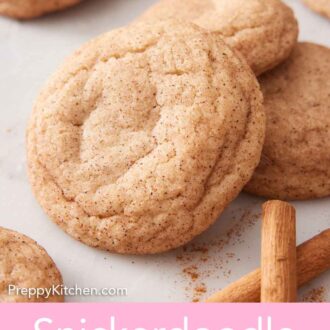




These classic Snickerdoodles are full of sweetly spiced nostalgia. Between the lightly crisp edges, soft and chewy interior, and warm cinnamon-sugar coating, they’re a treat that the whole family is sure to love. Best of all, these cookies are made with fewer than 10 simple ingredients and take just 15 minutes to prep. Perfect for the holidays or anytime you have a cookie craving!
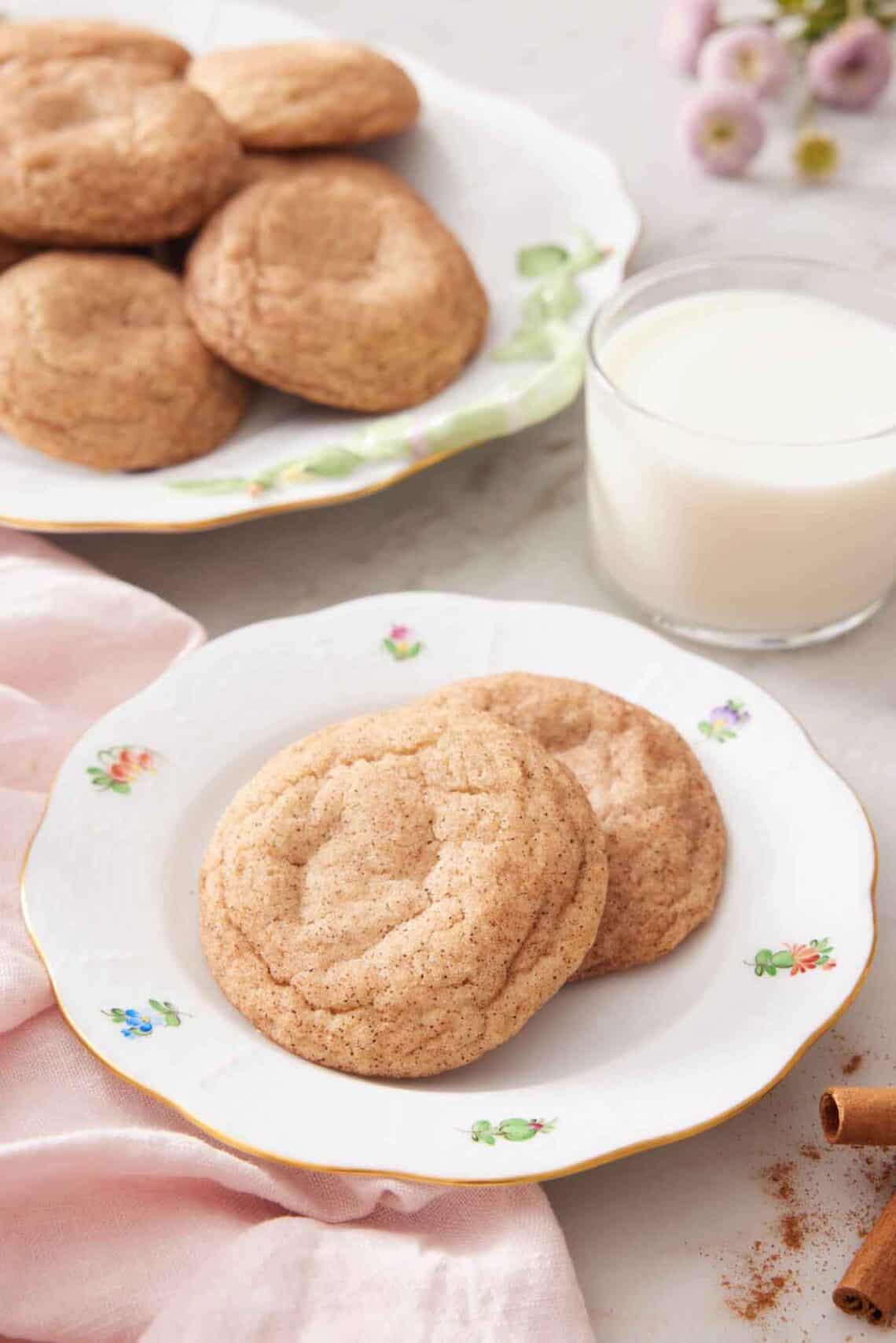
At first glance, snickerdoodles look like cinnamon-sugar-coated sugar cookies, but there’s one ingredient that sets them apart: cream of tartar. This pantry staple is the secret behind their signature tangy flavor and pillowy, chewy texture. In this post, I dig into the science of why cream of tartar matters, showing how it reacts with baking soda, and what happens if you skip it.
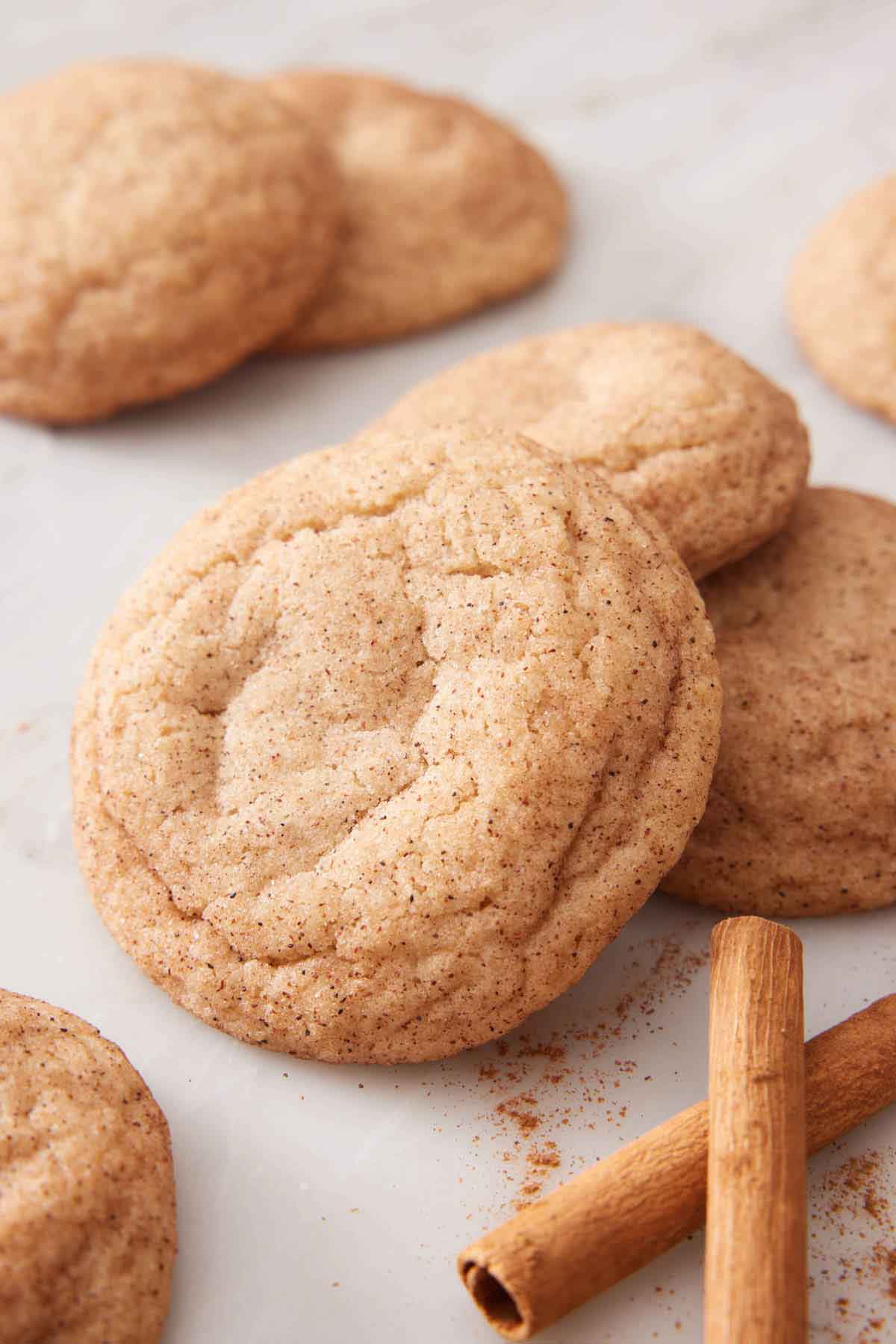
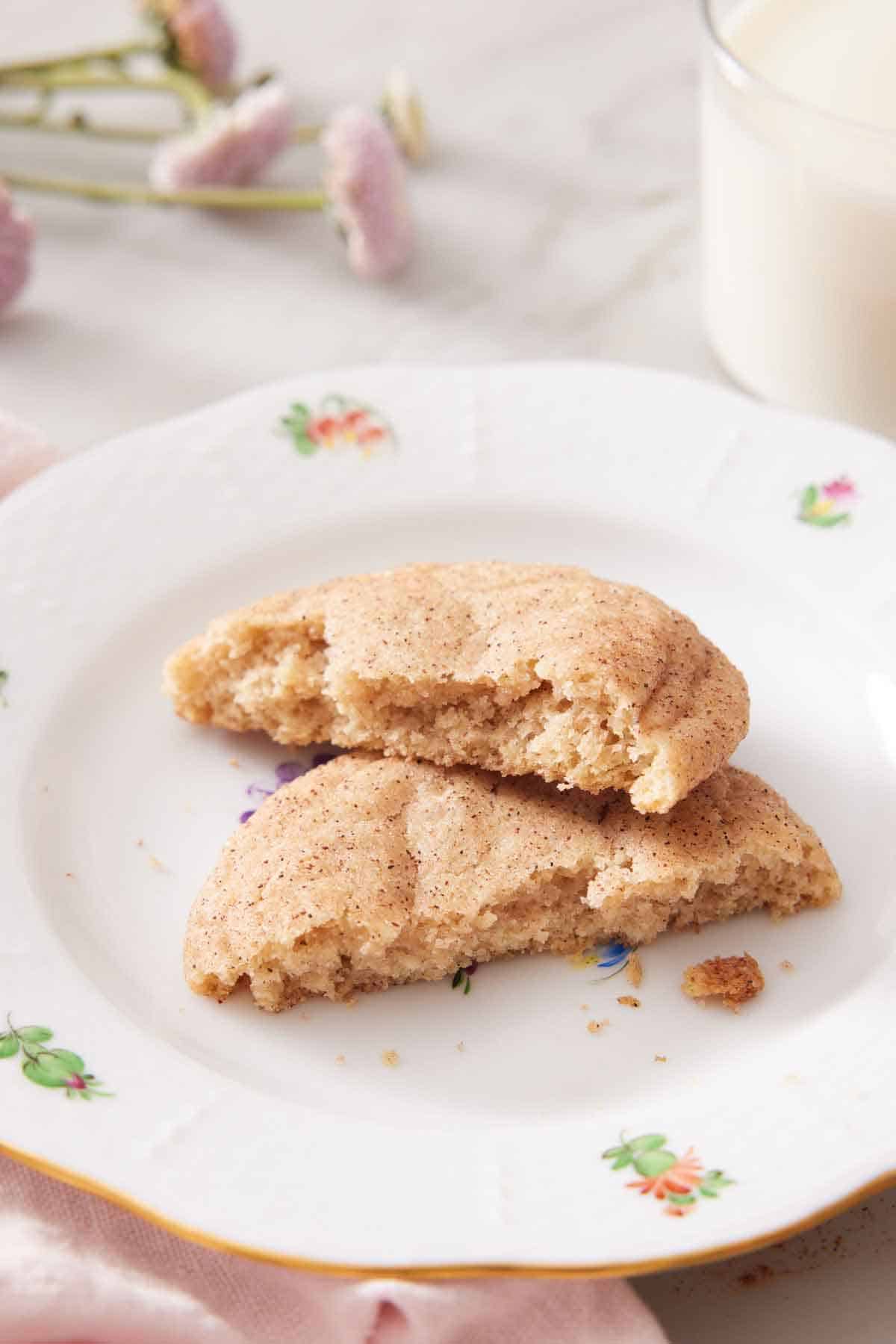
After retesting and perfecting the method, I can confidently say these are the best snickerdoodles around. They strike the perfect balance of crisp edges and soft, buttery centers. Each bite melts in your mouth with warm cinnamon sweetness, a hint of tang, and an irresistibly crinkly top that practically begs for a glass of milk.
“These snickerdoodles are absolutely perfect in every way! I’ve made many snickerdoodle recipes in my life and none of them ever passed the “first try test”…these are soft, moist, with a slightly crisp edge. Such a nice texture.”
Mary
Why This Recipe Works
I tested this recipe several times to find just the right ratio of butter, sugar, flour, and leaveners, along with the proper oven temperature to bake up the best snickerdoodle cookies!
- Soft, chewy, and thick without chilling. Since I found the best ingredient ratios and baking temperature, these no chill snickerdoodles can be scooped and baked directly after mixing. They spread just enough without any chilling to produce a thick snickerdoodle that’s soft and chewy in the center.
- Signature tangy flavor from cream of tartar. It wouldn’t be a snickerdoodle without this ingredient! Plus, it reacts with the baking soda for the perfect cookie texture. More on that below!
- The sugar coating makes a crackly top. Because the sugar melts and sets a crust on the outside of the cookie during baking, it cracks as it cools. This gives the snickerdoodles their classic appearance.
Key Ingredients & Substitutions
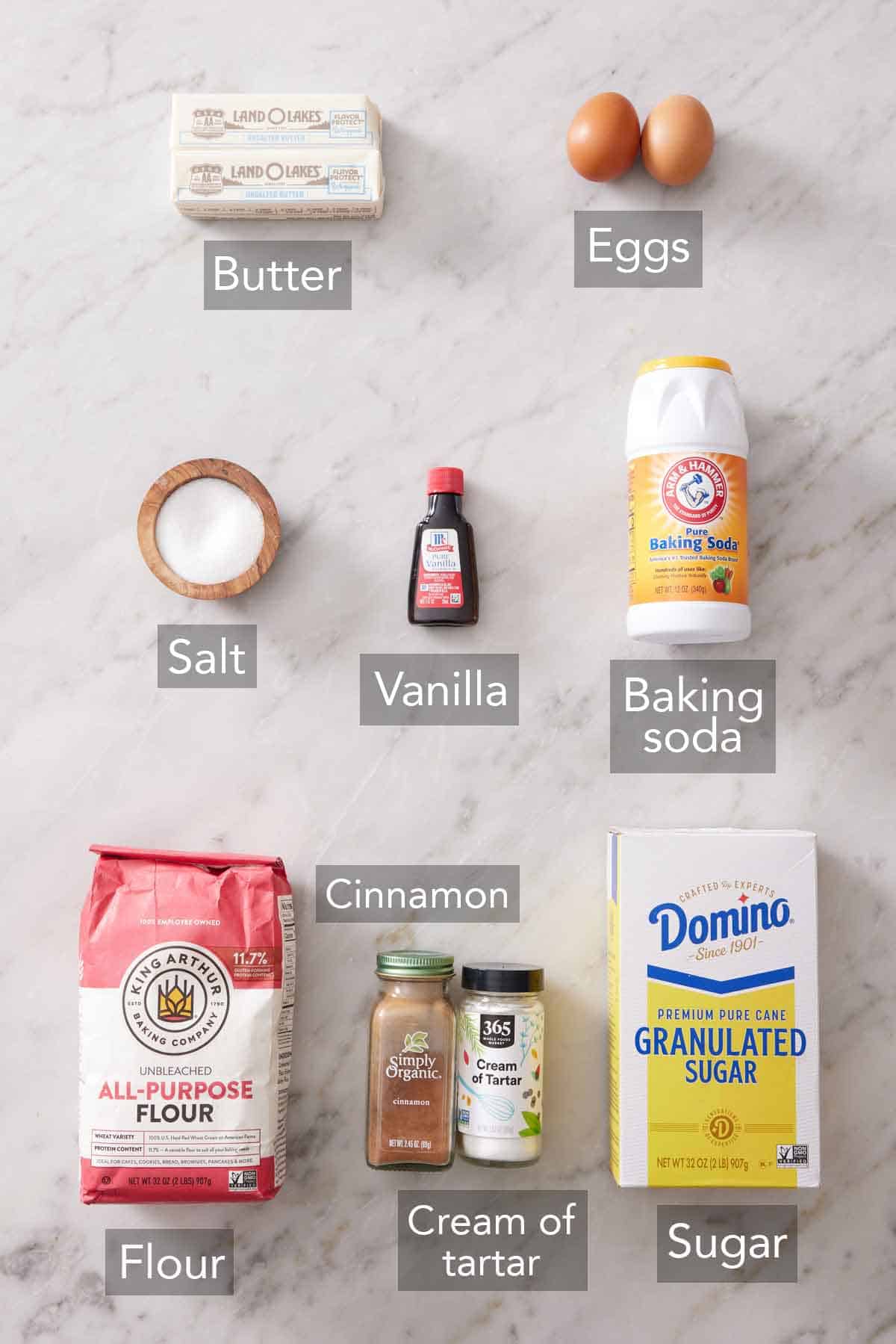
These are the main ingredients you need to make this easy snickerdoodle cookie recipe. You can find the full list of ingredients and measurements in the recipe card below.
All-purpose flour — plain white flour is all you need for the perfect textural balance of soft and chewy. Note that brands with lower protein content (e.g., White Lily) will yield an even softer crumb than those with a higher protein content (e.g., King Arthur), which will be a bit chewier.
Baking soda and cream of tartar — these two ingredients work together to create the perfect rise and chewy texture. Read on below to learn how!
Ground cinnamon and vanilla extract — the sources of snickerdoodles’ delicious flavor profile. Use cassia cinnamon for a sharper, spicier flavor, or swap in Mexican cinnamon for a softer, more floral flavor. If you’d like, you can even add extra spices to the cinnamon sugar, like ¼ teaspoon of ground clove, cardamom, or nutmeg. You can also use an equal amount of vanilla paste for the extract and add little flecks of vanilla bean to your cookies!
Unsalted butter and salt — salted butter varies widely in terms of saltiness depending on the brand, which is why pro bakers typically start with unsalted and add salt to taste.
Granulated sugar and large eggs — neutral white sugar and whole eggs help create the signature crinkly top and chewy consistency. For a less puffy but chewier cookie, swap one of the eggs for an egg yolk and ¾ cup of white sugar for light brown sugar.
Why Do Snickerdoodles Use Cream Of Tartar?
The secret to the best snickerdoodle recipe lies in the chemistry. Cream of tartar, an acidic byproduct of winemaking, reacts with baking soda to create carbon dioxide bubbles that give snickerdoodles their signature lift and chewy texture. (For the record, that is why baking soda is often used in baking recipes with acidic ingredients like brown sugar or buttermilk. Whereas baking powder—which doesn’t require acid to react—is used in recipes that only use less acidic white sugar or whole milk.)
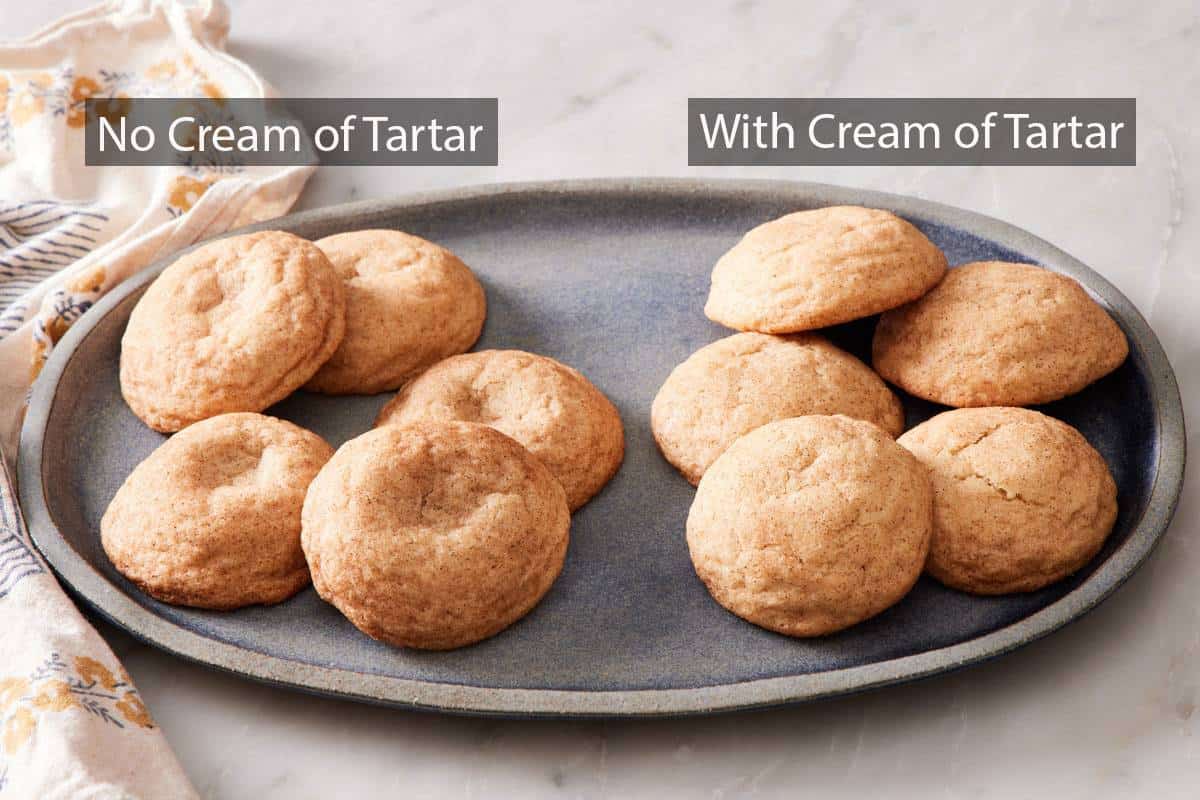
When I tested this recipe both ways, the difference was dramatic. You can see in the image below that the batch without cream of tartar spread a bit more and sank in the middle as they cooled. The edges set, but the centers never quite rose properly because there wasn’t enough acid for the baking soda to react with. When I added cream of tartar, however, the cookies puffed beautifully in the oven, then settled into soft, chewy rounds with a perfectly crinkled top.
Can I Substitute The Cream Of Tartar?
Yes, but you’ll still need to add some kind of acid for the baking soda to react properly, causing the cookies to puff up. Or swap the leavener. You can either:
- Replace the cream of tartar with 2 teaspoons of lemon juice or white vinegar.
- Replace the baking soda and cream of tartar with 3 teaspoons (1 tablespoon) of baking powder.
These options will change the texture and flavor slightly, but any of them is a better option than just omitting it, as proven by my test mentioned previously.
Want Thinner Cookies? Adjust These Two Factors
If you prefer your snickerdoodles on the thinner, crispier side, a few simple adjustments make all the difference. During testing, I baked multiple batches at different temperatures and shapes to see how each variable affected the final texture.
At 375°F, the cookies rose higher and stayed soft and chewy in the center, giving them a classically puffy snickerdoodle look. Flattening the dough balls slightly before baking made a small difference, but they still stayed thick and tender.
However, when baked at 350°F, the cookies spread noticeably more. Flattening the dough balls before baking at this lower temperature amplified that effect, producing cookies with more caramelized edges and a thinner, crisper bite.
So, if you like your snickerdoodles with a bit more snap, bake at 350°F and gently press each dough ball down with your fingers or the bottom of a glass before they go in the oven.
Pro Tips For Making Chewy Snickerdoodles
Weigh the flour. When you scoop flour into a measuring cup, the fine granules have a tendency to settle, pushing out the extra air between them. That means when you use a measuring cup, there’s a lot of room for variability. Using a kitchen scale eliminates that and gives you a precise gram amount every time. (Plus it means you have one less thing to clean!) If you don’t have a scale, make sure to use the spoon and sweep method— fluff up the flour and gently spoon it into a dry cup measure until slightly overflowing, then use a butter knife to level it off.
Don’t overbake the cookies. Moisture and chewiness go hand in hand. The longer you bake, the more they dry out. Look for the cookies to puff and start to wrinkle on the edges. They shouldn’t brown much at all on the edges.
Want more cinnamon sugar flavor? Coat the baked cookies in more of the cinnamon sugar mixture while they are still warm! Let them cool for 10 to 15 minutes to firm up so they don’t break when you handle them, then coat them in the sugar.
How To Make Snickerdoodles
Below, I’ve highlighted portions of the recipe in step-by-step process images along with instructions for making the best snickerdoodle cookies. You can find the full set of instructions in the recipe card below.
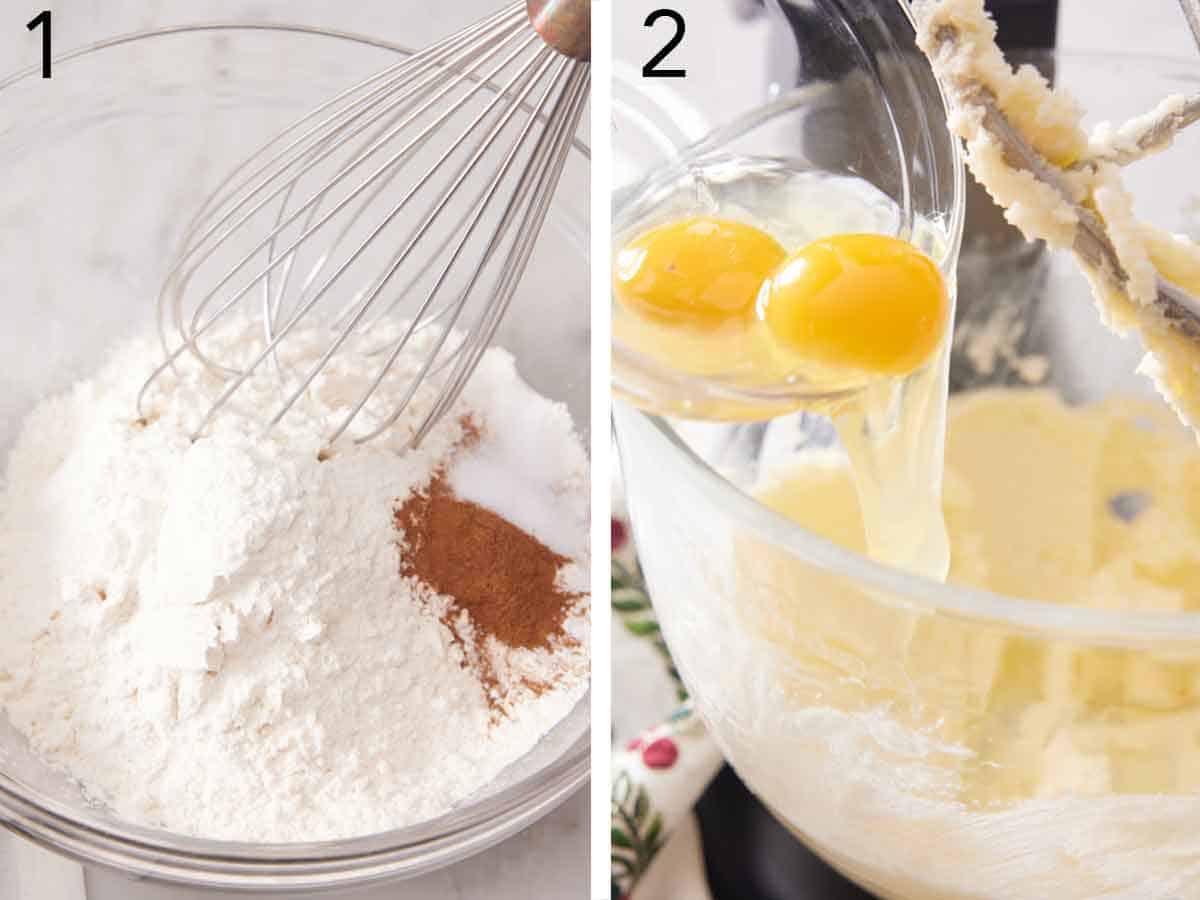
1. Preheat the oven to 375ºF. Combine the dry ingredients. In a medium bowl, whisk together the flour, baking soda, cream of tartar, cinnamon, and salt until everything looks evenly mixed.
2. Cream the butter and sugar. In a large bowl (or the bowl of your stand mixer fitted with the paddle attachment), beat the butter and sugar on medium speed until light and fluffy, which should take about 3 minutes. Add the eggs one at a time, beating well after each addition, then scrape down the sides of the bowl and mix in the vanilla.
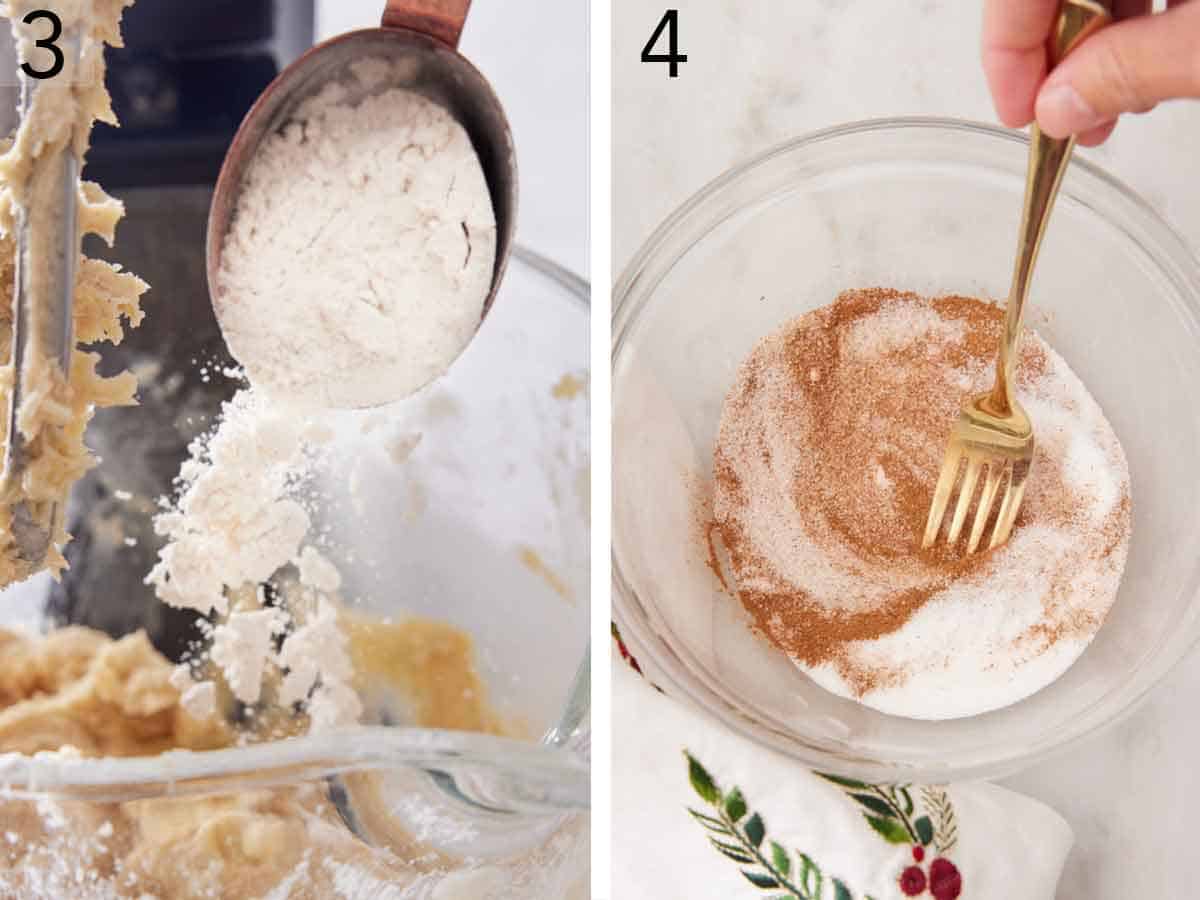
3. Bring the dough together. Turn the mixer to low and slowly add the dry ingredients to the wet mixture. Mix just until the flour disappears without overmixing, which can cause your cookies to become tough. Scrape down the bowl once more to make sure everything’s evenly combined.
4. Make the cinnamon sugar coating. In a small bowl, stir together the sugar and cinnamon until evenly blended.
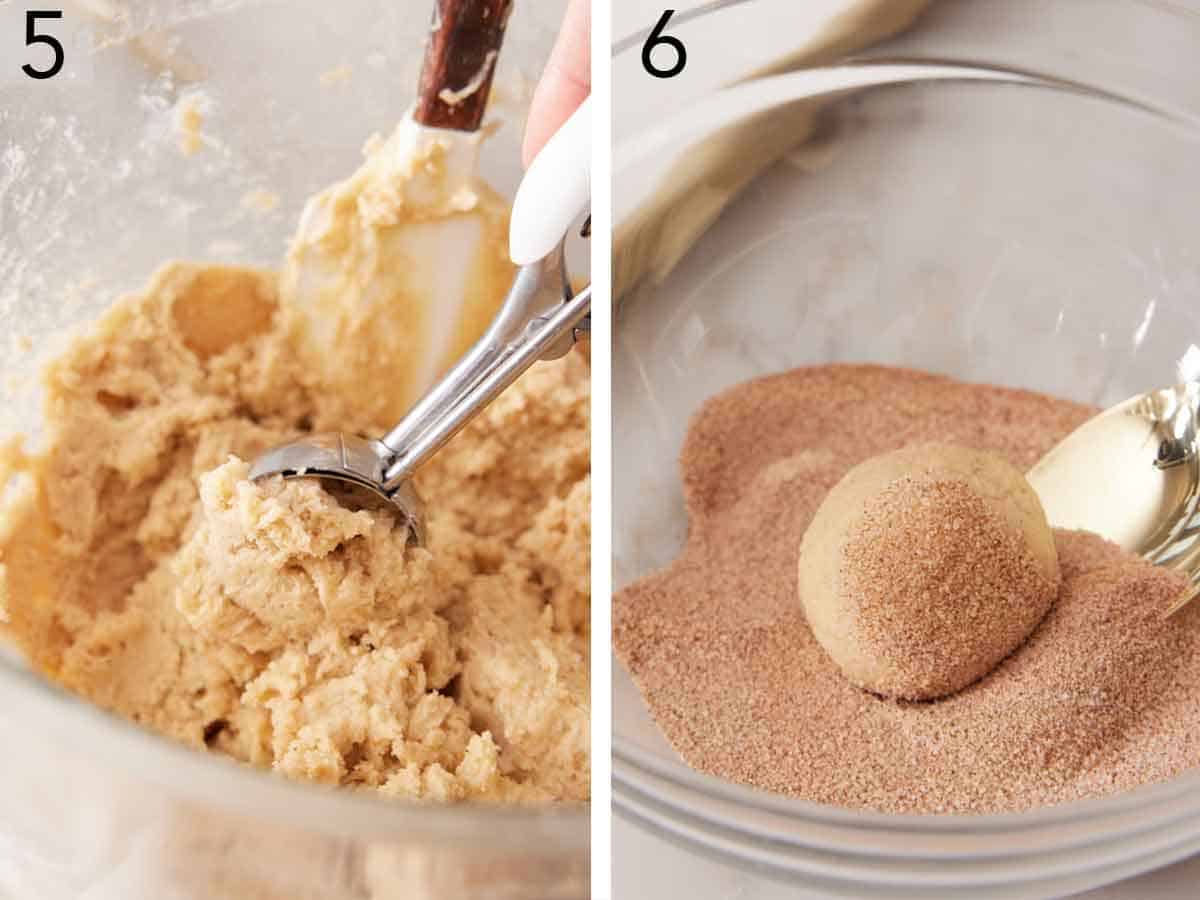
5. Scoop, roll, and coat. Use a cookie scoop or large spoon to portion out the dough into 1½-tablespoon cookie dough balls.
6. Roll each one between your palms until smooth, then coat generously in the cinnamon-sugar mixture. Place the dough balls on your prepared baking sheets about 2 inches apart. Bake for 9 to 10 minutes, or until the cookies are puffed and just beginning to wrinkle around the edges. Let them cool on the cookie sheet for about 5 minutes, then transfer to a wire rack to cool completely.
Snickerdoodle Recipe
Equipment
- Mixing Bowls
- Electric hand or stand mixer
- Baking Sheets
- Parchment paper or silicone baking mat
Ingredients
For the Cookies:
- 2¾ cups all-purpose flour (330g)
- 1 teaspoon baking soda
- 1 teaspoon cream of tartar
- 1 teaspoon ground cinnamon
- ¾ teaspoon salt
- 1 cup unsalted butter softened (226g)
- 1 cup granulated sugar (200g)
- 2 large eggs room temperature
- 2 teaspoons vanilla extract
For the Cinnamon-Sugar Coating:
- ⅓ cup granulated sugar (67g)
- 1½ teaspoons ground cinnamon
Instructions
- Preheat the oven to 375°F. Line two ungreased baking sheets with parchment paper.
- In a medium bowl, whisk together the flour, baking soda, cream of tartar, cinnamon, and salt.
- In a large mixing bowl or the bowl of a stand mixer fitted with a paddle attachment, beat the butter and sugar on medium speed until light and fluffy, about 3 minutes. Add the eggs one at a time beating well between each addition. Scrape down the bowl and mix in the vanilla.
- With the mixer on low speed, gradually add the flour mixture and beat just until combined. Scrape the sides down and mix in any remaining dry areas.
For the Cinnamon Sugar Coating:
- In a small bowl, mix sugar and cinnamon together.
- Use a cookie scoop or tablespoon to portion out the cookie dough into 1½ tablespoon-sized balls. Roll the dough in the palms of your hands to create smooth balls, then coat them in cinnamon sugar. Place the dough balls on the cookie sheets 2 inches apart.
- Bake one sheet at a time for 9 to 10 minutes or until puffed and just starting to wrinkle around the edges. Let the cookies cool on the baking sheet for 5 minutes then transfer to a wire rack to cool completely.
Notes
- How to manage the dough if it is too sticky to roll: The dough will be soft when rolling it between your palms, but it shouldn’t stick to your hands. If the dough is too sticky, you can chill it for 20 minutes and then scoop and roll it into balls. Or, scoop it directly into the cinnamon sugar, coat, and roll each one into a smooth ball.
- Storing the cookies: Store the baked cookies in an airtight container at room temperature for up to 5 days. Add a few large marshmallows to the container to keep them soft. Because they store well for several days, they make great Christmas cookies if you’re looking to fill a gift tin!
- Freezing the cookie dough: Scoop and roll the dough into balls, then coat them in cinnamon sugar. Place the dough balls on a lined baking sheet and freeze until solid. Then, transfer the frozen dough balls to a freezer container. They will keep for up to 3 months.
Nutrition
Have you tried this recipe? Tag me today!
Mention @preppykitchen and tag #preppykitchen!
Variations To Try
There are plenty of ways for you to make this snickerdoodle recipe your own, so have fun experimenting! Try folding mini chocolate chips or sprinkles into the dough for some texture. Or, swap out the cinnamon for another cozy choice like pumpkin pie spice. And don’t forget to check out two of my other favorite recipes for pumpkin snickerdoodles and snickerdoodle bars!
Freezing The Cookie Dough
Want the option to make cookies on demand? Follow the recipe up through the scooping and rolling in cinnamon sugar, then place on a plate or baking sheet (they can be close together). Freeze the balls until they are solid, then transfer to a zip-top freezer bag or freezer-safe container, removing as much air as possible to ward off freezer burn.
To bake from frozen, decrease the oven temperature to 350ºF and increase the baking time to 10-12 minutes. This will ensure the snickerdoodles have time to spread out enough while the center defrosts to achieve the traditional texture we’re after.
Frequently Asked Questions
A couple of things could be to blame. The most common culprit is oven temperature. If it’s too low (closer to 350°F), the cookies will spread more before the edges have a chance to set. That slower bake time means they’ll lose some of their signature puffiness and end up thinner and crispier. Use an oven thermometer to be sure!
Another likely reason is forgetting the cream of tartar. This key ingredient reacts with baking soda to create lift and those lovely air pockets that make snickerdoodles soft and chewy. Without it, the dough won’t rise properly, and the cookies can collapse into flat discs as they cool.
A reader asked me this question! If your cookies baked like little round balls and didn’t spread much at all, it’s most likely because there was too much flour in the dough. Even a couple of extra tablespoons can make a big difference! When there’s excess flour, it absorbs more moisture and fat, which dries out the dough just enough to keep it from relaxing and spreading in the oven. (This is why I love kitchen scales. You don’t have to worry about measuring incorrectly!)
To keep your snickerdoodles soft and chewy even days after baking, store them in an airtight container as soon as they’ve fully cooled. For an extra little baker’s trick, toss a few marshmallows into the container before sealing it up. The cookies will absorb a bit of moisture from the marshmallows, keeping them tender and pillowy instead of hard or crumbly.
More Cookie Recipes To Try
Try one of my other popular cookie recipes next!
My soft and chewy oatmeal raisin cookies are so easy to make. Plus, you can add other mix-ins like walnuts or chocolate chips!
These crispy-edged, chewy-centered almond butter cookies are similar to the classic peanut butter cookie but use creamy almond butter instead! This no-chill cookie dough can be scooped and baked immediately, so you don’t have to wait for freshly baked cookies.
A classic flavor combination of chocolate and peppermint, Andes mint cookies have a chocolatey cookie dough packed with chunks of creamy Andes creme de menthe thins. They are excellent for holidays or anytime you want a special treat.
No need to heat up your oven with these air fryer chocolate chip cookies! Make the dough and bake off just a few at a time in your air fryer as your cravings strike.
These tender butter cookies have been super popular on Preppy Kitchen for years! The slice-and-bake cookie dough freezes great, too, so you can have it on hand to bake anytime.
If you’ve tried this Snickerdoodle recipe, then don’t forget to rate it and let me know how you got on in the comments below. I love hearing from you!