This post may contain affiliate links. Please read our disclosure policy.
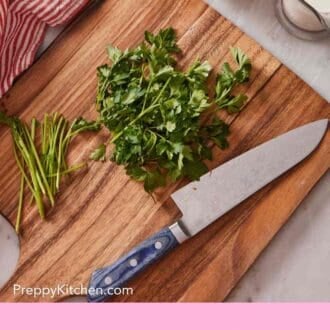
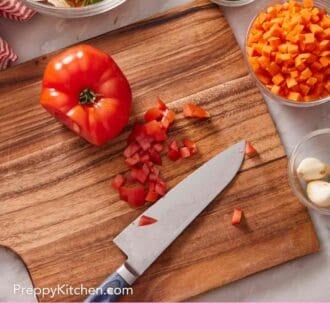
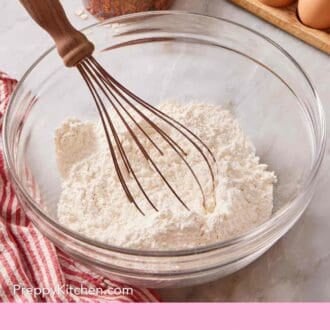
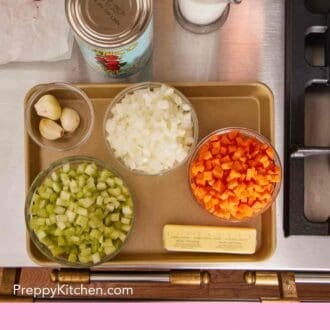
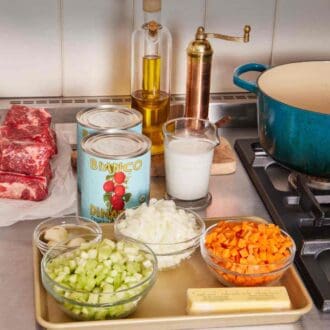
Mise en place—French for “everything in its place”—is the prep discipline that separates a calm cooking session from a frantic one. In this lesson, we discuss exactly what it is, where it came from, the version that actually works in a home kitchen (not a restaurant one), and the specific failures it solves across common recipes.
I made my chicken pot pie one winter, and I forgot to chop the thyme until I needed it. The diced vegetables were softening too much, the flour I added to thicken the sauce was sticking to the pan, and I was fumbling for the thyme bundle with one hand while trying to stir and keep everything in the pan from burning. By the time the thyme was actually minced and going in, the flour had taken on a dark golden color, and the kitchen smelled like I’d lost a small argument with the stove. One ingredient with one crucial timing mistake.
The next time I made it, I chopped the thyme before I turned the heat on. Total cook time went down by maybe a few minutes. And my blood pressure went down considerably more.
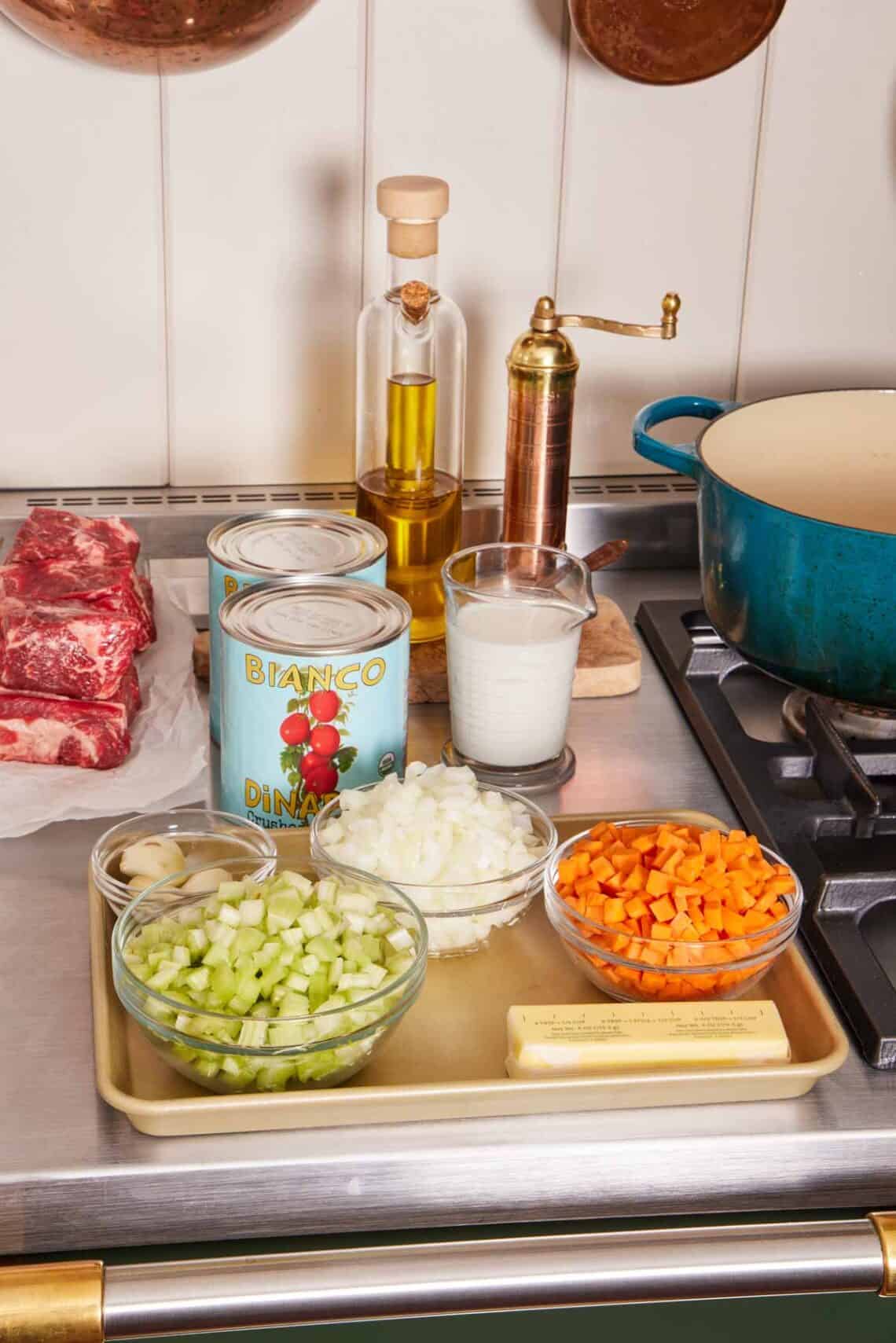
That’s the moment mise en place fixes. It’s a French kitchen phrase (pronounced “meez ahn plahss”) you’ve probably heard cooking shows throw around, and it translates as “everything in its place.” In professional kitchens, it means measuring and prepping every component of every dish before service starts. At home, it means the same thing on a smaller scale: chop the onions, mince the garlic, measure the spices, pre-portion the liquids, and line everything up before you turn on the stove. Then the actual cooking is calm, fast, and predictable.
This guide covers what mise en place actually is (and a few things it isn’t), where it came from, the version that works in a home kitchen, the equipment that makes it easier, and, most importantly, the specific failure points in recipes it eliminates. The abstract version of “be more organized in the kitchen” doesn’t change anyone’s behavior. My version—where you see how mise en place is the difference between the bechamel sauce for mac and cheese being lumpy and being perfectly creamy, between Devil’s Food cake that’s moist and fluffy versus dense and sunken—is the version that sticks.
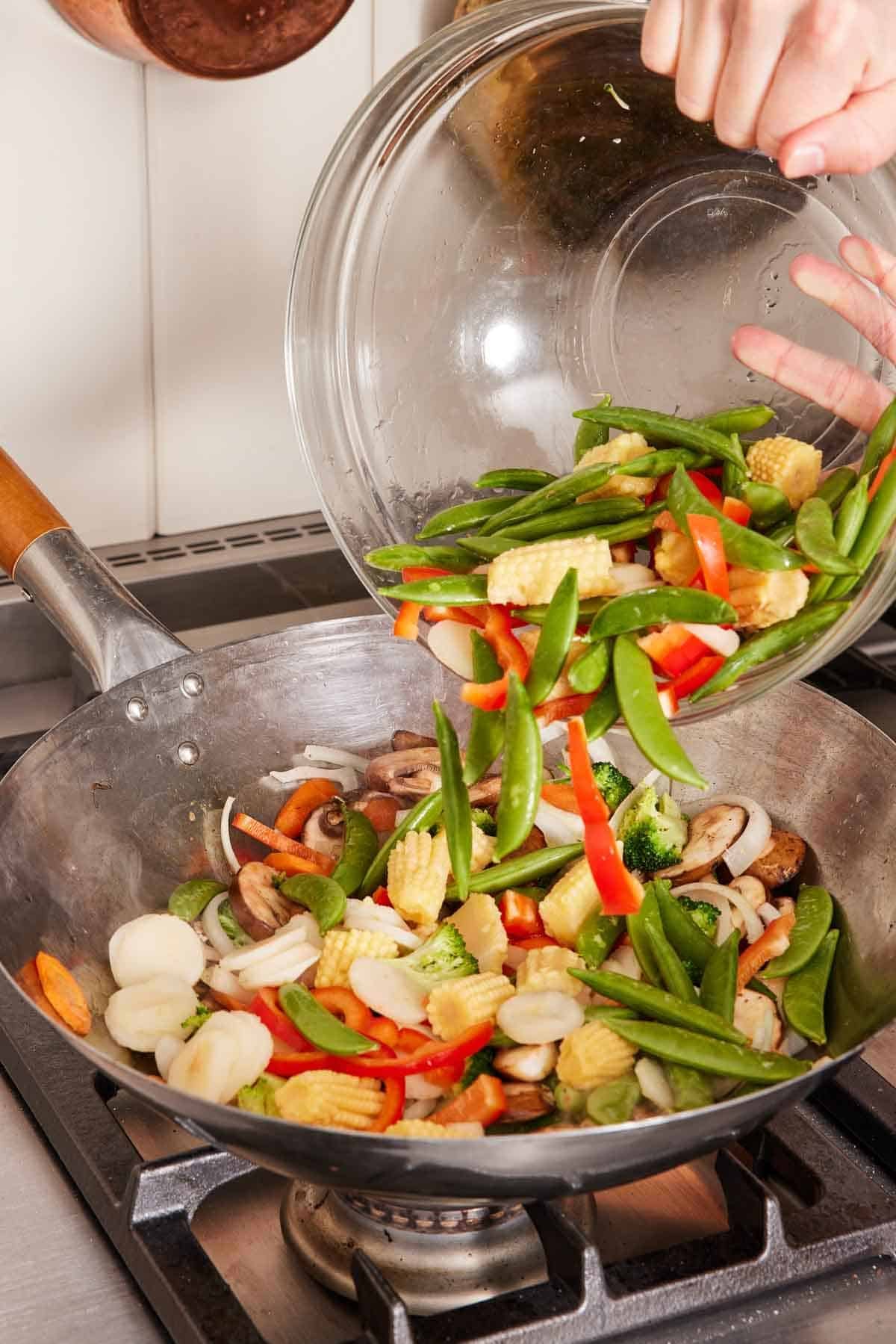
“I always thought mise en place was a chef thing for fancy restaurants. After trying it on a weeknight, making stir-fry, it changed my whole approach to cooking. I wasn’t frantically searching for ingredients mid-cook. It was calmer, and the food was better.”
Daniel
What Mise En Place Actually Means
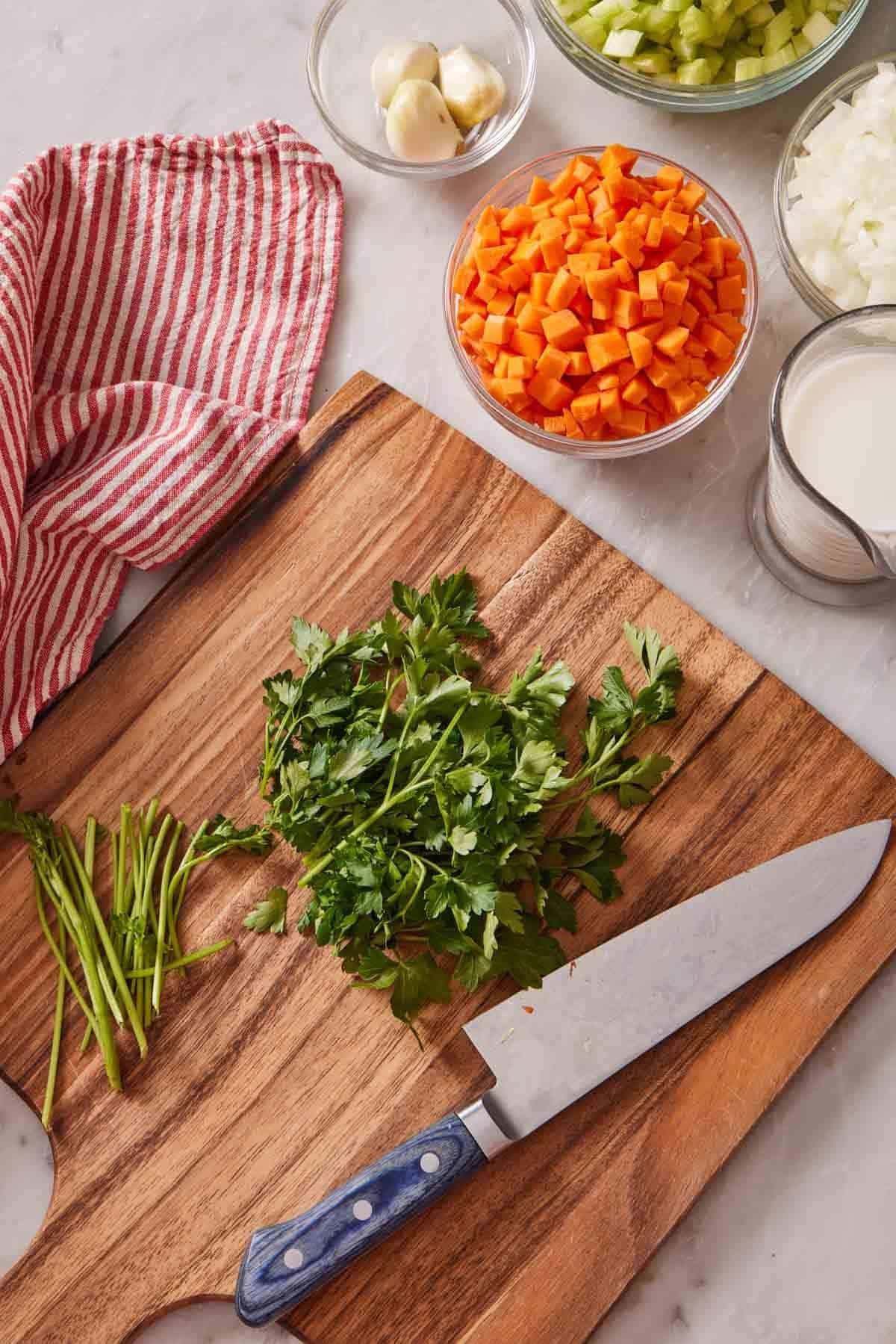
Mise en place—pronounced “meez ahn plahss”— is the practice of reading a recipe through, prepping every ingredient into its measured, ready form, and laying everything out in the order you’ll use it, all before you turn on any heat. It’s not a philosophy. It’s not a chef-only thing. It’s a practical sequence with five main principles: plan, gather, prep, organize, then cook.
What makes it work is that it separates two activities that home cooks usually try to do simultaneously: prep and execution. This lets you give each one your full attention. Chopping while a pan is on the heat is the source of most “I burnt this” and “I forgot that” moments in home cooking. When the chopping is already done, the cooking becomes a series of single-decision steps: heat the pan, oil in, onions in, stir, garlic in, stir, deglaze. Each step has one ingredient or stage ready in a bowl waiting to go in. The recipe stops fighting you.
So remember this simple version: read the recipe, pull everything out, prep it, line it up, then start cooking.
Where The Phrase Came From
The phrase comes from late-19th-century French restaurant kitchens, specifically from the brigade de cuisine system formalized by Auguste Escoffier, the chef who modernized French restaurant cooking from a chaotic free-for-all into something that resembled a military operation. Escoffier had been a soldier before he was a chef, and he brought military hierarchy and prep discipline into the kitchen. Every station had a defined role, every cook had a defined task, and every cook’s station was set up with all the components needed for service already prepped and laid out. That setup was the mise en place. The phrase has been in continuous professional use for roughly 140 years (though it is often referred to simply as “mise” for shorthand).
The modern version most home cooks have heard comes from Anthony Bourdain’s Kitchen Confidential (2000), which gave mise en place a kind of pop-culture sacred status. Bourdain wrote that “mise-en-place is the religion of all good line cooks” and described a line cook’s station as an extension of their nervous system. He’s right, but because of its restaurant background, a lot of home cooks decide mise en place is overkill for weeknight cooking. It isn’t! The home-kitchen version is much simpler than the line-cook version, but the payoff is just as real—fewer mistakes, calmer cooking, better food.
The Home-Kitchen Version Of Mise En Place
The version Escoffier ran in a Ritz hotel kitchen is more rigorous than anything a home cook needs. Line cooks pre-portion ingredients to gram-level accuracy in identical hotel pans, organized identically across stations, ready for hundreds of plates of the same dish in a single service. You don’t need that. You’re likely cooking one or two dishes for just a few people.
The home version is looser, and that’s the point. A few small bowls of pre-chopped vegetables and pre-measured ingredients, a measuring cup of stock or wine, the spice quantities pre-measured into a ramekin, the cooking tools (spatula, tongs, slotted spoon, salt cellar, etc.) positioned within arm’s reach of the burner. That’s enough for almost any home recipe. You can do all of the prep in the same amount of time it would take to do a sloppy job mid-cook—except now the mid-cook chaos has been replaced with a short prep window before you turn the heat on and a calm cooking experience.
Simply put, mise en place at home is mostly about finishing your prep before your heat starts, plus a little bit of organization.
Here’s the failure pattern I see most often when people try this for the first time and don’t get the payoff they expected: they prep three or four things, leave two or three things unprepped, start cooking, and then get caught short on the unprepped ingredients, and end up in exactly the same place they would have been without any mise. The discipline only works if you prep everything before the heat goes on. Half-mise is just regular cooking with extra dishes.
Why Mise En Place Changes Home Cooking
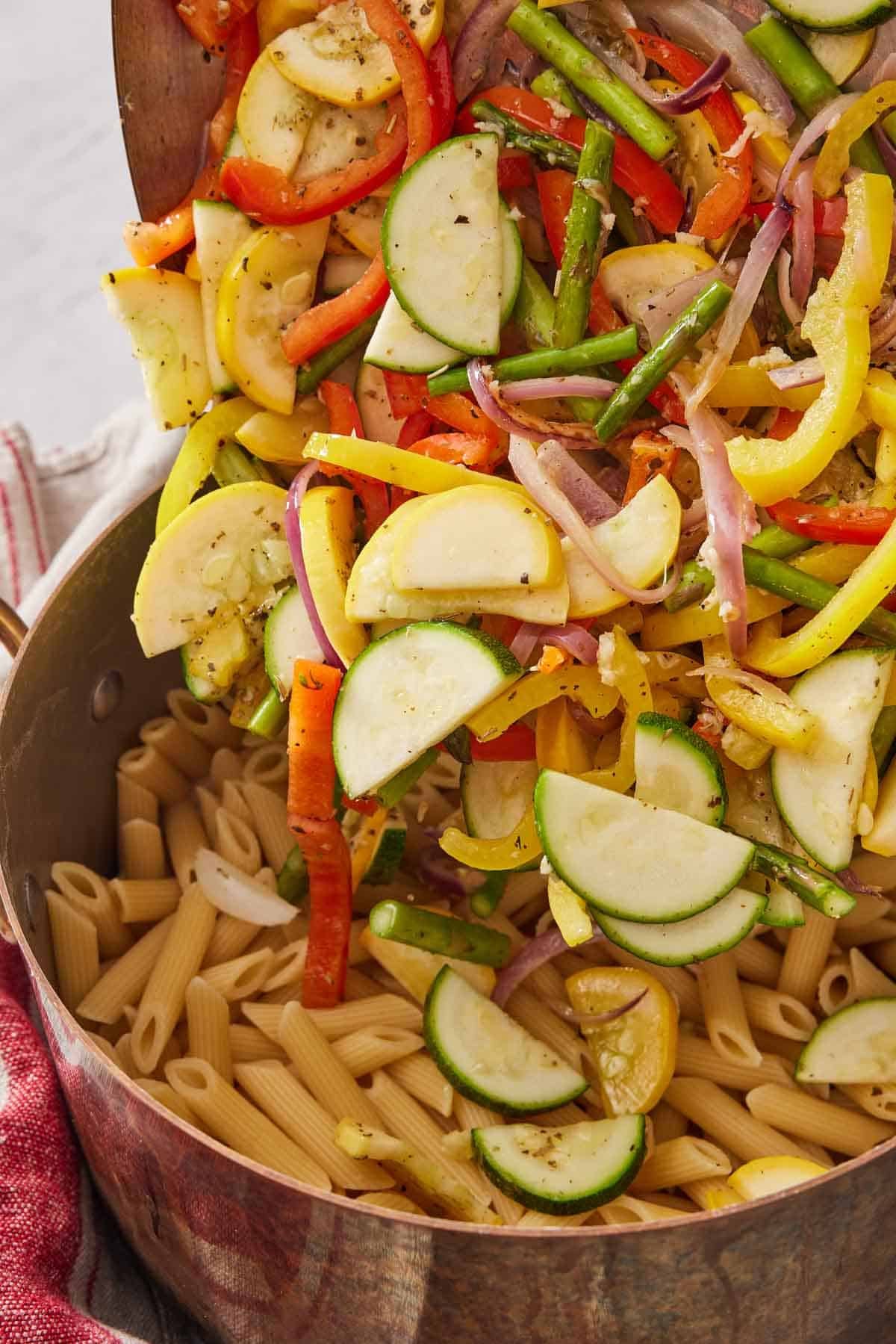
Most home cooks operate in what I’d call reactive mode: open the recipe, start step one, realize you need a chopped onion (chop the onion), realize you need the pan hot (heat the pan), realize you forgot the garlic (mince the garlic), realize the onions are now burning (swear under your breath), and so on. The recipe gets done, but every step feels like a small panic.
Mise en place flips this to anticipatory mode: every ingredient is already prepped, every tool is on the counter, every step is a single thing instead of three things at once. The pan can foam its butter calmly while you watch it, because the chopped onions are already in a small bowl waiting to go in.
The shift sounds small, but in practice, it changes everything:
- Fewer cooking mistakes. The biggest source of “burnt this,” “forgot that,” and “the timing went wrong” in home cooking is splitting attention between prep and execution. Mise en place separates them entirely.
- Better-tasting food. Onions that brown at exactly the right moment, garlic that cooks for just enough time that it doesn’t burn, herbs added at the precise step the recipe calls for—these all come from being able to focus on cooking the food rather than on chopping while you cook it.
- Less stress. I believe cooking can genuinely be enjoyable (even if a necessity). Most of what makes it stressful is feeling rushed and out of control. Mise en place removes that panicked feeling.
- Faster total time. This sounds counterintuitive — you’re adding a prep step. But chopping calmly while reading the recipe in advance is faster than chopping reactively while something burns. In my experience, a recipe that takes 45 minutes “freestyle” takes 35 minutes with proper mise en place. (And nothing overcooks.)
- Recipes you’ve never made before become much less intimidating. When all the prep is done before you start, executing an unfamiliar recipe is just following clear steps with the ingredients already in your hand.
This isn’t a fancy chef thing. Instead, it’s the discipline that makes weeknight cooking sustainable and enjoyable.
How To Mise En Place At Home (Step By Step)
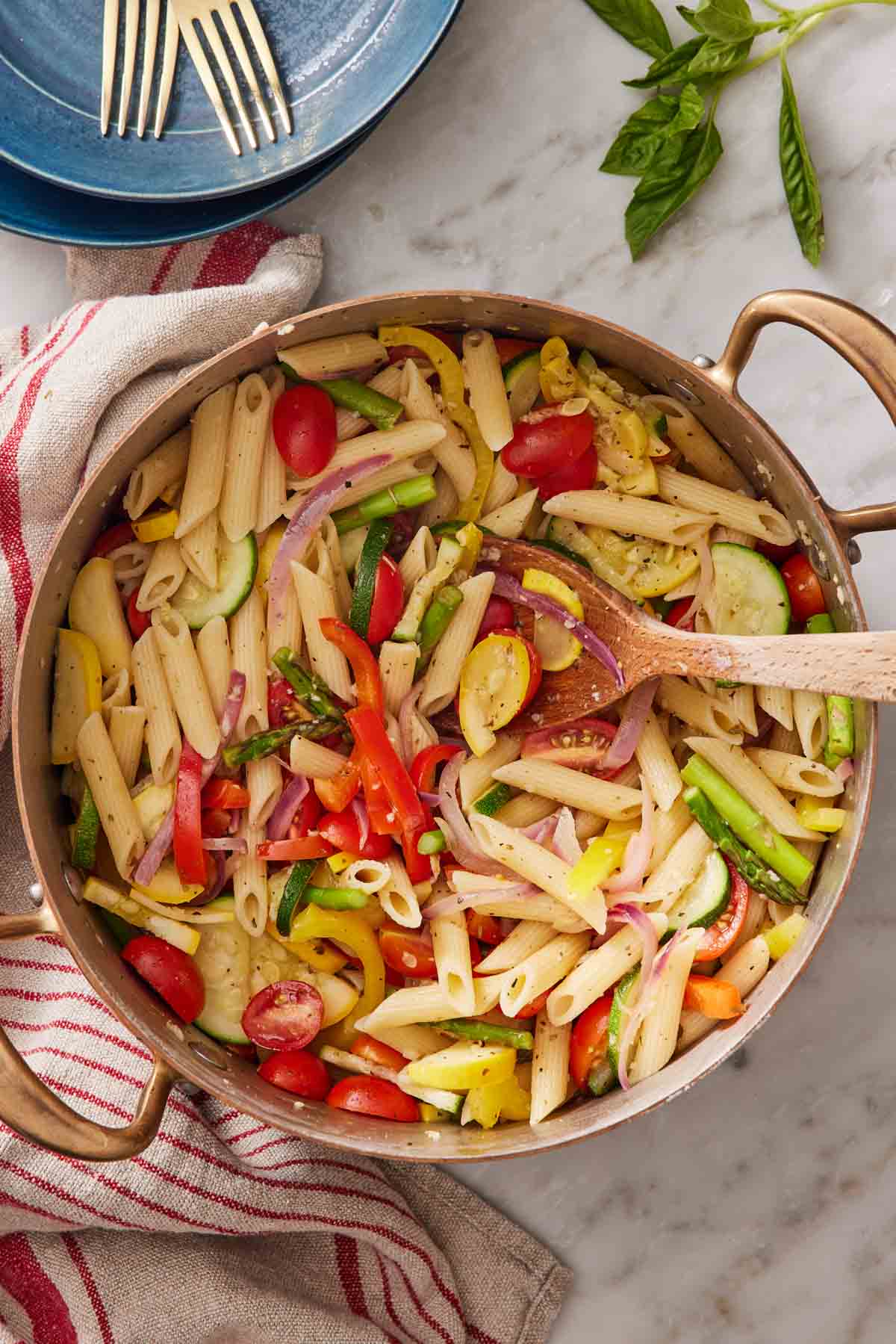
For a typical weeknight recipe with 8 to 12 ingredients, the full mise en place takes about 10-20 minutes. For a more complex weekend recipe (lasagna, a multi-component braise), 20 to 30 minutes. These are more of a sequence than a rigid set of rules. Plan, gather, prep, organize, then cook (cleaning along the way). Once the rhythm becomes second nature, you’ll do it without thinking.
1. Read the recipe twice. Before you do anything else, read the recipe completely from start to finish. Not just the ingredient list, the actual method too. You’re looking for the rhythm of the recipe: which steps happen in parallel, which require sustained attention, which need ingredients added at specific moments, and which steps have long cooking periods. Five minutes of reading saves twenty minutes of reactive time later.
2. Pull everything out. Pull every ingredient out of the fridge and pantry, and every tool out of the drawers and cabinets that you need. Onions, garlic, oil, spices, salt, the pan you’ll cook in, the spatula, the measuring spoons, and the cutting board. Put it all on the counter. If anything is missing, find out now, before you’ve already started cooking. Then, you can substitute or pivot to a different recipe if needed, with no harm done.
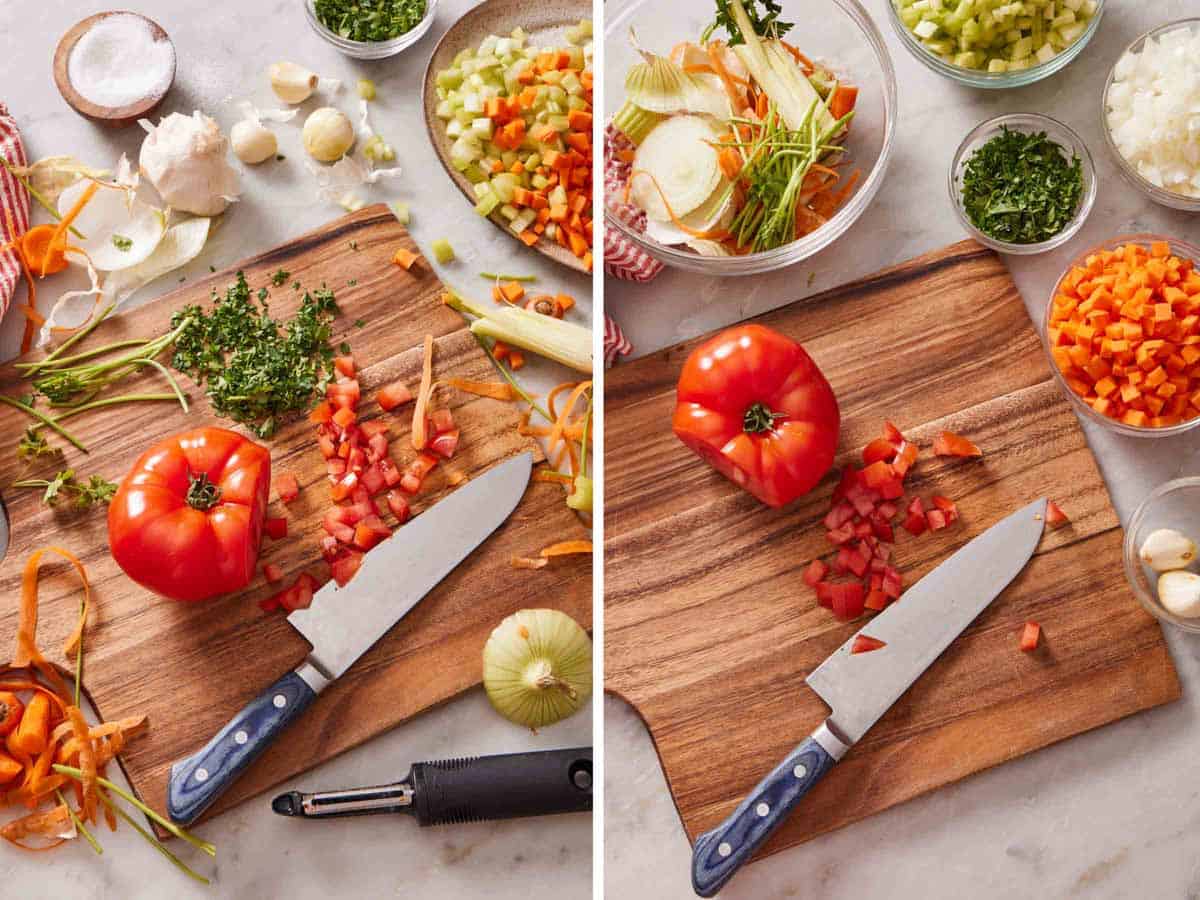
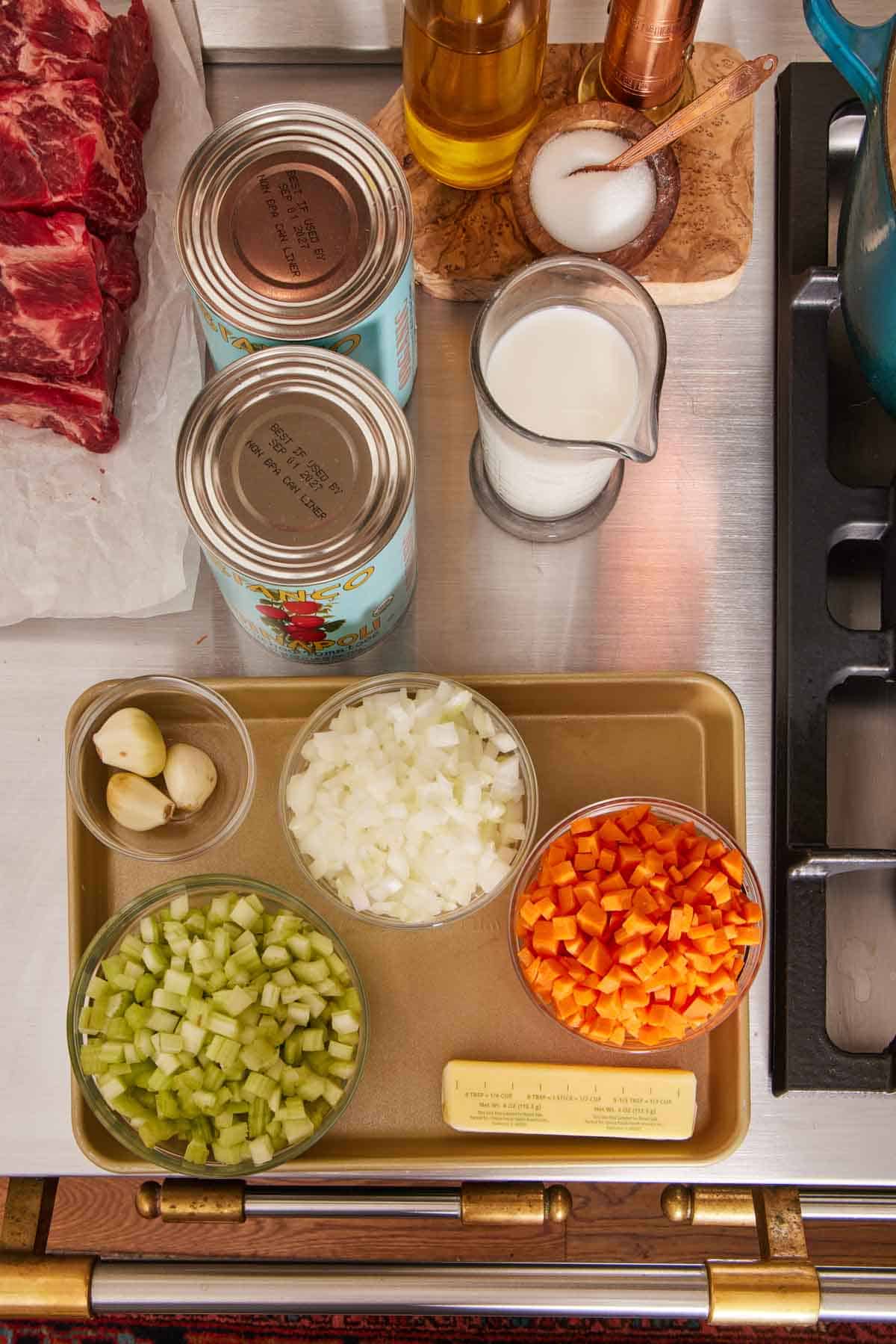
3. Do all the chopping first. Anything the recipe calls for needs to be ready in the form the recipe calls for it. If the recipe says “1 cup diced tomatoes,” that tomato should be chopped and measured, not sitting on your cutting board waiting to be prepped mid-cook. If there’s a mix of ingredients like a mirepoix (onions, carrots, celery) that go into the pan at the same time, you can combine them into one bowl to minimize clean up.
4. Pre-measure all liquids and dry ingredients. Stock, wine, vinegar, soy sauce, cream, oil—into a measuring cup or small bowl. Flour, sugar, spices—into ramekins. Don’t try to measure mid-cook. (Am I guilty of doing that? Yes. Is it always stressful? Also, yes.) The 30 seconds it takes to find the soy sauce bottle and measure the amount is the 30 seconds you don’t have when the garlic is one breath away from burning.
5. Arrange in cooking order, closest to the stove. The first ingredient in the pan sits closest to the burner. The last ingredient sits farthest. Group related items if it makes sense (all the spices together, all the liquids together) so you’re not hunting mid-cook.
6. Position your tools. Have a spatula, tongs, slotted spoon, ladle, etc., all within arm’s reach of the pan. Salt and pepper right next to it. A folded clean kitchen towel within reach. (These side towels allow you to quickly grab a hot pan handle without burning yourself.)
7. Now turn on the heat. From this point, cooking is calm and sequential. Each step has each ingredient already prepped, already measured, sitting in a small bowl waiting to go in.
The mental shift: the moment you finish step 7 above, the cooking is now the easy part. All the decision-making has happened. All the tedious work has happened. That shift—from “I’m cooking and prepping simultaneously” to “I prepped, now I’m only cooking”—is the entire game changer.
Keep food safety in mind when chopping. Do vegetables and herbs first, raw proteins second, and never the reverse. This is partly an efficiency thing (you want to wash the board only once) and partly a food-safety thing. The USDA recommends using one cutting board for fresh produce and a separate board for raw meat, poultry, and seafood, or thoroughly washing the board between uses to prevent bacteria from contaminating other food.
Clean as you go. This is the principle most home cooks skip, and it matters. Wipe the cutting board between vegetables and proteins. Put away the spice jars, olive oil, etc., after you’ve measured them. Place the prep bowls in the dishwasher while the soup simmers. A clean kitchen is the difference between a meal that ends with twenty minutes of dishes and one that ends with five.
The Failure Points Mise En Place Fixes (Recipe By Recipe)
Most explanations of mise en place stay at the higher level—be more organized, prep ahead, and your cooking will improve. That’s all true, but what does it really do? Here are some specific ways I see readers fail most often, recipe by recipe, and how mise en place fixes that.
Bechamel sauce without mise: the sauce is clumpy. If you don’t warm the milk before you make the roux, cold milk will cause the hot roux to clump together, and your sauce will be very lumpy and too thin. There’s no fix for it at that point. Mise-en-place fix: warm the milk before you melt the butter, so it’s ready to go. If you are using the bechamel sauce as a base for making mac and cheese, be sure to shred the cheese before you start the sauce. If you make the bechamel and then have it sit while you hand-grate a block of cheese, it can break or burn on the bottom.
Shrimp Scampi without mise: shrimp overcooks. This is a simple dish, and timing is everything. Once the shrimp is in the skillet, it cooks in about 4 minutes. If you are searching for a measuring cup to measure the wine, cubing butter, or chopping the parsley while your shrimp sits in the skillet, you will overcook the shrimp, turning it firm and rubbery. Mise-en-place fix: prep all of the ingredients at the start so you can easily reach for the measured amount of wine, sprinkle in the pepper flakes, stir in the right amount of butter, and finish with chopped parsley all within a few minutes for perfectly cooked shrimp.
Chicken alfredo without mise: pasta water disappears. The cream sauce needs pasta water added in two or three small additions to loosen it. If you cook the pasta and then immediately drain it down the sink because you forgot you needed the water, you’ve thrown away the one ingredient that thickens a pan sauce into a glossy coating. Mise-en-place fix: place a one-cup measure next to the colander, so you don’t forget to use it to dip out pasta water before the pot gets drained. A simple prep step that saves the dish!
Lasagna without mise: pasta is ready before the sauce and filling. Lasagna is a three-component build (meat sauce, cheese filling, pasta sheets) plus assembly. The trap is that the noodles cook fairly fast, and many people cook, drain, and let them sit because they don’t have their sauce, cheeses, and casserole dish ready to go for assembly. This causes the noodles to stick together and tear apart. Mise-en-place fix: prep the meat sauce and the cheese filling first, and set up your assembly station. Then cook your pasta so you are immediately ready to go when it’s done.
Devil’s food cake without mise: dense texture or sunken cake. The ingredients for the cake batter need to be at specific temperatures for the cake batter to mix properly—soften butter to whip in air, room temperature eggs to mix in smoothly, very hot coffee to quickly hydrate the flour and bloom the cocoa. If you have cold butter and eggs, you end up with chunks that bake up as holes in the cake or cake batter that doesn’t rise properly. If you have your cake batter mixed but have it sit while you make the coffee, the baking soda will react in the bowl and not in the oven, and the cakes will turn out dense or sink in the center. Mise-en-place fix: Set out ingredients ahead of time and brew the coffee right before you start the batter so it’s hot and ready to go.
Chili, tiramisu, quiche, chicken pot pie, pretty much every multi-component recipe. The pattern is always the same—there’s some specific point in the cooking where, without mise, you get caught flat-footed waiting on something you should have prepped earlier, and the dish suffers in some specific way. The point of mise en place isn’t that any one of these failures is catastrophic. It’s that they’re cumulative, and across a year of cooking, they add up to dozens of meals that came out slightly worse than they should have.
Equipment That Helps
You don’t need anything special. Bowls from your cabinet work fine. But a few small upgrades make this much easier:
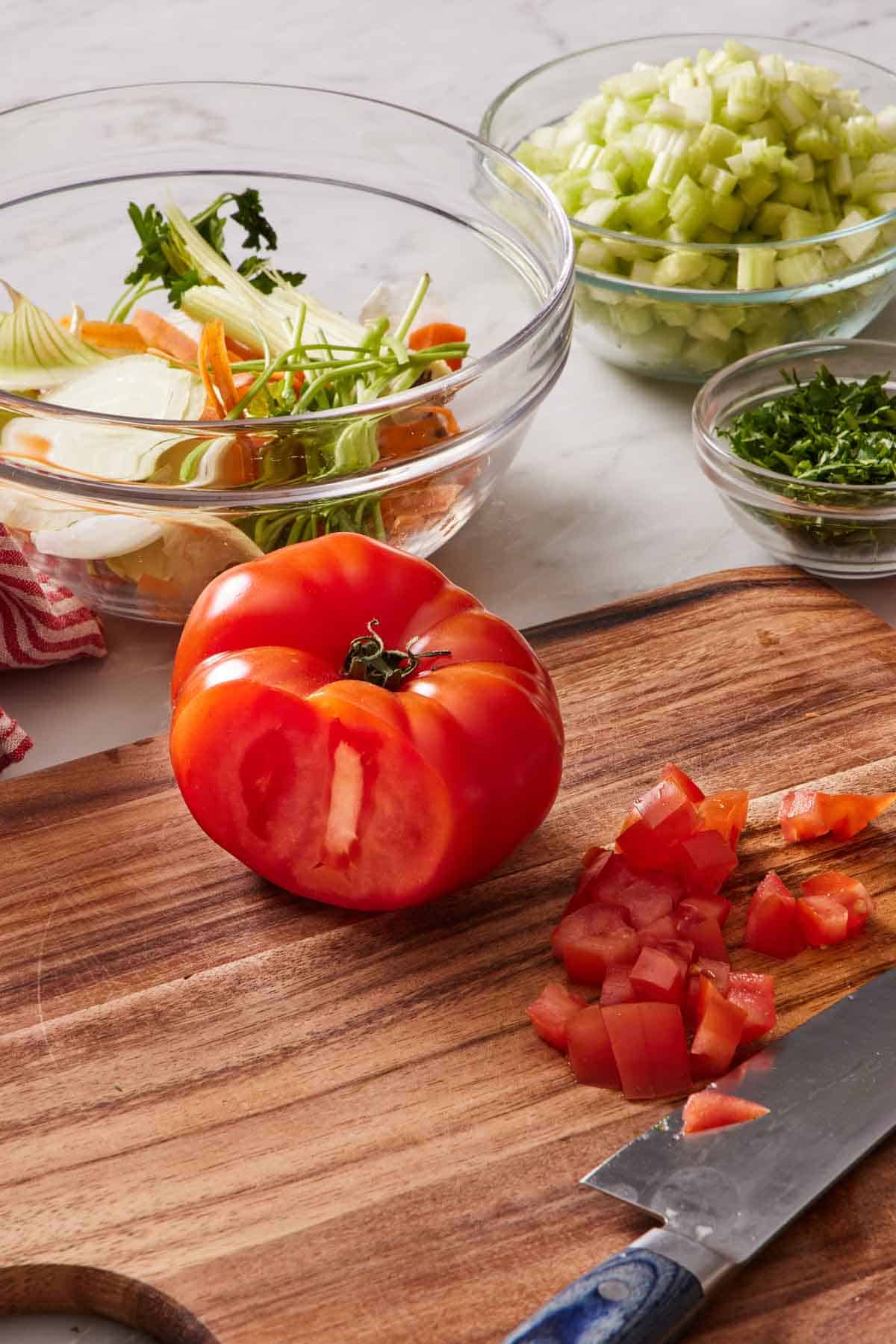
- Small prep bowls. A nesting set of glass or stainless steel bowls in 4 oz, 6 oz, and 8 oz is the best single upgrade you can make. They are cheap, dishwasher-safe, and stack out of the way. I’d buy these before I bought another single-purpose kitchen gadget!
- Pinch bowls and ramekins. Small (2 oz or less) for measured spices, salt, and finishing herbs. Coffee cups work, but stackable pinch bowls are helpful. A nice set can even live on the counter.
- A trash bowl. You don’t need a specific bowl; just set out a medium mixing bowl when you start prep to hold your scraps. Onion skins, tomato tops, carrot peels—if all of these stay on your cutting board, you have less room for chopping, and the discarded pieces can accidentally work their way into your dish.
- A bench scraper. Not just for baking. The fastest way to move chopped vegetables from the cutting board into a bowl is one swipe with a bench scraper. Faster and cleaner than scraping with the side of a knife. (Plus, you can dull your knife edge doing that!)
- A large cutting board. At least 16×12 inches. A bigger board means you can stage prepped vegetables on one side of the board while you’re still chopping on the other. I love a large Boos block.
- A clear workspace. This isn’t equipment, it’s a habit, but it matters more than any of the above. Mise en place needs a clear stretch of counter to set up on. A few minutes spent clearing the counter or emptying the dish rack before you start cooking is repaid many times over.
What you don’t need: lidded “mise containers” sold specifically for this purpose. Useful for prepping the night before a dinner party, but for everyday cooking, you’re going to dump every bowl into the pan within 20 minutes anyway, so you don’t need lids.
When You Can Skip It
Recipes with two or three ingredients don’t need a formal mise. Scrambled eggs. A grilled cheese. Chocolate ganache. The discipline is for multi-step, multi-ingredient recipes where timing and sequencing matter, which is most of dinner and baking, but not all of it.
If you’re cooking the same simple thing you’ve cooked a hundred times—your own go-to omelet, a basic pasta with butter and parmesan, oatmeal—the prep is in your head already, and mise en place may not change anything. The discipline becomes useful again the moment the recipe has more than five ingredients or more than three steps, and especially useful when you’re cooking a recipe you haven’t made before.
The honest answer to “Is mise en place necessary at home?” is: no, it isn’t necessary, but it’s the biggest improvement you can make to your cooking that costs no money and only takes a little bit of time per recipe. Most home cooks who try it for two weeks don’t go back.
Should I Mise en Place For Baking?
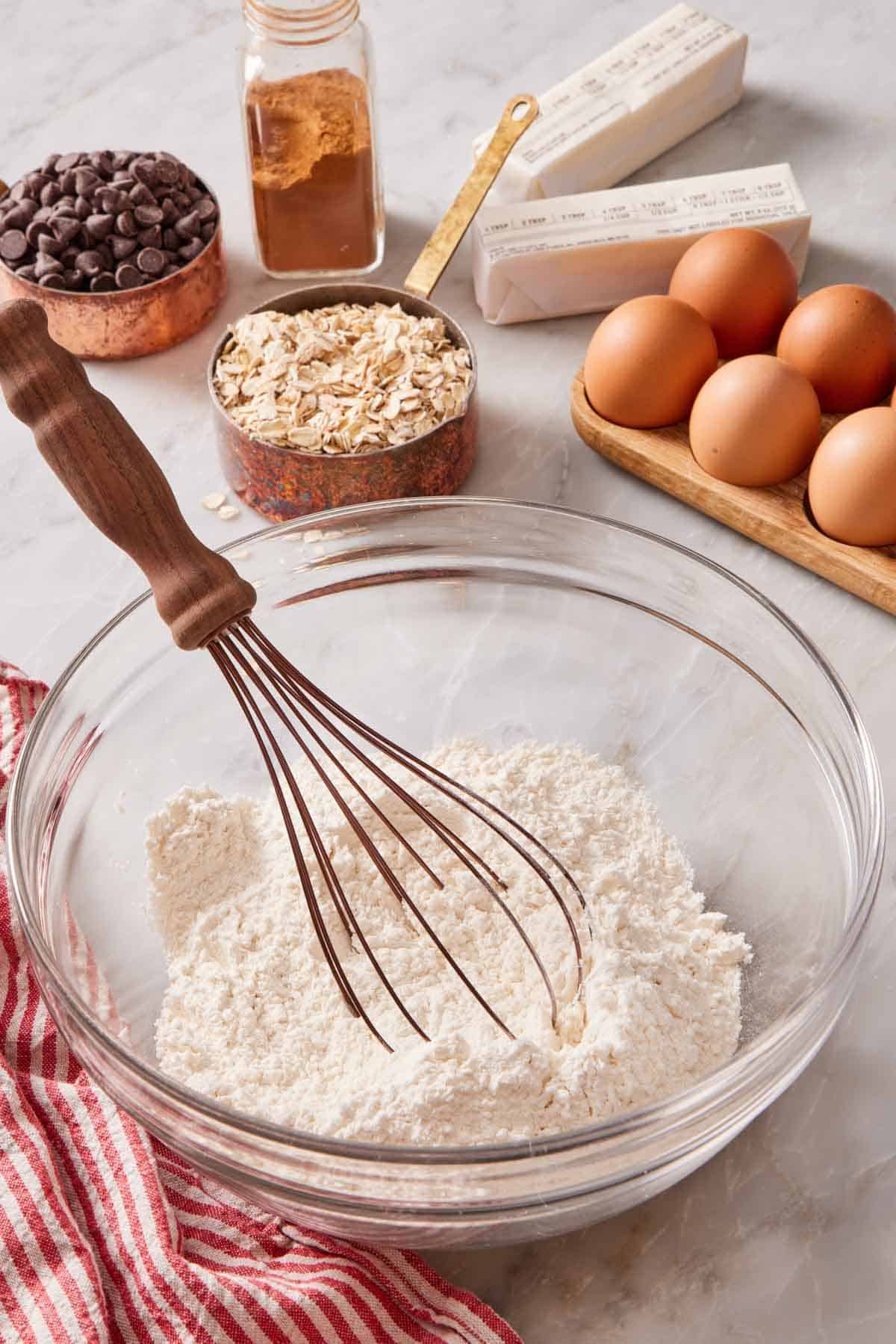
Yes! The same principles apply to baking as they do to savory cooking. You need to plan to set certain ingredients out ahead of time so they are at the right temperature. Liquids need to be measured so they are added at just the right time in the recipe. Pans need to be greased or lined. Fruits have to be washed and chopped.
Reading through the recipe lets you know what you need to prep, but also how ingredients are combined throughout the steps. I will group ingredients together in bowls based on how they are incorporated into the recipe. Like with dry ingredients—if you are whisking flour, baking soda, and salt together in a bowl, you don’t need to measure them out into separate bowls just to then combine them and set that bowl aside. Mix them together in one bowl, and set that aside as your dry-ingredient mise.
FAQs
Mise en place is a French phrase that literally translates to “everything in its place.” In cooking, it refers to the practice of measuring, chopping, and organizing every ingredient and tool before you begin cooking, so the actual cooking process is calm and uninterrupted.
Meez ahn plahss. The “mise” rhymes with “fleece.” The “en” is a soft nasal vowel similar to the “on” in “on the table.” And “place” rhymes with “hass” (not “place” as in English). The full phrase runs together quickly, almost as one word.
Yes, especially for any recipe with more than five ingredients or three steps. The 10 minutes of upfront prep is paid back in faster, calmer cooking and fewer mid-cook mistakes. A typical 45-minute recipe done reactively often comes in around 35 minutes with proper mise en place. The biggest win? The experience changes from frantic to enjoyable.
Yes. This is a common technique I use for dinner parties, big-batch weekend cooking, or weeknight meals you want to assemble fast. Chop, measure, and pre-portion ingredients the night before, store them in lidded containers in the fridge, and you can start cooking the next day with everything already done. Acid-sensitive ingredients (avocado, sliced apples) and certain herbs (basil, parsley) brown or wilt overnight, so prep those just before cooking.
Mise en place is per-recipe prep done just before cooking—chopping, measuring, organizing for one specific dish. Meal prep is cooking a specific dish, either complete meals or batched components, ahead of time and storing them ready to eat.
More Tutorials To Try
Foundational kitchen techniques that pair well with this lesson:
- Academy: How To Measure Ingredients Correctly — accurate measuring is half of good mise en place. This lesson covers flour, butter, sugar, liquids, and the kitchen scale technique.
- Academy: How To Activate Yeast — a baking-specific application of “prep before you commit” from the same school of thinking.
- Academy: How To Knead Dough — and other foundational baking techniques in the Baking Academy.
- Academy: How Long To Chill Cookie Dough — a small step with a big payoff in the flavor and texture of baked cookies.
If you’ve read this Mise en Place Academy lesson, then don’t forget to rate it and let me know how you got on in the comments below. I love hearing from you!