This post may contain affiliate links. Please read our disclosure policy.
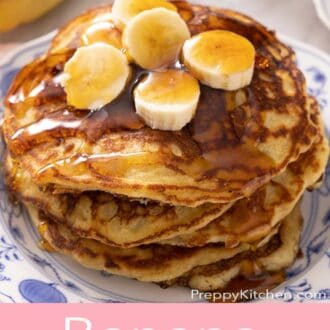
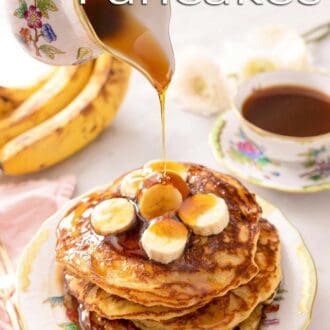
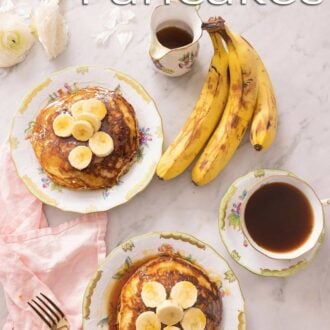
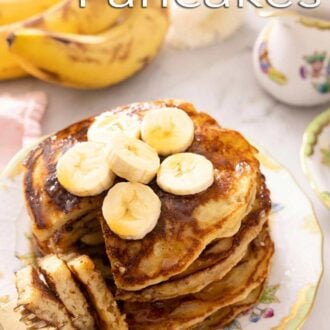
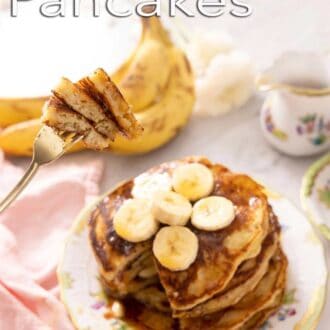
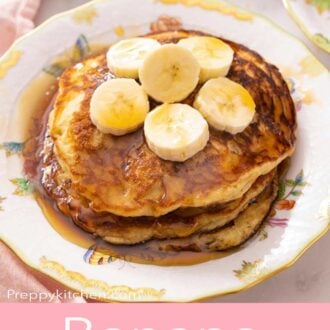
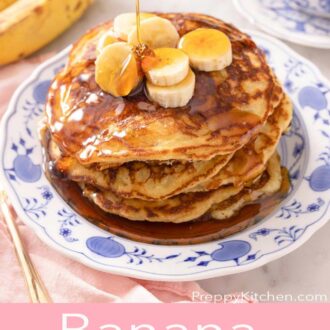
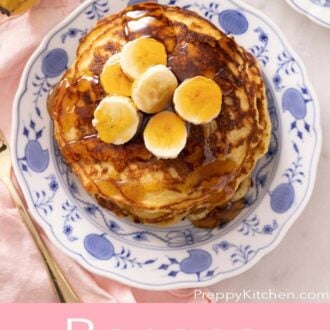
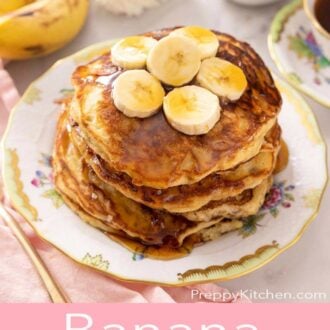
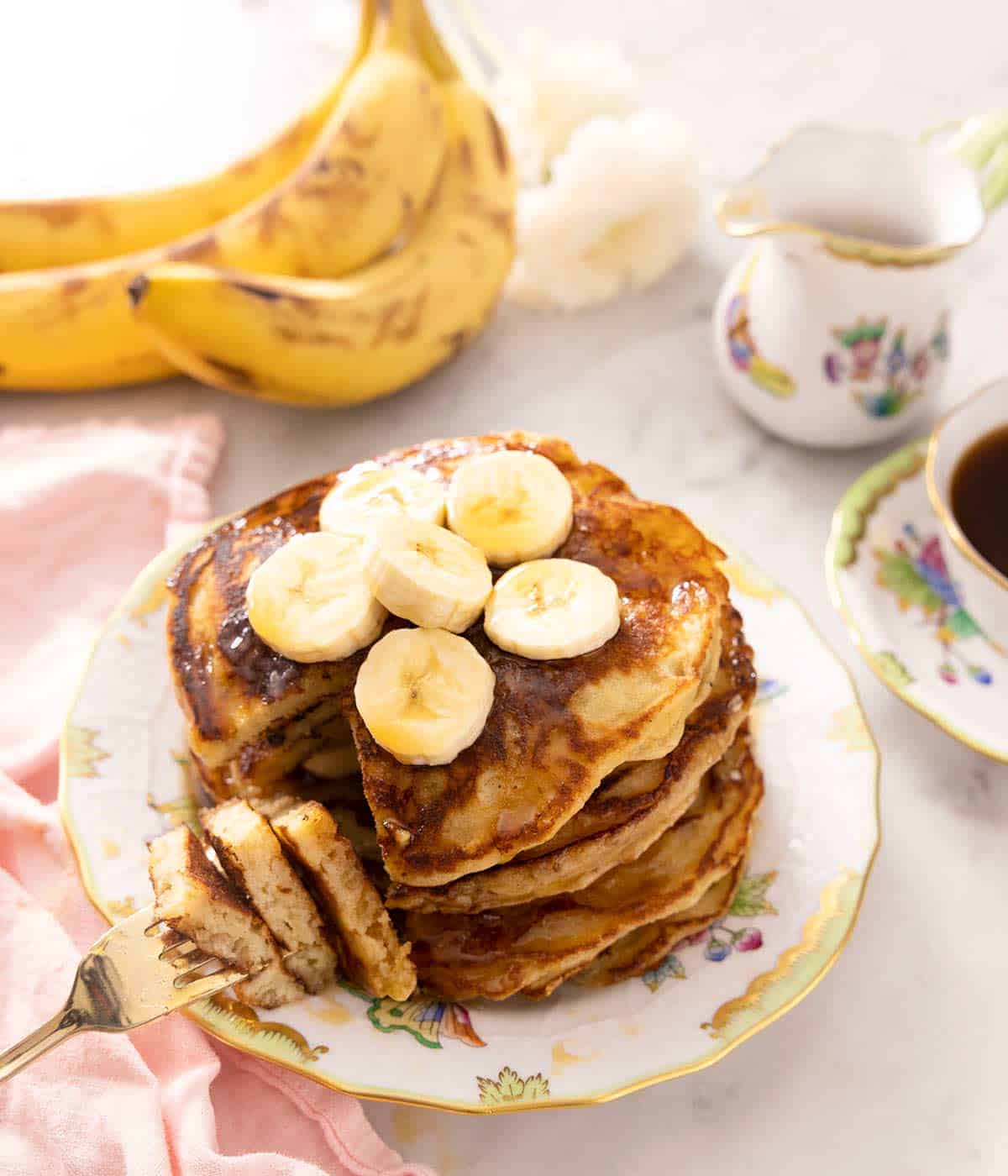
Soft, golden, Banana Pancakes come together in just 25 minutes! They are so fluffy and made with simple pantry staples, plus the secret ingredient most people throw away: overripe bananas.
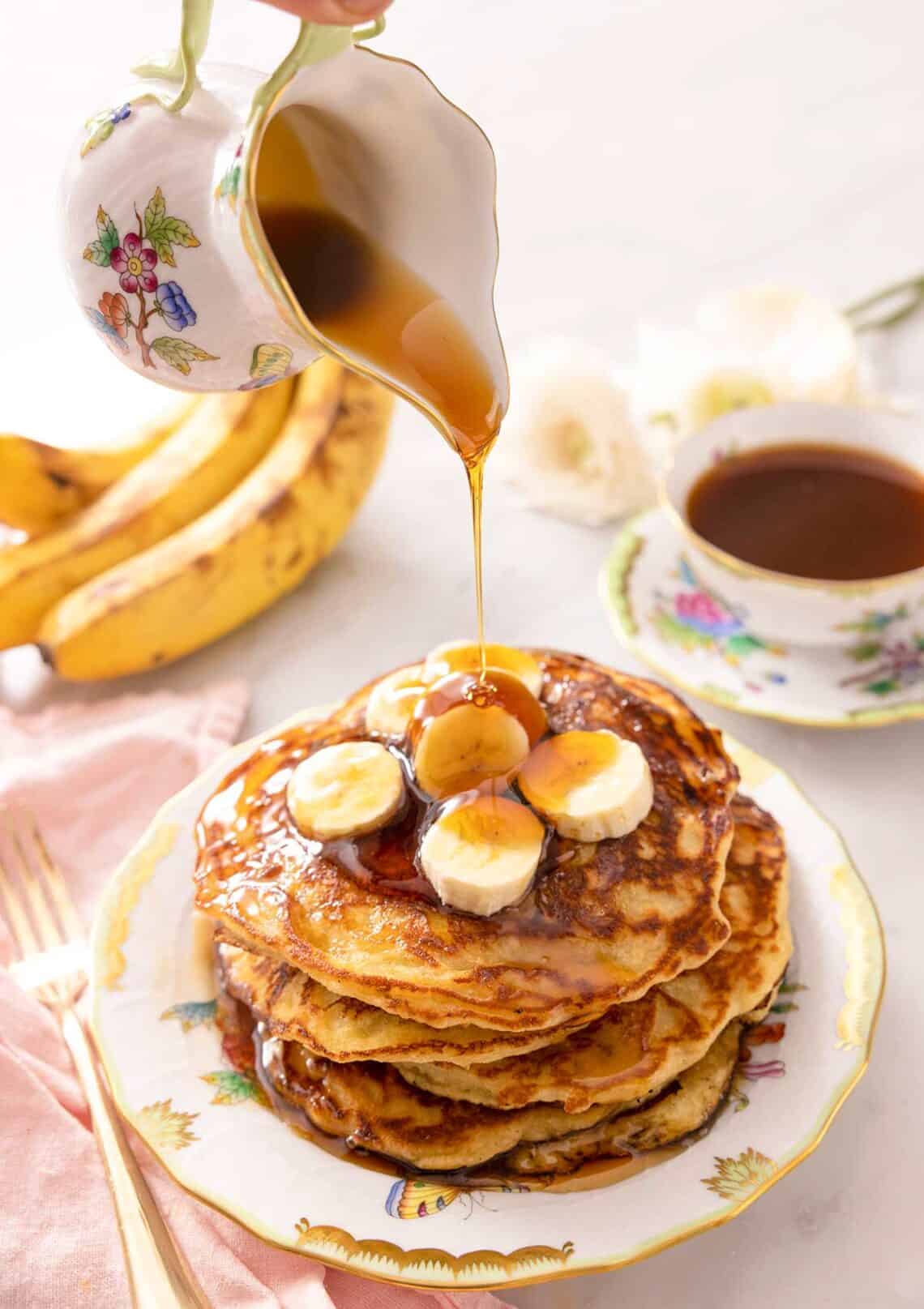
The classic, comforting flavors of banana pancakes are perfect for a weekend breakfast or brunch. The secret to making them truly great isn’t a fancy technique; it’s the bananas themselves. The riper, the better! Heavily spotted, soft, almost-black bananas mashed into the batter give you natural sweetness, real banana flavor, and the moisture that keeps the pancakes tender from edge to center. Most people see a black banana and think “throw it out.” I see breakfast.
This recipe is everything you love about light, fluffy pancakes, with the addition of mashed ripe banana for sweetness and depth. Your whole family will adore a stack served warm with butter and maple syrup. The bananas do most of the sweetening work, complemented by just a little granulated sugar and vanilla extract. Double the recipe for the freezer, and you’ve got a satisfying homemade breakfast that reheats in two minutes flat.
“I made these pancakes, and for the first time in my life, the pancakes were fluffy and melt-in-your-mouth good!! Highly recommend.”
S
What You Need To Make Banana Pancakes
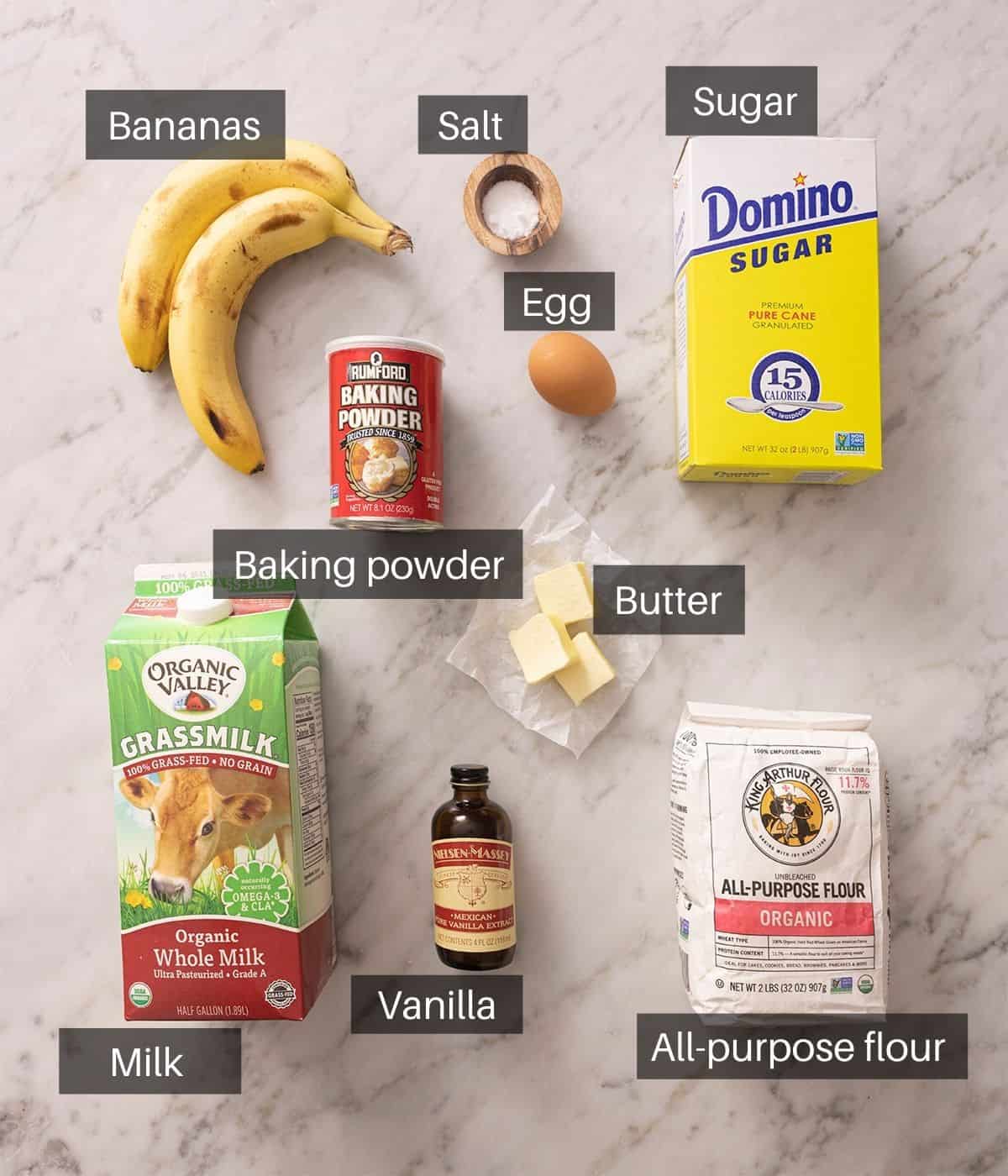
You only need a handful of simple ingredients to make this recipe for banana pancakes! The full list of ingredients and measurements can be found in the recipe card below.
Bananas — use very ripe or overripe bananas. Bananas with peels that are heavily spotted, soft, or fully black are the sweetest and easiest to mash. If your bananas aren’t quite there yet, see my quick-ripen tips below.
All-purpose flour — gives the pancakes their structure. Spoon flour into your measuring cup and level off with a knife rather than scooping straight from the bag, which packs the flour and can make the pancakes dense. Or, for the best results, weigh it if you have a scale.
Granulated sugar — you just need two tablespoons. The bananas do most of the sweetening. The added sugar rounds out the flavor and helps with golden brown caramelization on the surface.
Baking powder — the essential leavening ingredient for fluffy pancakes. Always check the expiration date. Old baking powder is one of the most common reasons homemade pancakes turn out flat. If yours is more than six months past the Best By date stamped on the can, replace it before you start.
Whole milk — I use whole milk for the richest flavor, but 2% works well, and almond, oat, or any non-dairy milk will give you good results too.
Egg — one large egg binds the batter and adds structure. Pull it from the fridge 20 minutes before you start, so it isn’t ice-cold going into the batter with melted butter (a cold egg will make the butter solidify in clumps). Or, soak it in warm tap water for 5 minutes.
Melted butter — adds richness to the batter and helps the pancakes brown beautifully. Melt it ahead of time and let it cool slightly so it doesn’t scramble the egg when you stir everything together.
Vanilla extract — a teaspoon is plenty. It pairs especially well with the banana flavor and rounds out the flavor of the warm pancakes.
How To Make Banana Pancakes
Here’s the full method, step by step. The complete ingredient list and timing are in the recipe card below.
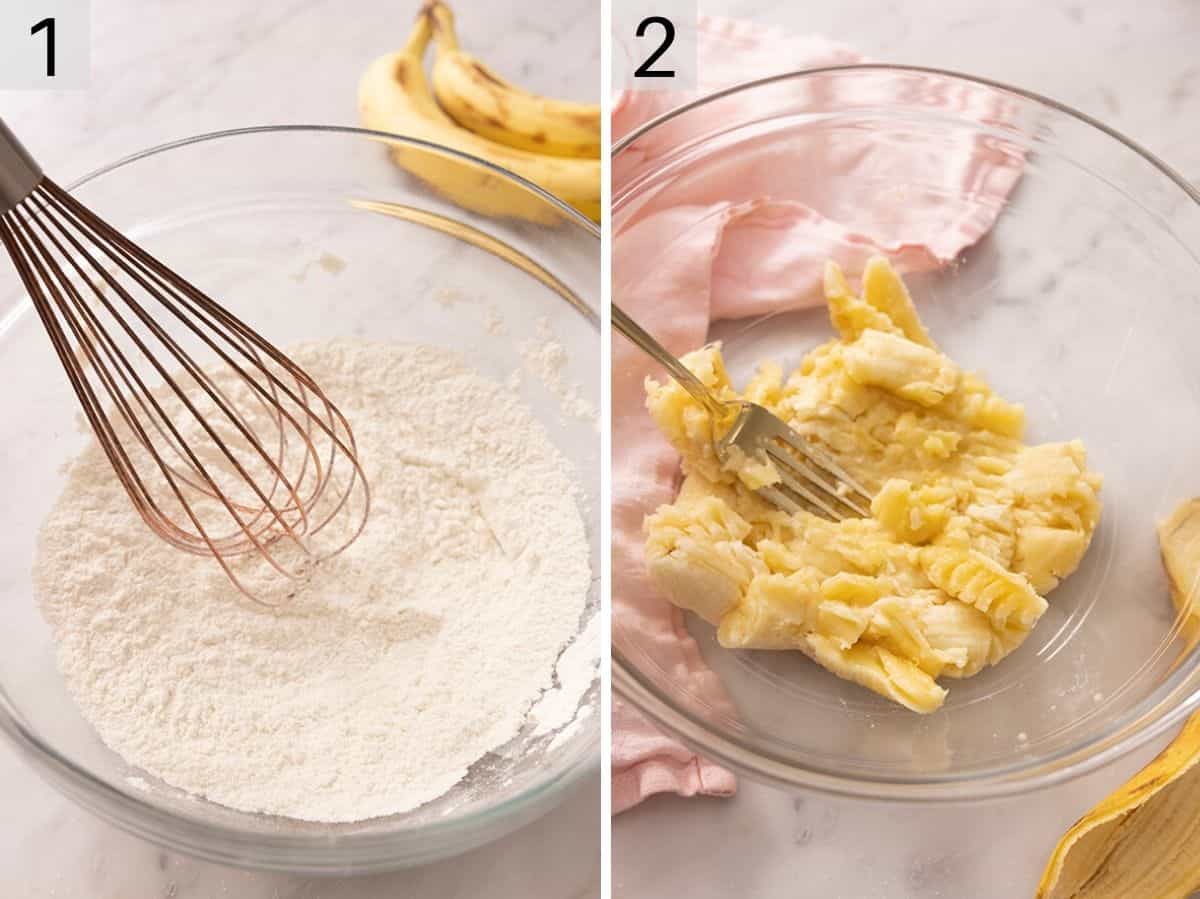
1. In a large bowl, whisk together the flour, sugar, baking powder, and salt until evenly combined.
2. In a medium bowl, mash the bananas with a fork. Leave a few small chunks rather than mashing completely smooth. Those soft pockets of banana give the finished pancakes pure banana flavor in every bite.
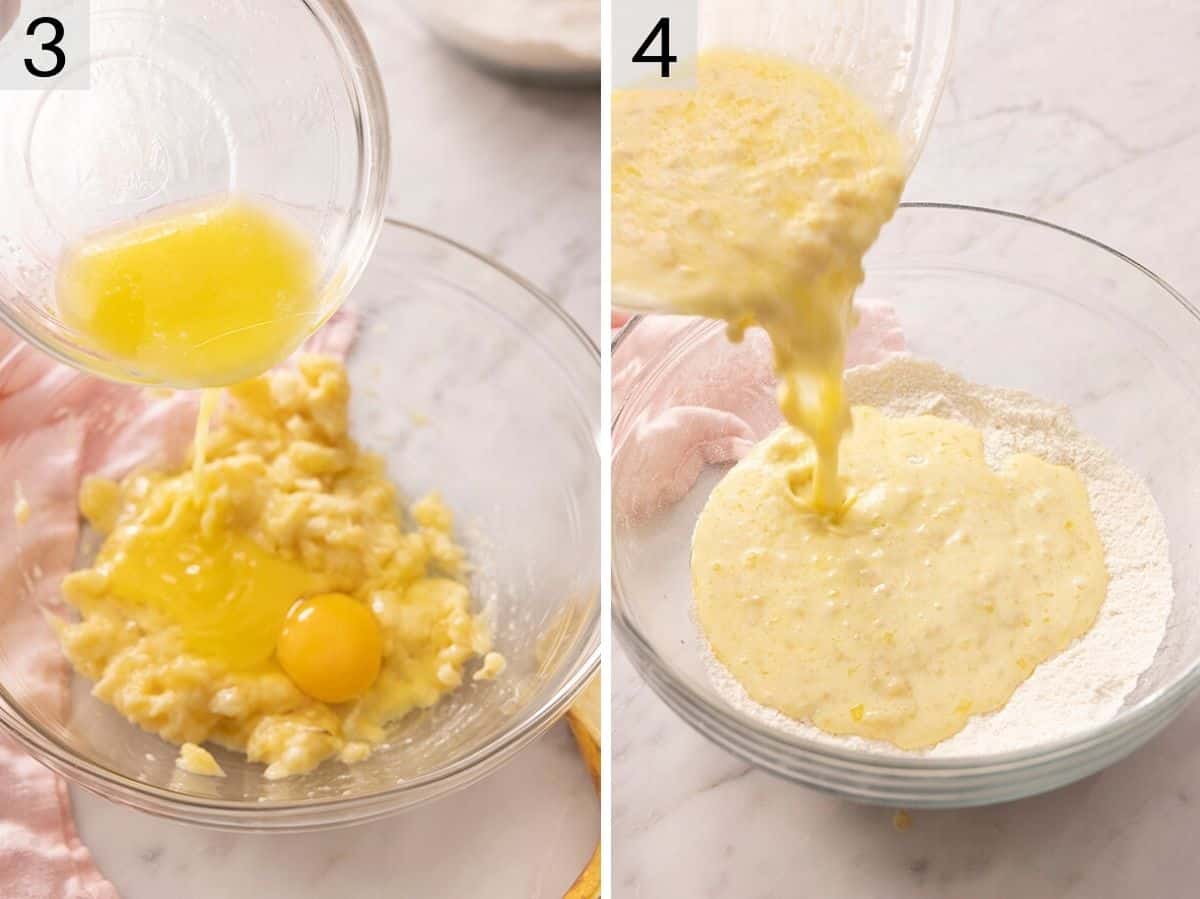
3. Add the milk, egg, melted butter, and vanilla extract to the mashed banana. Stir to combine.
4. Pour the wet mixture into the bowl of dry ingredients.
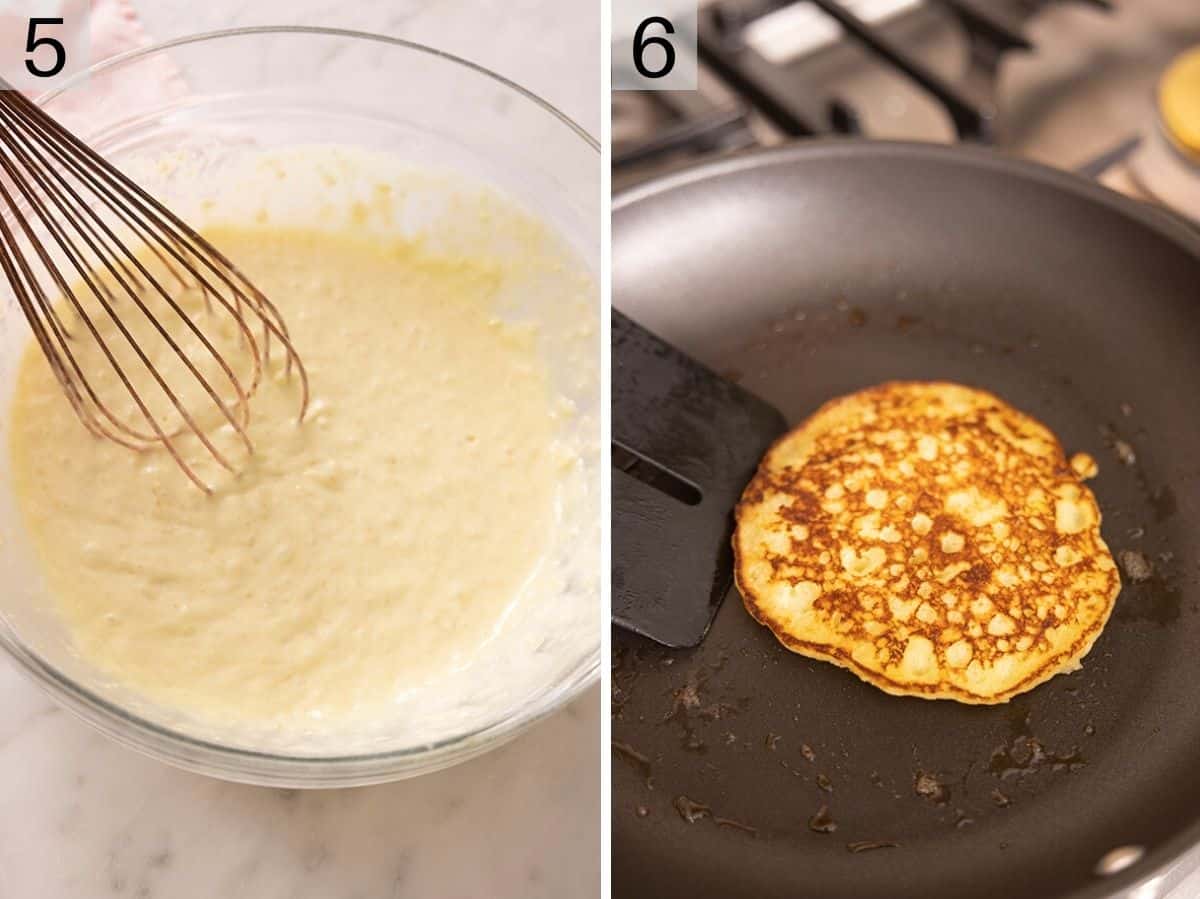
5. Whisk the batter until just combined. The batter should look thick, slightly lumpy, and a little shaggy. Stop the moment you no longer see dry flour streaks. This is the most important step for fluffy pancakes—overmixing develops the gluten in the flour and gives you tough, chewy pancakes instead of soft, tall ones. Small lumps are okay! They will dissolve when the pancakes cook.
6. Heat a large non-stick pan or griddle over medium heat and grease it lightly with butter or vegetable oil. Using about ¼ cup of batter per pancake, cook each one until the bottom is golden brown and bubbles have risen throughout the uncooked surface on top of each pancake, about 2 to 3 minutes. Flip and cook the second side until golden brown, about another minute. Re-grease the pan between batches.
How To Ripen Bananas Quickly
If your bananas are firm and yellow or slightly green when you want to make these pancakes, you’ve got two options to ripen them in a hurry.
- Oven method (15 minutes). Place unpeeled bananas on a baking sheet in a 350°F oven (or air fryer) and roast for 15 minutes, or until the peels turn fully black and the bananas feel very soft when squeezed. Let them cool completely before peeling (otherwise, they’ll be too hot inside to handle). When you squeeze out the flesh, it comes out almost pre-mashed!
- Microwave method (under a minute). Pierce the peel a few times with a fork, then microwave one banana at a time in 15-second bursts until very soft. Let cool for several minutes before peeling.
For the longer-term approach (a day or two ahead), see my full guide on how to ripen bananas. A paper bag with an apple is the gentlest method and gives you the deepest banana flavor.
Pro Tips For The Best Banana Pancakes
These are the small details that turn a good banana pancake into a great one. Most of them I learned the hard way over years of testing, and making these for my kids on repeat!
Mix until just combined. A few lumps in the pancake batter are exactly what you want. Overmixing develops gluten, which makes pancakes tough and chewy instead of light and fluffy. The moment you no longer see dry flour, stop stirring.
Test the pan or griddle with water. A drop of water should sizzle and dance on the pan when you add it. If it just sits there, the pan is too cool, and your pancakes will spread thin and turn out pale. If the water evaporates instantly with a hiss, the pan is too hot, and the outside will burn before the middle cooks. The sweet spot is somewhere between. Let the pan heat up longer or reduce the heat, depending on the test.
Use overripe bananas. I tested this with yellow-no-spots, lightly-spotted, and almost-black bananas side by side. The no-spot batch tasted like plain pancakes with a banana suggestion; the lightly-spotted batch was decent but mild; the almost-black batch tasted like banana the whole way through. The reason: as bananas ripen, the starches convert to sugar and the aroma compounds intensify, so a black-peel banana is delivering several times the flavor and natural sweetness of a yellow one. (Same rule applies in banana bread — the spottier the better.)
Use an electric griddle for big batches. Set it to 375°F, lightly grease the entire surface with butter or oil once it is hot, and cook six or eight pancakes at once. Perfect for feeding a crowd or doubling the recipe for the freezer.
Banana Pancakes Recipe
Equipment
- mixing bowl
- Large skillet or griddle
Ingredients
- 1 cup all-purpose flour (120g)
- 2 tablespoons granulated sugar
- 2½ teaspoons baking powder
- ½ teaspoon salt
- 2 very ripe bananas peeled
- 1 cup whole milk (240ml)
- 1 large egg
- 3 tablespoons unsalted butter melted, plus more for the pan
- 1 teaspoon vanilla extract
Instructions
- Whisk together the flour, sugar, baking powder, and salt in a large bowl, then set aside.
- Mash the bananas in a separate bowl leaving some chunks for texture. Add milk, egg, melted butter, and vanilla.
- Pour the wet mixture into the dry mixture and stir until just combined. (a few lumps are okay!)
- Place a large pan or griddle over medium heat. Lightly grease with more butter or vegetable oil. Working in batches, add about ¼ cup of batter to the pan per pancake, and cook until golden brown on the bottom and bubbles have formed all over the surface on top of the pancake, 2 to 3 minutes. Flip and cook for an additional minute or until golden brown on the bottom.
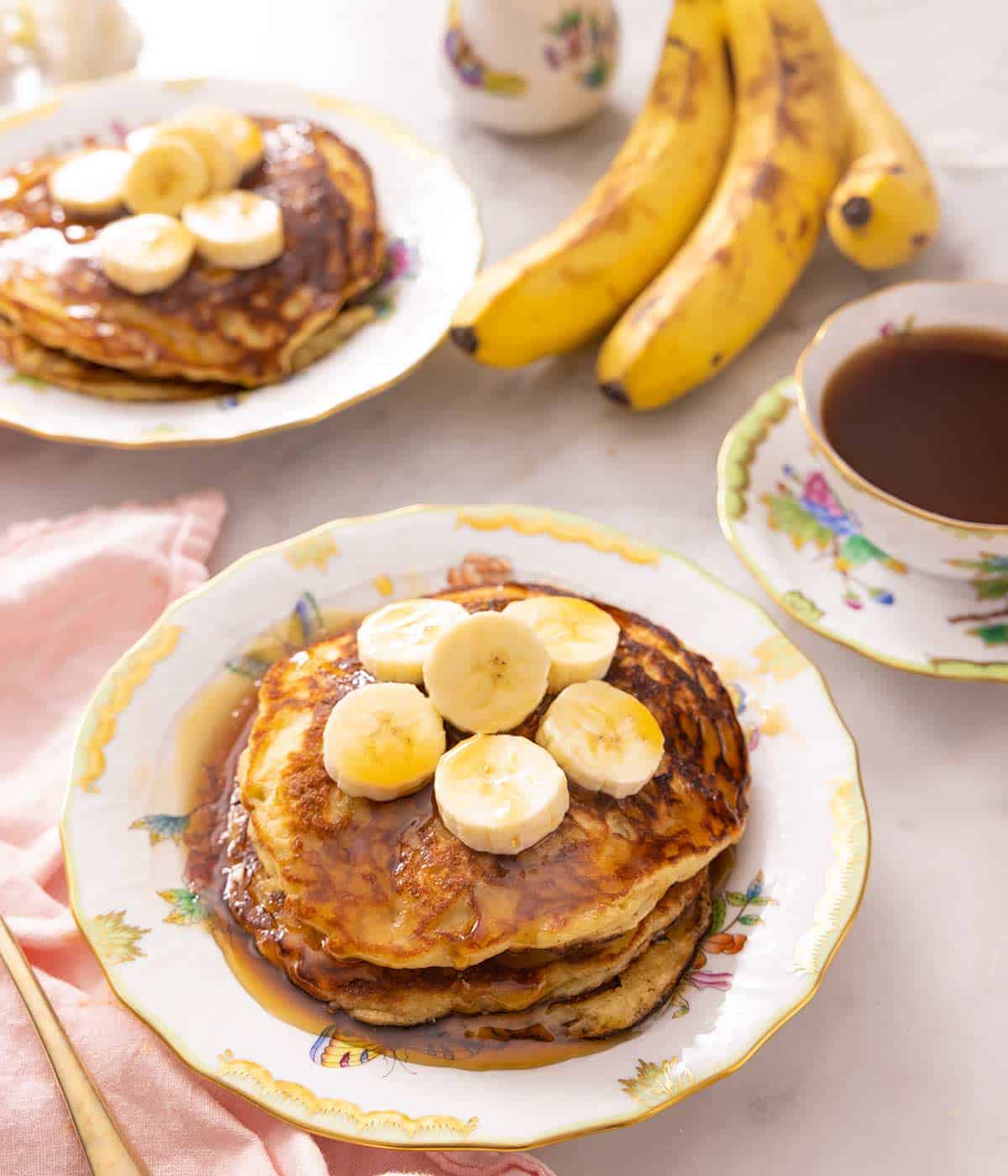
- Continue cooking pancakes, adding more butter to the skillet between each batch. Serve the pancakes warm with sliced bananas, maple syrup, and butter.
Notes
- Don’t press down on the pancakes after flipping. It’s tempting, and it can feel productive for browning, but pressing actually squeezes out the air bubbles that make the pancakes tall and fluffy. Flip once, let them cook through, then transfer them to a plate.
- Reduce the heat if the pancakes brown too fast. If you smell butter starting to burn, or the bottoms turn dark brown before the surface bubbles fully form, drop the heat to medium-low or low. The pan often gets hotter as you cook through subsequent batches—especially with cast iron—so adjust as you go.
- Keep cooked pancakes warm in the oven. Preheat the oven to 250°F or use a “Keep warm” setting, and place a wire rack over a baking sheet in the oven. Move finished pancakes to the rack as you go. The rack lets air circulate underneath the pancakes so the bottoms stay crisp instead of going soggy. They’ll hold for up to an hour while you finish the batch.
Nutrition
Have you tried this recipe? Tag me today!
Mention @preppykitchen and tag #preppykitchen!
How To Store And Freeze Leftovers
Cooked pancakes keep beautifully! This recipe is built for doubling and freezing, making future pancake breakfasts so easy.
Refrigerator (3 days): Let pancakes cool to room temperature, layer parchment paper between each one to prevent sticking, then store in an airtight container in the fridge.
Freezer (3 months): Cool completely, layer parchment between pancakes, and store in a zip-top freezer bag or freezer-safe container. Press out as much air as you can if using a freezer bag. This will help prevent freezer burn for longer storage.
To reheat from frozen: Microwave a single pancake for 20 seconds, or warm for 1-2 minutes in a toaster oven or air fryer at 350°F. For a bigger batch, lay them on a baking sheet, cover loosely with foil, and warm at 350°F for 8-10 minutes until heated through.
Frequently Asked Questions
Pancakes with gooey centers usually mean one of two things: the pan is too cool, or the baking powder is past its prime. Pancakes cook best at 375°F on an electric griddle or medium heat on most stoves. Test the pan with a drop of water (it should sizzle on contact).
And check your baking powder: if it’s been open more than six months, replace it. Dead baking powder won’t rise, which gives you flat, dense pancakes that can feel undercooked or gummy no matter what else you do right.
Yes, in two ways. Cooked pancakes hold for up to an hour in a 250°F oven on a wire rack, perfect for serving the whole family at the same time. For further prep, freeze them in a single layer with parchment between each pancake. They reheat from frozen in 20 seconds in the microwave or a few minutes in the oven or air fryer for a freshly cooked taste and texture.
The batter can also be mixed and held for 1 hour before cooking the pancakes. Cover the bowl, and don’t stir the batter again, even when you are ready to cook—just scoop onto the griddle.
Lots of things go great in these pancakes. Sprinkle ground cinnamon, grated nutmeg, ground ginger, or pumpkin pie spice into the dry ingredients for a touch of warm spice. Swap granulated sugar for brown sugar for a deeper, more caramel flavor. Drop a small handful of chocolate chips on each pancake right after you scoop the batter into the pan. That way, the chips melt into the pancake without sticking to the spatula. Fresh blueberries, diced strawberries, or chopped pecans all stir into the batter beautifully, too.
For gluten-free, swap the all-purpose flour for a 1:1 gluten-free baking flour blend (the kind with xanthan gum already added). Measure by weight if possible, since GF blends can vary. Letting the batter sit for at least 10 minutes will also help the flour hydrate, since it takes a bit more time to absorb moisture. If the batter feels too thick, add a bit more milk.
For dairy-free, swap the whole milk for unsweetened almond, oat, or soy milk, and use a neutral oil or vegan butter in place of dairy butter. The texture is nearly identical.
If You Love This Recipe, Try These Out!
These easy pancake recipes can be added to your family’s rotation:
- Pancake Recipe — the classic fluffy original and one of my most popular breakfast recipes.
- Lemon Ricotta Pancakes — bright and tender weekend favorite
- Buttermilk Pancakes — the tangy, extra-fluffy classic for a pancake breakfast.
- Apple Pancakes — fall-spiced sibling to banana pancakes, packed with warm spices and chunks of tender apples.
- Pumpkin Pancakes — an autumn breakfast classic that’s easy to whisk together.
- Crepe Recipe — the thin, elegant cousin to fluffy American-style pancakes.
If you’ve tried this banana pancakes recipe, then don’t forget to rate it and let me know how you got on in the comments below. I love hearing from you!