This post may contain affiliate links. Please read our disclosure policy.
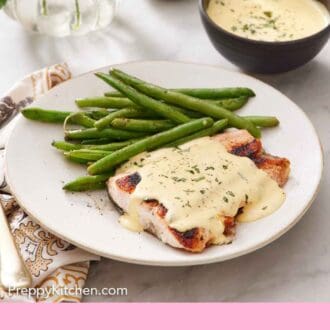
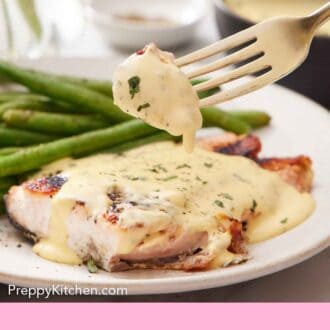
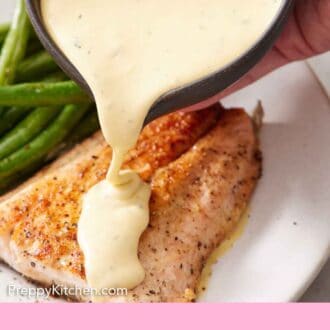
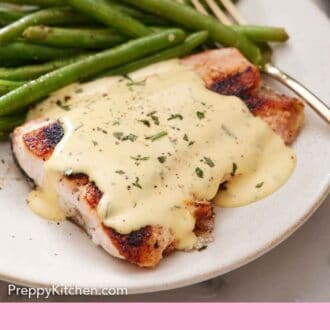
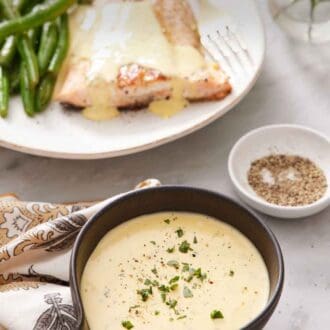
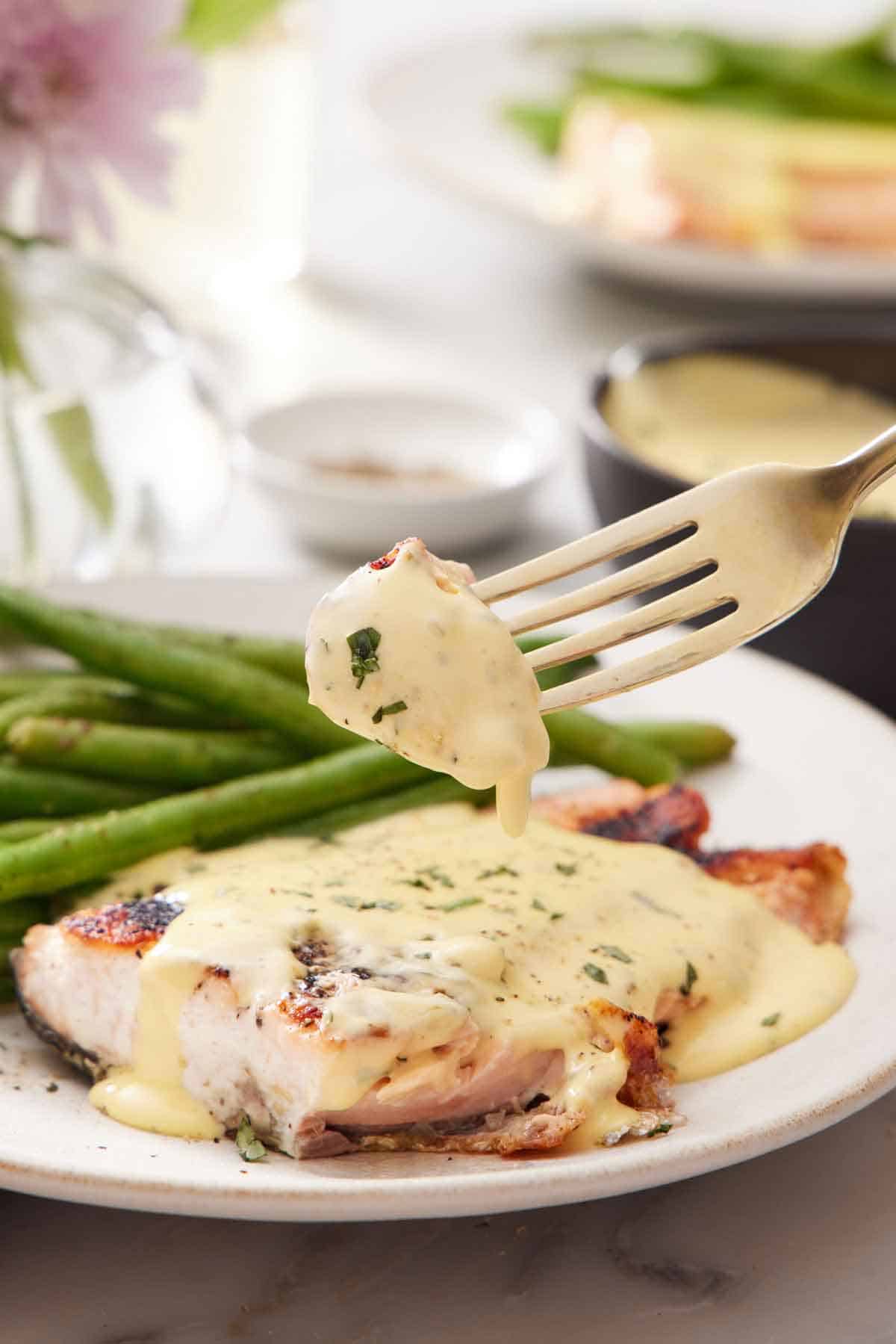
Rich, flavorful Béarnaise Sauce is the perfect elegant sauce for a special occasion. Drizzle it over steak, salmon, and veggies for a delicious main dish or side!
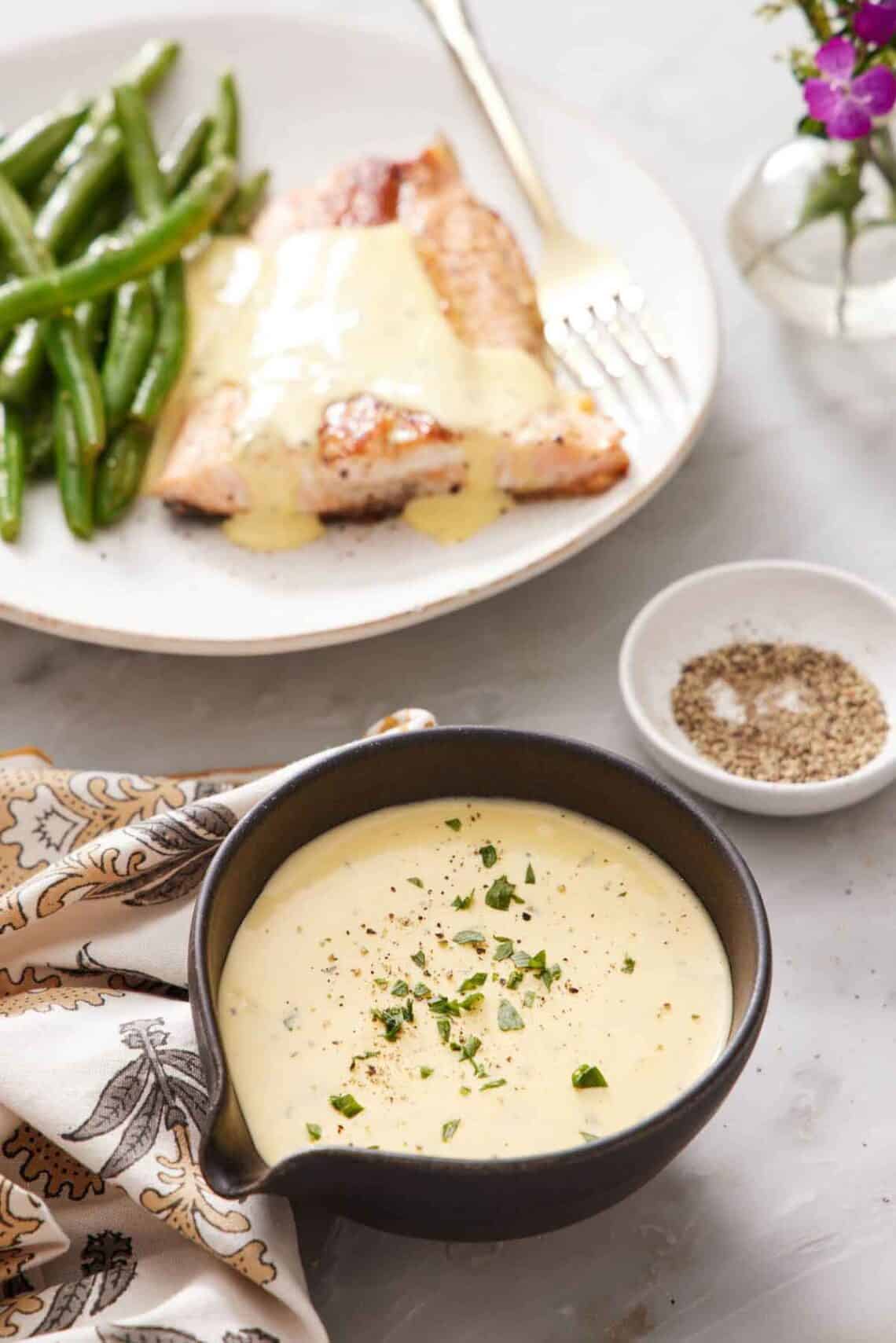
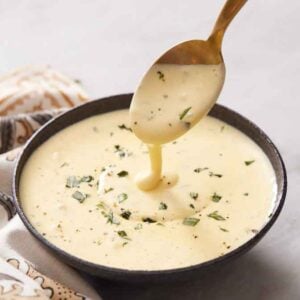
A French classic, béarnaise sauce is incredibly velvety, buttery, and so creamy. Made with an emulsion of butter, egg yolks, and a shallot reduction, this smooth, thick sauce instantly elevates a variety of dishes.
While this sauce has a reputation for being difficult to make, my method for blending the ingredients is foolproof for a sauce that incorporates beautifully and doesn’t break! For more classic French recipes, try my sole meunière, beef Bourguignon, and coq au vin.
What Is Béarnaise Sauce?
Béarnaise sauce is a classic French sauce made by blending together a vinegar and shallot reduction, melted butter, and egg yolks. Elegant and timeless, béarnaise sauce is a variation of hollandaise sauce, which is one of the five French mother sauces. (The others are béchamel, velouté, espagnole, and tomato.)
Incredible when drizzled over steaks as it is classically served, this velvety sauce is an amazing way to elevate your bacon-wrapped filet mignon.
Ingredients
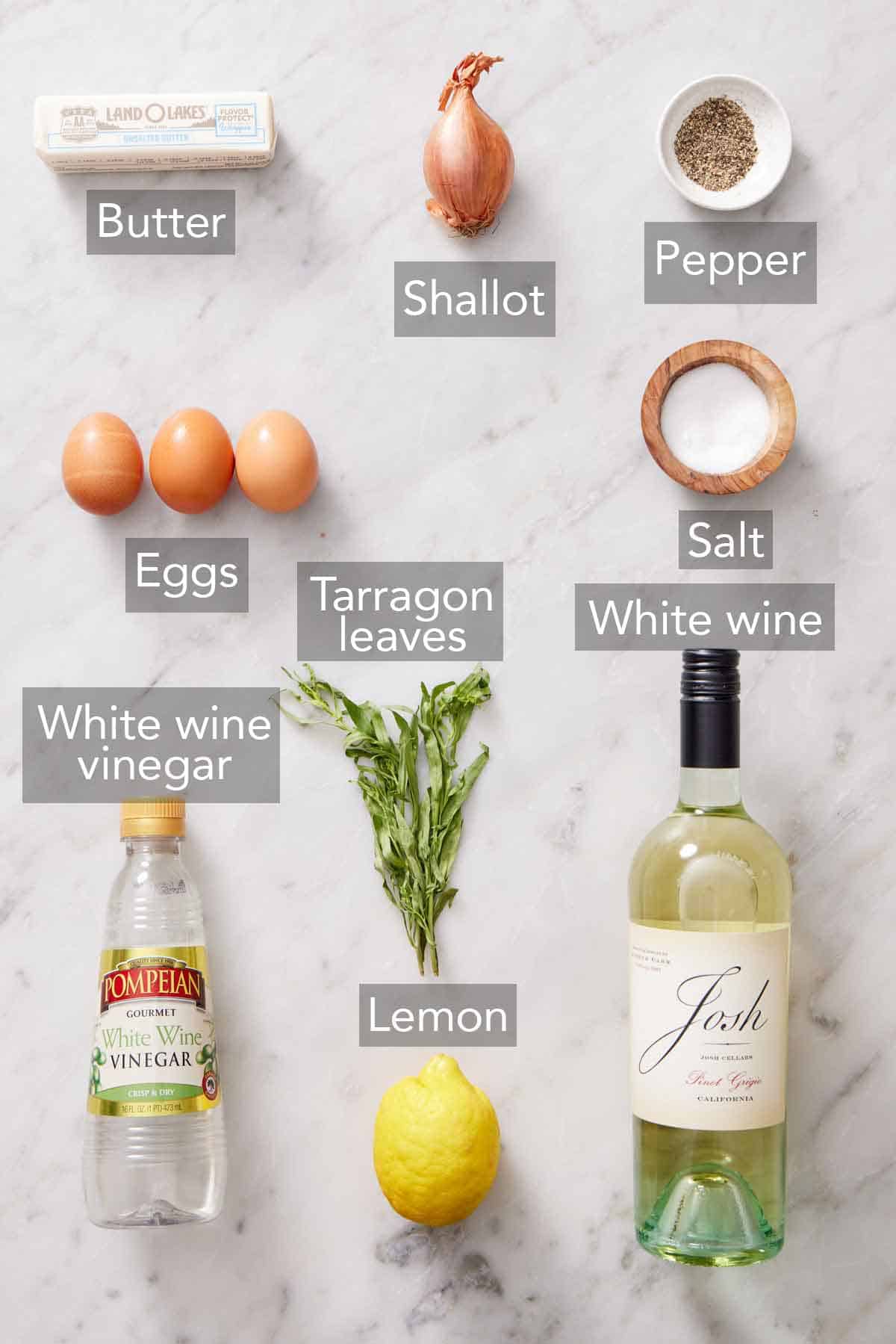
Wine — you need dry white wine to make the vinegar and shallot reduction.
Vinegar — white wine vinegar is the best option for a sweet acidity.
Shallot — finely chop 1 shallot to introduce a sweet, mild onion-like flavor to the béarnaise sauce.
Tarragon — chopped fresh tarragon adds a subtle anise flavor to the sauce.
Butter — use a good quality European-style unsalted butter for a rich flavor and smooth texture. This kind of butter also has less moisture, which means there’s less butter popping in the microwave.
Egg — egg yolks get whipped into a rich, creamy emulsion with the butter and reduction.
Salt and black pepper — you don’t need much in the way of seasonings because the vinegar reduction is so flavorful in itself. These simple seasonings will do the trick!
Lemon juice — lemon juice adds a hint of bright acidity.
How To Make Béarnaise Sauce
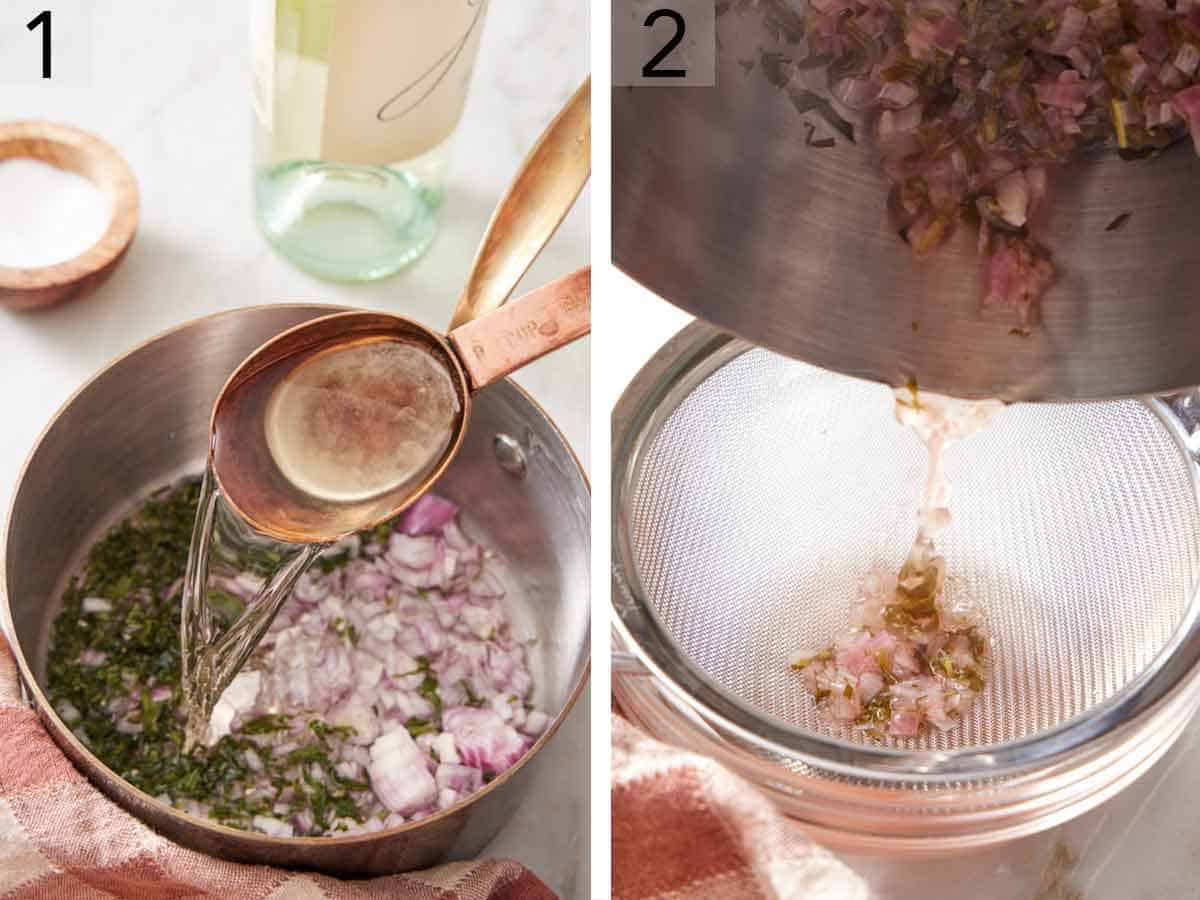
1. Combine the white wine, vinegar, shallot, and tarragon in a small saucepan. Cook over medium heat for 8 to 10 minutes, until the liquid in the pan is reduced to 2 tablespoons. Remove from the heat and set aside to infuse and cool for 5 minutes.
2. Strain the liquid through a very fine-mesh strainer, pushing on the solids to extract as much liquid as possible. You should be left with about 2 tablespoons of infused liquid.
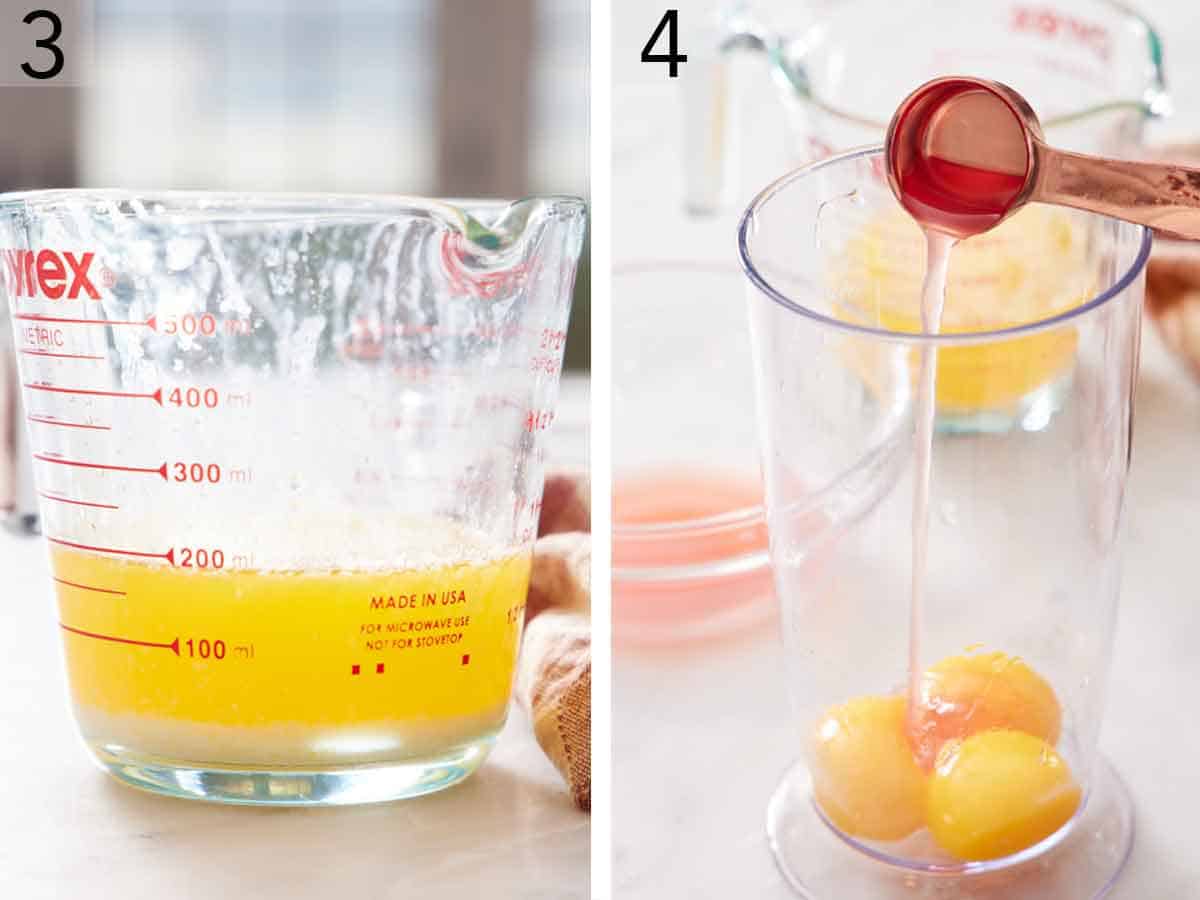
3. Meanwhile, place the butter in a liquid measuring cup. Cover and microwave on high for 75 to 90 seconds or until the butter is melted and the white solids start to sink to the bottom of the cup. Set it aside for 5 minutes, until the milk solids settle and separate from the golden, clarified butter.
4. In a tall liquid measuring cup, combine the egg yolks, vinegar reduction, and salt. Using a stick blender, blend the mixture until it’s very smooth.
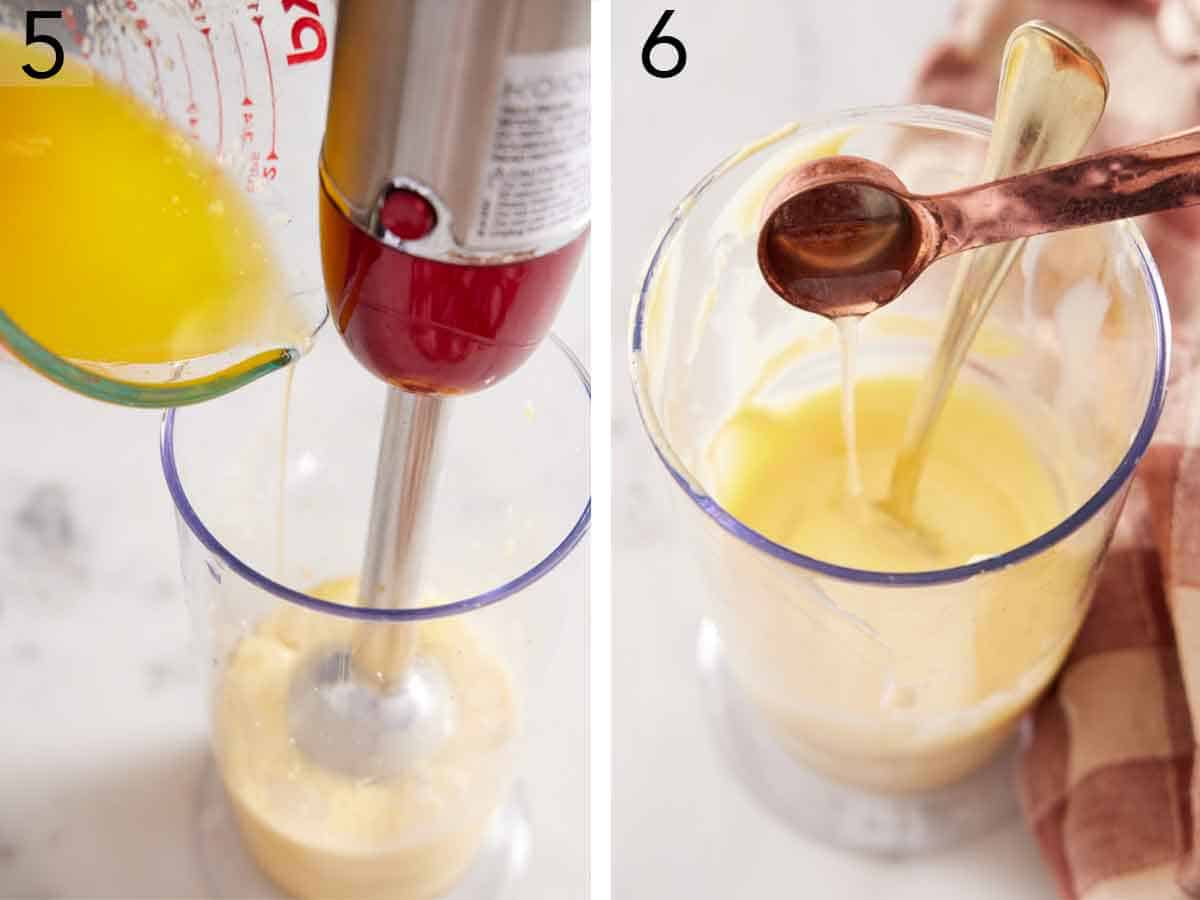
5. With the blender on low speed, stream in the clarified butter. Leave the milk solids in the bottom of the cup, and discard. You should be adding around ¾ cup of clarified butter. Start by adding a few drops of butter at a time, and then increase speed to add a slow stream of butter as the mixture starts to emulsify and thicken.
6. Stir in the lemon juice, pepper, and up to 1 teaspoon more of chopped fresh tarragon. Adjust the consistency with warm water by stirring in 1 teaspoon at a time. It should be a drizzling consistency, not thick like mayonnaise. Serve immediately.
Can I Make This In A Double Boiler?
Yes, you can make béarnaise sauce in a double boiler on the stove. Combine the egg yolks, vinegar reduction, and salt in a small bowl set over a simmering pot of water. Whisk the mixture well until the egg yolks are lightened in color and have doubled in volume. While whisking, slowly stream the warm butter into the egg yolks. This method requires stamina, as you will be whisking for several minutes.
The double boiler method can be extra tricky because there are more chances for the eggs to scramble, for the sauce to break, and for the butter to not emulsify properly and turn soupy instead of creamy. Though this method is more traditional, using the immersion blender is virtually foolproof.
How To Serve It
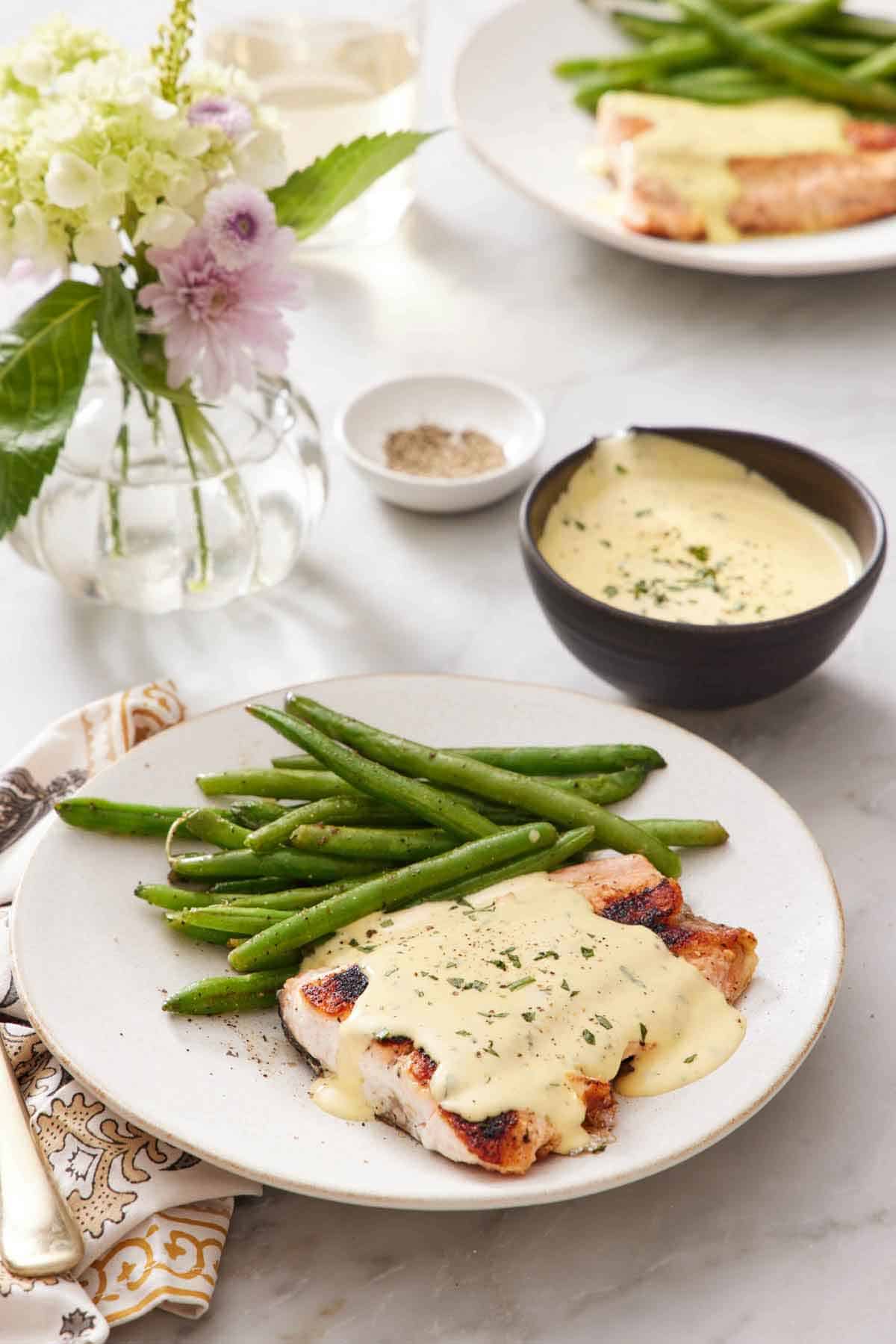
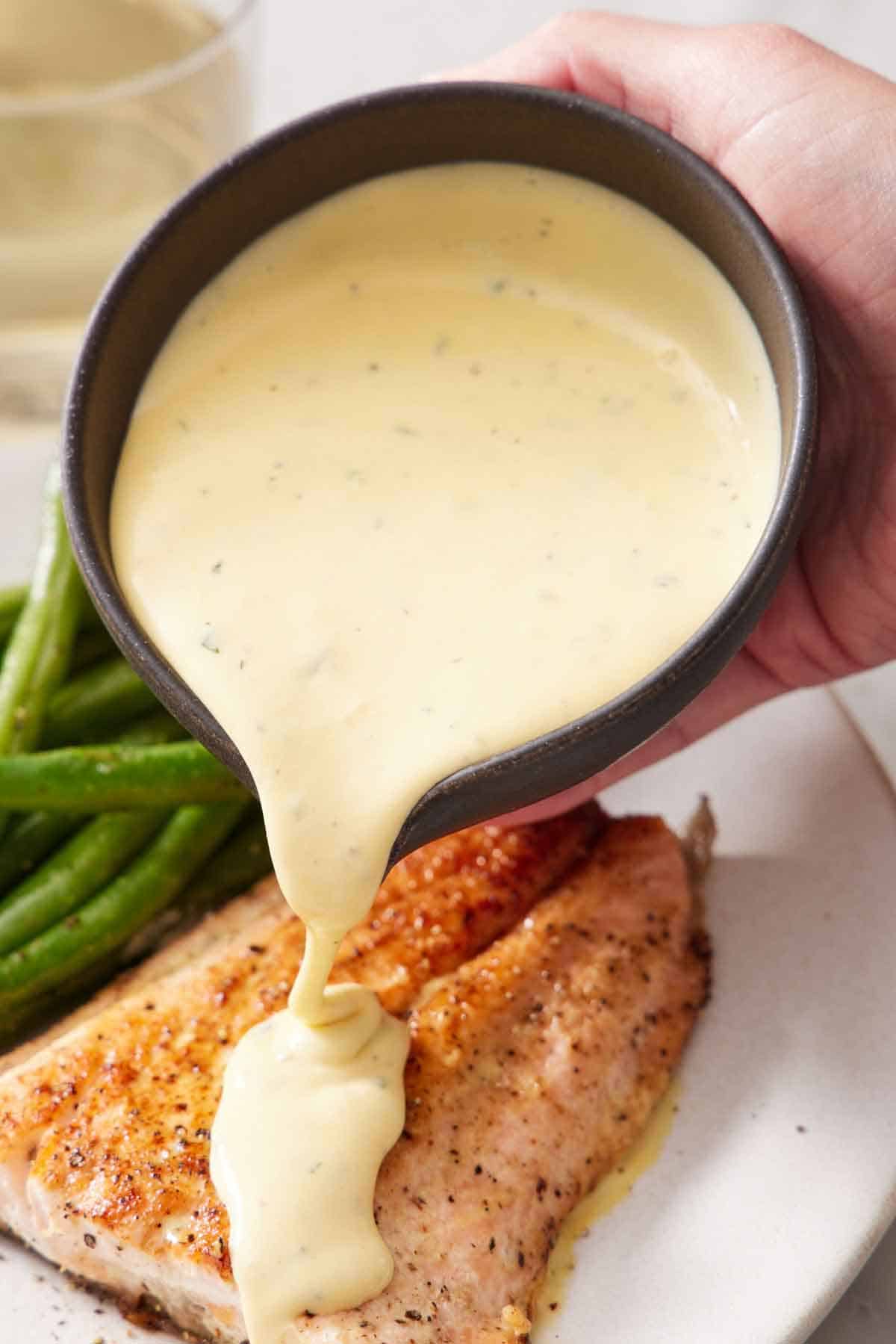
- Spoon it over fish, chicken, or steak: Béarnaise sauce is particularly delicious drizzled over your favorite steak, and is a great way to elevate super easy main dishes like air fryer steak, blackened salmon, and roasted chicken.
- Use it to dress roasted or blanched vegetables: Try it over roasted carrots, roasted asparagus, or French green beans.
- Make a variation of eggs benedict: Make a twist on a classic eggs benedict by swapping the hollandaise sauce for bearnaise sauce.
How Do I Keep The Sauce Warm?
Béarnaise sauce is a bit finicky if kept over heat and is, therefore, best used immediately. If you want to shorten the cooking time, you can prep part of it ahead by following the recipe through step 3 and setting it aside for up to 3 hours. Then, proceed with blending it while your protein of choice is resting.
If you want to try making it ahead, you can set the sauce on a food-warming plate or place it in a thermos or insulated container to keep it warm for about an hour. But the sauce can split very easily, so these are both risky! I recommend making it right before you want to use it for the best results.
How To Store
While béarnaise sauce is best used immediately, it will keep in an airtight container in the refrigerator for up to 2 days. Gently reheat leftovers using one of the following two methods:
Stove-top: This is the best method. Add the sauce to a saucepan over very low heat and whisk constantly. You can add a tablespoon of butter to help emulsify it again if needed.
Microwave: Heat the sauce in 15-second intervals, whisking between each one, until just warmed.
Pro Tips For Making This Recipe
- Separate the eggs when they’re cold. It is much easier to separate the whites and yolks when the eggs are cold. Then, leave the yolks out for about 15 minutes to give them time to come closer to room temperature. This will make them easier to blend and reduce the risk of the cold eggs solidifying the melted butter.
- If you over-reduce the wine and vinegar mixture, it’s okay. Just add enough water to reach 2 tablespoons of liquid after it’s strained.
- For the clarified butter, you can melt the butter on the stove in a small pot instead of using the microwave.
- Use ghee. Ghee is clarified butter, so if you have it, you can use ¾ cup of melted ghee instead of clarifying your own butter.
- It’s best to add the butter when it’s hot, around 140°F to 150°F. The hot butter will cook and thicken the raw eggs as the mixture emulsifies.
- Add chervil: A classic French bearnaise sauce is finished with freshly chopped chervil instead of tarragon (tarragon is easier to find, though!). Use it if you have it, or you can add ½ teaspoon of freshly chopped parsley for a bright, grassy flavor.
Frequently Asked Questions
Use a dry white wine like chardonnay, pinot blanc, or sauvignon blanc. Don’t use cooking wine, which is quite sour. You can use a less expensive wine, but pick a bottle you would enjoy drinking so that you like the flavor of the finished sauce.
Yes, but I recommend still adding it to the vinegar mixture at the beginning to infuse the reduction with the herbal flavor. You could also use tarragon vinegar instead of white wine vinegar. If you still want some green fresh herbs in the sauce, use fresh minced parsley.
It’s quite easy to control the consistency of béarnaise sauce. Too thin? Pulse it a few more times to thicken it up. Too thick? Add in a little bit of warm water (1 to 2 teaspoons) and blend again. Keep in mind that béarnaise sauce should be thin enough to drizzle over and coat meats or veggies. It should not be thick like mayonnaise.
If you’ve tried this béarnaise sauce recipe, then don’t forget to rate it and let me know how you got on in the comments below. I love hearing from you!
Béarnaise Sauce Recipe
Equipment
- Immersion blender
- Tall liquid measuring cup
- Small saucepan
- Small, fine mesh strainer
Ingredients
- ¼ cup dry white wine (60mL)
- ¼ cup white wine vinegar (60mL)
- 1 shallot finely chopped (about 50g)
- 1 tablespoon chopped tarragon leaves
- 1 cup unsalted butter (226g)
- 3 large egg yolks
- ½ teaspoon salt
- ¼ teaspoon ground black pepper
- 1 teaspoon fresh lemon juice
Instructions
- In a small saucepan, combine the white wine, vinegar, shallot and tarragon. Cook over medium heat for 8 to 10 minutes until the liquid in the pan is reduced to 2 tablespoons. Remove from the heat and set aside to infuse and cool for about 5 minutes.
- Strain the liquid through a very fine mesh strainer, pushing on the solids to extract as much liquid as possible. (You should have about 2 tablespoons).
- Meanwhile, place the butter in a liquid measuring cup. Cover and microwave on high for 75 to 90 seconds, until the butter is melted and the white solids start to sink to the bottom. Set it aside for 5 minutes, until the solids settle and separate from the golden, clarified butter. (You can also melt the butter in a small pot on the stove to make this clarified butter).
- In a tall, 2-cup liquid measuring cup, combine the egg yolks, vinegar reduction, and salt. Using a stick blender, blend the mixture until it’s very smooth.
- With the blender on low speed, stream in the warm, clarified butter from the top of the liquid measuring cup (leave the milk solids in the bottom of the cup, and discard.) You should be adding around ¾ cup of clarified butter. Start by adding a few drops of butter at a time, and then increase speed to add a slow stream of butter as the mixture starts to emulsify and thicken.
- Stir in the lemon juice, pepper, and up to 1 teaspoon more of chopped fresh tarragon. Adjust the consistency with warm water, by stirring in 1 teaspoon at a time. (You should be able to drizzle the sauce so that it coats a steak or vegetables. It should not be thick like mayonnaise.) Serve immediately.
Notes
- Separate the eggs when they’re cold. It is much easier to separate the whites and yolks when the eggs are cold. Then, leave the yolks out for about 15 minutes to give them time to come closer to room temperature. This will make them easier to blend and reduce the risk of the cold eggs solidifying the melted butter.
- If you over-reduce the wine and vinegar mixture, it’s okay. Just add enough water to reach 2 tablespoons of liquid after it’s strained.
- For the clarified butter, you can melt the butter on the stove in a small pot instead of using the microwave.
- Use ghee. Ghee is clarified butter, so if you have it, you can use ¾ cup of melted ghee instead of clarifying your own butter.
- It’s best to add the butter when it’s hot, around 140°F to 150°F. The hot butter will cook and thicken the raw eggs as the mixture emulsifies.
- Add chervil: A classic French bearnaise sauce is finished with freshly chopped chervil instead of tarragon (tarragon is easier to find, though!). Use it if you have it, or you can add ½ teaspoon of freshly chopped parsley for a bright, grassy flavor.
Nutrition
Have you tried this recipe? Tag me today!
Mention @preppykitchen and tag #preppykitchen!