This post may contain affiliate links. Please read our disclosure policy.



If you love eggs benedict and have 10 minutes to spare, you need to add this easy hollandaise sauce recipe to your repertoire! This tangy, rich, and creamy sauce comes together with just a few pantry staples and minimal effort.
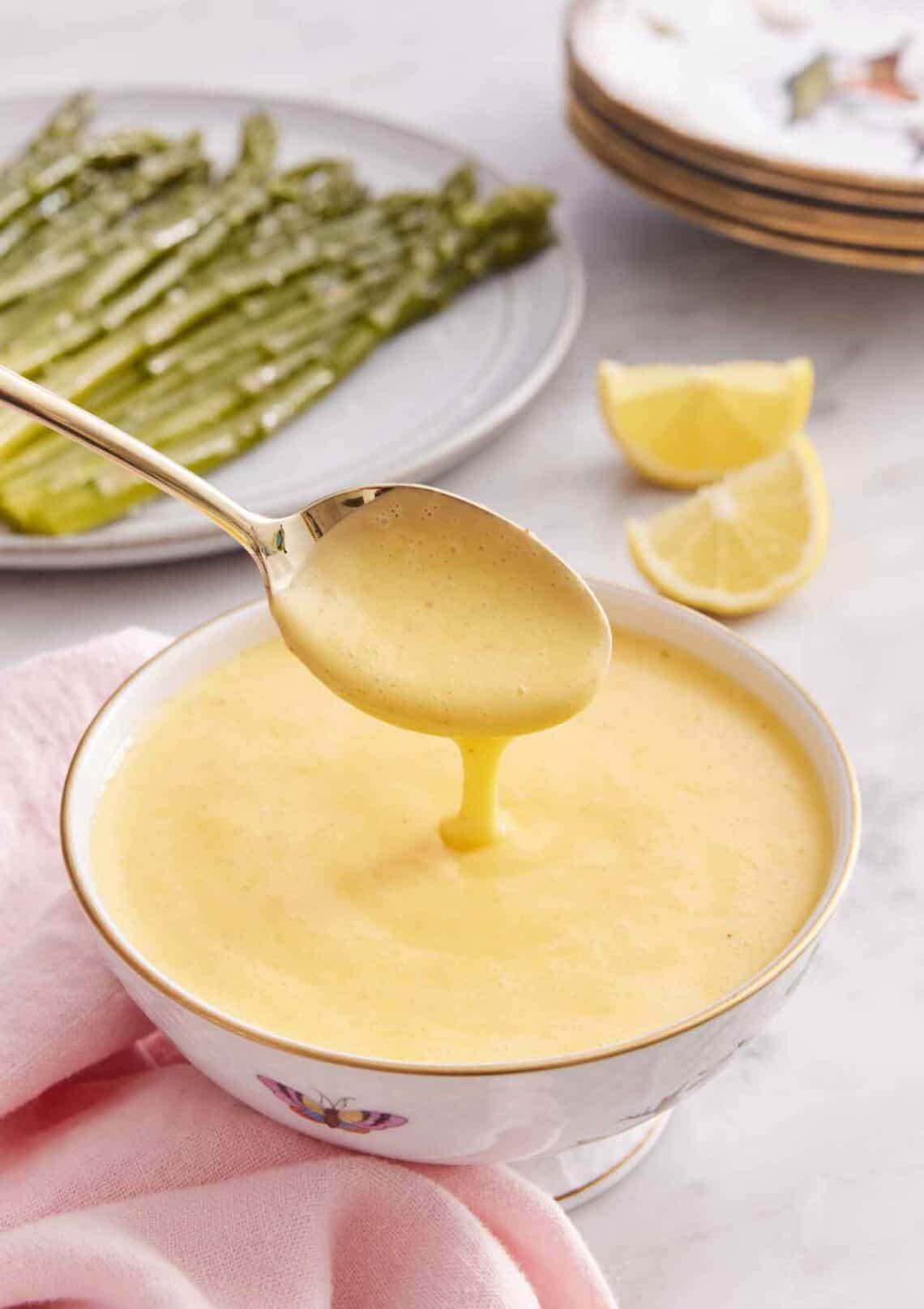
If you love eggs benedict and have 10 minutes to spare, you need to add this easy hollandaise sauce recipe to your repertoire! This tangy, rich, and creamy sauce comes together with just a few pantry staples and minimal effort.
There’s nothing quite like a beautiful, bright yellow hollandaise sauce. The thick, lemony sauce made primarily of egg yolks and butter is a cinch to whip up with a few simple ingredients, a small saucepan on the stove top, and a whisk. My hollandaise recipe has no immersion blender or double boiler required! The traditional way to make hollandaise can be a bit intimidating, but my unfussy, foolproof method will give you luxurious, velvety homemade hollandaise sauce in only 10 minutes!
Hollandaise sauce is one of the five mother sauces of French cuisine, meaning that it is considered one of the basic sauces that acts as a starting point for making other sauces. I like to think of hollandaise as a beautiful sauce to add pizazz to a breakfast or side dish.
While tangy hollandaise is probably best known for being generously poured over a tender poached egg and toasted English muffins for eggs benedict, it is also marvelous on seafood and vegetables! And if you’re looking for more ways to enjoy this easy hollandaise sauce recipe, then spoon it over juicy blackened salmon, tender crab cakes, or even sweet roasted carrots.
What You Need to Make This Recipe
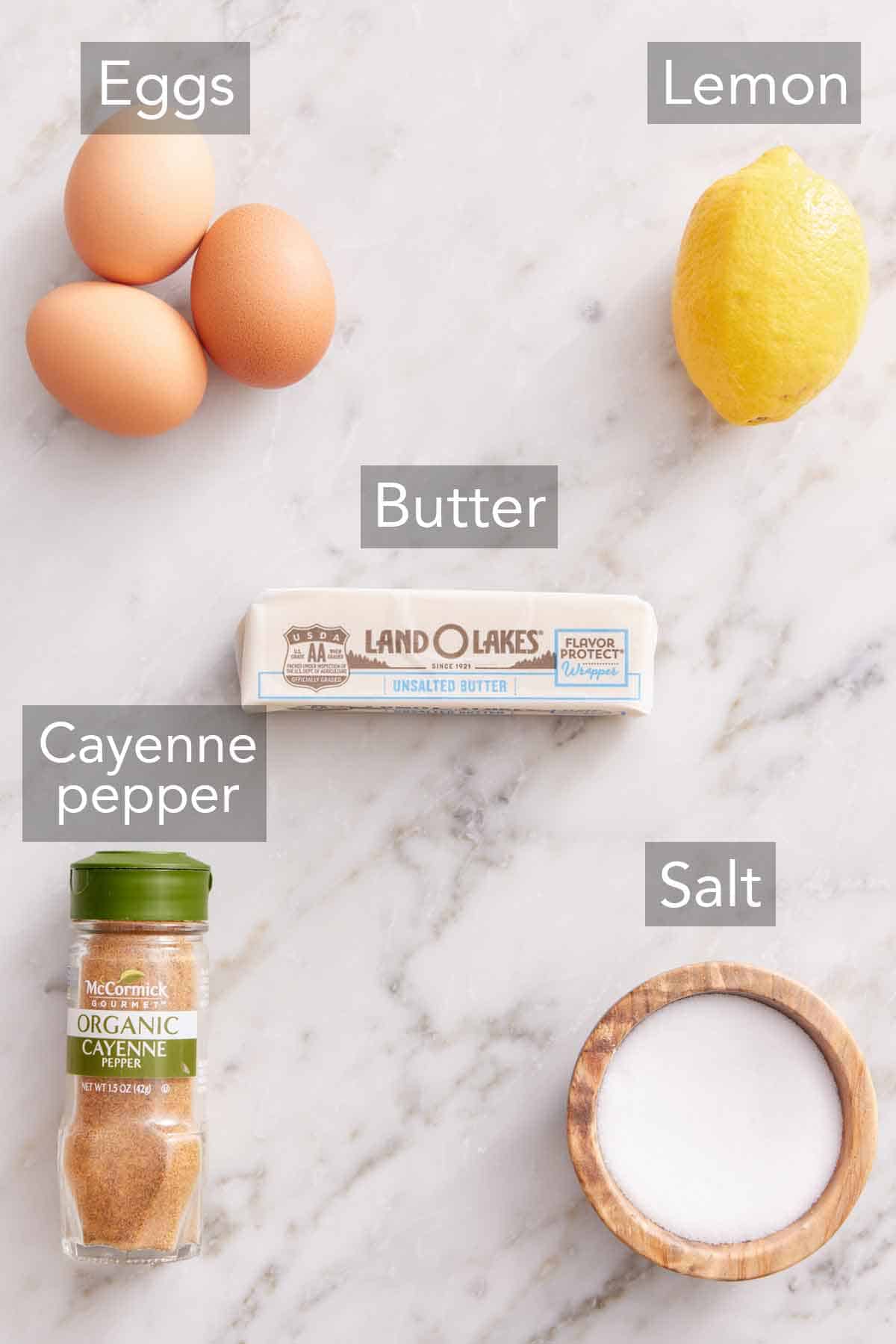
Egg yolks — I like using pasture-raised eggs because of their vibrant orange yolk and rich flavor. Save the egg whites for a batch of coconut macaroons or Swiss meringue buttercream!
Lemon juice — Use freshly squeezed lemon juice (not the bottled stuff) for the best-tasting hollandaise. If you don’t have fresh lemon juice, you can use white wine vinegar.
Butter — Butter helps to thicken the sauce and also adds richness. I opt for unsalted butter, but if you only have salted butter on hand, simply decrease the amount of salt you use by about ¼ teaspoon. No need to melt the butter, either. It goes into the saucepan while it is still cold.
Cayenne pepper — Cayenne pepper adds a very subtle kick to the hollandaise sauce. If you aren’t a fan of spicy foods, don’t worry: This recipe only calls for ⅛ teaspoon of cayenne pepper, so the sauce is not hot at all. You could swap this out for black or white pepper if you prefer.
How to Make Hollandaise Sauce
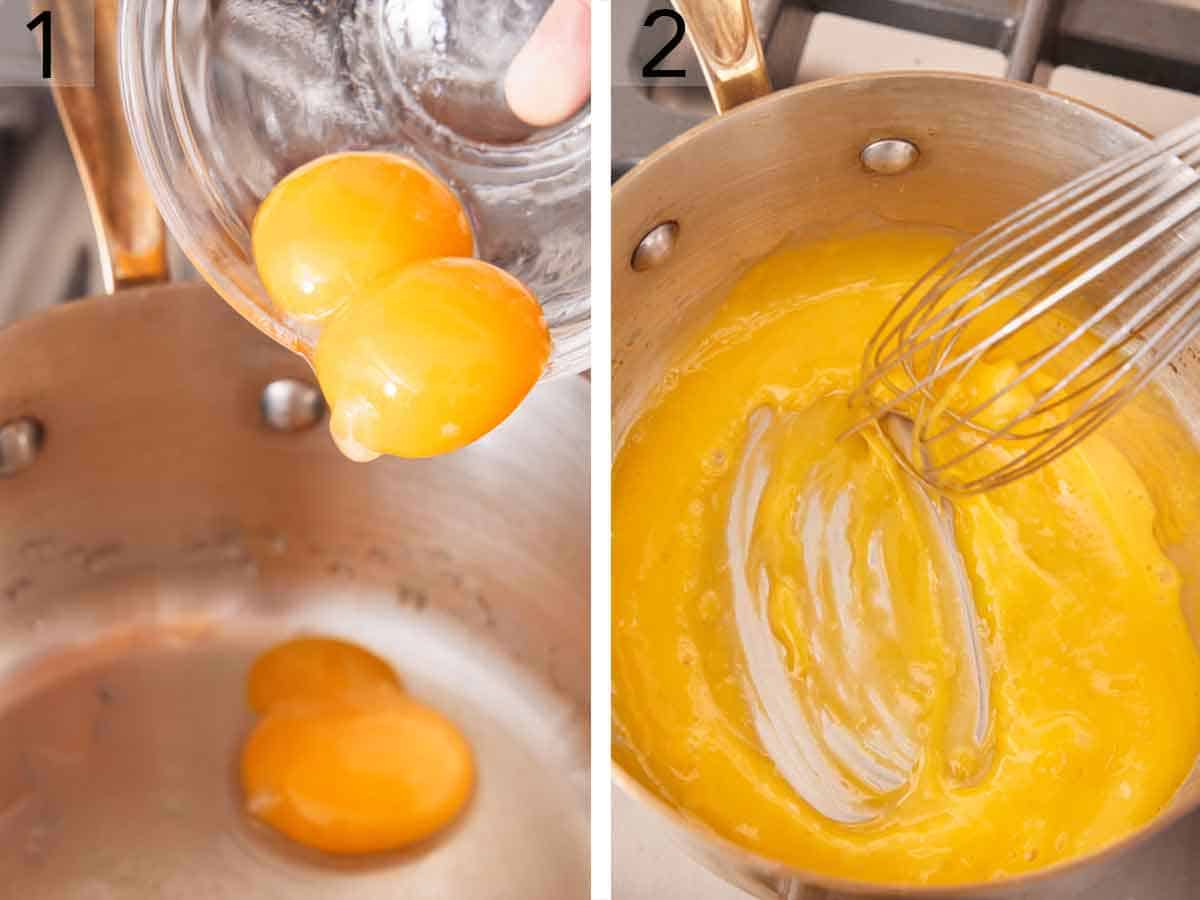
1. Grab a small saucepan and add the egg yolks and lemon juice.
2. Whisk vigorously until blended.
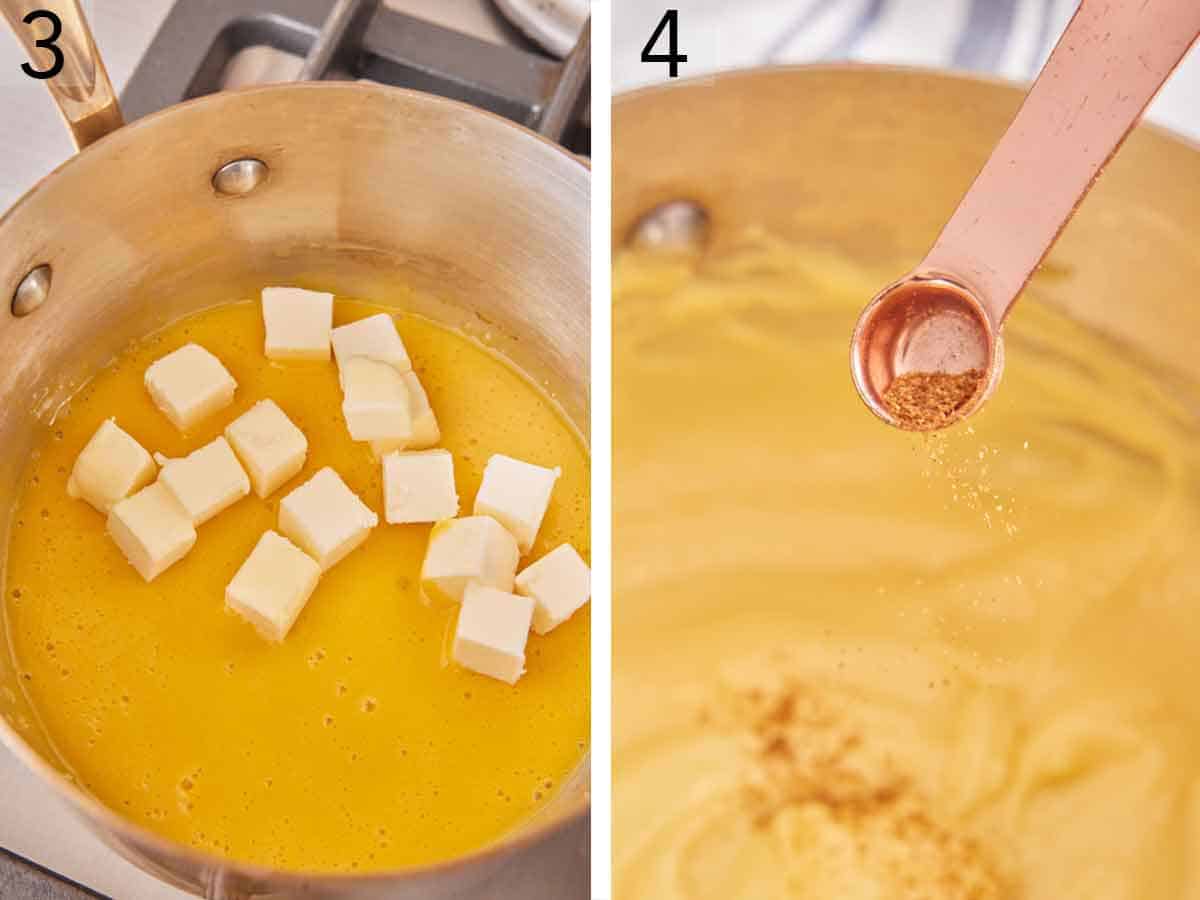
3. Cut the butter into small cubes and add to the saucepan with the egg mixture. Place the saucepan over low heat on the stovetop, whisking continuously. When the butter melts and the mixture has thickened (which will take around 5 minutes), remove from the heat.
4. Add the rest of the butter and whisk vigorously once more. Once the butter melts, you will have a thick, velvety, smooth sauce. Stir in the salt and a pinch of cayenne pepper and serve.

Pro Tips for Making This Recipe
- Don’t throw away the egg whites. You can store egg whites in the refrigerator for a day or two, or you can freeze them for up to 3 months.
- Don’t skip the cayenne pepper. Even if you are not a fan of hot foods, I encourage you to include the cayenne pepper. It does not give you a spicy sauce; it just adds pleasant heat and delightful flavor.
- Whisk, whisk, whisk! To make sure the ingredients emulsify and don’t separate, keep whisking throughout the prep and cooking process!
- Keep the heat low. If your heat is too high and the pot gets too hot, your sauce can thicken up too much and won’t be pourable, or it can separate. If your stove runs hot, move the pot off the heat every 30 seconds or so, whisk it off the heat for a few seconds, then return it. This will give the pot a chance to cool for a few seconds and reduce the risk of overheating the sauce.
- Use the hollandaise sauce as quickly as possible. While it is true that you can refrigerate leftovers, reheating hollandaise can be more complicated than making it in the first place! I try to use the whole batch for one meal, which is easy if I’m preparing brunch for my family or a few friends.
Frequently Asked Questions
You can technically make hollandaise sauce ahead of time, but it will lose some of the velvety texture. Reheating it is tricky, and since the sauce only takes about 10 minutes to whip up, it’s honestly easier to make a fresh batch when you need it! If you do choose to make it shortly before serving, you can keep it in the pot, and reheat it by gently whisking it over very low heat just until it’s warm to the touch and loose enough to pour.
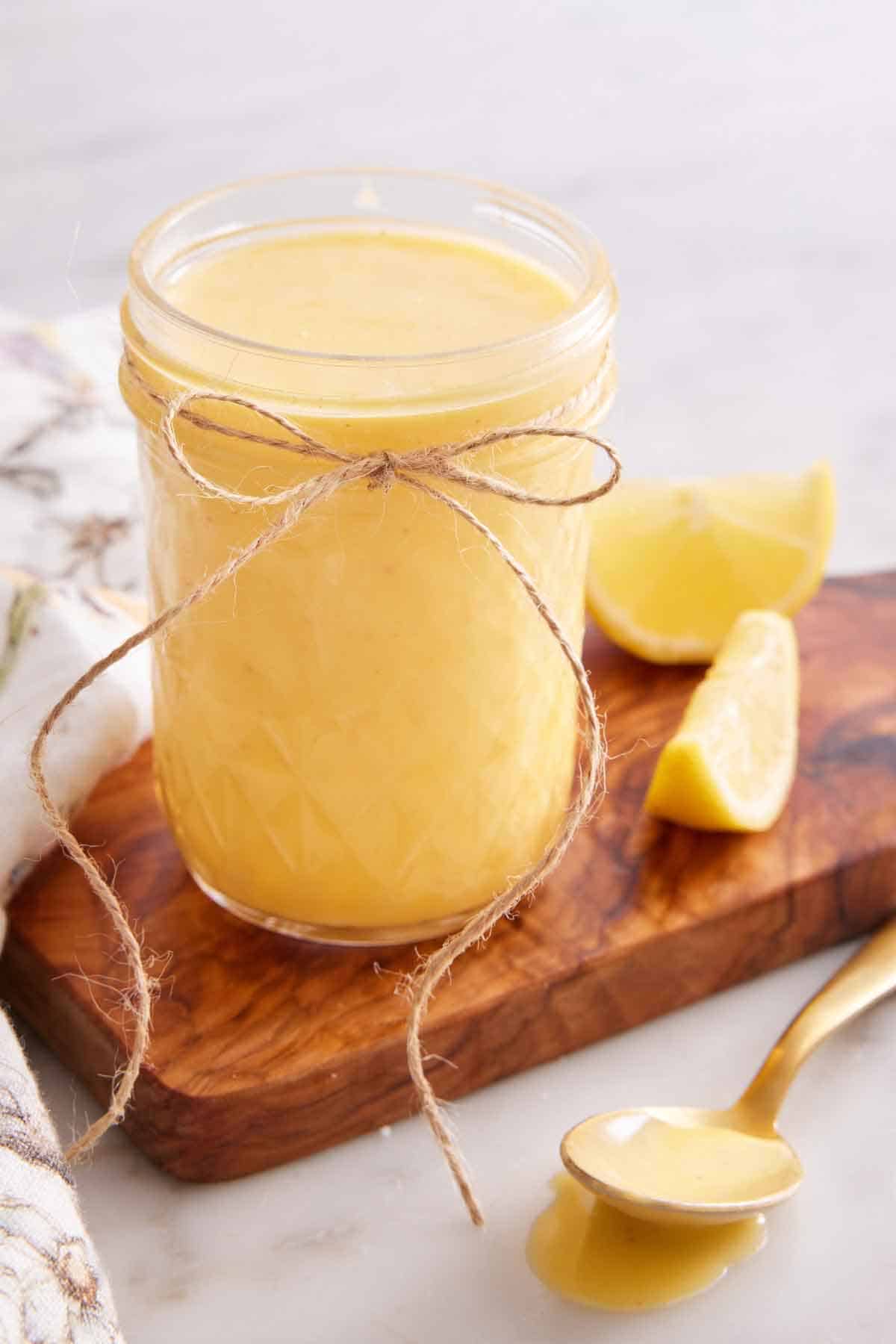
I think the best option is to use all the hollandaise sauce when it has been freshly made. But you can store leftovers in a Mason jar in the refrigerator for 2 to 3 days. Heat it very gently by placing the sealed container in a bowl of warm water so it doesn’t curdle.
While similar in ingredients and classic technique to this homemade hollandaise, a Bernaise is flavored with shallots, black or white pepper, and herbs.
Heating the sauce too much too quickly! With a traditional hollandaise sauce recipe, hot melted butter is whisked into the egg yolk mixture. If the butter is too hot, the emulsion will break. Heat can do the same thing in this recipe, so keep your burner low and remove it occasionally to slow control the heat.
If you’ve tried this recipe, then don’t forget to rate the recipe and let me know how you got on in the comments below, I love hearing from you!
Hollandaise Sauce
Equipment
- Small saucepan or pot
- Whisk
Ingredients
- 3 egg yolks
- 1 tablespoon fresh lemon juice
- ½ cup unsalted butter (113g)
- ½ teaspoon salt
- ⅛ teaspoon cayenne pepper
Instructions
- Combine the egg yolks and lemon juice in a small saucepan, whisking vigorously until blended. Cut the butter into small cubes. Add half of the butter to the pan.
- Place saucepan over low heat, stirring constantly with a whisk, until the butter melts and the mixture thickens, about 5 minutes. Remove from the heat.
- Add the remaining butter and whisk vigorously until the butter melts and is fully incorporated, creating a smooth, velvety sauce. Stir in the salt and cayenne, and serve immediately.
Notes
- Don’t throw away the egg whites. You can store egg whites in the refrigerator for a day or two, or you can freeze them for up to 3 months.
- Don’t skip the cayenne pepper. Even if you are not a fan of hot foods, I encourage you to include the cayenne pepper. It does not give you a spicy sauce; it just adds pleasant heat and delightful flavor.
- Whisk, whisk, whisk! To make sure the ingredients emulsify and don’t separate, keep whisking throughout the prep and cooking process!
- Keep the heat low. If your heat is too high and the pot gets too hot, your sauce can thicken up too much and won’t be pourable, or it can separate. If your stove runs hot, move the pot off the heat every 30 seconds or so, whisk it off the heat for a few seconds, then return it. This will give the pot a chance to cool for a few seconds and reduce the risk of overheating the sauce.
- Use the hollandaise sauce as quickly as possible. While it is true that you can refrigerate leftovers, reheating hollandaise can be more complicated than making it in the first place! I try to use the whole batch for one meal, which is easy if I’m preparing brunch for my family or a few friends.
Nutrition
Have you tried this recipe? Tag me today!
Mention @preppykitchen and tag #preppykitchen!