








I love the refreshing lemon flavor from this moist lemon pound cake. I tested this recipe for the perfect balance of flavor and texture. This lemon loaf is dense like a traditional pound cake, but not heavy or gummy in texture! Lemon zest and lemon juice are used in the batter and the glaze, so every bite is bursting with bright lemon flavor. You will fall in love with this recipe as it’s simple to make and perfect for any occasion.
A reader, Nalani, says: “This is the recipe I have been looking for! I have tried many other lemon breads, and they are all dry or require a syrup soak. This one is moist, and the crumb is perfect!” ★★★★★
Key Ingredients
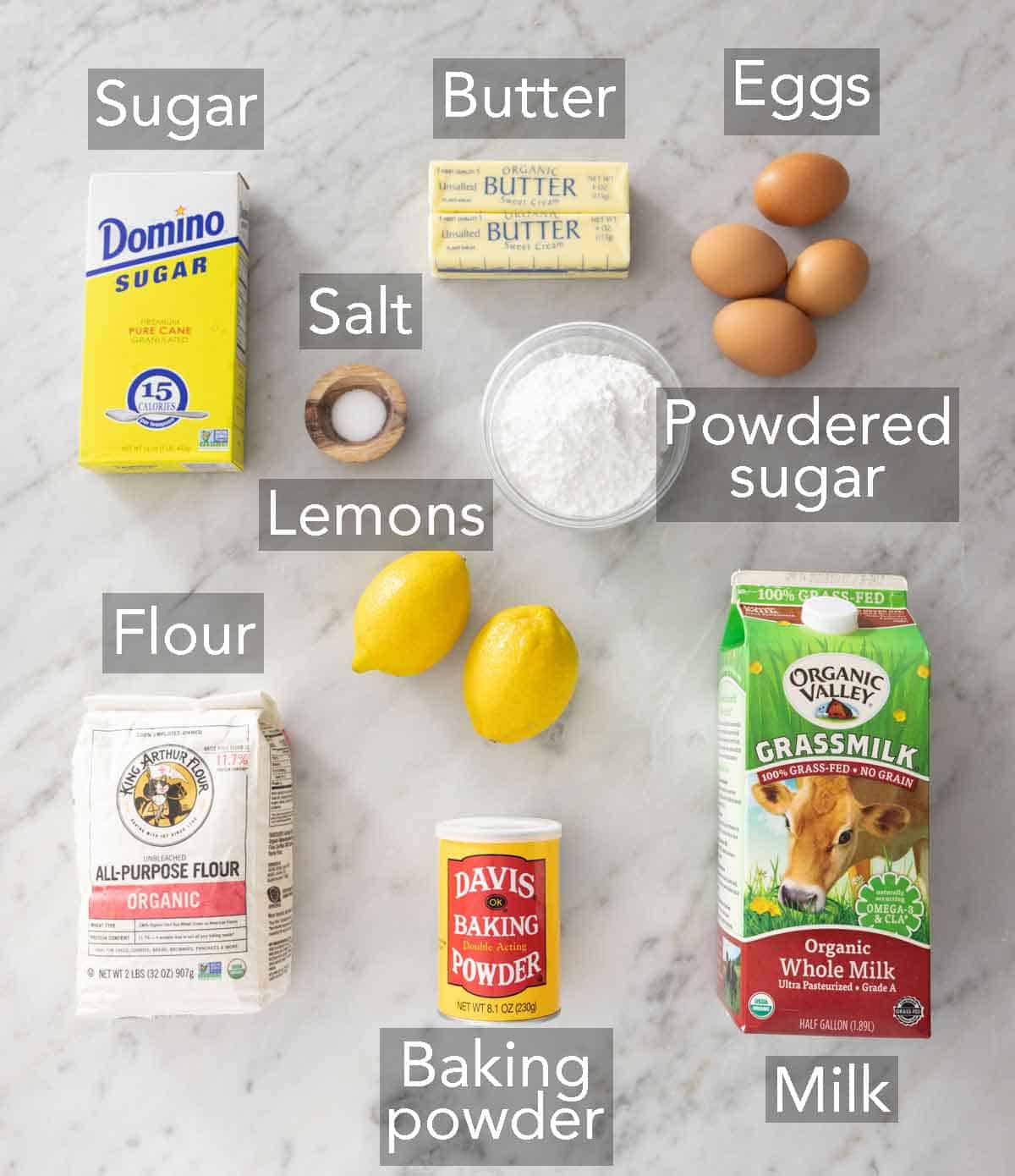
These are the main ingredients you need to make lemon pound cake. You can find the full list of ingredients and measurements in the recipe card below.
Butter — make sure you bring the butter to room temperature so it will cream easily. Room temperature means it’s soft enough, so when you press into it, your finger leaves a dent, but not so soft that it’s greasy or oily. You can follow my tips to soften butter quickly if you don’t have to let it warm up at room temperature. Also, make sure to use unsalted butter to ensure the cake doesn’t turn out too salty.
Lemon — I recommend using lemon zest and freshly squeezed lemon juice for the best flavor for your pound cake. Fresh lemon juice has a brighter flavor than bottled lemon juice, so it’s worth the extra step of juicing a lemon. Plus, the zest is essential to packing in tons of lemon flavor! An average-sized fresh lemon will provide you with about 2 to 3 teaspoons of lemon zest and 3 tablespoons of lemon juice. I recommend picking up two lemons to be on the safe side since you will also need some lemon juice for the glaze.
All-purpose flour — readers often ask me, “What’s the best type of flour to use in baking?” More often than not, I use all-purpose flour in my recipes because it is the most common flour in kitchen pantries, and it makes a perfectly tender cake. Some pound cakes are made with cake flour, but in recipe testing, I found that it wasn’t necessary to use a specialty flour to produce a delicious result.
Eggs — eggs assist the baking powder in helping the cake rise. As the eggs mix into the batter, they create air bubbles that expand in the oven, so the cake rises. The proteins in the eggs also serve as a binder, helping the sugar and flour bake up into that iconic dense but tender pound cake texture.
Milk — I recommend using whole milk for the best flavor. Do not substitute with water. The dairy helps keep the batter from turning dry.
Powdered sugar — this confectioners’ sugar is used to make a sweet, thicker version of my lemon glaze that is drizzled over the cake for a delicious finish. If you do not have any on hand, see my post on how to make powdered sugar at home.
What’s The Secret To Strong Lemon Flavor?
Using lemon zest packs intense lemon flavor into this pound cake. The peel of lemons contains natural lemon essential oils, which are highly concentrated in lemon flavor, so including the zest gives the cake lots of flavor. The juice also adds lemon flavor to the cake and glaze, but is much more subtle. This is why using fresh lemons is a must for the best flavor!

Can I Bake This In A Bundt Pan?
You can double the recipe and bake it in a 12- to 16-cup Bundt pan or 10-inch tube pan. The baking time will be the same. Be sure to grease your pan well with butter and a dusting of flour, or use baking spray with flour. This ensures the cake will release cleanly.
Pro Tips For The Best Lemon Cake
I highly recommend using a scale to measure your flour. It is the most accurate way to ensure you have just the right amount. However, if you don’t have a scale, be sure to fluff your flour with a spoon and then spoon it into your cups before leveling it off with a knife. This method is the best way to measure flour without overpacking the measuring cup. Too much flour will lead to a dense and dry pound cake.
If you forgot to set out your eggs, quickly bring them to room temperature by placing them in a large bowl and covering them with warm tap water for 5 minutes. Room temperature eggs mix much more effortlessly into the batter and will keep the butter from clumping up.
It’s easier to zest a lemon before juicing. I use a microplane or the small holes of a box grater to remove the yellow part of the peel. If your lemon has been in the fridge, bring it to room temperature and roll it on the counter to loosen the juices. This way, you get more juice out of the lemon.
Avoid overmixing the pound cake batter. If you beat it for too long after the flour has been added, you can overdevelop the gluten, and it will lead to a tough and rubbery cake. Stop mixing when you see all the dry streaks of flour disappear. If needed, you can scrape down the bowl and mix for a few seconds more.
How To Make Lemon Pound Cake
Below, I’ve highlighted portions of the recipe in step-by-step process images along with instructions for making this recipe for lemon pound cake. You can find the full set of instructions in the recipe card below.
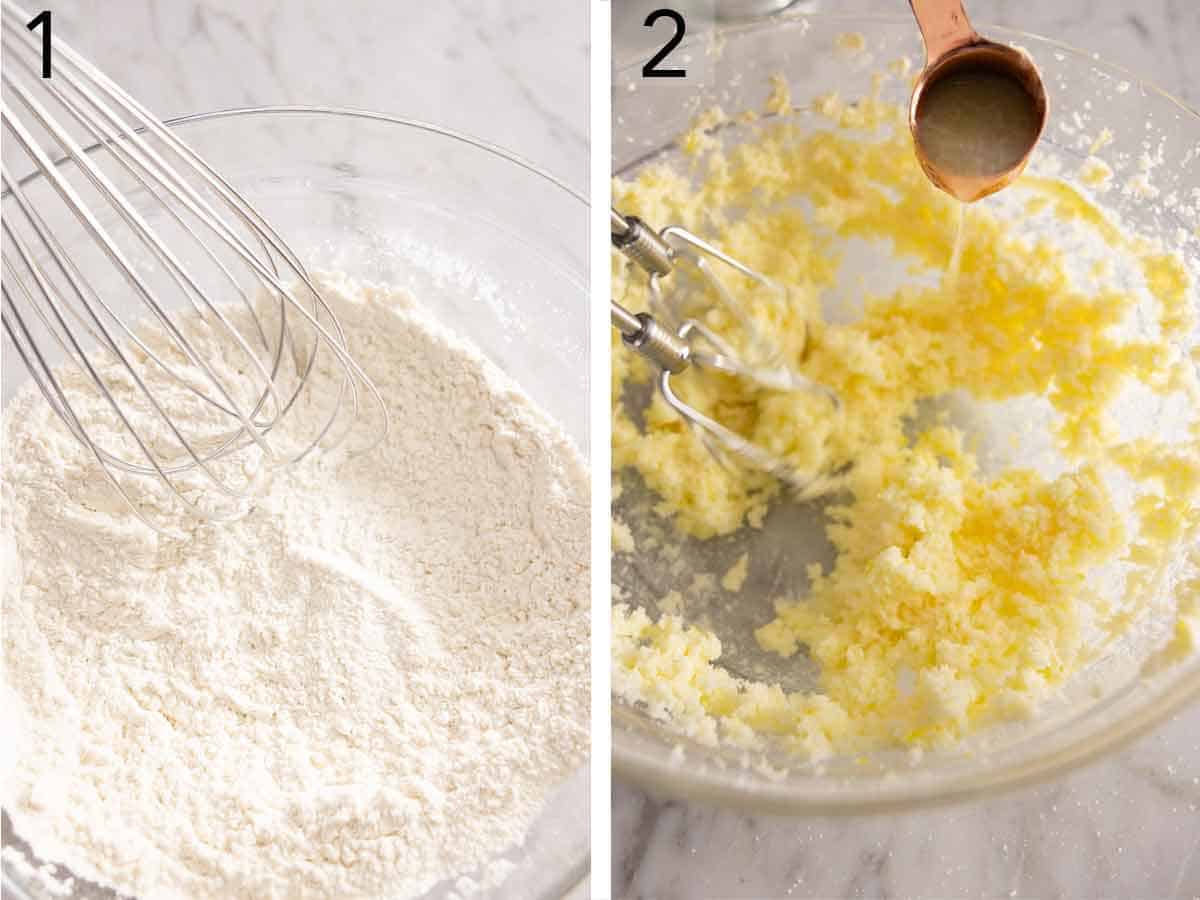
1. Start by mixing together the dry ingredients. Whisk together the flour, baking powder, and salt in a medium bowl and set aside.
2. Cream the butter with sugar in a large bowl with an electric mixer—you can use a hand mixer or a stand mixer with the paddle attachment. Beat until the mixture is lightened in color and appears fluffy, 2 to 3 minutes. Then beat in the lemon juice and zest. Adding the zest here lets the natural lemon oils infuse the fatty butter, amplifying the lemon flavor in the cake.
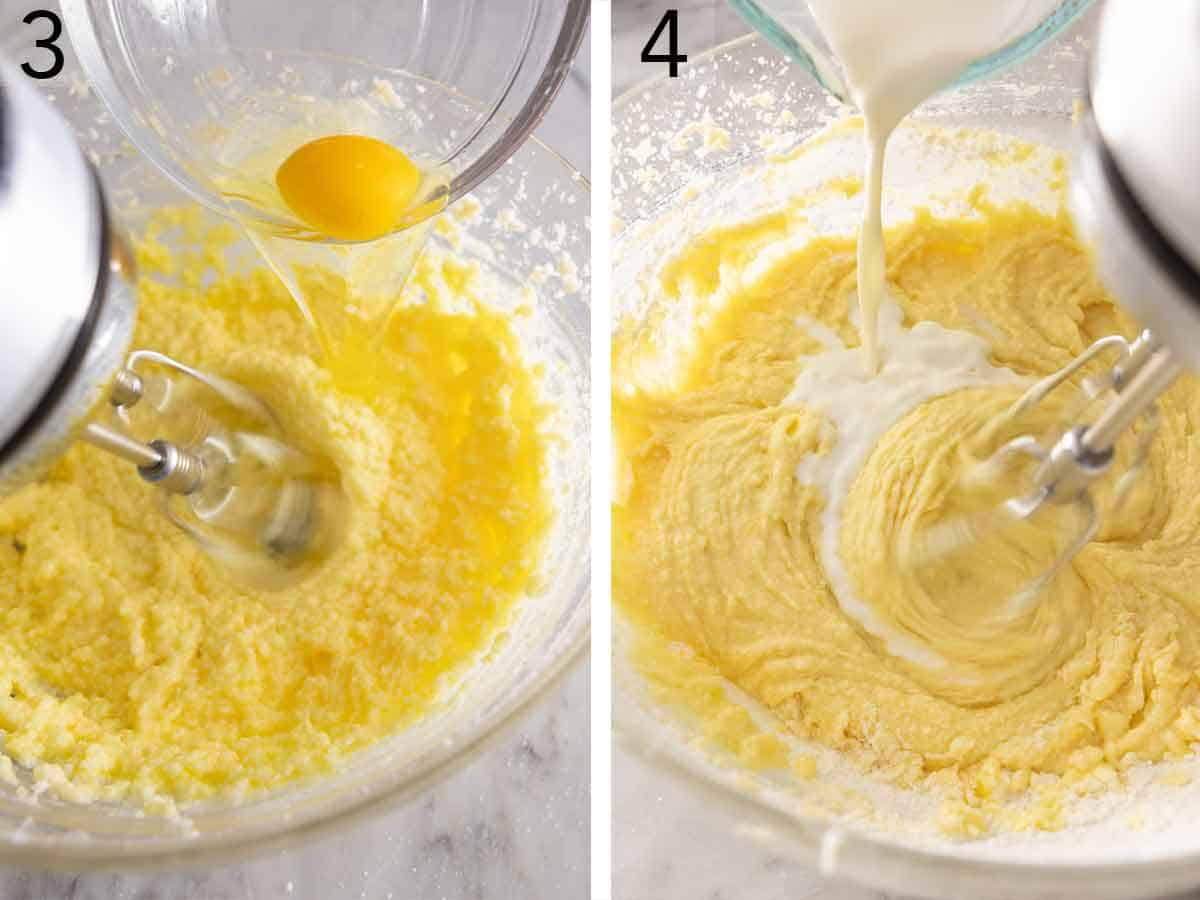
3. Add the eggs one at a time, beating until each egg is well combined before adding the next one. Stop and scrape down the bowl as needed so you don’t end up with large clumps of butter in the mixture.
4. With the mixer running on low, add a third of the flour mixture followed by half of the milk. Repeat with another third of the flour, the rest of the milk, and the last of the flour. Doing this in stages helps to prevent overbeating the batter.

5. Pour the batter into the prepared loaf pan, then bake for 65 to 70 minutes, or until a wooden pick inserted into the center comes out clean. The cake will rise and crack on top—that’s normal! Let it cool in the pan for a few minutes, then remove it and cool completely on a wire rack.
6. Once the cake has cooled, make the glaze. In a medium bowl, whisk together the powdered sugar, lemon juice, and milk until smooth to make the glaze. Drizzle the lemon glaze over the cooled pound cake before serving.

Lemon Pound Cake Recipe
Video
Equipment
- Electric or stand mixer
- Mixing Bowls
- Loaf pan
- Parchment paper
- Wire cooling rack
Ingredients
Pound Cake:
- 2 cups all-purpose flour (240g)
- 1½ teaspoons baking powder
- 1 teaspoon salt
- 1 cup unsalted butter room temperature (227g)
- 1¼ cup granulated sugar (250g)
- 4 large eggs room temperature
- 3 tablespoons fresh lemon juice
- 1 tablespoon grated lemon zest
- ½ cup whole milk room temperature (120mL)
Glaze:
- 1 cup powdered sugar (120g)
- 1 tablespoon fresh lemon juice
- 2 teaspoons whole milk
Instructions
For the Pound Cake:
- Preheat the oven to 350°F. Lightly grease a 9×5-inch loaf pan with baking spray and line with parchment paper.
- In a medium bowl, whisk together the flour, baking powder, and salt.
- In a large bowl using an electric hand mixer or the bowl of a stand mixer fitted with the paddle attachment, beat the butter on medium speed until light and fluffy, about 3 minutes. Gradually beat in the sugar until light and fluffy, about 2 minutes. Beat in the lemon juice and zest. Add the eggs one at a time, beating until well combined before adding the next one. Stop and scrape down the bowl as needed.
- With the mixer on low, add in the flour mixture alternating with the milk. Pour the batter into the prepared loaf pan.
- Bake for 65 to 70 minutes, or until a wooden pick inserted into the center comes out clean. Let the cake cool in the pan for 10 minutes. Remove from the pan and let cool completely on a wire rack.
For the Glaze:
- In a medium bowl, whisk together the powdered sugar, lemon juice and milk until smooth. Drizzle over cooled pound cake before serving. Store any leftovers in an airtight container at room temperature for up to 4 days.
Notes
- Tent the cake with foil for the final 15 minutes if the lemon pound cake is browning too quickly. The foil will shield the top of the cake from direct heat in the oven and prevent it from burning.
- If you’re a fan of lemon poppyseed muffins, you can add 1 tablespoon of poppy seeds to the batter!
Nutrition
Storing Lemon Pound Cake
If you have leftovers, store them at room temperature for up to 4 days in an airtight container. It will dry out if you simply wrap it loosely with plastic wrap.
Freezing: This cake freezes wonderfully with or without the glaze. Wrap the cake with plastic wrap and then tin foil before freezing for up to 3 months.
You can also freeze individual slices to pull them out as needed. Simply wrap them up individually in plastic and transfer the slices to a freezer-safe bag. Bring the cake to room temperature before enjoying it. Do not thaw frozen cake in the microwave or oven, as it will dry out.

FAQs and Troubleshooting
If you don’t have fresh lemons, then lemon extract can work in a pinch. The substitution is ½ teaspoon of extract per 1 teaspoon of lemon zest. So for this recipe, use 1½ teaspoons of lemon extract in the cake batter and replace the lemon juice with additional milk. For the glaze, use water in place of the lemon juice and add ½ teaspoon of vanilla extract or ¼ teaspoon of lemon extract.
This happens because the outer edges of the cake set before the center does. As the cake batter in the center continues to rise, it pushes the set sides apart and forms the crack. It is totally normal and actually something I love in a pound cake! The crispy edges of the crack top are so delicious.
Yes! This recipe works great with other citrus fruits like orange, lime, or grapefruit. I also have a delicious orange cake recipe, if you are looking for something specifically made with oranges!
More Dessert Recipes To Try
If you love lemon desserts, try one of my other citrus-packed recipes!
My lemon tart has a press-in buttery tart crust and a luscious lemon curd filling. This recipe is easy to make and delicious with fresh lemons or Meyer lemons!
One of my most popular recipes, these homemade lemon bars are a must-bake! The crust is buttery and tender, perfectly balanced with the sweet-tart lemon filling on top.
My three-layer lemon blueberry cake is an excellent dessert for any summer party! The cake layers are fluffy, packed with fresh blueberries, and coated with a lemon buttercream.
If you’re looking for an easy recipe, these lemon cookies are perfect to bake. They bake up soft and tender and are finished with a drizzle of lemon glaze.
Make a jar of homemade lemon curd to serve with a number of desserts! It’s perfect for filling cakes, spooning over meringues or ice cream, or folding into whipped cream for an easy lemon mousse.
If you’ve tried this lemon pound cake recipe, then don’t forget to rate it and let me know how you got on in the comments below. I love hearing from you!
A.moore says
Can I use dry fat free milk instead?
Sarah Ward (Executive Editor, Preppy Kitchen) says
Hydrate it with water as directed by the package direction first.
Many says
I made lemon pound cake today for the first time and I love it. I have never tried it before so I was a little nervous if I would love it or not. I don’t really like sour dessert but my husband requested this cake so I tried. I reduce sugar 1/3 as I saw someone here did that. The sweetness is perfect for me. So I suggest anyone who doesn’t like sweet cake to try reducing sugar. Frankly speaking, I made mistake by overlooked 1 ingredient which is milk and I realized that after the cake was in the oven! However, the texture is still pretty good and my husband didn’t even noticed that. So if you don’t have milk, you can skip it and your cake will be fine.
Naya says
Made it twice, super delicious, recommend going extra on the lemon zest to ensure it has lemon flavor
Nasimiyu says
Perfect perfect perfect! The crumb is the best I’ve ever had! Even when I reduce the sugar by 1/3, it still doesn’t disappoint and it’s gone so fast!
Karen Samuels says
Oh my goodness. This recipe is simply delicious- all John’s recipes are! I baked it last night and baked another one today. That’s how good it is. Thank you, John for sharing your talent