This post may contain affiliate links. Please read our disclosure policy.



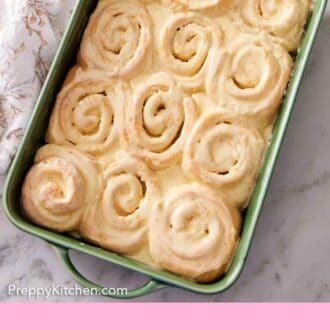

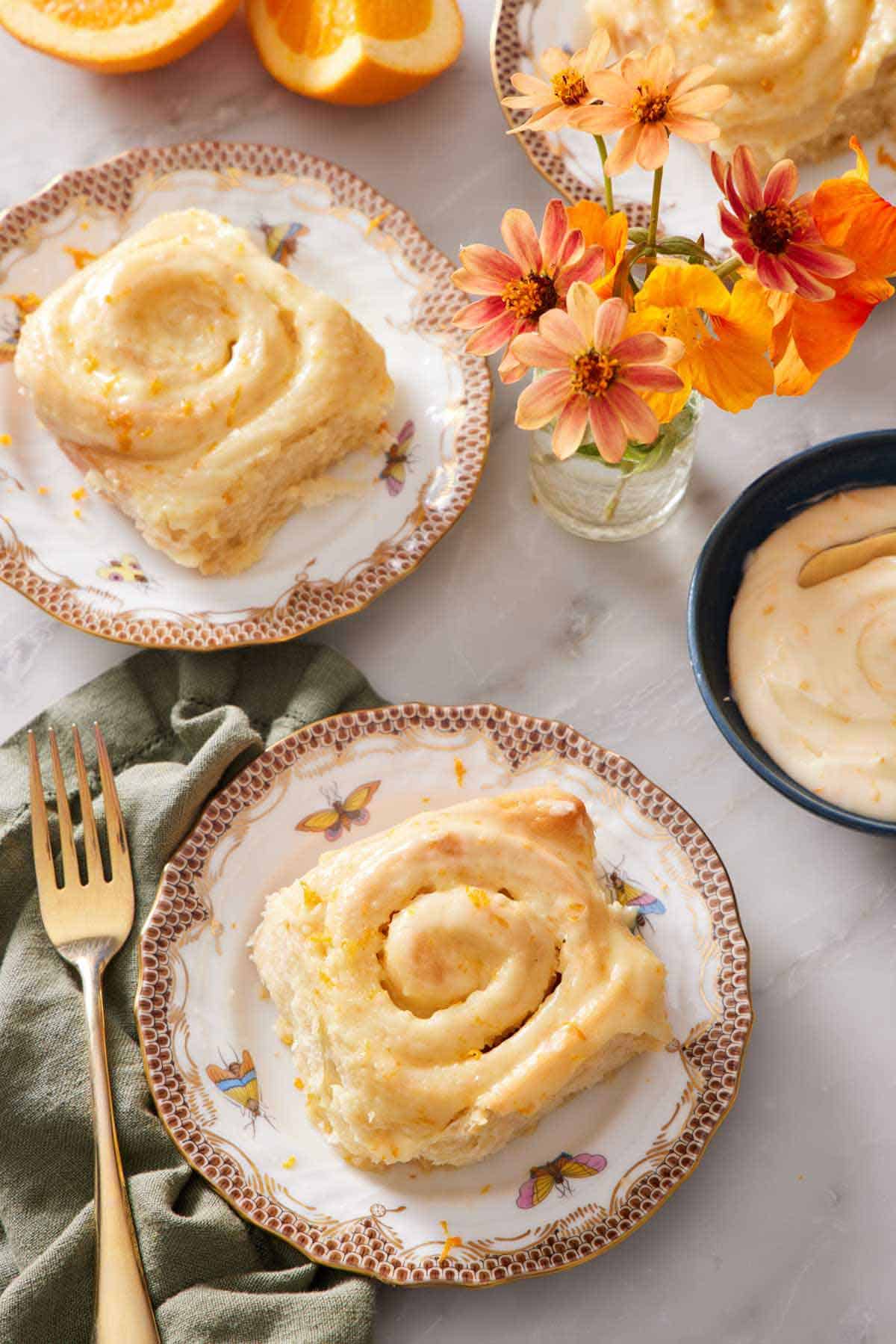
Fluffy Orange Rolls stuffed with sweet orange zest filling and topped with a simple powdered sugar glaze are extra special when served on Christmas morning! Bake up a batch for the perfect, warm morning bun to serve with coffee.
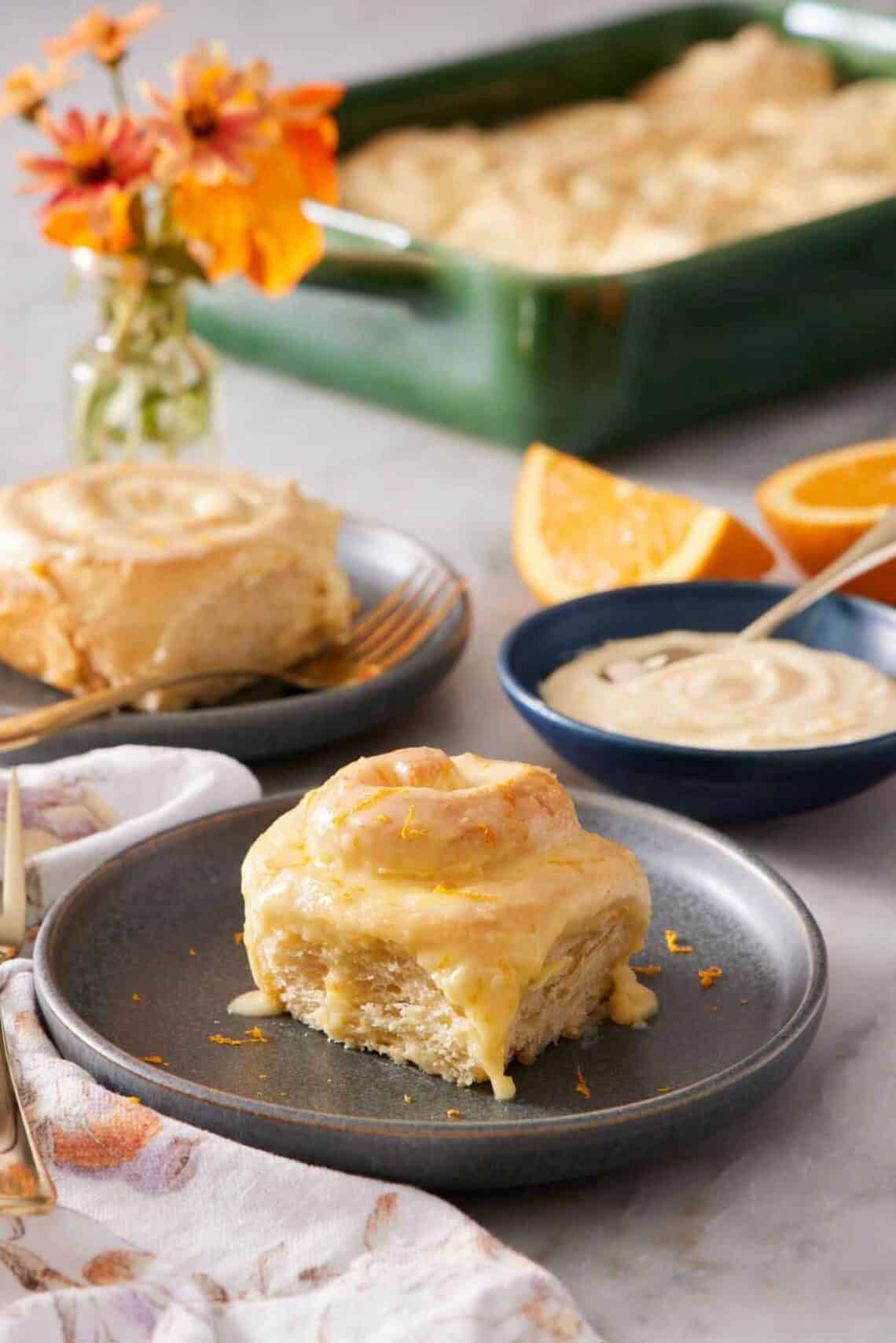
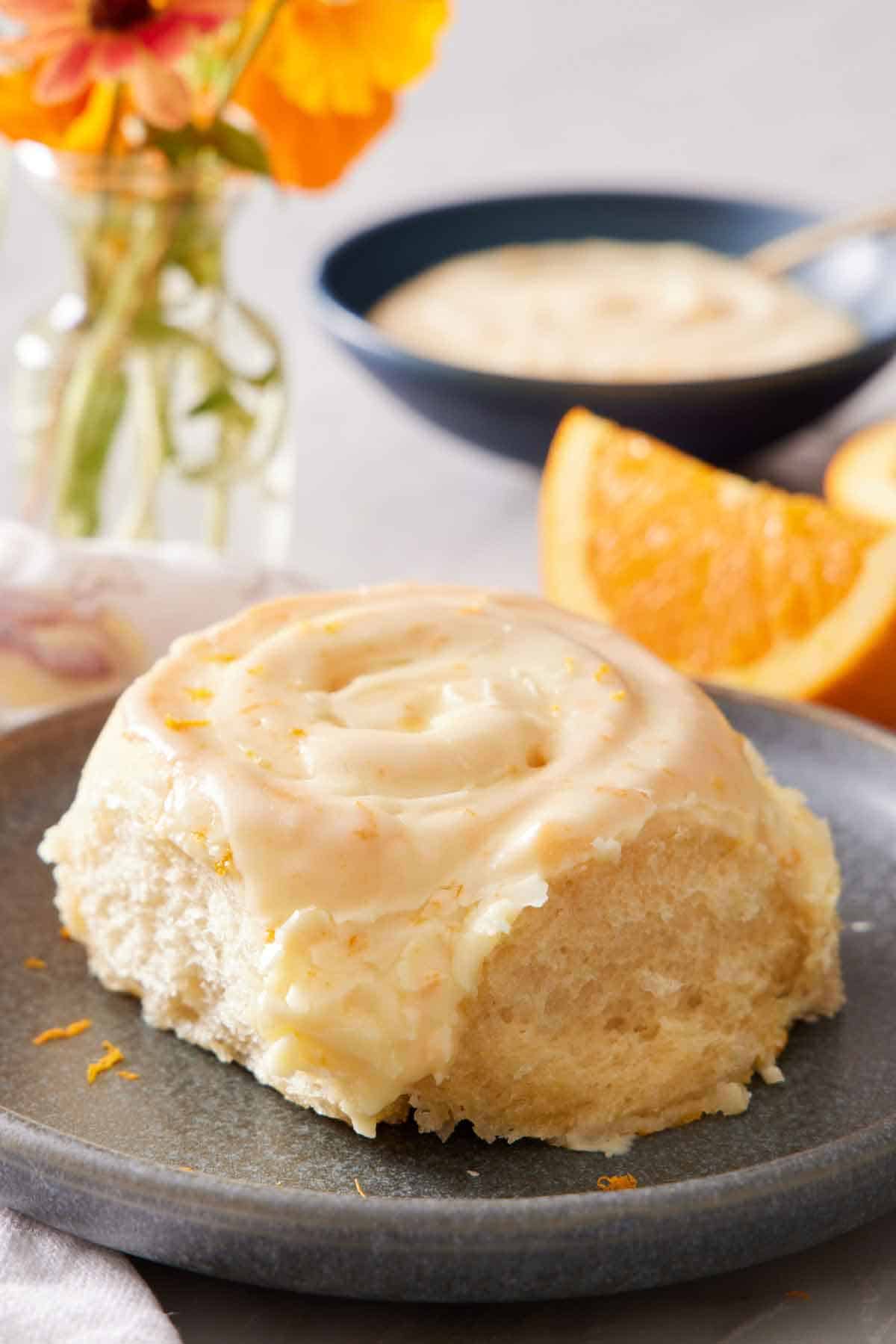
My homemade orange rolls are addictively pillowy, citrusy, and so simple to make! With orange juice both in the dough and the glaze and lots of zest in the filling, you’ll get just the right amount of orange flavor in every bite!
Another great thing about this orange roll recipe is that you can prepare it in advance to save time during the hectic holiday season. I share all the tips below for making them ahead of time, either by refrigerating or freezing them. For more sweet breakfast recipes, try my cinnamon rolls, strawberry rolls, and sticky buns.
Ingredients
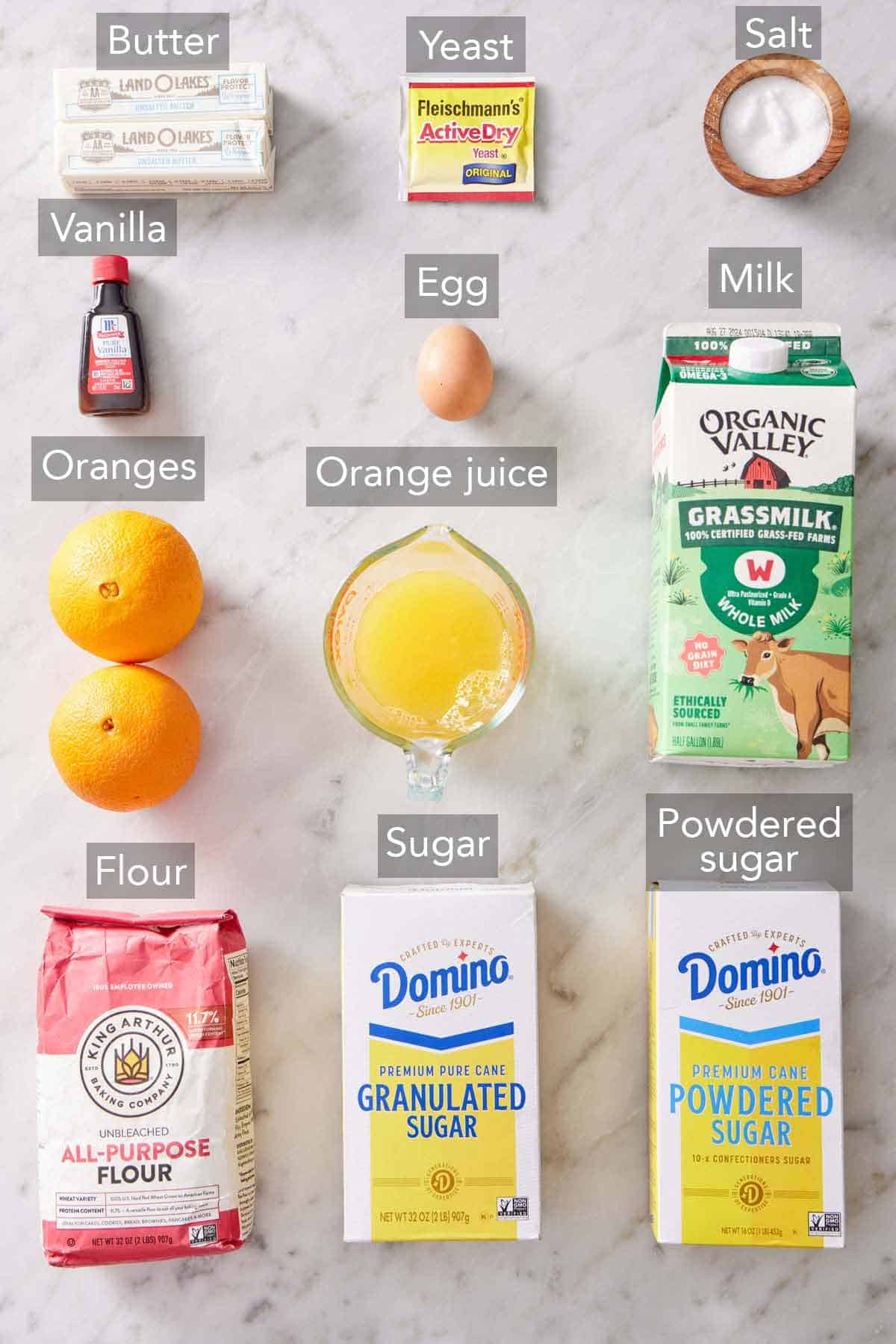
Whole milk — you need warm milk, 110°F to 120°F, to activate the dry yeast.
Sugar — sugar helps to feed and activate the yeast and makes the gooey orange filling for the rolls.
Yeast — use active dry yeast. Double-check its expiration date to make sure it is still active.
Flour — all-purpose flour is all you need for these orange rolls to turn out fluffy and tender.
Orange juice — orange juice infuses the dough with citrus flavor. Use fresh orange juice and squeeze it after zesting the oranges.
Butter — melt and cool unsalted butter to add richness to the dough.
Egg — an egg binds the dough and provides structure.
Vanilla — use good vanilla extract for the best flavor.
Filling — for the zingy filling, you need granulated sugar, flour, orange zest, and softened butter.
Glaze — for the simple glaze, you need powdered sugar, orange juice, melted butter, vanilla extract, orange zest, and a little salt.
How To Make Orange Rolls
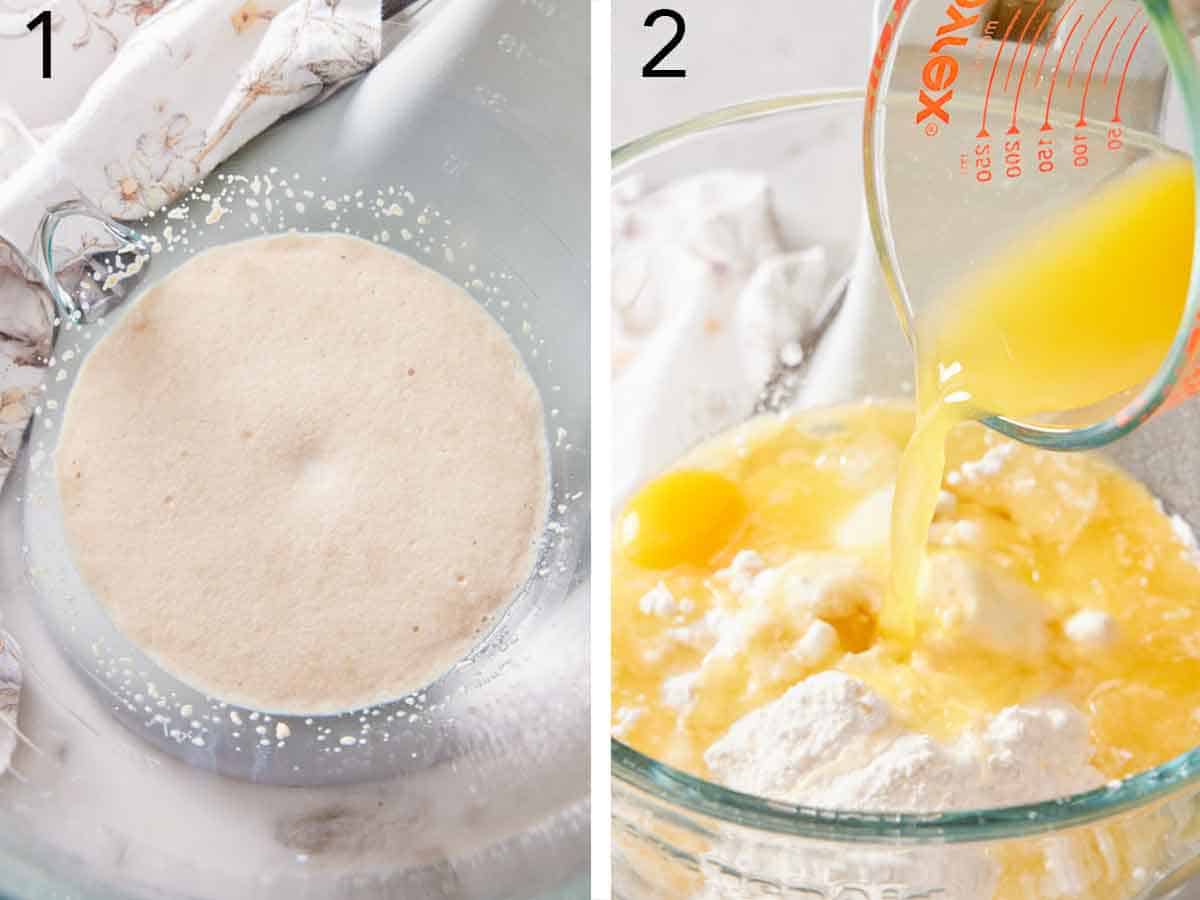
1. Activate the yeast in the bowl of a stand mixer fitted with the dough hook attachment by stirring together the warm milk, granulated sugar, and yeast. Let stand until foamy.
2. Add 4¼ cups of flour, the orange juice, cooled melted butter, egg, vanilla extract, and salt to the yeast mixture.
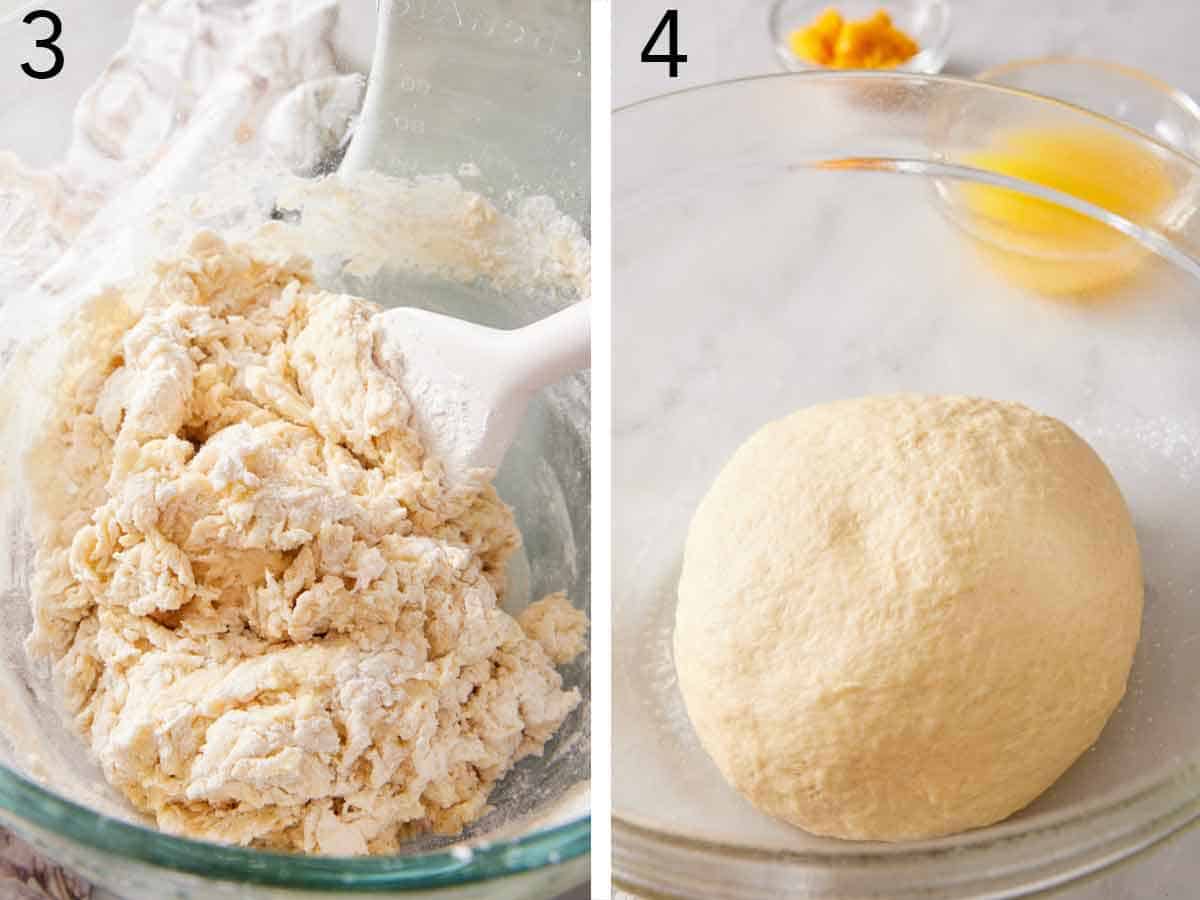
3. Using a spatula, mix until all of the flour is incorporated and a shaggy dough forms.
4. Place the bowl on the stand mixer and mix on low speed for 5 to 7 minutes, until the dough is smooth, wraps around the dough hook and pulls away from the sides of the bowl. The soft dough is ready when it is smooth and springs back quickly when pressed with a fingertip.
Remove the dough from the mixing bowl and spray the bowl with nonstick spray, then return the dough to the bowl and cover it with plastic wrap. Let the dough rise in a warm, draft-free place, about 75°F, for 1 hour to 1 hour and 15 minutes or until nearly doubled in size.
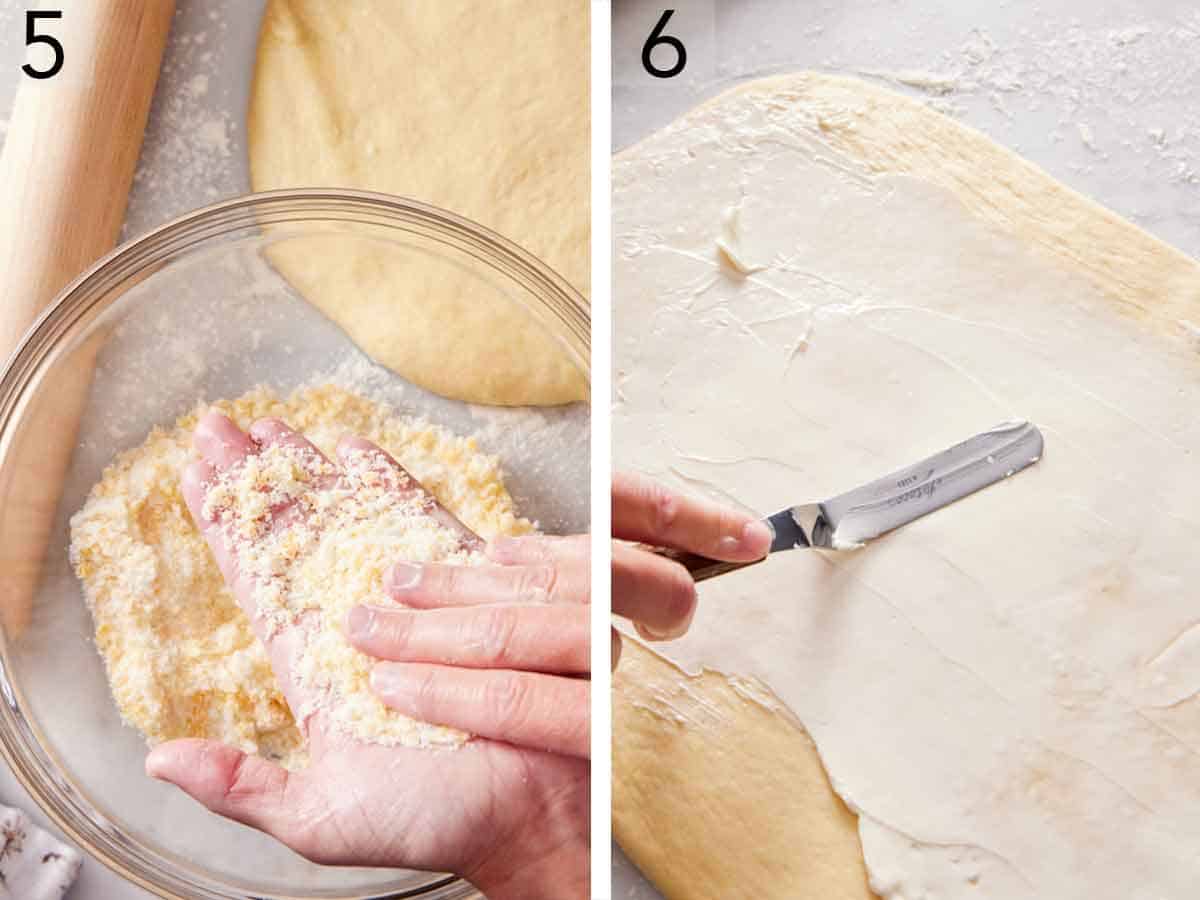
5. Make the filling in a small bowl. Stir together the sugar and flour. Mix in the orange zest and massage the mixture with your fingers to incorporate the sugar and the zest together.
6. After its first rise, turn the dough onto a lightly floured surface. Form the dough into a rectangle. With a rolling pin, roll the dough into a 12×18-inch rectangle, about ¼-inch thick. Use a bench scraper to press the edges of the dough towards the center to make straight sides and a neat shape. Then, with a butter knife or small offset spatula, spread the softened butter onto the dough in an even layer, leaving a ½-inch border on the long side, farthest away from you.
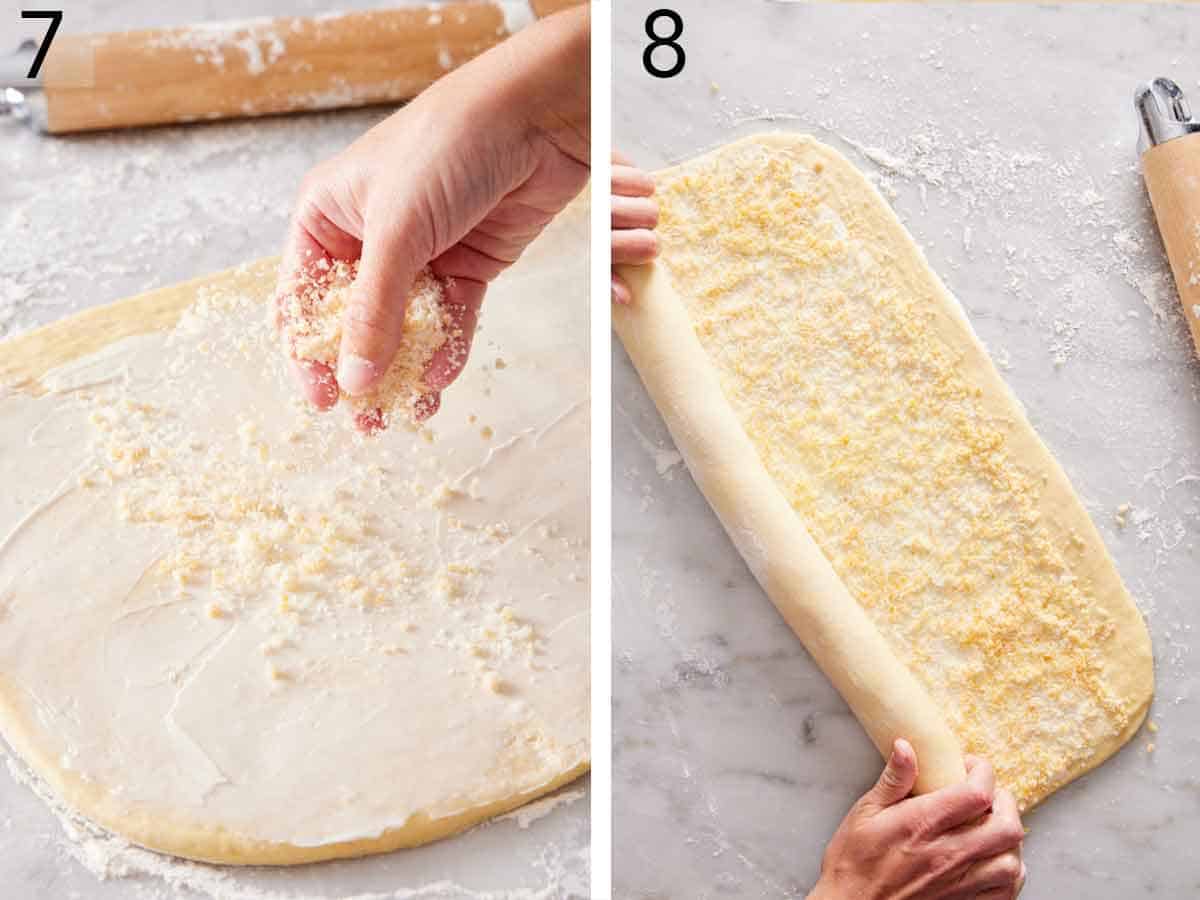
7. Sprinkle the orange filling mixture evenly over the butter.
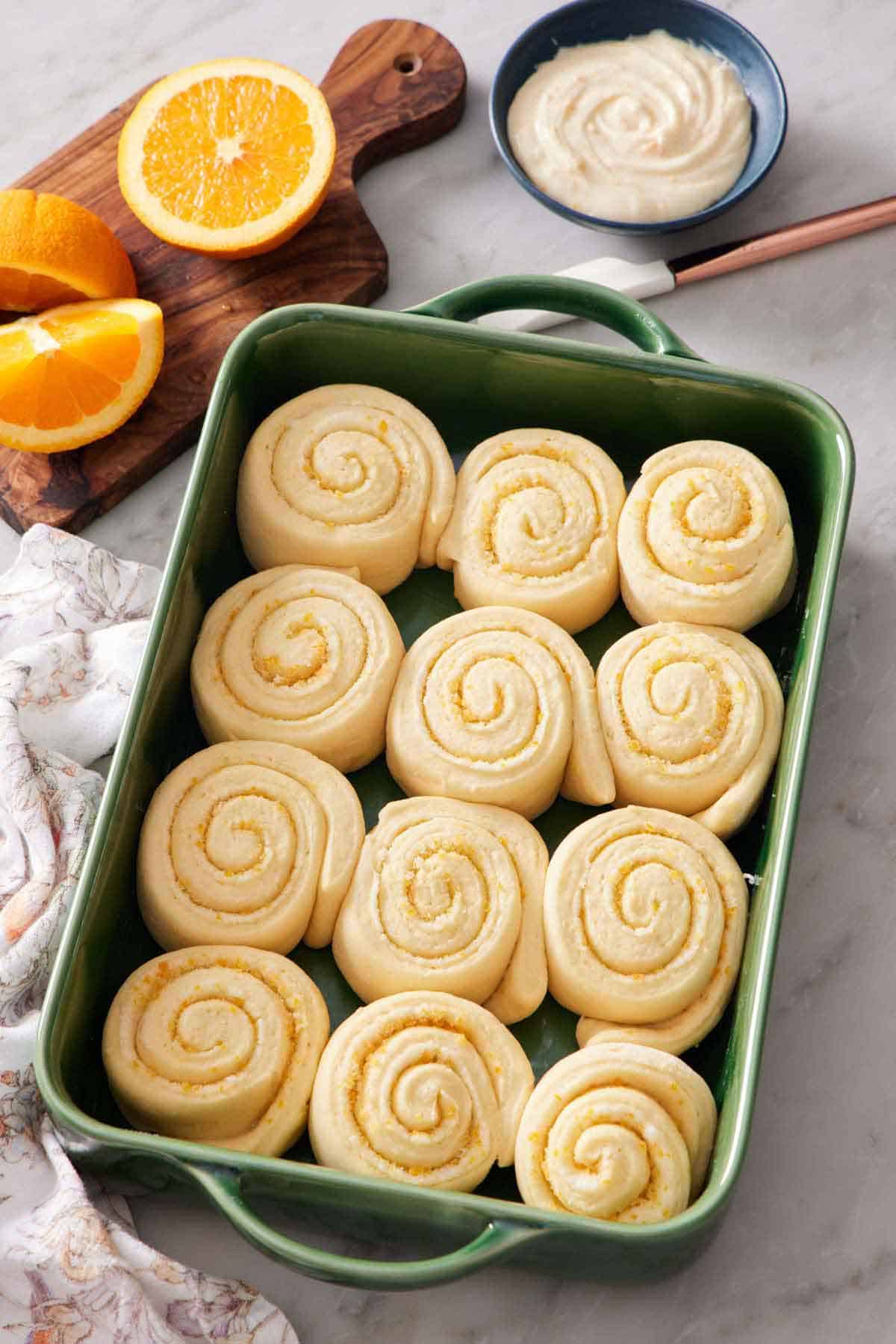
8. Starting with the long side closest to you, roll the dough into a tight log. Cut the log into 12 equal pieces (about 1½ inches wide).
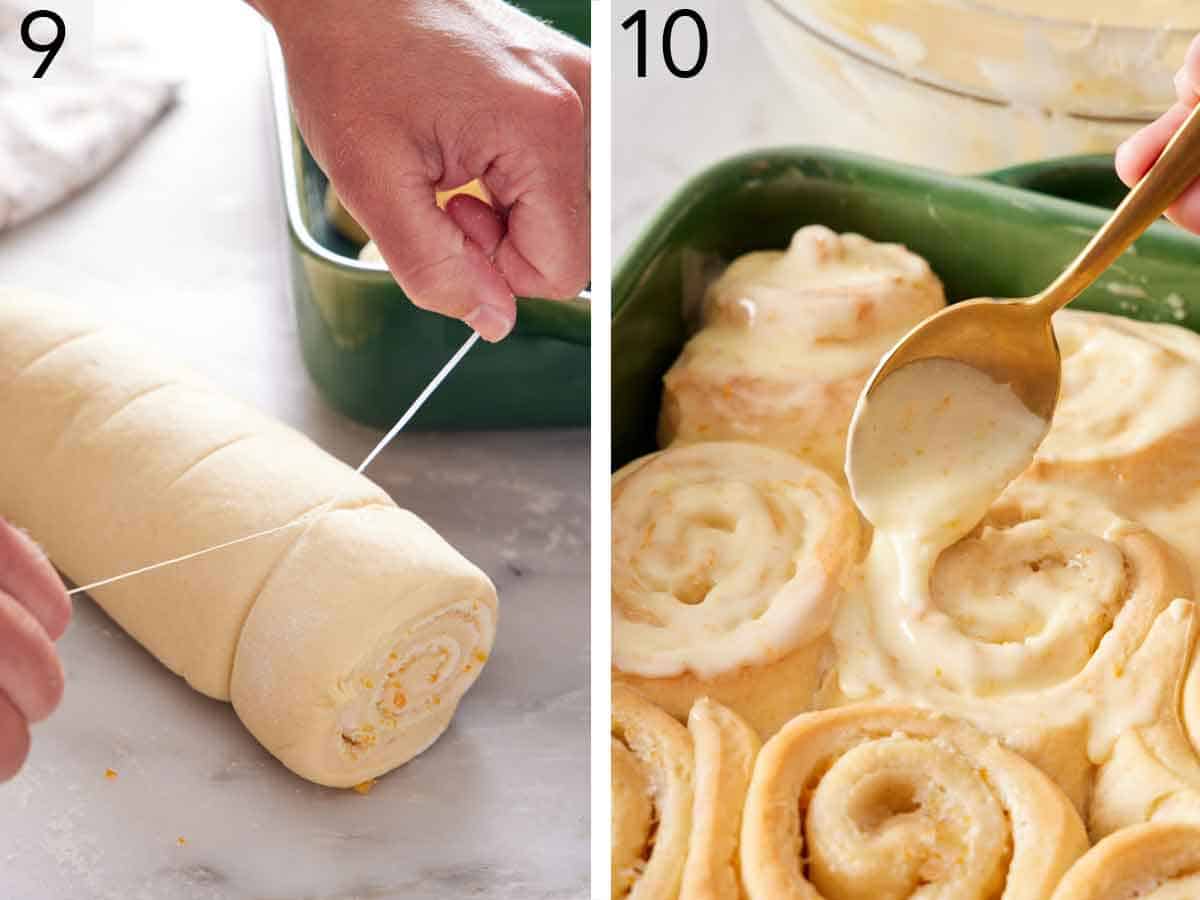
9. To cut the dough, you can use a sharp, serrated knife. Or, string a piece of unflavored dental floss underneath the log and pull up on the floss, crossing your hands and the floss above the log. Place the rolls cut side down and evenly spaced in a 9×13-inch baking pan lightly greased with softened butter.
Cover with plastic wrap and let rise again in a warm place (75°F) for 45 minutes to 1 hour, until the sides are touching and the rolls are puffed. Once 30 minutes of rising have passed, preheat the oven to 350°F. Uncover the orange rolls and bake for 22 to 25 minutes or until lightly golden brown on top. Let cool for 20 minutes.
10. While the rolls cool, make the glaze. In a large bowl, whisk together powdered sugar, 5 tablespoons of orange juice, butter, vanilla, orange zest, and salt. If the icing is too thick, whisk in the remaining 1 tablespoon of orange juice. Spread the glaze over the warm orange rolls and serve.
How To Mix The Dough By Hand
If you don’t have a stand mixer, you can knead this dough by hand. Mix the dough together as directed until it is shaggy. Then, flour a clean work surface and turn the dough onto it. Knead it until it is smooth and springy. You can flour your hands and the dough very lightly as needed throughout kneading. When it’s done, the dough should feel moist and easily come off of your hands.
Rub The Zest Into The Sugar For More Flavor
If you love a punchy orange flavor, rub the zest with the sugar for the filling! Before combining the flour and sugar for the filling, add the sugar and orange to the bowl. Massage the zest into the sugar mixture with your fingers until it feels wet, is light orange in color, and is very fragrant. Then, stir in the flour. This process infuses the sugar with the citrus oils in the zest, which brings out the flavor more.
How To Cut The Perfect Rolls
Using a sharp knife might seem like the best option, but cutting through the log can squash the dough and misshape the rolls.
To cut the filled dough log into perfect rolls, use a somewhat unlike kitchen tool–unflavored dental floss! (Be certain that it is unflavored to avoid any minty flavoring getting onto the rolls.) Mark a line for the thickness of each roll on the top of the log so you know where to cut. Slide a long piece of dental floss under the log at a mark. Cross the floss ends up and over the log, and pull the ends in opposite directions to cut it. This will keep the spirals intact.
If you don’t have unflavored floss, you can use a sharp, serrated knife and saw back and forth a few times rather than pressing and cutting straight through.
Make-Ahead Instructions
There are two simple ways to make these orange rolls in advance. Make overnight orange rolls by chilling them before the second rise, or freeze the baked rolls so you can easily thaw and serve them!
Refrigerate unbaked rolls: Shape and place the cut rolls in the prepared pan. Cover with plastic wrap and immediately refrigerate the unbaked rolls for up to 18 hours. When you’re ready to bake them the next day, remove them from the fridge and let them sit at room temperature for 1 hour. Then, uncover and bake as directed.
Freeze baked rolls: Bake the rolls as directed, but do not add the glaze. Once the rolls are completely cool, cover tightly with plastic wrap and aluminum foil and freeze them for up to 3 months. Thaw the rolls overnight in the refrigerator before warming them in an oven heated to 350°F. Lastly, top the orange rolls with the powdered sugar glaze and serve.
How To Store And Reheat
Store fully cooled orange rolls in an airtight container in the refrigerator for up to 4 days. Reheat the leftover rolls to refresh them, either in the microwave for about 20 seconds or in the air fryer or oven at 300°F for 3 to 5 minutes.
Pro Tips For Making This Recipe
- Prepare for this recipe by first zesting 4 medium to large oranges. Reserve the zest in a bowl (covered), then juice the oranges. You’ll need the juice for the dough and icing, then the zest for the filling and icing. It’s so hard to zest cut/juiced oranges, so definitely do the zesting first!
- Weigh the flour. To avoid using too much flour, weigh it using a kitchen scale. If you don’t have one, fluff the flour up in its container, spoon it into your measuring cup, and level off the top with a knife.
- Pay attention to ingredient temperature. For the dough, you need melted butter and a room-temperature egg. For the filling, you need softened butter (if you forget to set it out to soften, check out my tutorial for how to soften butter). Make sure the butter for the filing is very soft and spreadable. If it’s too cold, it can tear the dough when you spread it. Lastly, for the glaze, you need melted butter.
- Glazing tip: I like to spread about two-thirds of the glaze over the warm rolls, then let the rolls cool further before drizzling with the remaining glaze. This way, some of the glaze soaks into the rolls, but the last bit gives them a pretty coating on top.
Frequently Asked Questions
Yes. After the dough rises a second time, wrap the baking dish in plastic wrap and aluminum foil and freeze for up to 3 months. Thaw overnight in the fridge, and then bake the orange rolls as directed.
Sure. For a hint of warm cinnamon flavor in the orange rolls, stir 2 to 3 teaspoons of ground cinnamon into the filling mixture after you’ve rubbed the zest and sugar together.
Yes! Meyer lemons, regular lemons, limes, and grapefruit would all work well in this recipe.
If you’ve tried this orange rolls recipe, then don’t forget to rate it and let me know how you got on in the comments below. I love hearing from you!
Orange Rolls Recipe

Equipment
- Stand mixer
- 9×13-inch baking pan
- Rolling Pin
Ingredients
For the Dough:
- ½ cup warm milk (110-120°F) (120mL)
- ¼ cup granulated sugar (50g)
- 2¼ teaspoons active dry yeast (.25oz/7g packet)
- 4¼ cups all-purpose flour plus more for dusting (510g)
- ½ cup orange juice (120mL)
- ¼ cup unsalted butter melted and cooled (56g)
- 1 large egg room temperature
- 2 teaspoons vanilla extract
- 1 teaspoon salt
For the Filling:
- ¾ cup granulated sugar (150g)
- 1 tablespoon all-purpose flour
- 2 tablespoons orange zest
- 6 tablespoons unsalted butter room temperature (85g)
For the Glaze:
- 2½ cups powdered sugar sifted (300g)
- 5 to 6 tablespoons orange juice (75 to 90mL)
- 2 tablespoons butter melted and cooled
- 1 teaspoon vanilla extract
- 1 teaspoon orange zest
- ¼ teaspoon salt
Instructions
For the Dough:
- In the bowl of a stand mixer fitted with the dough hook attachment, stir together the warm milk, granulated sugar, and yeast. Let stand until foamy, about 10 minutes.
- Add the flour, orange juice, cooled butter, egg, vanilla extract, and salt. With a spatula, mix by hand until all of the flour is incorporated and a shaggy dough forms.
- Place the bowl on the stand mixer and mix on low speed for 5 to 7 minutes, until the dough is smooth, wraps around the dough hook and pulls away from the sides and bottom of the bowl. (If the dough gets wrapped too high up around the hook at any point during mixing, stop the mixer, remove it from the dough hook, and place it the bottom of the bowl. Continue to mix.) The dough is ready when it is smooth and springs back quickly when pressed with a fingertip.
- Remove the dough from the mixing bowl and spray the bowl with nonstick spray. Return the dough to the bowl and cover it with plastic wrap. Let rise in a warm place (about 75°F) for 1 hour to 1 hour and 15 minutes or until nearly doubled in size.
For the Filling:
- In a small bowl, stir to combine the sugar and flour. Mix in the orange zest. (Massage the mixture with your fingers, in order to incorporate the sugar and the zest together.)
- Lightly grease a 9×13-inch baking pan with softened butter
- Turn the dough onto a lightly floured surface. Press and stretch the dough into a rectangular shape. With a rolling pin, roll the dough into a 12×18-inch rectangle, about ¼-inch thick. Use a bench scraper to press the edges of the dough towards the center to make straight sides and a neat rectangle shape.
- With a butter knife or small offset spatula, spread the softened butter onto the dough in an even layer, leaving a ½-inch border on the long side, farthest away from you. Sprinkle the orange-sugar mixture evenly over the butter, and spread it to even it out with your hands.
- Starting with the long side closest to you, roll the dough into a tight log. Cut the log into 12 pieces of equal width (about 1½ inches wide). You can use a sharp, serrated knife to cut, or string a piece of dental floss underneath the log and pull up on the floss, crossing your hands and the floss above the log.
- Place the rolls cut side down evenly spaced in the prepared baking dish.
- Cover with plastic wrap and let rise in a warm place (75°F) for 45 minutes to 1 hour, until the sides are touching and the rolls are puffed.
- After 30 minutes of rising, preheat the oven to 350°F.
- Uncover the rolls and bake for 22 to 25 minutes or until lightly browned on top. Let cool for 20 minutes.
For the Glaze:
- Meanwhile, in a large bowl whisk to combine the powdered sugar, 5 tablespoons of orange juice, butter, vanilla, orange zest, and salt. If the icing is too thick, whisk in the remaining 1 tablespoon of orange juice.
- Spread the glaze over the warm rolls. Serve warm.
Notes
- Prepare for this recipe by first zesting 4 medium to large oranges. Reserve the zest in a bowl (covered), then juice the oranges. You’ll need the juice for the dough and icing, then the zest for the filling and icing. It’s so hard to zest cut/juiced oranges, so definitely do the zesting first!
- Weigh the flour. To avoid using too much flour, weigh it using a kitchen scale. If you don’t have one, fluff the flour up in its container, spoon it into your measuring cup, and level off the top with a knife.
- Pay attention to ingredient temperature. For the dough, you need melted butter and a room-temperature egg. For the filling, you need softened butter (if you forget to set it out to soften, check out my tutorial for how to soften butter). Make sure the butter for the filing is very soft and spreadable. If it’s too cold, it can tear the dough when you spread it. Lastly, for the glaze, you need melted butter.
- Glazing tip: I like to spread about two-thirds of the glaze over the warm rolls, then let the rolls cool further before drizzling with the remaining glaze. This way, some of the glaze soaks into the rolls, but the last bit gives them a pretty coating on top.
Nutrition
Have you tried this recipe? Tag me today!
Mention @preppykitchen and tag #preppykitchen!