This post may contain affiliate links. Please read our disclosure policy.
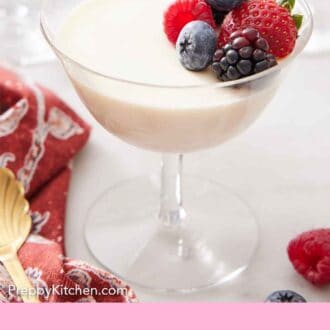
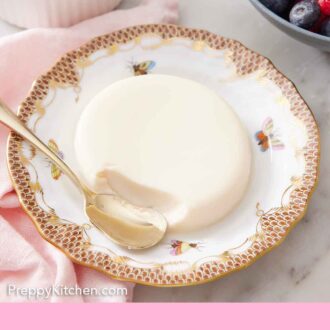
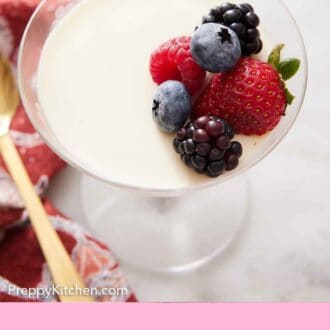
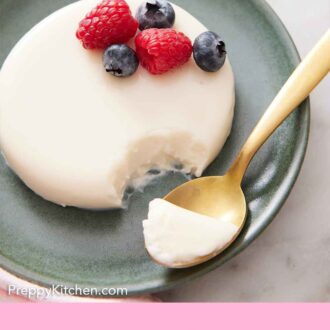
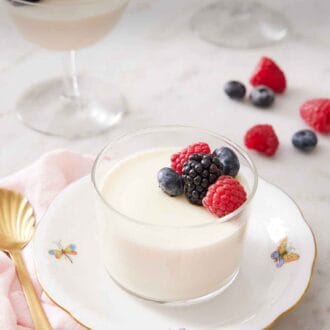
This classic vanilla Panna Cotta is rich and creamy with the perfect velvety mouthfeel. Easy enough for a weeknight, sophisticated enough for a dinner party—the hardest part is waiting for it to set!
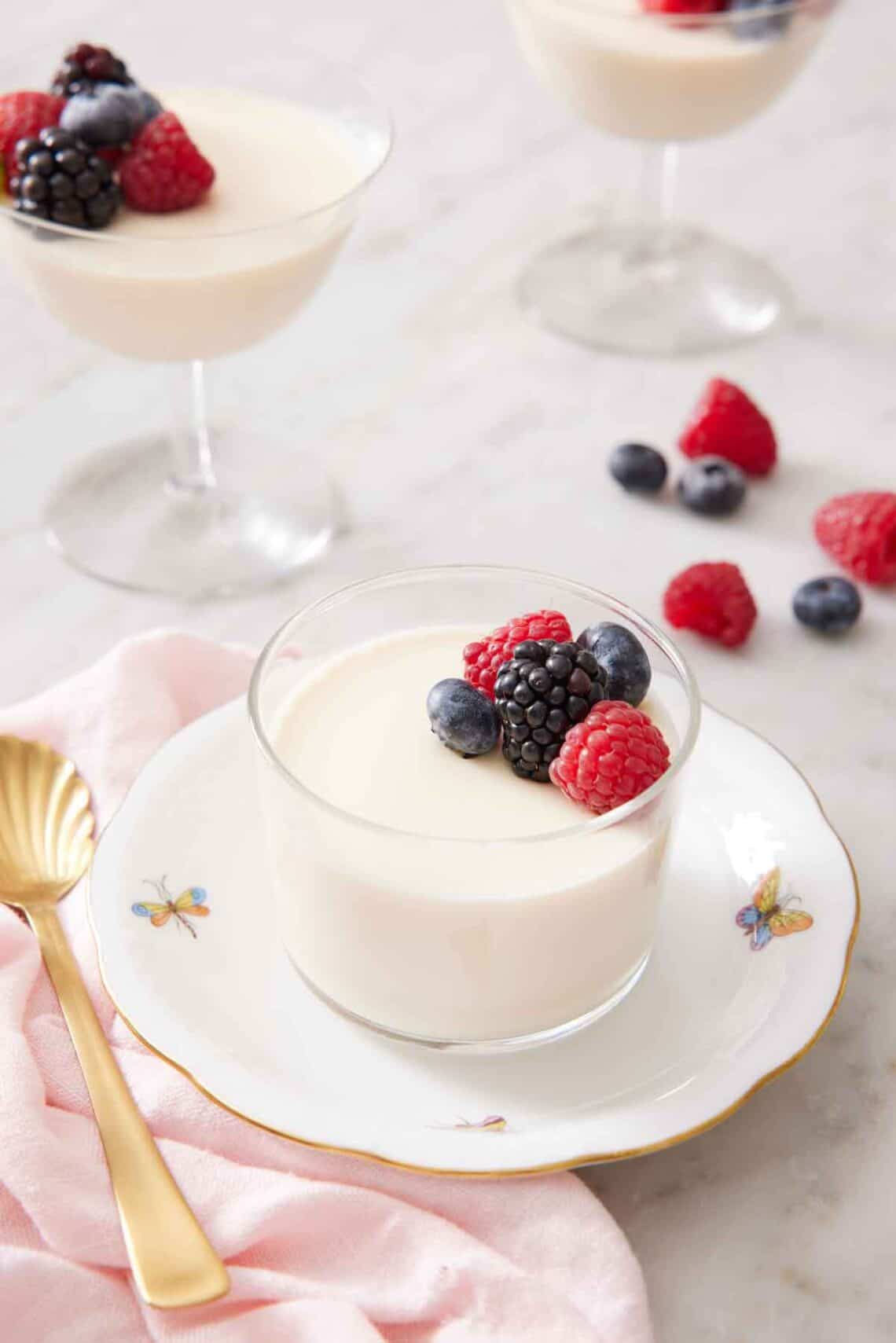
Panna cotta is one of those desserts that looks like you fussed over it, but really only takes 15 minutes of hands-on time. It’s an Italian dessert set with gelatin that feels like custard but doesn’t have eggs. The trick is getting the texture right: silky, wobbly, melt-on-the-tongue, never rubbery. After my team and I retested this recipe more than half a dozen times over the years, I can tell you the texture comes down to two specific decisions—the milk-to-cream ratio and the temperature you pull the saucepan off the heat. Get those right, and you have a restaurant-quality dessert that holds in the fridge for over a week. Plus, there’s a video tutorial in the recipe card below if you’d rather watch than read.
In testing, we made this recipe with the standard 1:1 milk-to-cream ratio you see on most other recipes. The result was firmer than I wanted and a little watery on the finish. Bumping the heavy cream up to a 3:2 ratio (1½ cups cream against 1 cup of whole milk) gave us the velvety, melt-on-the-tongue texture that defines a great panna cotta, without crossing into the watery or rubbery territory you sometimes get on other versions.
“Thank you for sharing this simple yet delicious and fancy looking dessert! It was so easy to make. I impressed all my guests.”
Marina
What Is Panna Cotta?
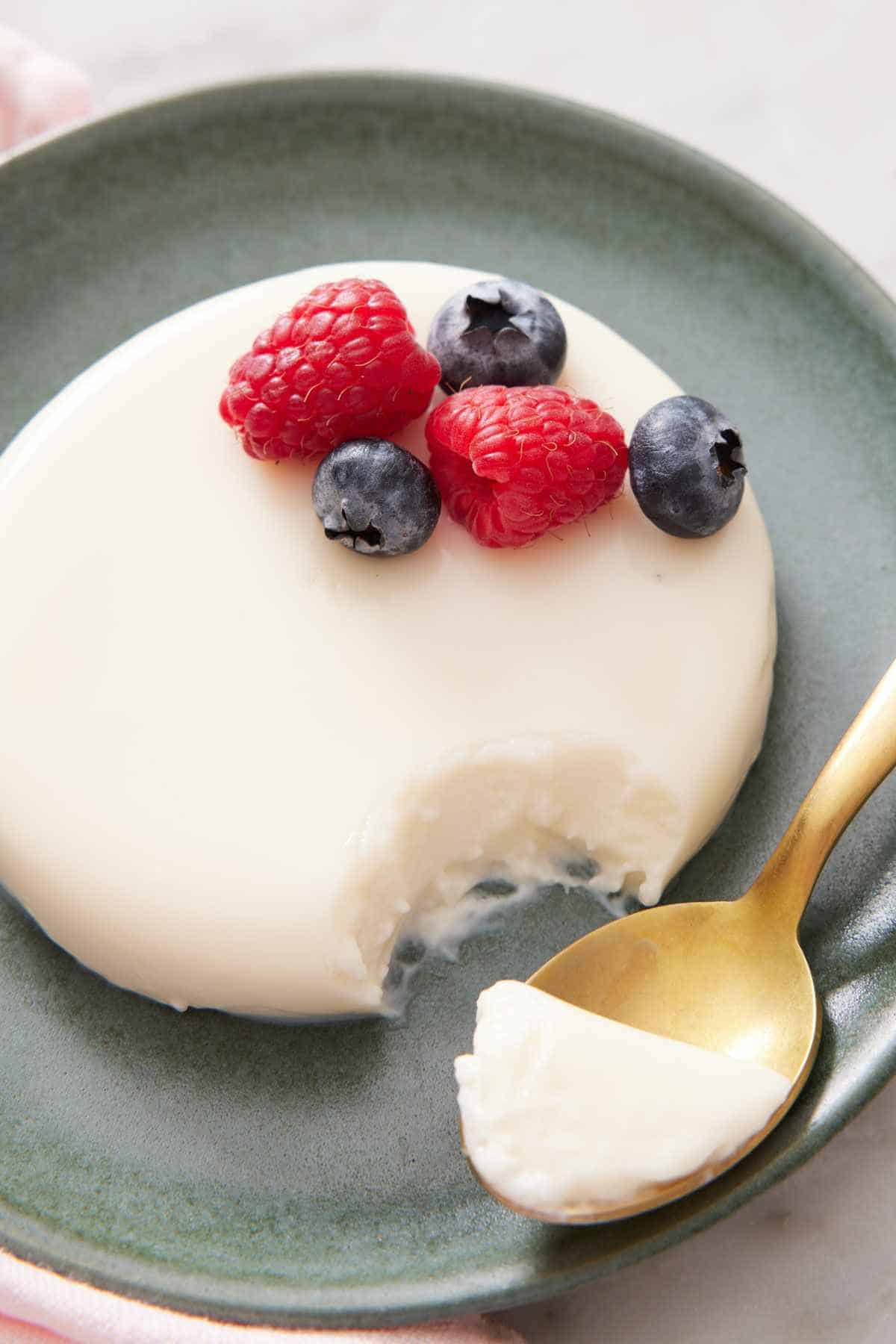
Panna cotta is a classic Italian dessert made from milk, heavy cream, sugar, gelatin, and vanilla. The name literally means “cooked cream” in Italian. It’s eggless and unbaked. Instead, gelatin is what sets it, giving panna cotta its signature silky, jiggling texture. It’s similar to a custard or pudding but lighter on the tongue, and unlike crème brûlée or flan, there are no eggs and no oven required. You just simmer, chill, and serve.
Panna Cotta vs. Creme Brulee vs. Flan
These three desserts get confused a lot, especially when you’re scrolling through restaurant menus, so here’s the quick breakdown:
| Panna Cotta | Crème Brûlée | Flan | |
| Set with | Gelatin | Eggs (egg yolks) | Eggs (whole) |
| Cooked how? | Stovetop only | Baked in a water bath | Baked in a water bath |
| Top finish | Soft, served with toppings | Hard caramelized sugar crust | Syrupy caramel sauce |
| Texture | Silky, jiggly, light | Dense, rich, custardy | Dense, velvety, sliceable |
| Serve from | Ramekin or unmolded | Always in the ramekin | Slice like a cake |
| Make-ahead | Up to 10 days | 2-3 days | 3-4 days |
Each is incredible. Panna cotta is the easiest of the three for beginners (no torch, no water bath, no risk of breaking eggs over too-high heat). Crème brûlée wins on theatrics, and flan is ideal for caramel lovers. If you want any of these in your dessert rotation, I have a crème brûlée and flan recipe too.
Key Ingredients For Panna Cotta
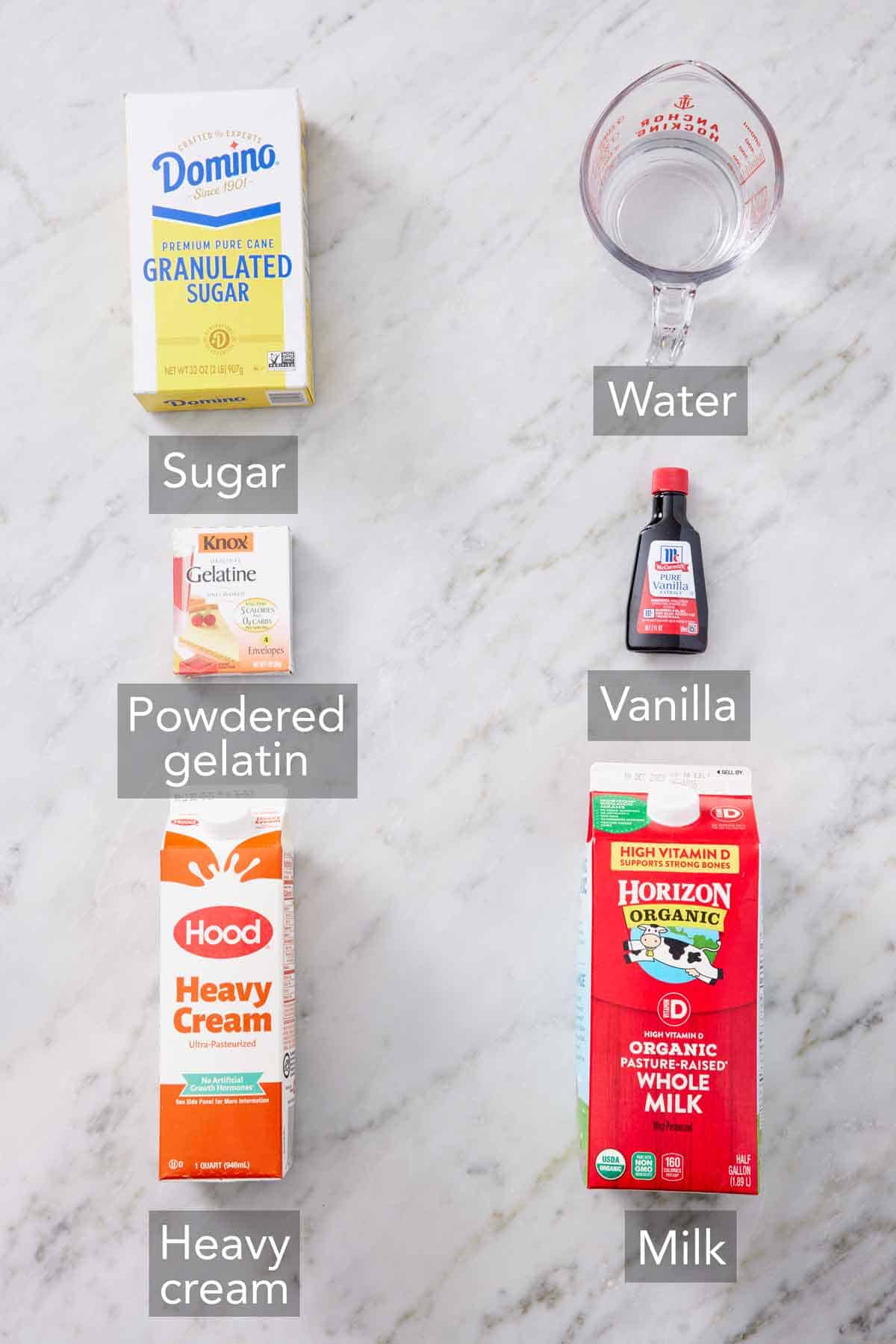
These are the main ingredients you need to make vanilla bean panna cotta. You can find the full list of ingredients and measurements in the recipe card below.
Gelatin — unflavored gelatin powder is an important ingredient for panna cotta, giving it that delicate, perfectly wobbly consistency. You’ll bloom it in cold water before adding it to the other ingredients so it can hydrate and dissolve properly. One rule: Never boil gelatin. The proteins in gelatin that help it set will start to break down above 140°F and rapidly deteriorate when it reaches boiling (212°F). This is why the milk is heated first, then the bloomed gelatin and cream are added, and it is removed from the heat. Prolonged heating or boiling once the gelatin is added will prevent the panna cotta from setting.
Milk — use whole milk for the best texture and flavor. Panna cotta needs fat for its signature soft but gelled texture. Using 2% milk or fat-free milk can yield a panna cotta that feels too firm and tastes watery.
Vanilla — use high-quality vanilla extract or scrape the vanilla seeds out of a fresh pod. Using a vanilla bean will give your panna cotta pretty flecks of vanilla throughout, but liquid extract tastes just the same. Vanilla bean paste is also a convenient option if you want the look of fresh vanilla bean seeds without using a pod. Note: Some of the seeds will settle on the bottom of the container, so keep this in mind if you plan on unmolding it.
Heavy cream — the perfect balance of milk fat between the whole milk and heavy cream is what gives panna cotta a texture that is custard-like and never rubbery. The 3:2 cream-to-milk ratio is the biggest factor in texture, as I mentioned above. I tested this recipe in the early stages with less cream and more milk, and the texture was much firmer and less rich, more like milk jelly. In a pinch, you can substitute both the cream and milk with half and half, but the texture will be slightly less velvety since the ratio is closer to 1:1.
Two Ways To Serve: Mold Or Glass
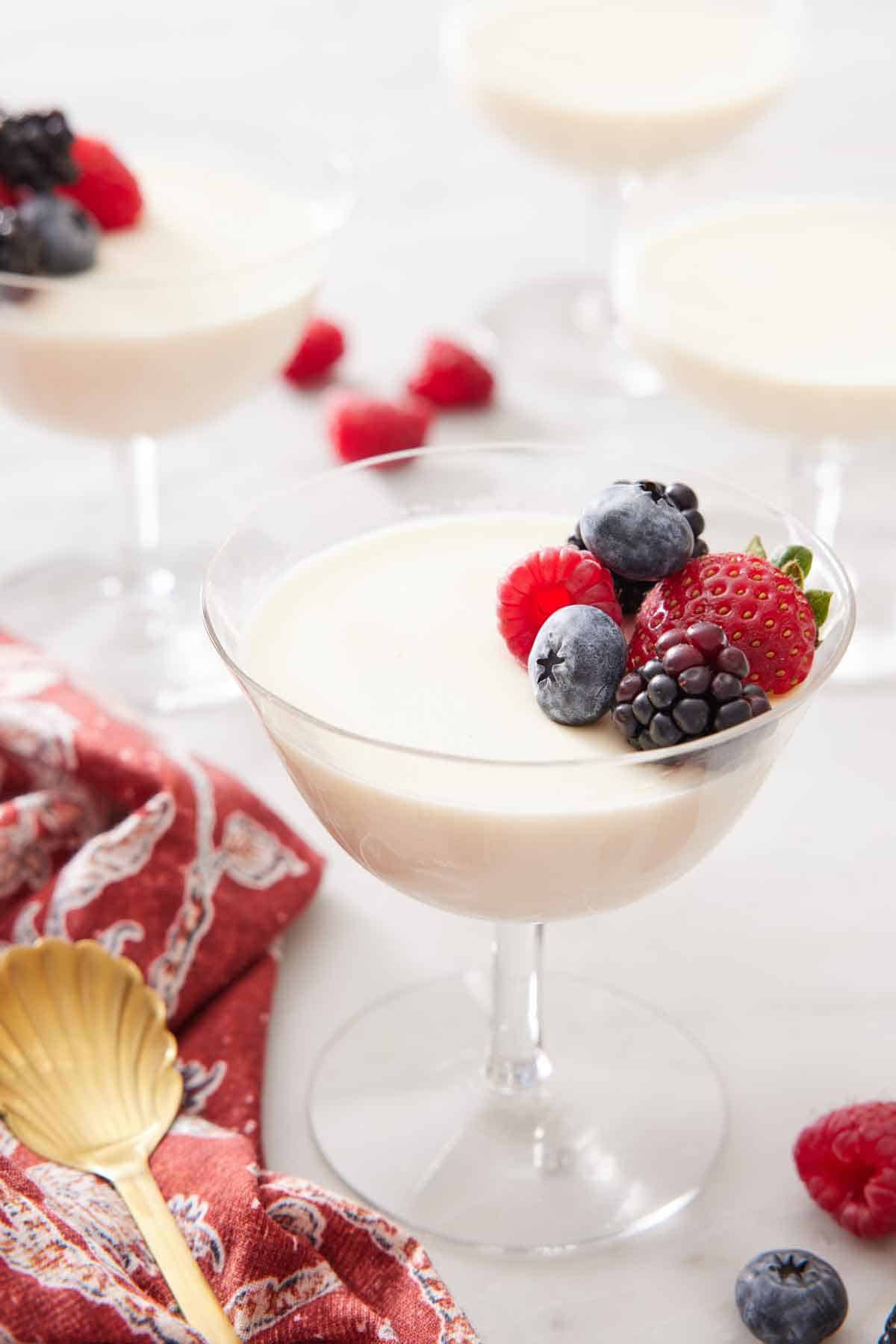
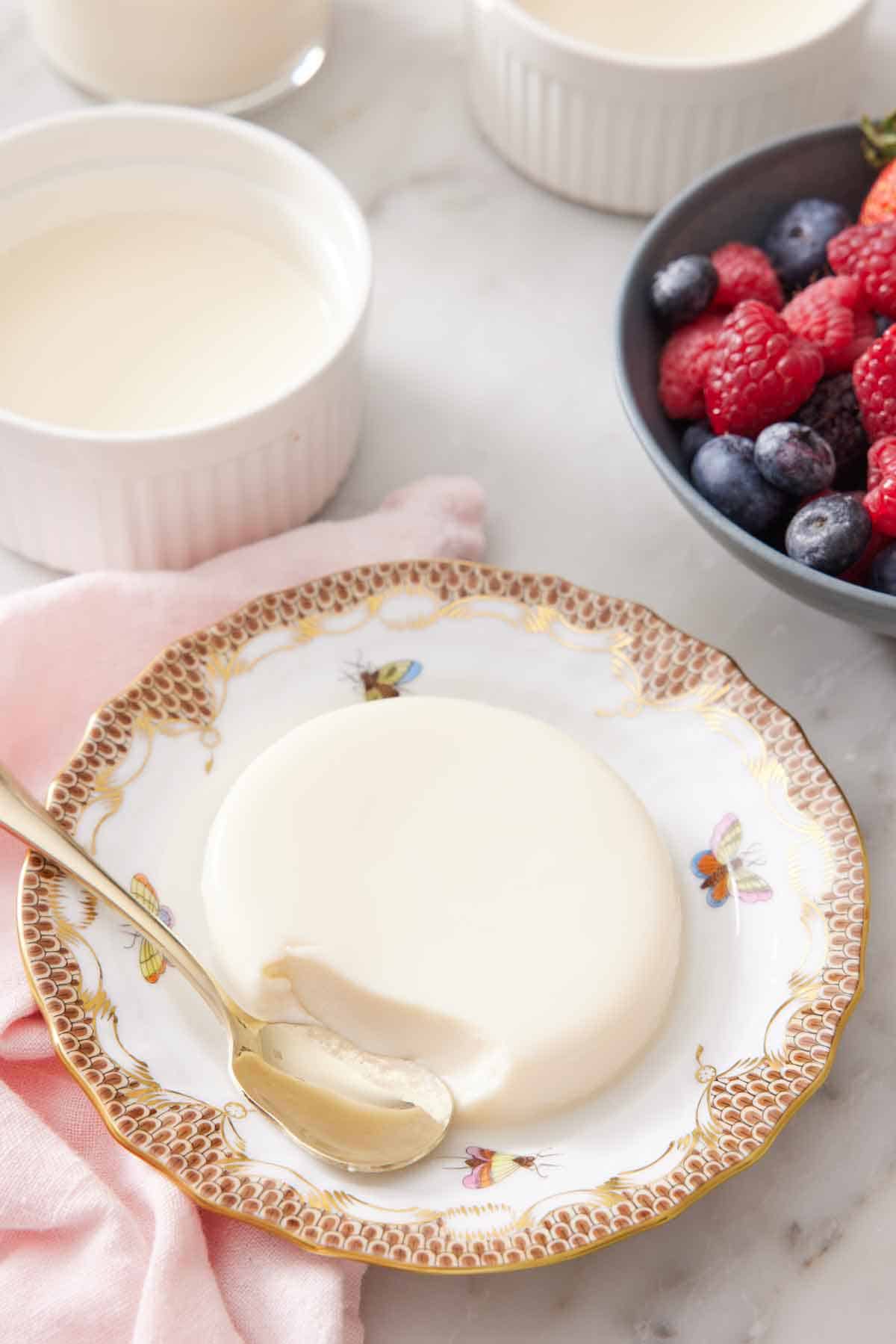
You can serve panna cotta unmolded onto a plate or straight from the glass. Both come out of the same recipe with no adjustments. Pick based on the occasion!
Unmolded (the dinner-party version): Divide the mixture among ramekins or gelatin molds. After chilling, dip the ramekin or mold into hot water for 3 to 5 seconds and invert onto a plate. (Metal molds only need a quick dip. A ceramic ramekin may need a few more seconds.) The silhouette is gorgeous and looks like restaurant work for almost no extra effort.
In the glass (the weeknight version): Pour straight into cocktail glasses, small dessert cups, or any 6- to 8-ounce vessel and chill. Top right before serving. This is what I do for potlucks and casual dinners. It’s easier to transport, no risk of cracking, and no anxious moment when you flip the ramekin.
If your ramekin won’t release: Dip in hot water again for another 3 to 5 seconds. If it’s still stubborn, gently jiggle or tap the dish, or run the knife around the inside edge between the panna cotta and the dish before re-inverting.
Easy Variations
This recipe is a great foundation to experiment with different flavorings and make this easy panna cotta recipe your own. Here are some flavors my team and I tested and loved:
- Add citrus: Stir in 1 teaspoon fresh lemon zest or 1½ teaspoons fresh orange zest to the milk mixture for a light and bright citrus finish. (Don’t use the juice—the acid can curdle the milk.)
- Add coffee: Dissolve 1 heaping tablespoon of instant espresso powder in the whole milk as it heats (Step 2) for a rich coffee-flavored panna cotta.
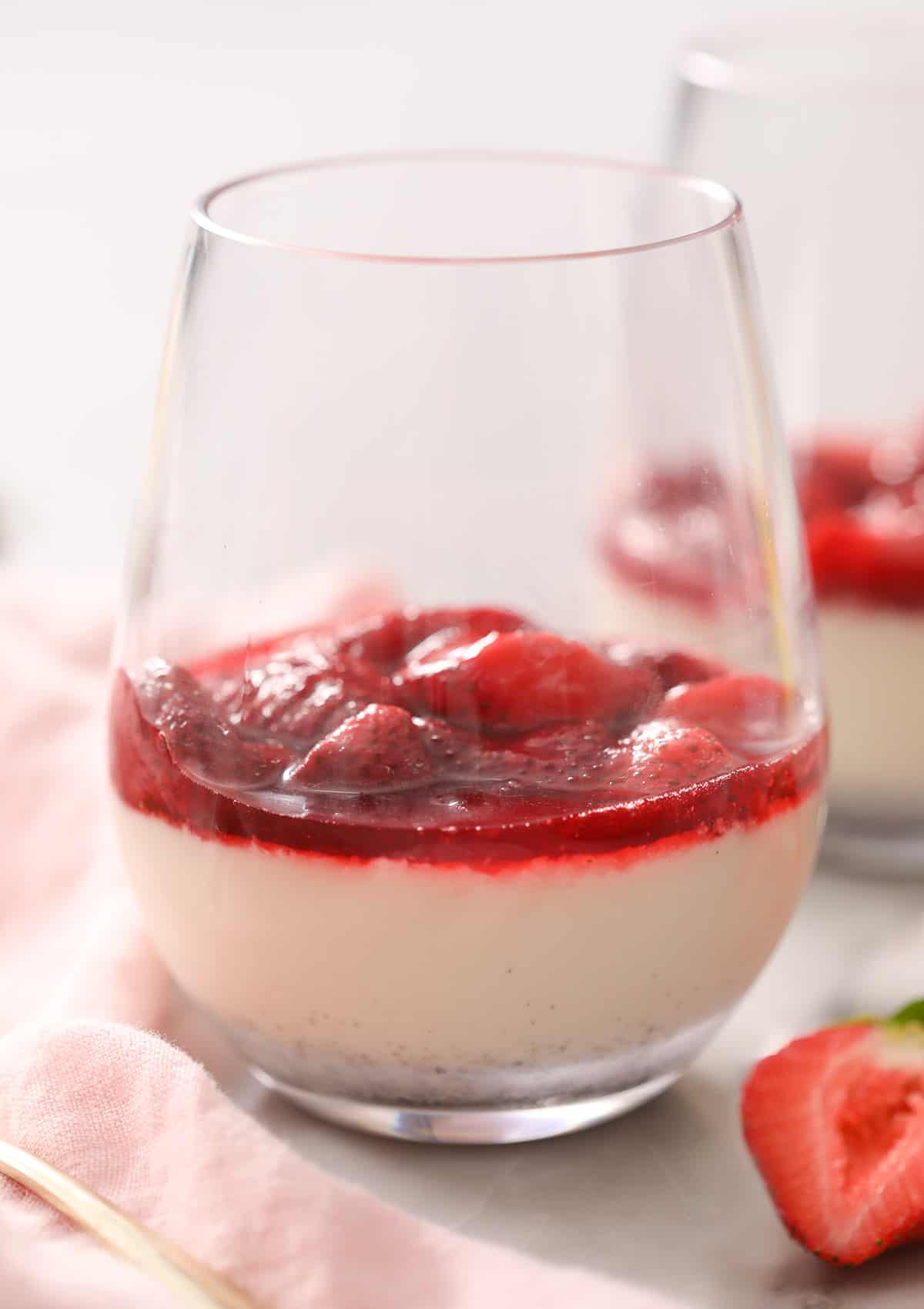
- Topping ideas: Fresh fruit, caramel sauce, chocolate ganache, lemon curd, and strawberry sauce are all wonderful panna cotta toppings. It just depends on whether you want a sweeter dessert or a brighter, fruitier one.
- Roasted strawberry topping: To make roasted strawberries, toss together 1 pound hulled and halved strawberries, ¼ cup sugar, and 1 teaspoon vanilla extract or vanilla bean paste. Spread the mixture in a 13×9-inch baking dish and roast at 425°F for 20-25 minutes, stirring halfway through, until juices are bubbling vigorously throughout the pan. Transfer the berries and all the syrup to a heat-proof bowl and let cool completely. If desired, stir 1 tablespoon of balsamic vinegar into the cooled berries for an additional Italian-inspired touch.
Pro Tips For The Best Panna Cotta
Bloom the gelatin in cold water. Hot water can prematurely activate the gelatin and weaken its setting power. Cold water lets it absorb evenly and reserves the protein’s reaction until mixed with the warm milk.
Pull the pan off the heat at 140°F. Not 145, not “almost simmering.” We tested adding gelatin to milk that was actively simmering once, and it set, but barely — soft and slumpy. Now we pull the saucepan the moment steam starts rising and always check it with a thermometer before stirring in the gelatin. If the cream is too hot, swirl the pot around several times and let it sit until it has cooled to 140°F.
Don’t skip the strain. This is the line between “this is good” and “this is perfect.” Straining will catch any tiny bits of gelatin that didn’t bloom or dissolve properly. The milk and cream can also form a skin when being heated, and can ruin the velvety texture of your panna cotta.
Prevent a skin from forming on the surface of the panna cotta. Cover the container with plastic wrap before refrigerating to keep the top from drying out. Or you can press plastic wrap directly onto the surface of the panna cotta. It will mar the surface—only do this if you plan on inverting the dessert or fully covering it with a topping, so the surface isn’t visible.
How To Make Panna Cotta
Below, I’ve highlighted portions of the recipe in step-by-step process images along with instructions for making this easy panna cotta. You can find the full set of instructions in the recipe card below.
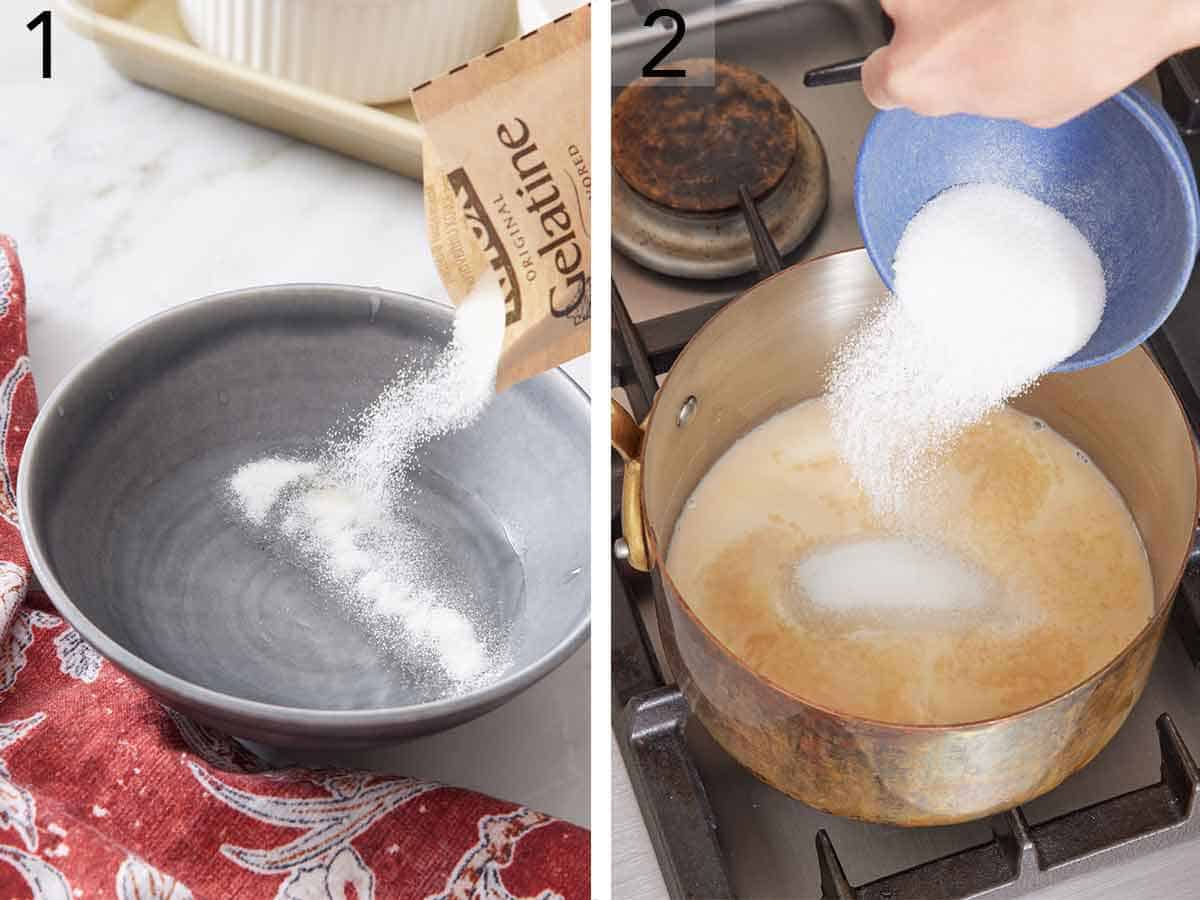
1. Bloom the gelatin: Sprinkle the gelatin powder over cold water in a small bowl. Set aside while you warm the milk (or for at least 5 minutes).
2. Heat the milk: Place the whole milk, granulated sugar, and vanilla (extract or the bean with seeds) in a medium saucepan, and place it over medium-low heat. Stir frequently while it heats up, until it is about 140°F. It should be hot to the touch, barely steaming, and not bubbling.
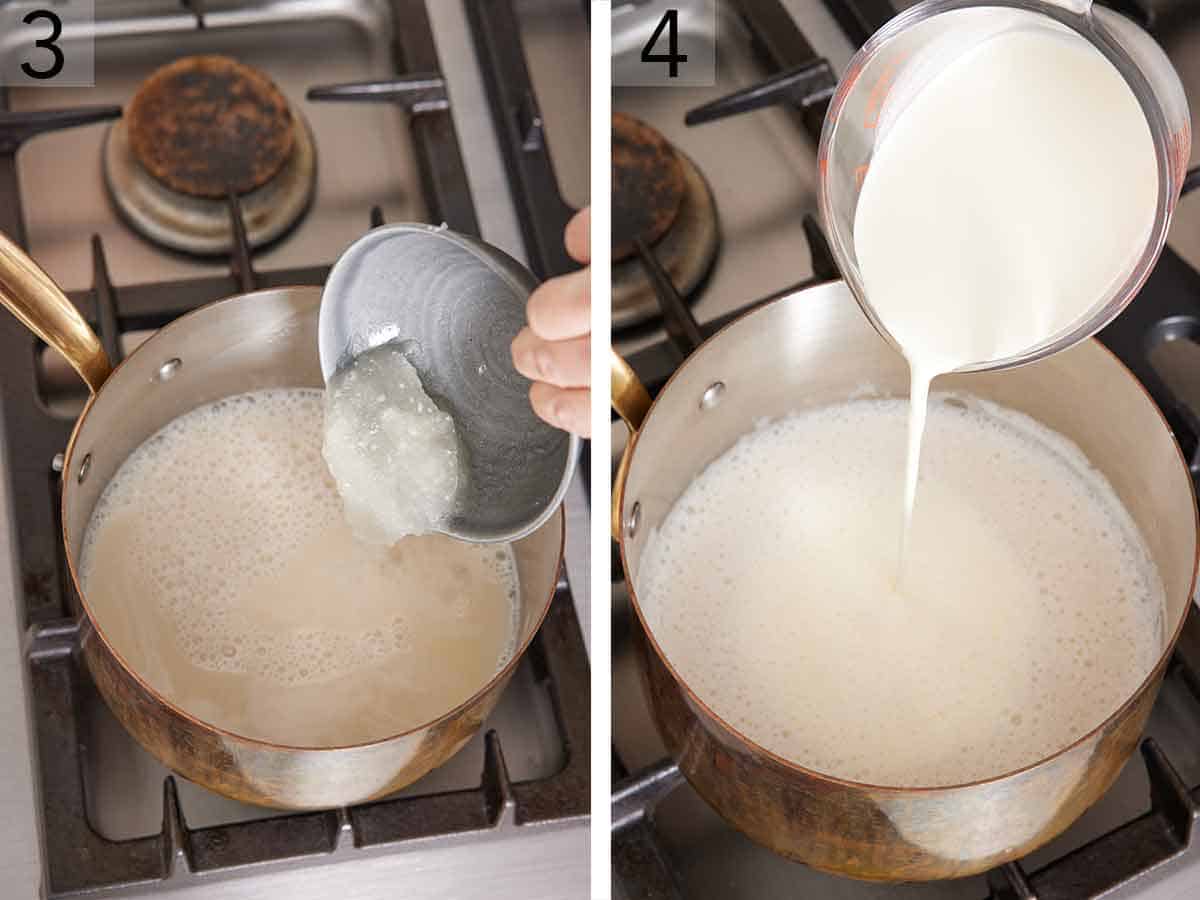
3. Melt the gelatin: Once the milk mixture is hot, add the bloomed gelatin and whisk gently until fully dissolved. Whisking too aggressively at this stage creates bubbles and foam on the surface that can mar the finished top.
4. Add the cream: Gently stir the heavy cream into the gelatin mixture. Adding the cream at this stage also helps reduce the temperature of the milk and gelatin mixture, preserving its setting strength.
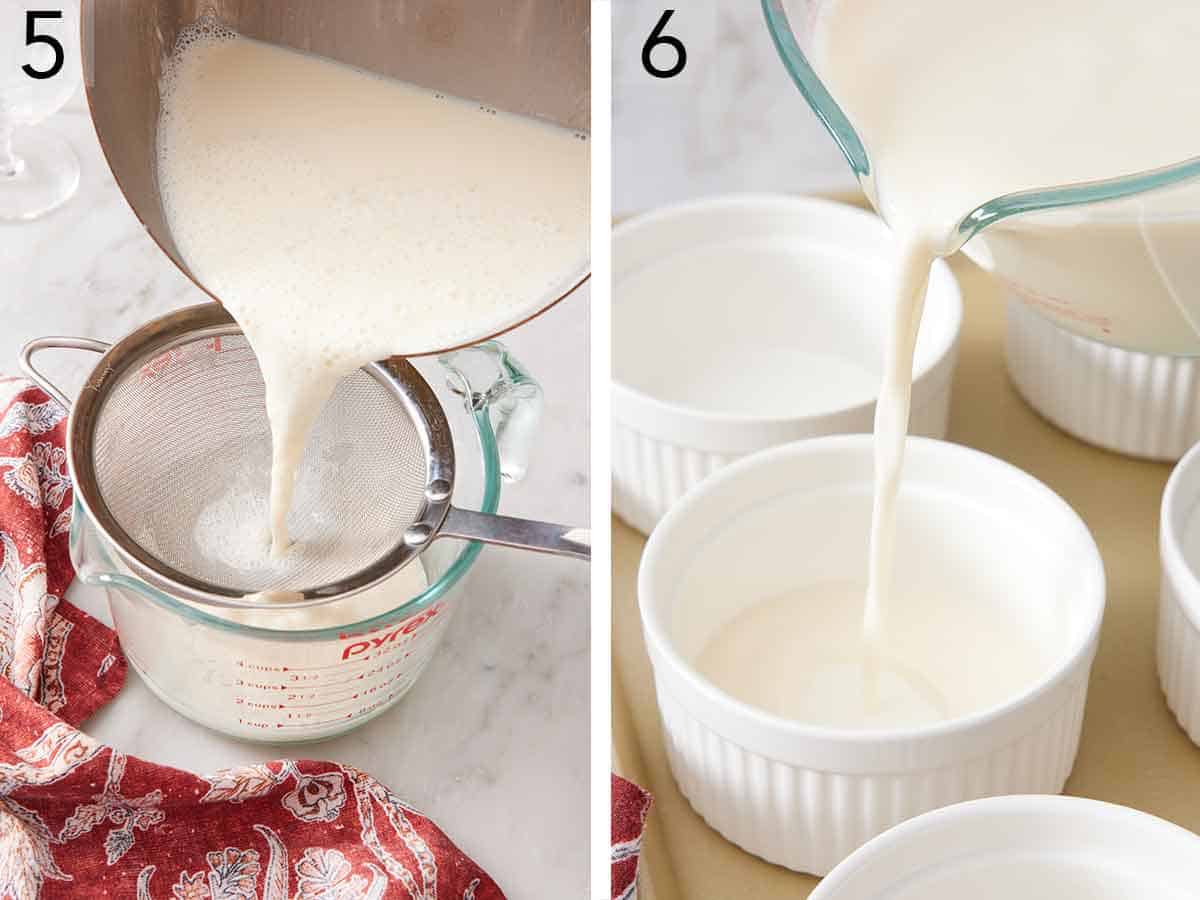
5. Strain the milk mixture: Remove the hot cream mixture from the heat and strain it into a large measuring cup through a fine mesh sieve. This will remove any bits of undissolved gelatin or any skin that may have formed on the cream when it was heating. (A container with a spout helps you fill the cups or molds.)
6. Mold the panna cotta: Divide the panna cotta mixture among six 6-ounce ramekins or small glasses. Allow the panna cotta to cool at room temperature for about 1 hour. Then cover each container with plastic wrap and chill in the refrigerator for at least 6 hours or overnight. We tested chilled at 4 hours (still slightly soupy in the center), 6 hours (set but a little soft), and overnight (perfect). As I mentioned a few sections above, you can either serve the panna cotta straight out of the ramekins or invert them. Serve with desired toppings and enjoy.
Panna Cotta Recipe
Equipment
- Saucepan
- Ramekins
- Fine mesh sieve or strainer
Ingredients
- ¼ cup cold water (60mL)
- 1 (¼-ounce/7g) envelope unflavored powdered gelatin
- 1 cup whole milk (240mL)
- ½ cup granulated sugar (100g)
- 1 vanilla bean seeds scraped or 2 teaspoons vanilla extract
- 1½ cups heavy cream (360mL)
- For serving: roasted strawberries or fresh berries
Instructions
- Place the water in a small bowl, and sprinkle the gelatin evenly over the surface of the water. Set aside to hydrate.
- Combine the milk, sugar, and vanilla bean with seeds or vanilla extract in a medium saucepan. Place it over medium-low heat, stirring frequently. When the milk mixture is hot to the touch (about 140°F), gently whisk in the hydrated gelatin until fully dissolved. Stir in the cream. Remove from the heat and strain through a fine mesh sieve.
- Divide the mixture among six 6-ounce ramekins or small glasses. (There should be about 4 ounces per dish.) Let the panna cotta cool at room temperature for about 1 hour. Then, cover each one with plastic wrap, and place in the fridge to chill for at least 6 hours or overnight.
- Serve the panna cotta in the ramekin or invert it. To unmold the panna cotta, dip the ramekin in a bowl of hot water for about 3 seconds. Run a thin, sharp knife around the edge of the panna cotta. Place a small plate on top and flip the ramekin and plate over. Wiggle the ramekin to release the panna cotta. If it doesn’t come loose, dip in hot water again. Serve with roasted strawberries, fresh berries, or as desired.
Notes
- Choose a serving option to fit your occasion. Dessert cups, round ramekins, wine glasses, martini glasses, or creme brûlée ramekins are all great options. For smaller, handheld desserts, divide the dessert between 14 shot glasses or espresso cups and chill for only 3-4 hours. Perfect for cocktail parties and potlucks!
- To prevent a wrinkled top, let the panna cotta cool at room temperature. This brings the temperature down enough so that it doesn’t rapidly cool on the surface before the center. If you immediately place it in the fridge, the top will firm up quickly while the mixture below is still warm and runny, causing tension on the surface and wrinkles to form.
Nutrition
Have you tried this recipe? Tag me today!
Mention @preppykitchen and tag #preppykitchen!
Common Mistakes
These are the four mistakes I see most often when readers tell me their panna cotta didn’t turn out.
It didn’t set. Almost always one of two things: the gelatin got too hot (anything above 140°F starts breaking down the proteins; boiling destroys them), or the ratios were off. Measure carefully, and pull the pan the moment the milk is hot to the touch.
It’s rubbery or jello-like. Too much gelatin, or the wrong dairy. Don’t substitute fat-free milk or low-fat cream. The fat is what gives panna cotta its silky texture; without it, you just have flavored gelatin (more like jello than a creamy, custard-like consistency).
The top is wrinkled. You put it in the fridge while it was still warm. Cool at room temp for an hour first.
It cracked when I tried to unmold it. Either it didn’t chill long enough, or the hot-water dip was too short. The hot water briefly melts the very thin outer layer touching the ramekin, releasing the seal so the dessert slides out cleanly.
Storage & Make Ahead Tips
Panna cotta lasts for ages, making it a perfect make-ahead dessert. It will keep for up to 10 days in the refrigerator! I recommend keeping it tightly covered, preferably with plastic wrap, directly touching the surface of the panna cotta after it has set, so it doesn’t develop a skin or absorb any odors from the refrigerator. Keep the dessert in its ramekin or mold until you’re ready to serve.
Can I freeze panna cotta? While I’ve seen many people say you can freeze panna cotta, I don’t recommend it. I have tested this and find that freezing it always negatively affects the creamy texture in some way. The gelatin breaks down once thawed, and it will turn grainy and watery. Cream and milk can also split once thawed, turning watery and curdled.
Frequently Asked Questions
Two main reasons you may end up with a runny, watery panna cotta are incorrectly measuring ingredients (using too much milk and cream) or overheating the gelatin. Overheating the gelatin destroys the proteins in it that help it to set up firmly.
If your panna cotta is firm, almost jello-like in consistency instead of creamy, you may have used too much gelatin or the wrong cream. Don’t use a fat-free cream or substitute it with whole milk. As I mentioned earlier in recipe testing, the fat from the cream is essential to a soft, velvety texture.
Honestly, yes, but not as well. We haven’t tested a dairy-free version, but readers have reported decent results substituting full-fat coconut milk for the heavy cream and unsweetened oat or almond milk for the whole milk. Expect a different flavor and a slightly different texture.
More Italian Dessert Recipes To Try
If panna cotta is your kind of dessert, you’ll love these Italian classics:
Tiramisu is the no-bake Italian dessert everyone asks me to bring to dinner parties. Espresso-soaked ladyfingers layered with creamy mascarpone is the ultimate make-ahead crowd-pleaser.
Cannoli feature crisp shells with a rich, sweetened ricotta filling. They’re easier to make at home than you think, especially with a cannoli mold.
Bomboloni are Italian filled donuts—fried yeasted dough rolled in sugar and stuffed with pastry cream. A wonderful afternoon project.
Zeppole are Italian donut puffs, crispy outside and pillowy inside, dusted with powdered sugar.
Biscotti are twice-baked Italian cookies that are crunchy, perfect for dunking in coffee or sweet wine, and they keep for weeks.
Tiramisu Cake turns the classic dessert into a layer cake. It’s perfect for birthdays and celebrations when you want the tiramisu flavor in a tall, slice-able format.
If you’ve tried this panna cotta recipe, then don’t forget to rate it and let me know how you got on in the comments below. I love hearing from you!