This post may contain affiliate links. Please read our disclosure policy.
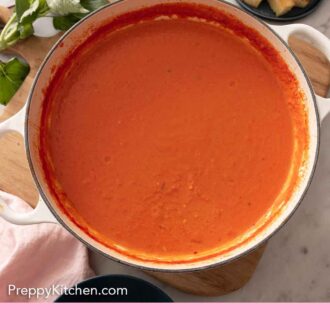
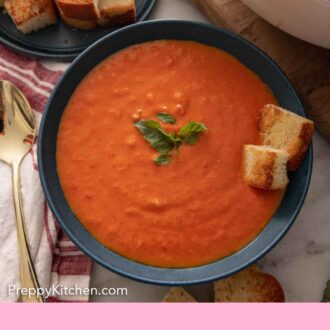
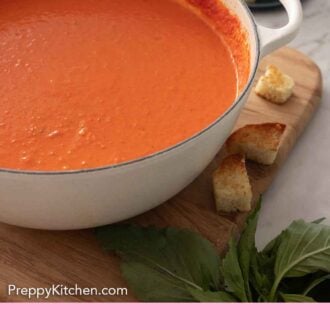
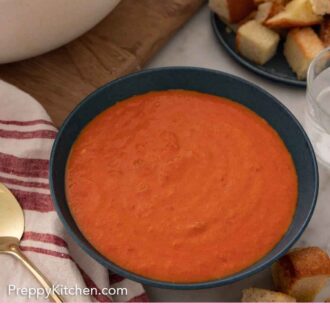
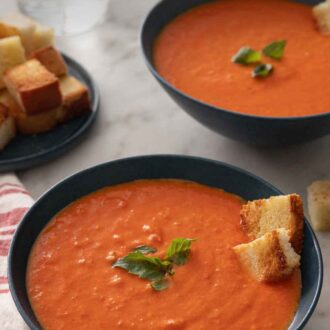
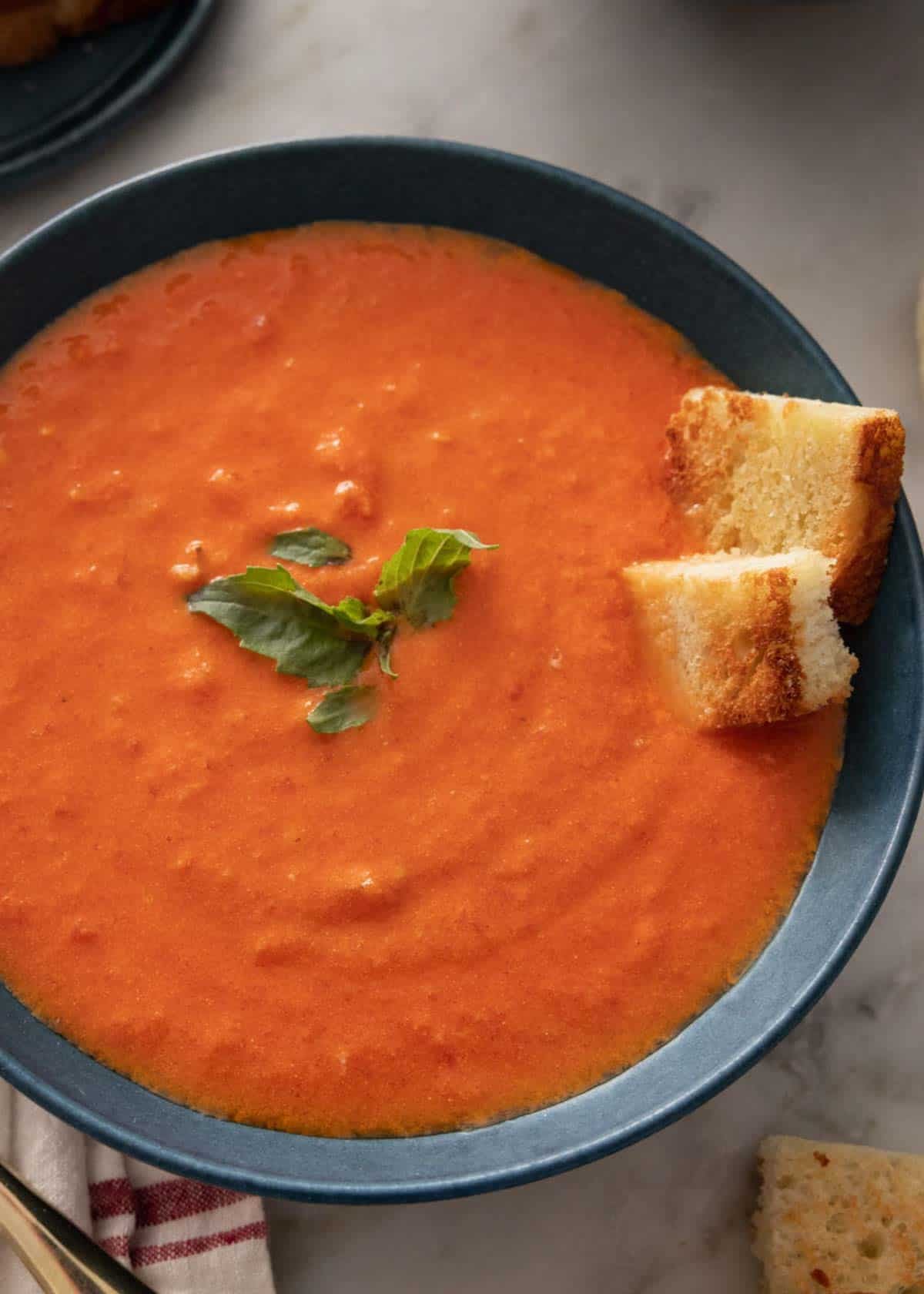
This cozy homemade tomato soup is rich, creamy, and easy to make with pantry staples. Using canned whole tomatoes gives this soup intense flavor and makes it quick to cook! It’s an easy, comforting meal that belongs next to a grilled cheese.
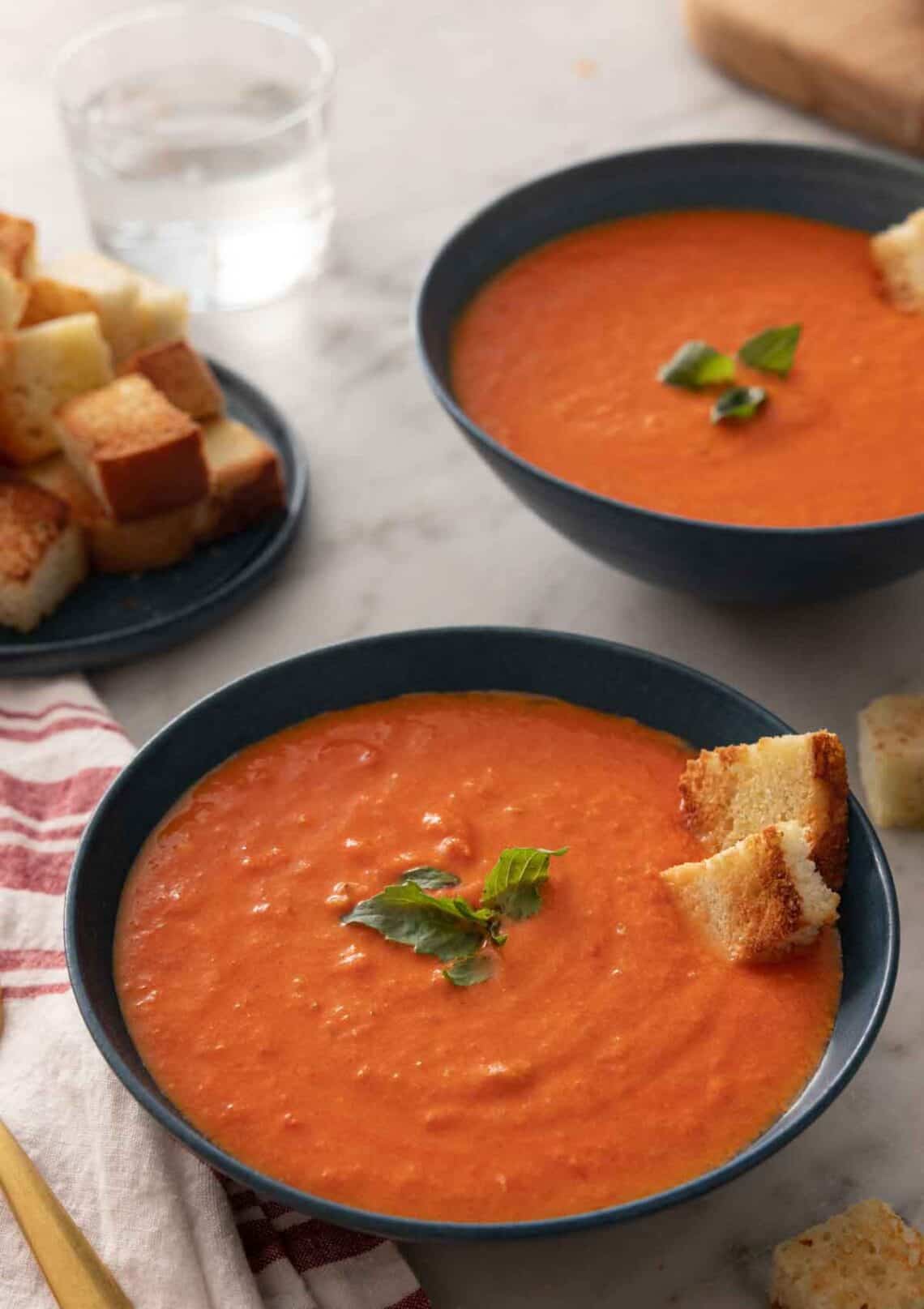
I’ve been making this tomato soup for years, and it earned its spot in my regular winter rotation for one reason: it gives me deep, restaurant-quality tomato flavor from a couple of cans and about 10 minutes of actual work. I went into developing this recipe assuming I’d want fresh tomatoes, but during testing, I quickly changed my mind—the batches I made with good canned whole tomatoes beat the supermarket-fresh ones every single time, especially outside of peak summer tomato season.
Sautéed onion and garlic, a 30-minute simmer, a swirl of cream, and a handful of fresh basil add so much flavor to the pantry staple. It’s the natural counterpart to a good grilled cheese, but it’s just as good with crusty sourdough or garlic bread for dunking.
“I made the Tomato Soup yesterday for dinner. It was so fresh tasting even though I used can tomatoes. I use Red Gold peeled and whole tomatoes. I will definitely be making your recipes. You make it so easy and that is what I like. Thank you!”
Teresa
Key Ingredients
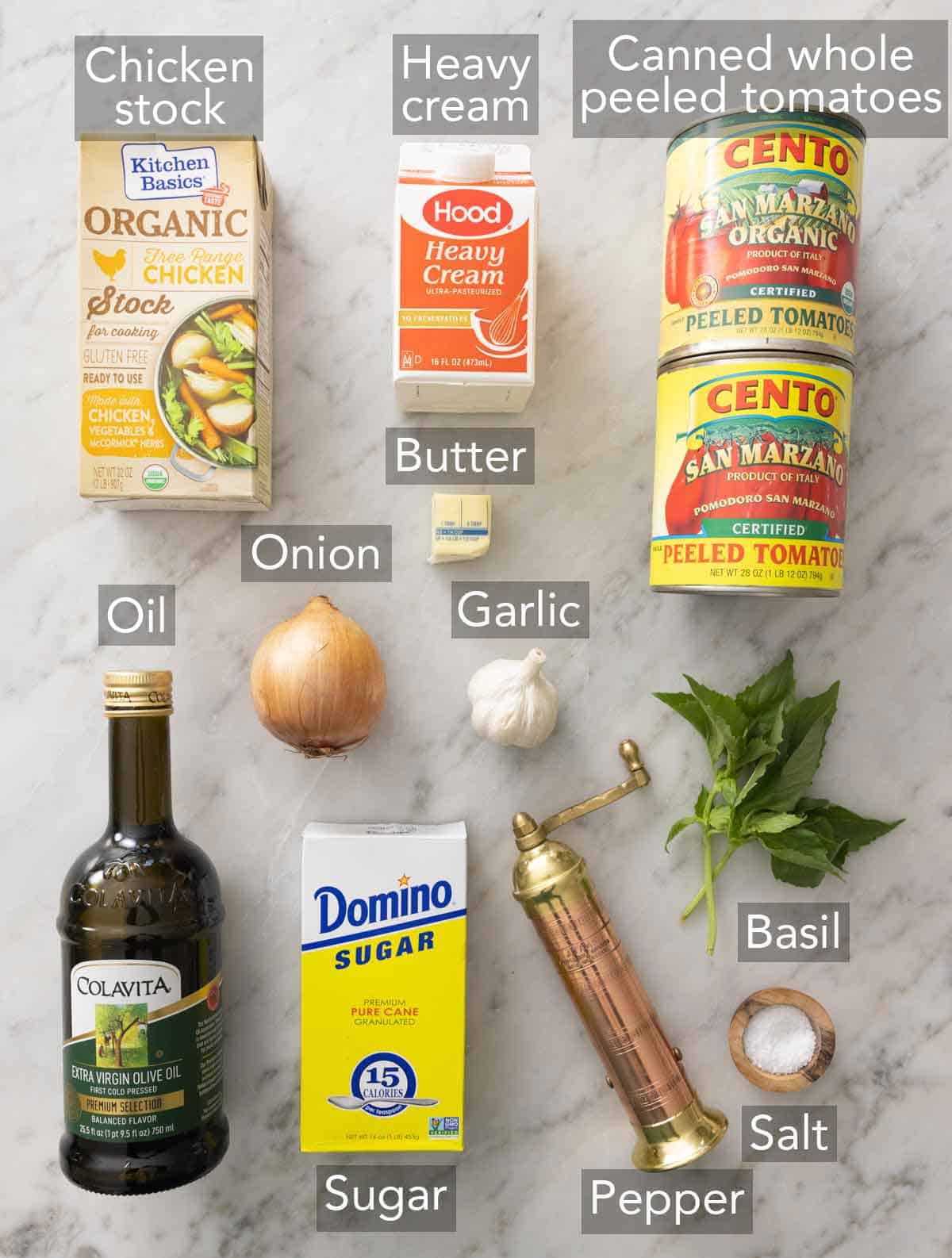
These are the main ingredients you need to make this creamy tomato soup recipe. You can find the full list of ingredients and measurements in the recipe card below.
Olive oil and butter — I use both for the best flavor. In testing, the combination gave the soup a rounder flavor than all-butter or all-oil. The oil also keeps the butter from scorching while the onions soften.
Onion and garlic — the flavor foundation that takes this from tasting like canned tomatoes to tomato soup! I cook the onion until it’s soft before the garlic goes in—rushing this step makes a big difference in flavor. Cooking the onions sweetens them and makes the soup have a deeper flavor.
Whole peeled canned tomatoes — two 28-ounce cans are perfect for a chunky, tomato-rich soup. I keep coming back to San Marzano for their deep, low-acid flavor, but any good whole peeled tomatoes work. The Cento brand is my favorite because it’s well-priced, has good flavor, and is easy to find. If you have tomatoes that are somewhat watery or bland tasting, you can add a few tablespoons of tomato paste to amplify the tomato flavor.
Chicken stock (or water) — I prefer chicken stock for the savory depth, but water or vegetable stock keeps it vegetarian and still works.
Sugar — this is a game-changer when working with canned tomatoes! Tomatoes have to be acidic enough to be shelf-stable, so adding a little bit of sugar balances the tomatoes’ acidity. How much I actually can change with the cans, depending on batch or brand. See the balancing section below to learn exactly what I taste for.
Heavy cream — a little splash at the end adds a creaminess to the tomatoes that rounds out their flavor. I tested the soup with and without it, and beyond the richness, the cream noticeably rounded off the acidic edge. Half-and-half or milk also works if that’s what you have on hand.
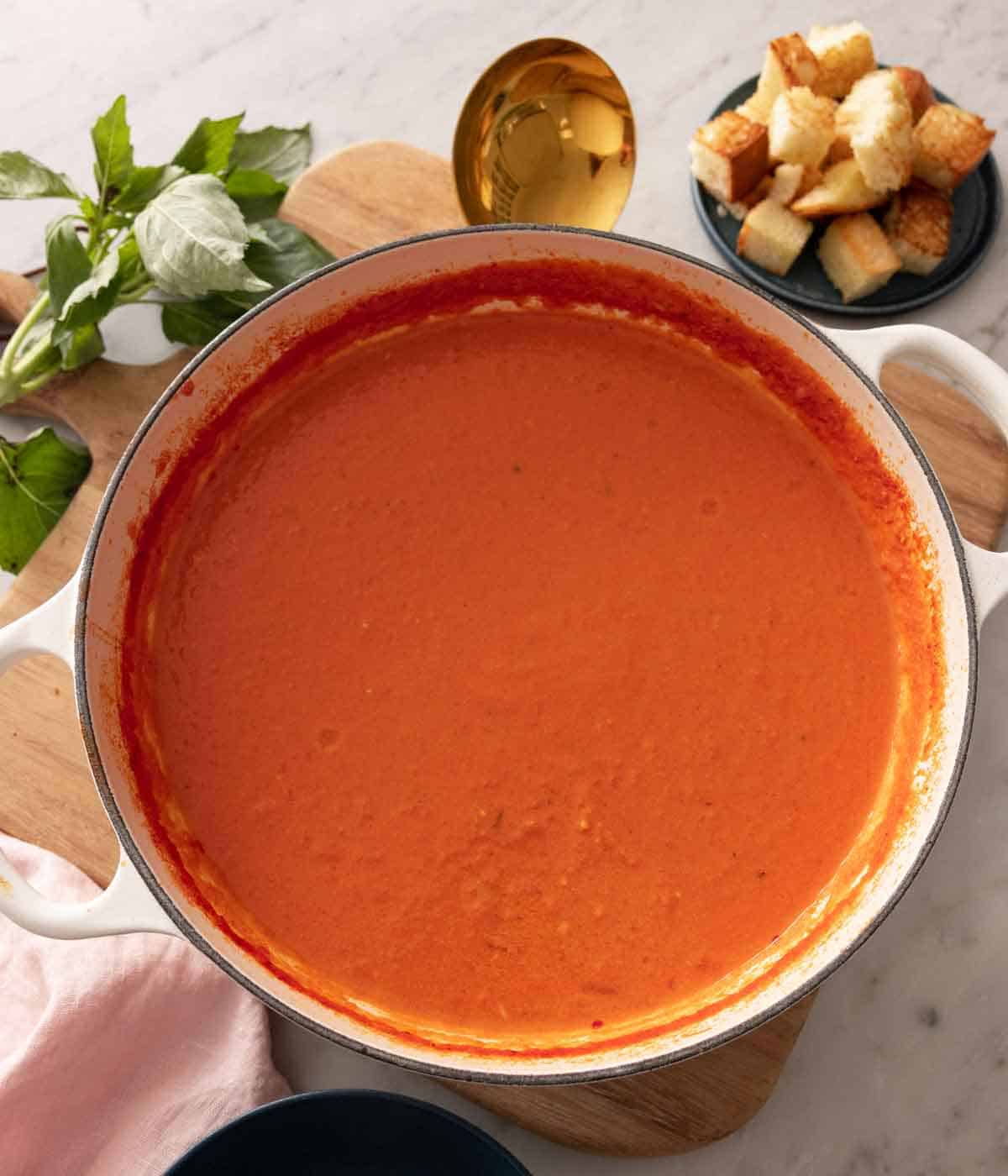
Why I Use Canned Tomatoes (I Tested Fresh)
It feels “wrong” to reach for canned tomatoes, especially if you make this in the summer when tomatoes are in peak season, but I tested it both ways before settling on canned. Even with peak summer tomatoes, the canned-tomato batches won in every one of my tests.
Canned tomatoes are picked and packed at the height of ripeness, and cooked so their flavor is more concentrated. Fresh tomatoes need to be peeled, cored, and simmered for much longer or roasted first to concentrate their flavor. I tested this recipe with both fresh and canned tomatoes and found that good canned tomatoes gave me consistent results every time, resulting in a deeper tomato flavor, and the soup took much less time to make with fewer steps. Plus, it means you can make this any time of the year!
Be sure to swirl a little stock in the empty cans to rinse out what clings to the sides. There’s a lot of good tomato pulp hanging onto the can, so don’t leave that flavor behind.
How To Make Tomato Soup
Below, I’ve highlighted portions of the recipe in step-by-step process images along with instructions for making this easy tomato soup. You can find the full set of instructions in the recipe card below.
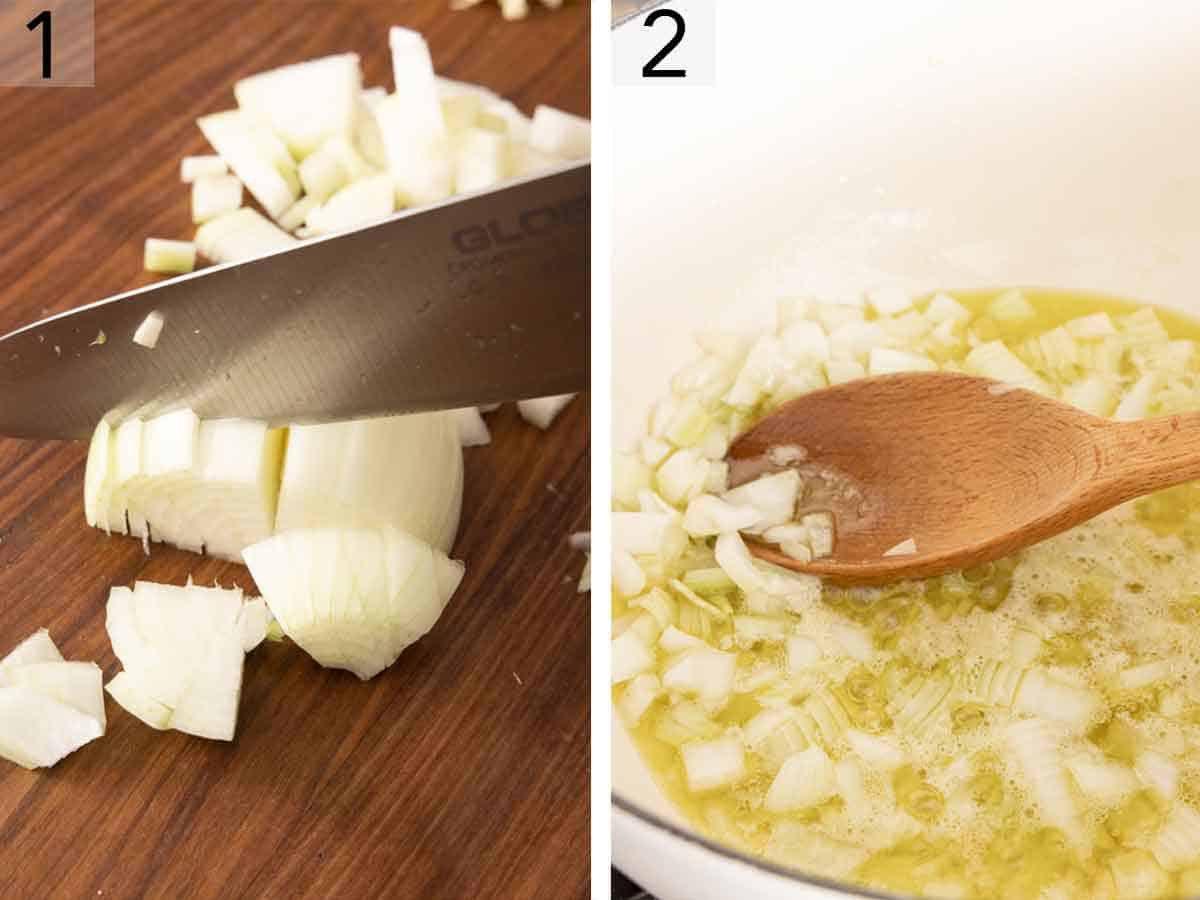
1. Prep the aromatics. Make sure you peel and dice the onions and mince the garlic. Small pieces will cook down and blend more easily.
2. Soften the aromatics. Heat the olive oil and butter in a large Dutch oven until the butter melts. Add the onion and cook, stirring, until soft, about 8 minutes. Add the garlic and cook for about 5 minutes more, until fragrant. I pull it the moment the onions start to brown, because I’ve let it go too far before, and the soup picked up a faint bitterness from the over-browned garlic.
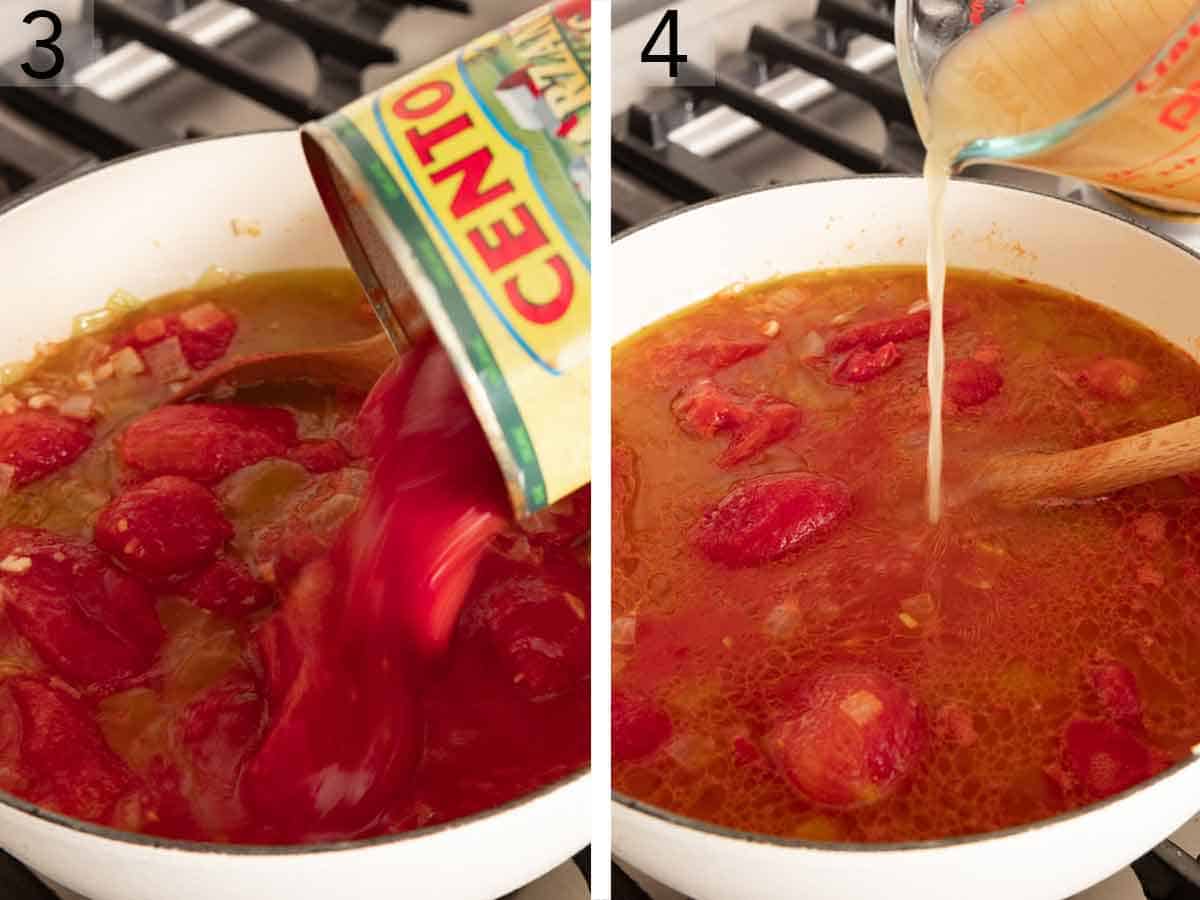
3. Add the tomatoes. Add the whole, peeled tomatoes right into the cooked onions and garlic.
4. Add the stock, swirl a little stock in the tomato cans to catch every bit of juice. Stir in the sugar and pepper, bring to a boil, then reduce to medium-low, and simmer for 30 minutes, stirring occasionally. I tested this with a shorter simmer time, and the flavor wasn’t as good. The 30-minute simmer concentrates the flavor more and gives time for the aromatics and tomato juices to meld.
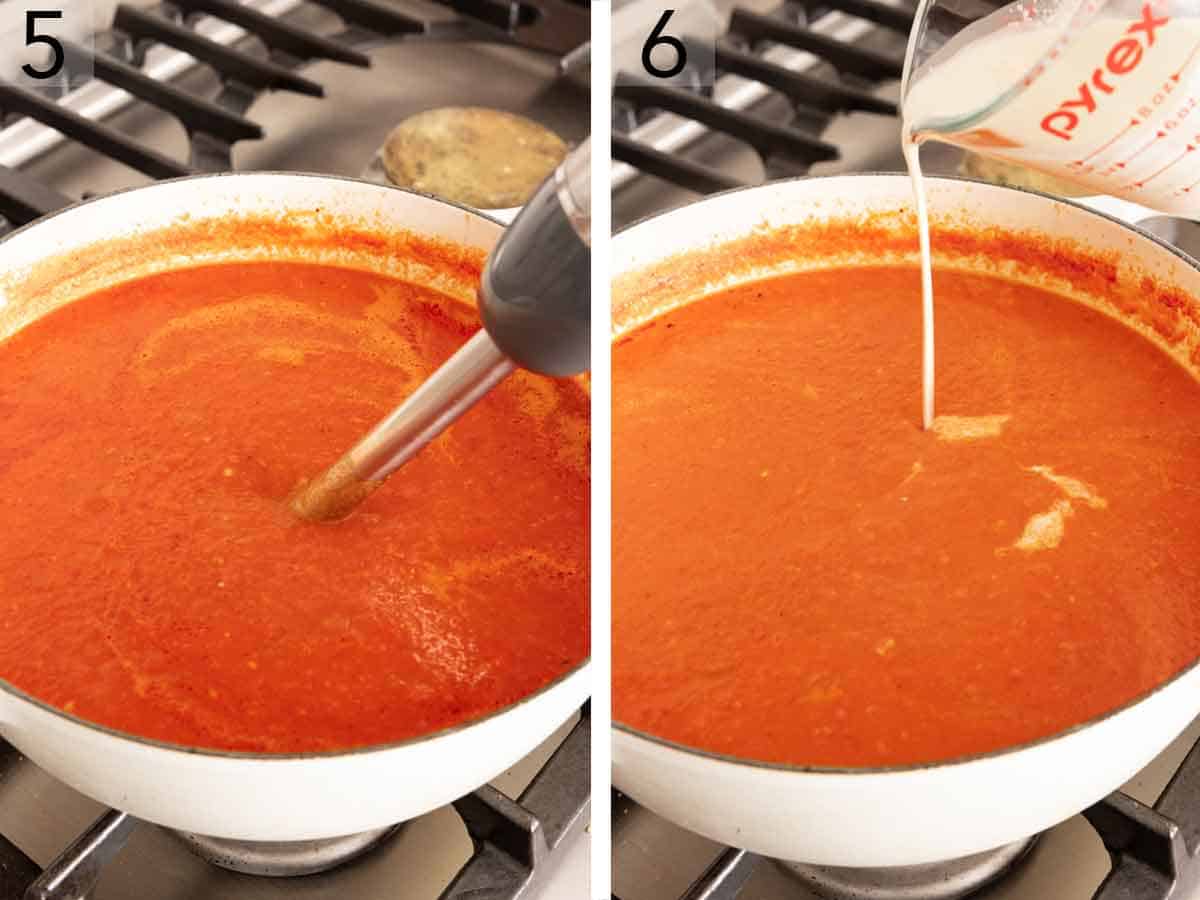
5. Blend. Turn off the heat, and pulse with an immersion blender to your preferred texture. I usually stop while there’s still a little body because I prefer a slightly chunky tomato soup over a perfectly smooth one, but it’s up to you!
6. Finish with cream. Taste and add salt, then stir in the cream. Serve hot with plenty of fresh basil on top.
The Blender Mistake I Made (So You Don’t!)
Here’s a lesson I learned the hard way: don’t purée this soup in a high-speed countertop blender. The first time I tried to get it silky that way, the whole batch came out unmistakably bitter. That’s because blending olive oil at high speed ruptures the oil molecules and releases bitter compounds.
An immersion blender, pulsed right in the pot, breaks down the tomatoes but is gentle enough that it won’t change the flavor of the olive oil (plus, you skip ladling hot soup into a blender jar). If a high-speed blender is all you have and you want it super smooth, make the soup with vegetable or grapeseed oil—or all butter—instead of olive oil. You can also mash the tomatoes with a potato masher for a rustic texture, if you don’t have a blender of any kind.
Balancing Sweetness and Acidity
Tomato soup goes from okay to great with the right balance between acidity and sweetness. The sugar isn’t there to make the soup sweet. It rounds out the tomatoes’ sharp acidity, and this can vary between brands of canned tomatoes. I start with the amount in the recipe and adjust from there. If you’re nervous about it, or you know your tomatoes aren’t very sharp, you can start with less (or none) and add a touch more later if needed.
A reader mentioned the soup ran a little sweet for her taste, so if you find this too, you can balance it with a bit of salt, a splash of lemon juice or vinegar, or wait until the cream is added. I always season with salt at the very end, once everything’s come together.
Variations to Try
This is a classic tomato soup that is easy to adapt!
- Tomato basil soup: I add about 10 fresh basil leaves to the pot right after I turn off the heat, then blend them in. It gives a deeper, fresher basil flavor than garnishing alone. Basil also loses some flavor as it is cooked, so I add it at the end.
- Tomato bisque: Bump up the cream by ½ cup (120ml) for a richer, silkier bisque-style bowl.
- Roasted tomato depth: For a smoky-sweet twist, roast or broil the tomatoes (a few slices of red pepper work too) before they go in the pot. This is a variation that a reader shared that I think is worth trying!
- Lighter: Use half-and-half or whole milk instead of heavy cream, or cut the cream to ½ cup.
- Vegan: Skip the regular butter (use more olive oil or vegan butter), swap in vegetable broth, and use full-fat coconut milk in place of the cream.
- A little heat: A pinch of crushed red pepper flakes with the garlic adds gentle warmth.
Pro Tips For The Best Tomato Soup
Use a non-reactive pot. Aluminum, seasoned cast iron, or copper pots can react with the acidity of the tomatoes, and the soup may taste metallic. Use stainless steel or enamel-coated cookware instead.
How to Serve Tomato Soup
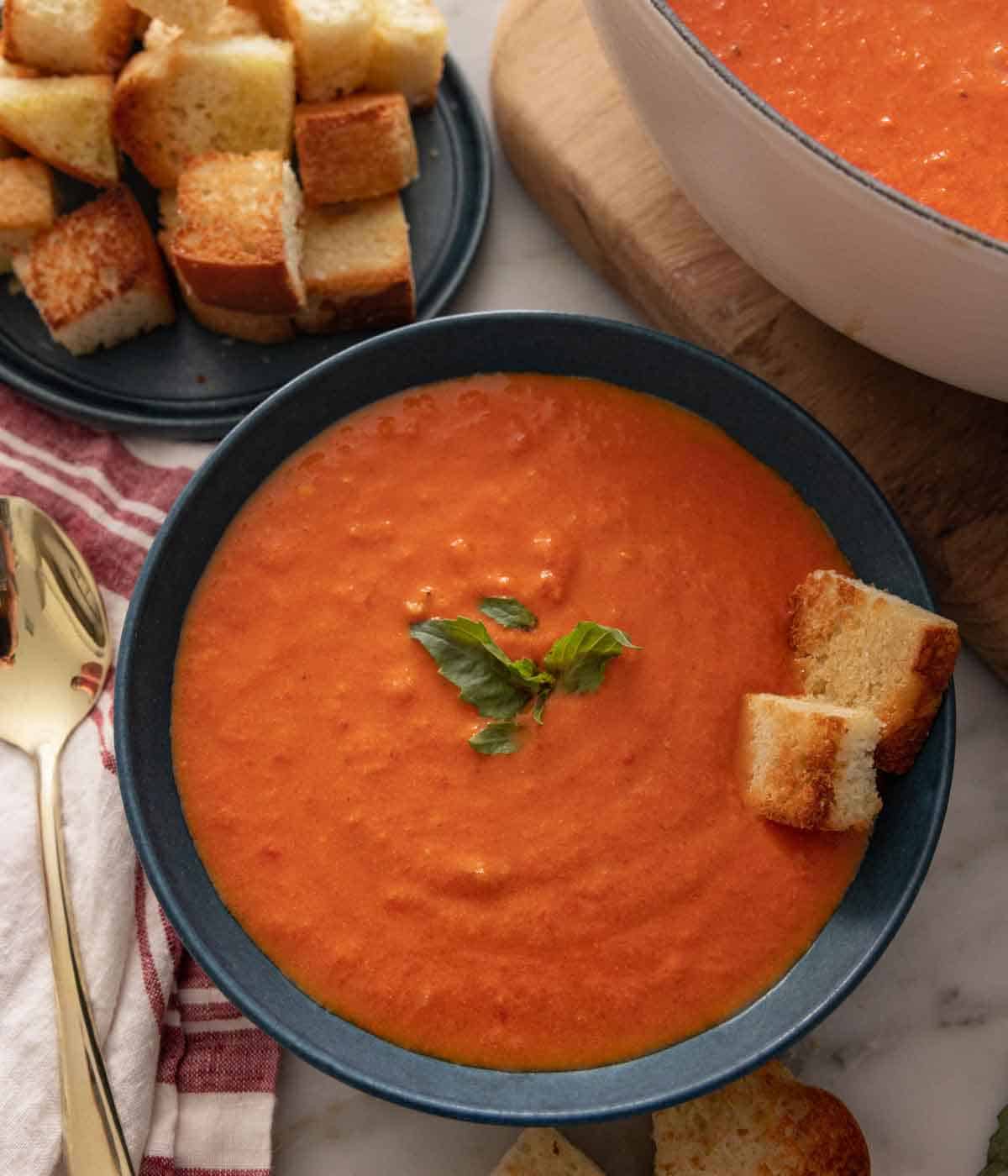
The classic pairing is a grilled cheese for dipping (an air fryer grilled cheese makes it even faster). Beyond that, toast some crusty sourdough or garlic bread, or finish the bowl with croutons, crispy bacon, a swirl of cream, or shredded cheddar or parmesan.
Tomato Soup Recipe

Equipment
- Dutch oven
- Immersion blender
Ingredients
- 3 tablespoons extra-virgin olive oil
- 2 tablespoons unsalted butter
- 1 yellow onion chopped
- 6 garlic cloves minced
- 2 (28-ounce/794g) cans whole peeled tomatoes
- 3 cups water or chicken stock (720ml)
- 1 tablespoon granulated sugar
- ½ teaspoon ground black pepper
- Salt to taste
- ¾ cup heavy cream (180ml)
- Fresh basil chopped
Instructions
- In a large Dutch oven, combine olive oil and butter. Heat over medium heat until the butter is melted. Add the onion. Cook, stirring frequently, until softened, about 8 minutes. Stir in the garlic and cook for another 5 minutes or until very fragrant and just starting to brown.
- Add the tomatoes. Swirl the cans with some of the chicken stock to get the rest of the tomato juices and pour into the pot with the remaining stock. Stir in the sugar and black pepper.
- Bring to a boil (this will take about 10 minutes), then reduce the heat to medium-low and continue simmering for 30 minutes, stirring occasionally. Remove from the heat.
- Using an immersion blender, pulse the soup to break up the tomatoes a bit or until your desired consistency. (I do not recommend transferring the soup to a high-speed blender as blending olive oil can turn it very bitter. Mash with a potato masher to break up the tomatoes a bit if you don’t have an immersion blender.) Taste and add salt, if needed. Stir in the cream. Serve immediately topped with fresh basil.
Notes
- Don’t rush the simmer. The full 30 minutes is ideal for the best flavor, giving the tomatoes time to concentrate a bit more and absorb flavor from onions and garlic. I tested this soup once, only letting it cook for 10 minutes because I was in a rush, and the flavor was somewhat bland and one one-note. It tasted less rich and more like canned tomatoes with chunks of onion in it than a savory tomato soup. When I simmered it for 30 minutes, the soup had a strong tomato flavor but was rounded out by the aromatic onions and garlic that simmered in the pot, too. A short simmer time didn’t allow the ingredients to meld and fully combine for a deeply flavored soup.
Nutrition
Have you tried this recipe? Tag me today!
Mention @preppykitchen and tag #preppykitchen!
Storing and Freezing
Cool the soup completely, then refrigerate in an airtight container (glass is ideal and won’t stain like plastic containers) for up to 4 days. Reheat it gently over medium-low heat.
It also freezes well for up to 3 months, with one note: if you’re making a batch specifically to freeze, leave the cream out and stir it in fresh when you reheat. The dairy can separate after it thaws, making the soup less creamy and grainy looking. Thaw the frozen overnight in the fridge before warming on the stovetop.
Frequently Asked Questions
Canned whole peeled tomatoes are my pick over fresh—they’re packed at peak ripeness, so you get reliably great flavor year-round with no peeling or coring. I reach for San Marzano for their deep, low-acid flavor. If a can tastes flat, I stir in a tablespoon of tomato paste per can to boost it.
The most common cause is blending olive oil at high speed, which releases bitter compounds. I learned that the hard way and switched to an immersion blender. Over-browned garlic can do it too, so cook the garlic just until fragrant.
Stir in a little grated parmesan for a salty-creamy addition to balance the sweetness. You can also rebalance it by adding more acidity from a small splash of vinegar or lemon juice. In the future, if your tomatoes don’t taste very sharp, you can start with less sugar or leave it out until the end and add it to taste.
Yes, it’s delicious without it, or with half-and-half or milk for something lighter. For dairy-free, use full-fat coconut milk.
More Soups to Try
These comforting soup recipes are worth making next:
- French Onion Soup — deeply caramelized onions in rich broth under a bubbling cap of melted cheese.
- Broccoli Cheese Soup — thick, cheesy, and cozy, ready in about 30 minutes.
- Chili — a hearty homemade chili that gets a rich base from canned tomatoes.
- Chicken Noodle Soup — the classic feel-better meal, made from scratch.
- Chicken Pot Pie Soup — all the comfort of pot pie in a creamy, spoonable soup.
If you’ve tried this tomato soup recipe, then don’t forget to rate it and let me know how you got on in the comments below. I love hearing from you!