This post may contain affiliate links. Please read our disclosure policy.


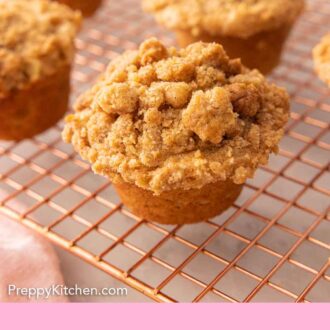


Moist and flavorful, these Apple Muffins are quick and easy to stir together! Follow my tips for ensuring the apples don’t sink to the bottom. Plus, my two-temperature trick for baking muffins ensures they rise with tall domes every time!
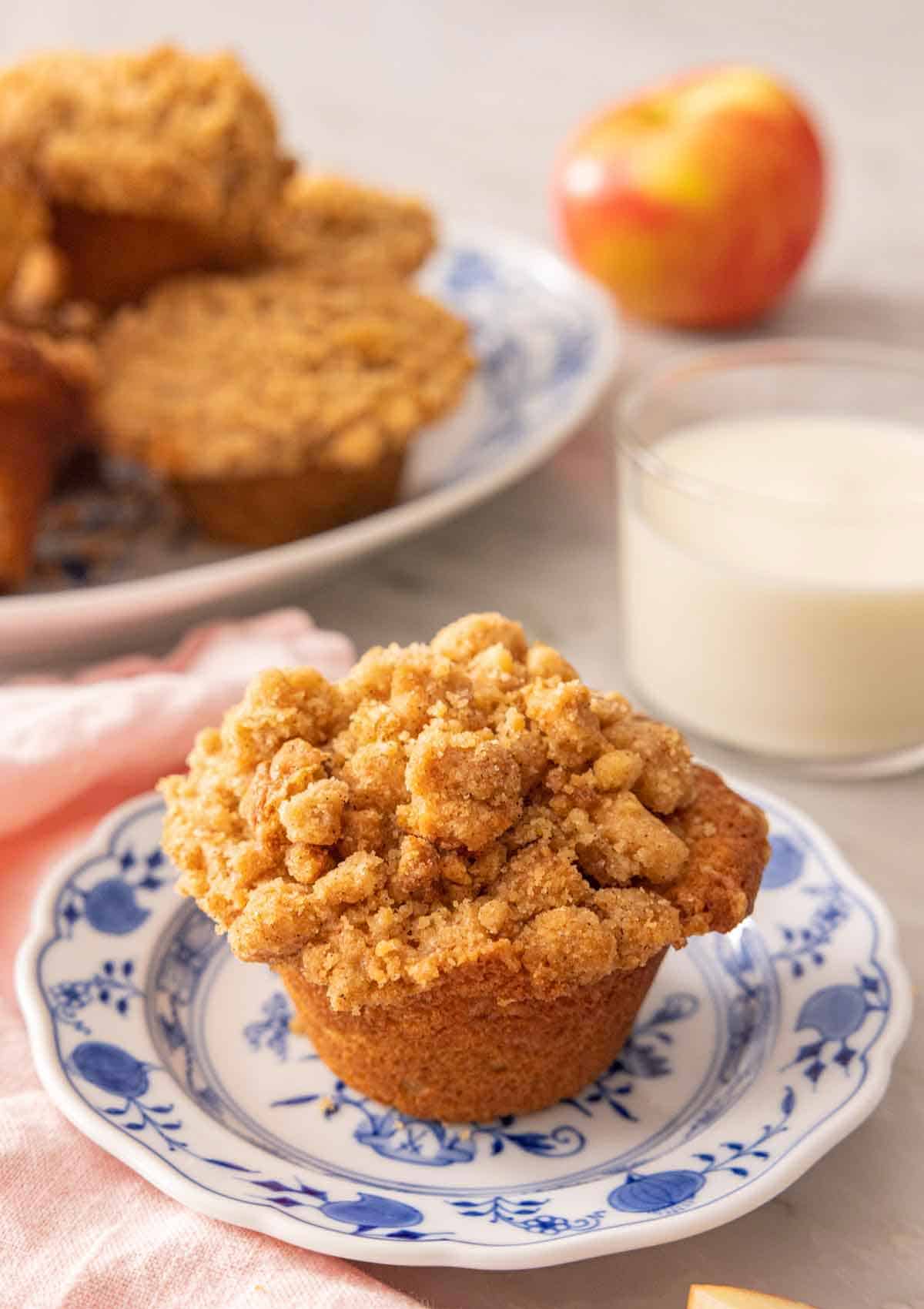
There are two ways an apple muffin goes wrong, and they both involve gravity: the apple sinks to the bottom and leaves a dry, plain top half, or the muffin starts to dome beautifully in the oven and then spreads into a flat disc on top. Both are easy to avoid, and I tested this recipe with the fixes already built into it. In this post, I’ll explain which step is doing which job so your muffins bake perfectly every time!
The short version: tossing the diced apple in a couple of tablespoons of the dry mix keeps them suspended, and starting the oven hot before dropping it sets the top structure before the crumb has time to collapse. Below, I explain how these two moves work and where they go wrong, along with variations you can make to this recipe to make it suit your taste or pantry ingredients.
“Pure perfection. They are by far the best muffins I have ever made. I got to share them with my family and friends and they were very happy with the results. Thank you for the recipe.”
Paulina
Why There’s No Baking Soda in This Batter
Look at almost any other apple muffin recipe, and you’ll see baking soda and baking powder together. My recipe uses baking powder alone, and that’s deliberate.
When I first tested this recipe, I included both baking powder and baking soda. The combination of both leaveners can help produce a more even rise in cakes, so that was my reason to use them both in this recipe. However, baking soda needs an acid to react with since it’s a base. On its own in a batter, it mainly serves to raise the pH. This, in turn, increases browning and aids in spreading (why it is used so often in cookie dough!).
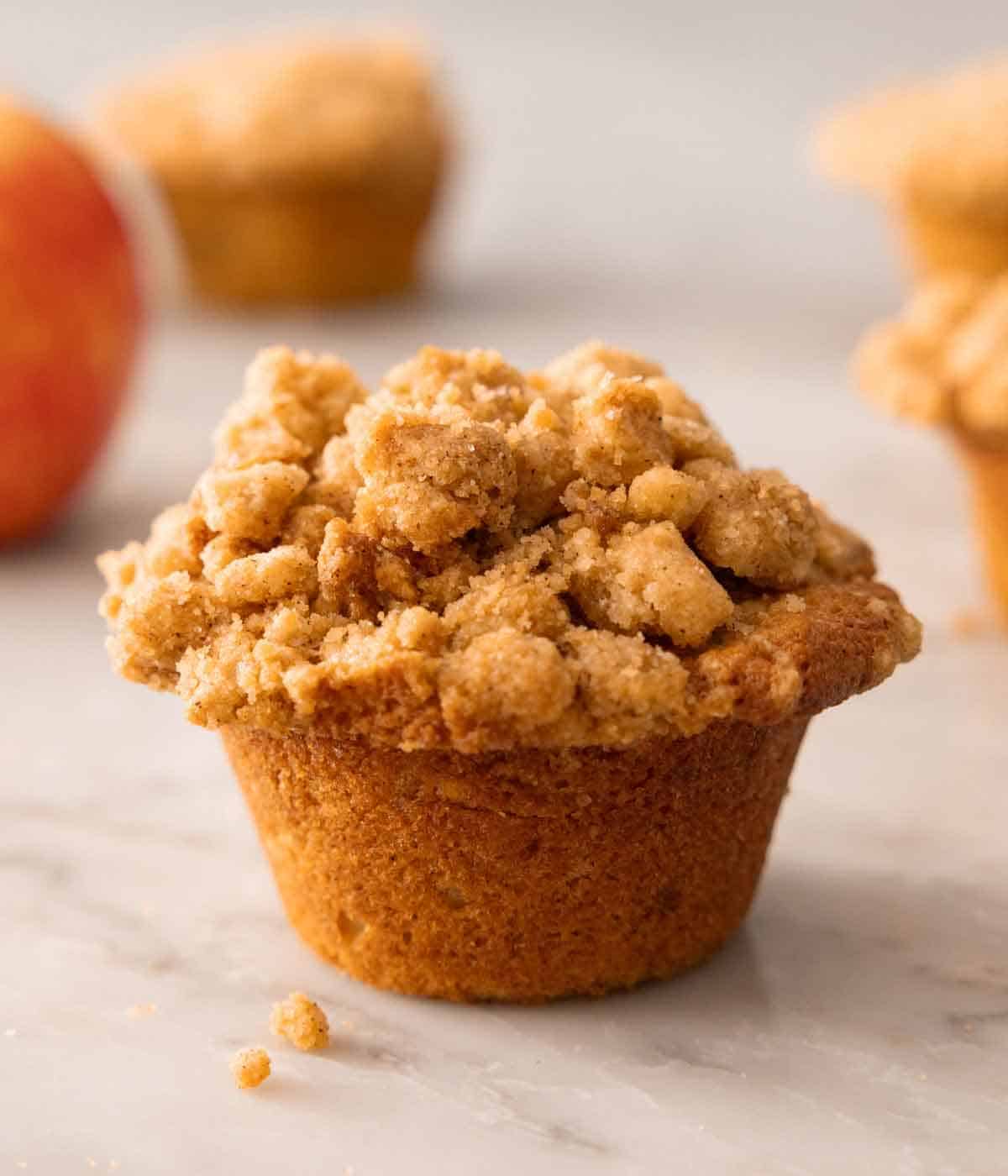
My test confirmed this. The version with the baking soda had tops that spread wider and over the lip of the muffin pan and weren’t as tall. So, I removed it and relied only on baking powder for the proper rise. This produced muffins with a more reasonable spread, taller, domed tops, and less browned edges for softer, fluffier muffins.
Recipes that rely on baking soda are almost always paired with an acidic ingredient like sour cream, yogurt, lemon juice, or buttermilk to activate it. This batter uses plain whole milk and nothing highly acidic. Baking powder already contains its own acid in dry form, which is exactly why it works in a batter like this one. Don’t try to replace the baking powder with baking soda in this recipe. You’ll get a coarser crumb, a faint chemical aftertaste, and the muffins won’t rise correctly.
Key Ingredients
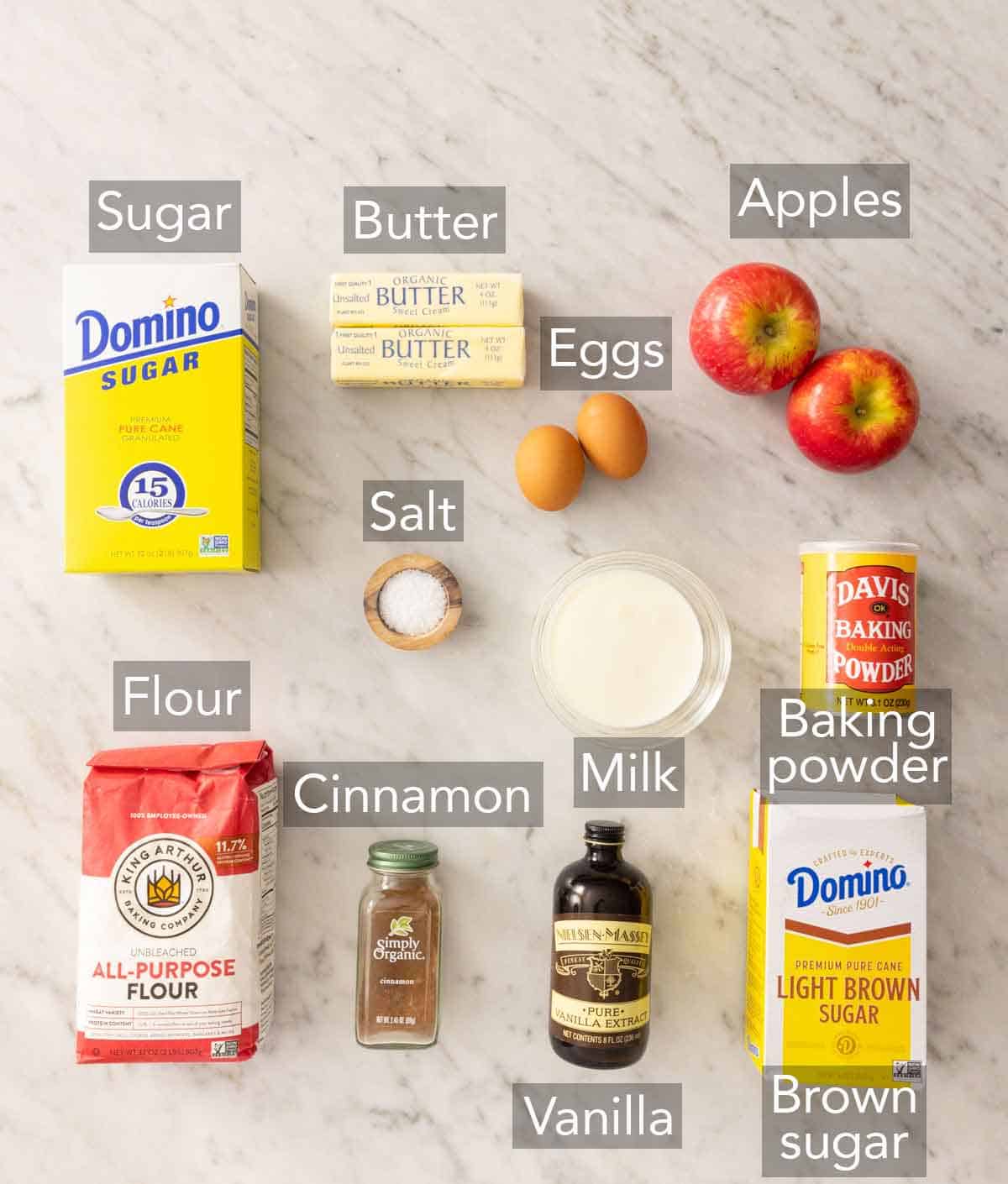
These are the main ingredients you need to make homemade apple muffins. You can find the full list of ingredients and measurements in the recipe card below.
Apples — use a firm baking variety for hearty chunks throughout. Honeycrisp, Granny Smith, Pink Lady, Fuji, and Braeburn all hold their shape. Softer varieties (McIntosh, Gala, Jonagold) can turn to mush and release too much water into the crumb. You also want to make sure the pieces are diced into small chunks, so they distribute well throughout the muffins. If you’re curious about grating the apples for a less chunky texture, I’ve written up my full chopped-versus-grated comparison, including side-by-side photos from a re-test, over on apple bread. The same logic applies here!
Butter — soften the unsalted butter stick to room temperature. This batter is creamed, meaning you beat air into the butter and sugar for about two minutes before mixing the other ingredients in. That air is part of what helps the muffins rise in the oven. A liquid fat, like melted butter or vegetable oil, skips that step entirely and produces a denser muffin.
Sugar — you will use two types for the muffins: granulated for clean sweetness and structure, light brown for the molasses note and for moisture retention. The brown sugar is used in both the batter and the crumb topping and pairs beautifully with the flavor of the apples. If you’re out, use my easy steps for how to make brown sugar with just two ingredients.
Whole milk — you don’t need much; just enough to hydrate the flour but keep the batter from being too thin. A thick batter helps keep the apples suspended during baking and produces a tall dome.
Three Tricks for Tall Muffin Tops
Trick one: the batter has to be thick. A thin batter spreads before it sets, and you get a flat, wide muffin top. This batter should hold its shape on a spoon. If yours is pourable, you’ve either mismeasured the flour or added too much milk.
Trick two: fill the wells nearly to the top. Half-filled wells give you half-sized muffins—there’s no oven trick that compensates for too little batter. Fill 12 wells, about ⅓ cup each, then add the crumb topping. The well will be filled almost to the top, if not mounded slightly above. If you use cupcake liners, the liners will be full.
Trick three: start the oven at a higher temperature. An initial 400°F blast is what pushes the dome up. The baking powder quickly reacts, causing the batter to rise. The edges also set quickly in the high heat, so the batter pushes upwards but is forced to rise towards the center rather than outward. The temperature is dropped after 10 minutes to finish baking the muffins through without burning the top or edges. And don’t open the door after you add the muffins. Opening the oven drops the temperature dramatically, which can cause the muffins to stop rising or sink (and a muffin that loses its lift doesn’t get it back). Only open the door near the end of baking to check for doneness.
A note on sinking tops. If your muffins rise tall and then sag as they cool, the usual cause is underbaking. The structure hasn’t set enough to hold itself up once the steam leaves. The second cause is old leavening. Baking powder loses potency over time. If the tin has been open more than six months, replace it before you end up with flat muffins.
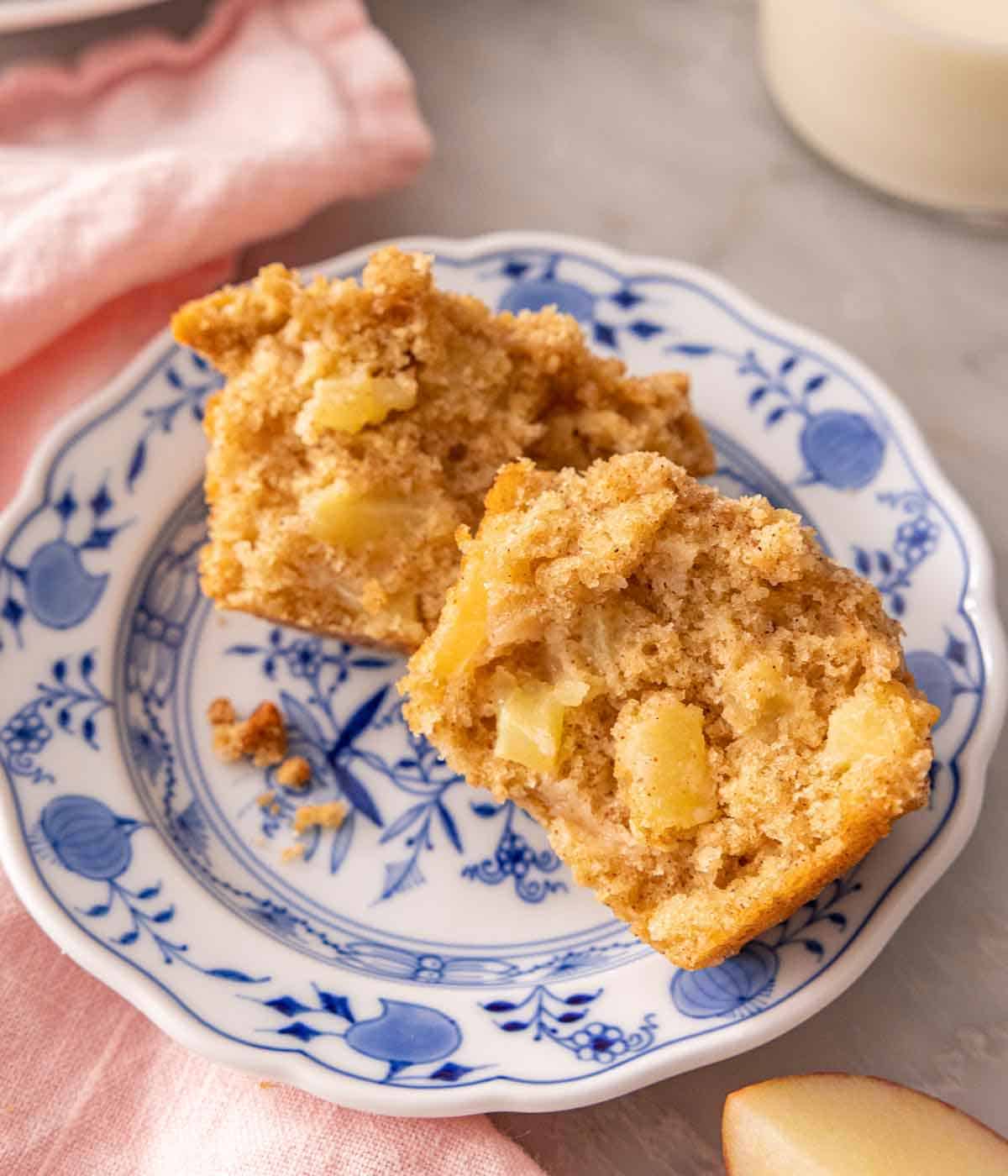
Getting the Crumb Topping Right
Two things matter here. The first is texture: stop mixing once the butter has moistened the dry sugar and flour, but the mixture still holds clumps. Overworked crumb topping turns into a paste and won’t crumble.
The second is quantity: divide the topping fairly evenly among the wells so the muffins all bake the same. The crumb topping adds some weight on top of the batter. If one well is overfilled and another doesn’t have much at all, they won’t rise the same way. I hastily made them for the boys one week and created an accidental test! The overfilled crumb topping muffins spread more because the crumb weighed the batter down as it rose and pushed it out. I like to start with 1 tablespoon on top of each, then come back through the pan with another tablespoon. Then, see how much is left, and roughly divide it among each well.
How To Make Apple Muffins
Below, I’ve highlighted portions of the recipe in step-by-step process images along with instructions for making this apple muffin recipe. You can find the full set of instructions in the recipe card below.
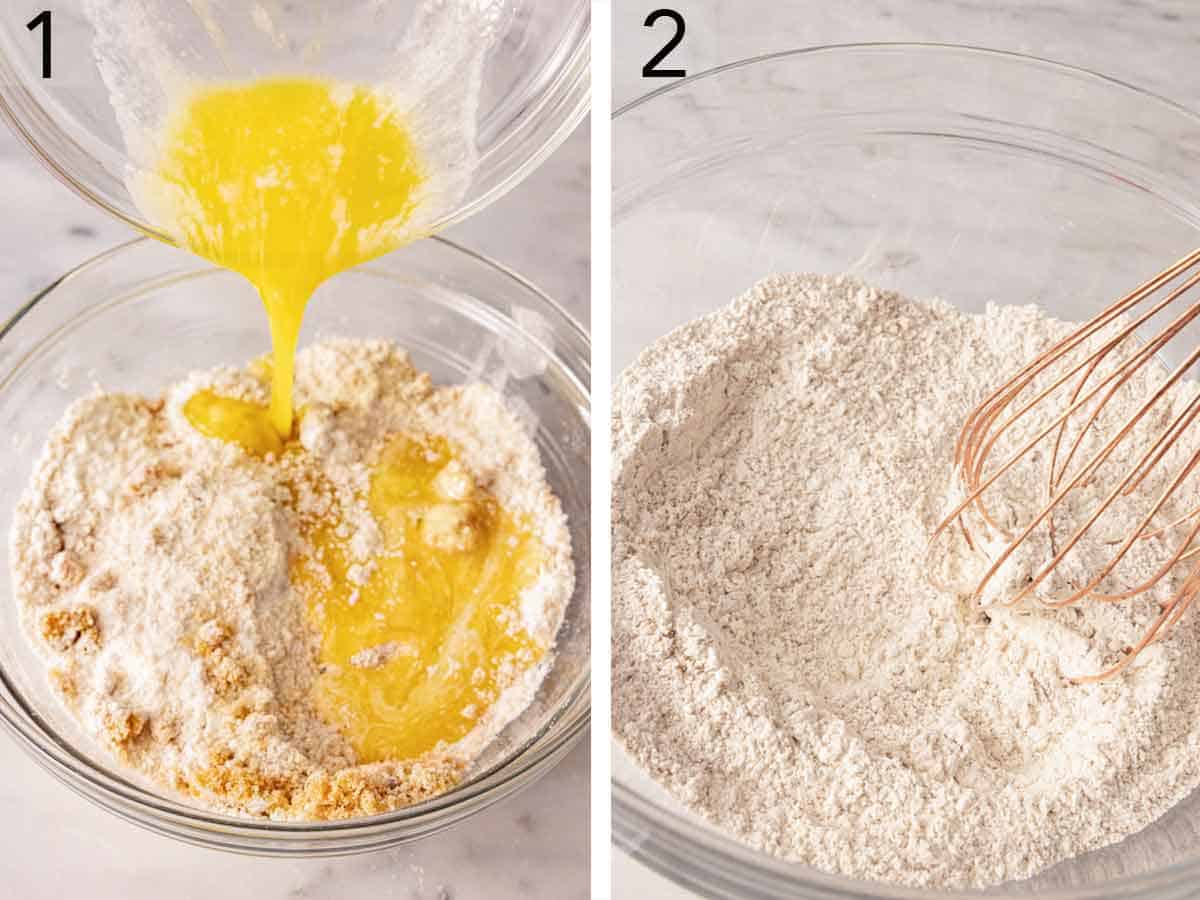
1. Make the crumb topping first. Stir the brown sugar, flour, granulated sugar, and cinnamon together, then stir in the melted butter with a fork. Stop while it’s still clumpy. If you keep going, it turns into paste, and paste bakes into more of a flat sugary lid instead of a craggy crumb. Set the topping aside.
2. Whisk the dry batter ingredients—flour, baking powder, cinnamon, salt—in a large bowl. Coat the apples. Toss the diced apple with two tablespoons taken from that dry mixture. This is the anti-sinking step, so don’t skip it! This coating of flour forms a little jacket around the apple pieces that holds them suspended in the batter. Without it, the weight of the apples can cause them to sink to the bottom of the muffin wells.
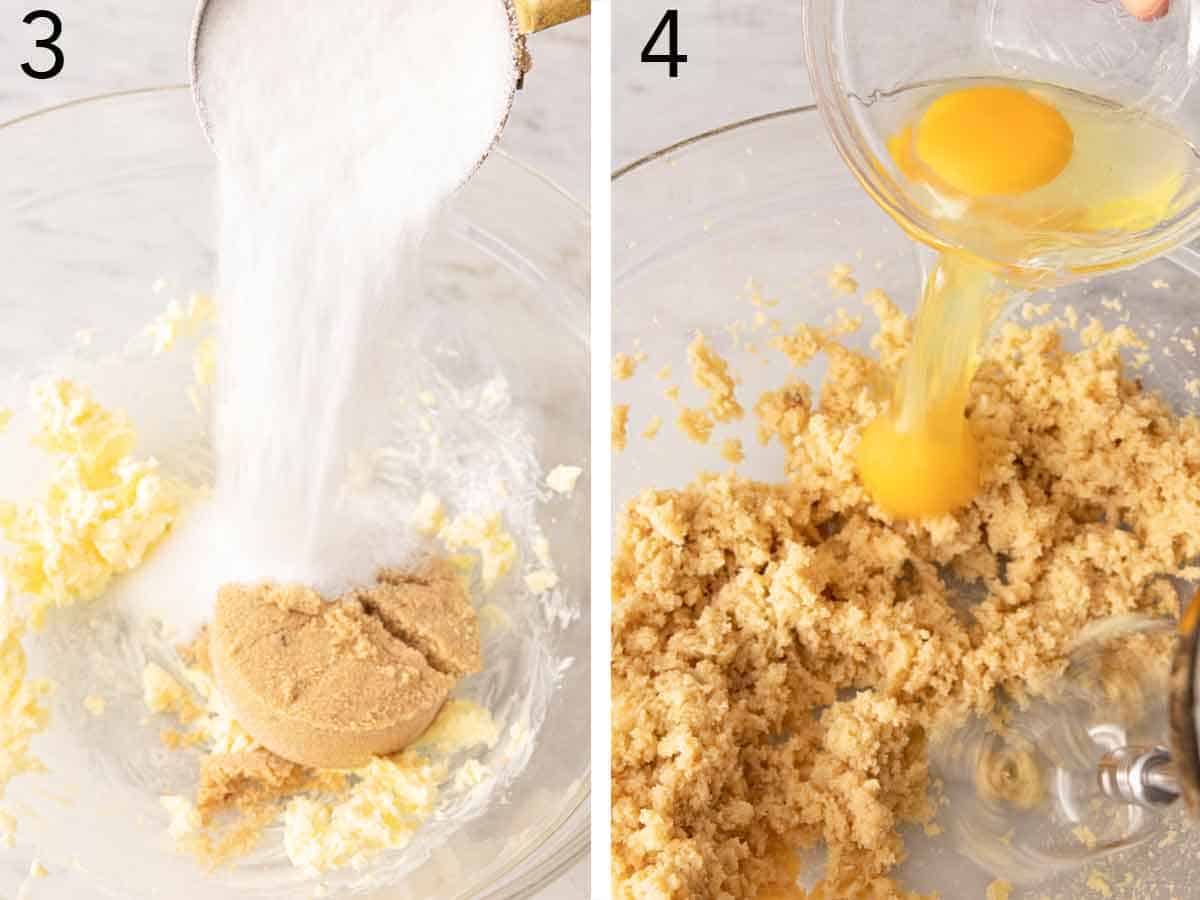
3. Cream the butter and sugars for a full two minutes on medium. The mixture should look a bit fluffy from air whipped into the mix. If your butter is firmer to start with, you may need to beat it for an additional minute or two. Go by texture, not just time, since the goal is to incorporate air for the proper rise.
4. Add the eggs one at a time. This helps the liquidy eggs incorporate into the fat better so you don’t have lumps of butter and sugar throughout the batter. Scrape the bowl, then beat in the vanilla.
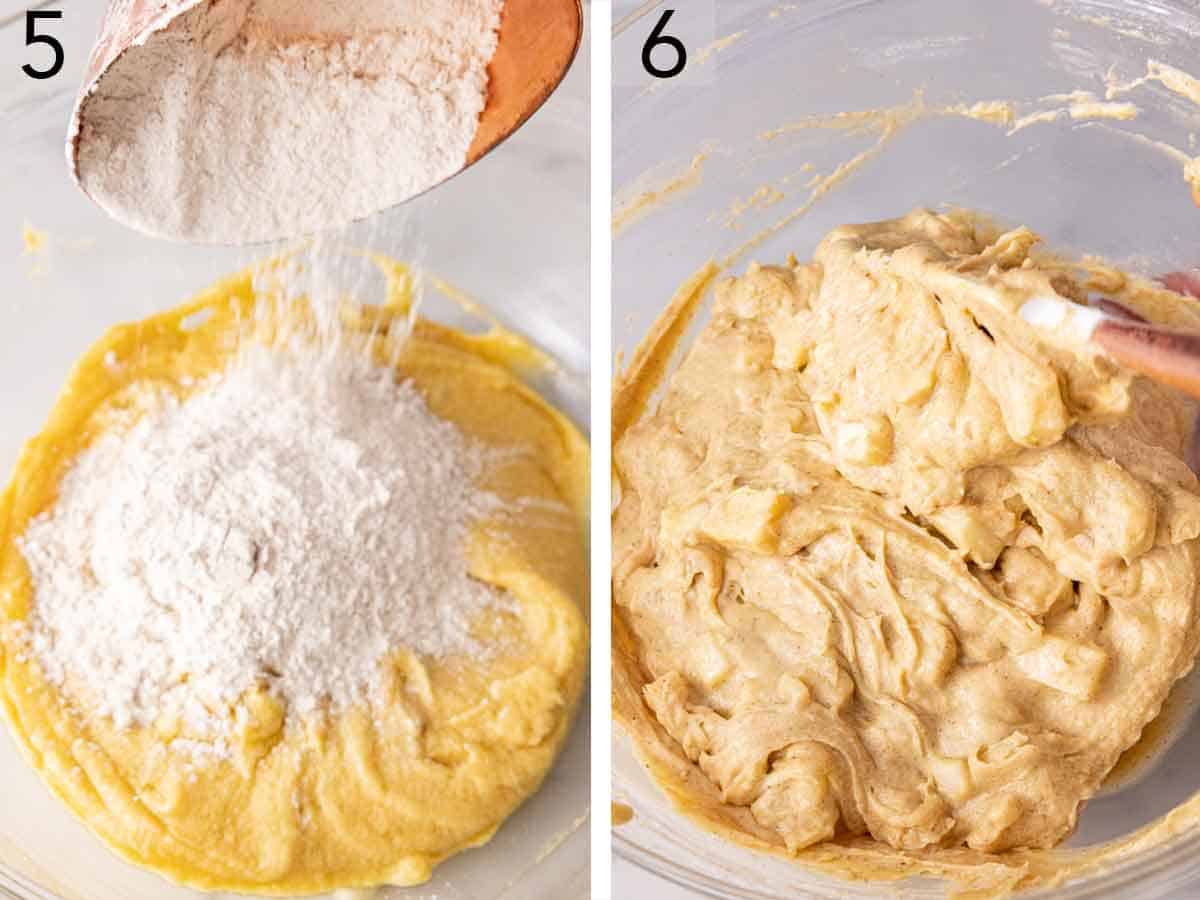
5. Alternate flour and milk on low speed. A third of the flour, half the milk, and so on. Stop the moment it’s combined. By alternating the wet and dry, you prevent the batter from either being too thick to mix in the liquid easily (overmixing the batter), or too thin and losing the air you worked hard to beat into the butter and sugar.
6. Fold in the apples by hand. Switch to a spatula so you can gently distribute the apples throughout the batter. This helps prevent overmixing the batter and keeps the beaters from breaking the apples into tiny pieces.
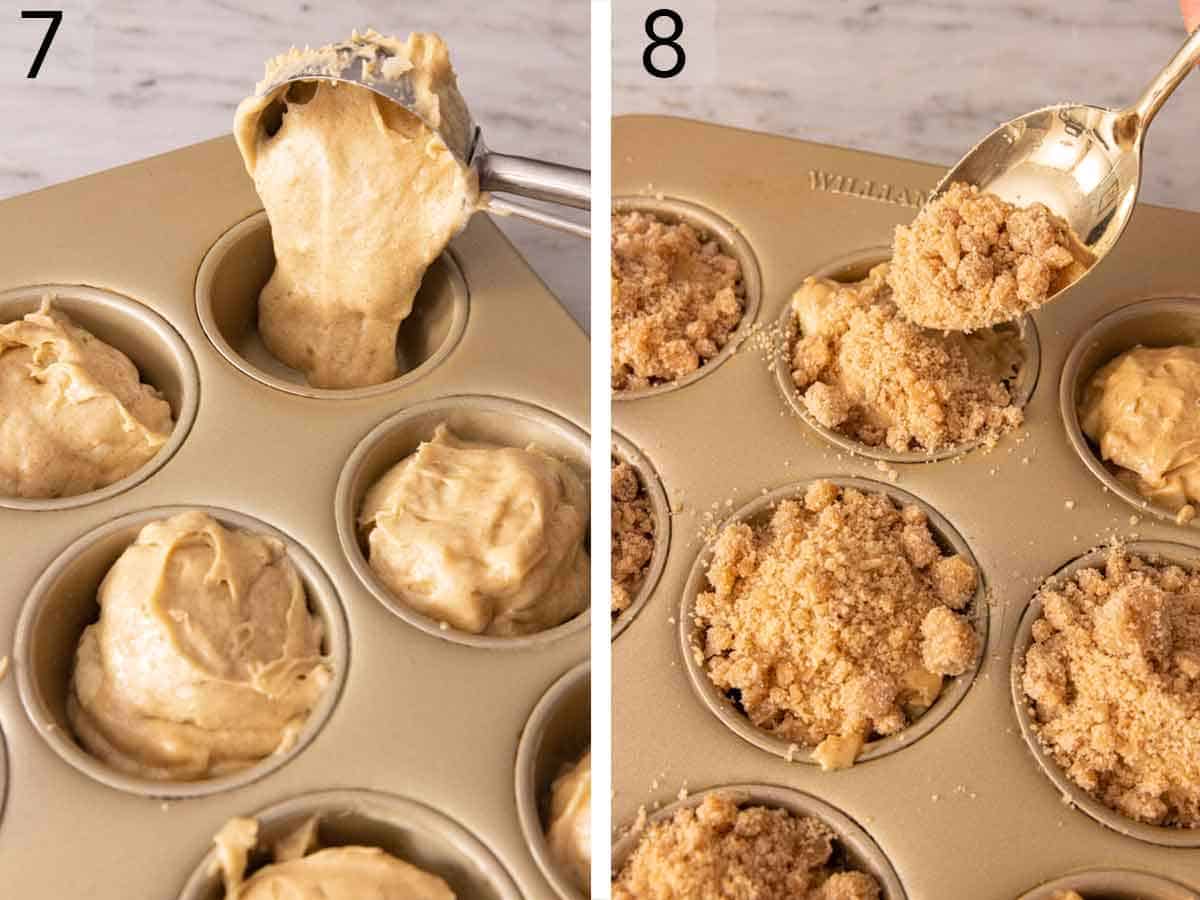
7. Fill the wells. About ⅓ cup of batter per well—they’ll be nearly full, which is correct.
8. Spoon the crumb over the batter in each well. Bake hot (400°F), then drop to finish. 400°F for 10 minutes gets a quicker rise for a tall top. Then reduce to 350°F for another 12 to 15 minutes without opening the door to finish baking the muffins without burning the top or edges. A toothpick should come out with a few moist crumbs, not clean. Remove the muffins from the pan and let them cool on a wire rack.
Variations
Skip the crumb. Sprinkle coarse sanding sugar or cinnamon sugar over the batter instead. You lose the streusel texture but gain a crackly top and less prep!
Add nuts. Half a cup of chopped toasted pecans or toasted walnuts can be folded in with the apples, or scattered over the crumb before baking.
Make it a loaf. Grease a 9×5-inch loaf pan and line it with parchment paper. Sprinkle all of the crumb topping onto the batter, and bake at 350°F for 55 to 65 minutes or until a toothpick inserted into the center comes out clean.
Related bakes worth trying. Morning glory muffins and carrot muffins offer a similar texture and warmth—both are filled with fruit and grated carrots, warm spices, and are easy to stir together. If you’ve got apples to use up beyond a dozen muffins, apple crisp and apple cobbler are the perfect apple desserts to make!
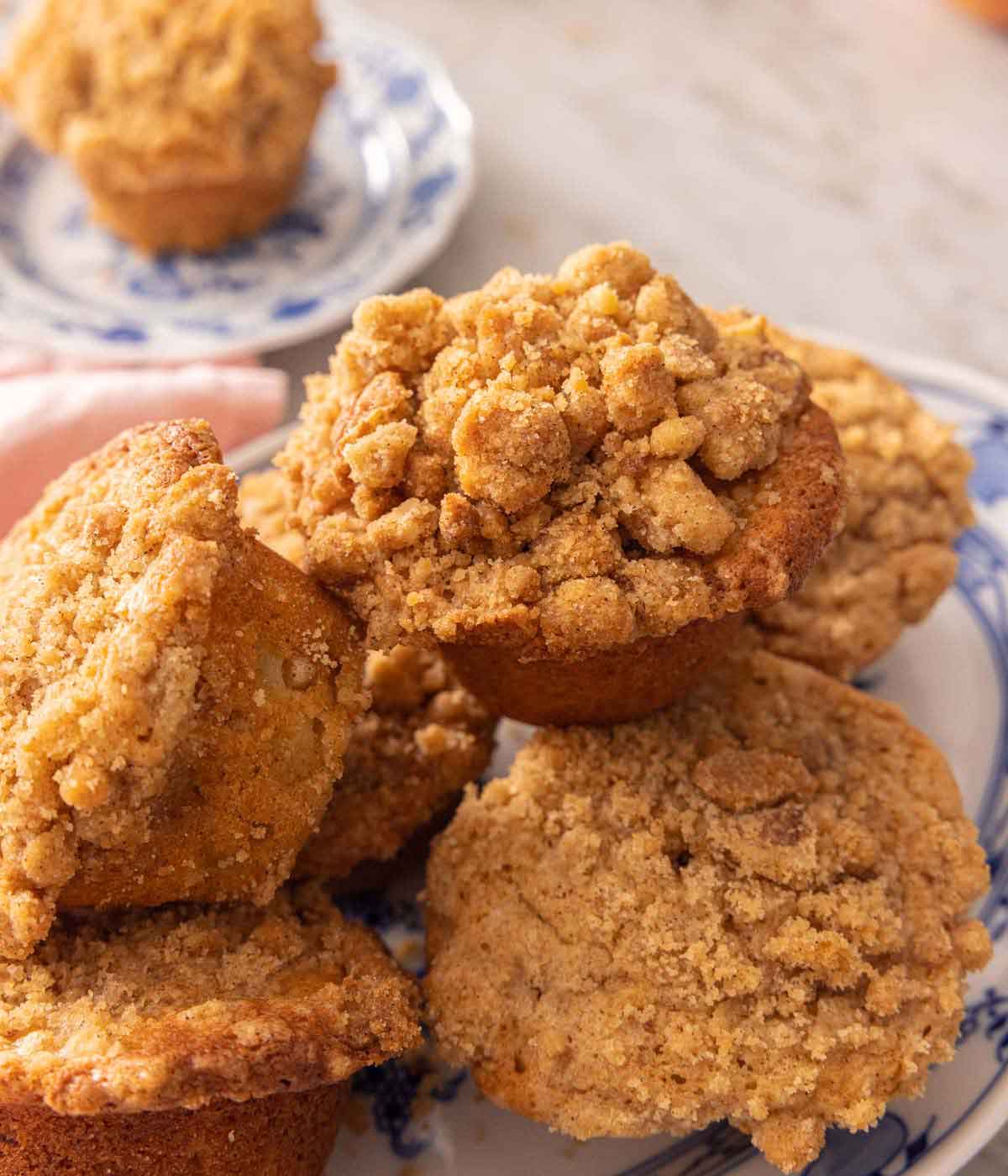
Pro Tips For The Best Apple Muffins
Measure your flour by using a scale! Adding too much flour to the recipe is the most common reason the muffins end up dense. The best and easiest way to measure the ingredients is using a scale, especially flour. See my Academy lesson, How to Measure Ingredients Correctly, for how to tare and weigh with a scale, in addition to accurately measuring ingredients like brown sugar and flour with volume measuring cups.
Be careful not to overmix the batter. It’ll lead to dense muffins or large holes in the crumb.
Use the right muffin pan. This recipe uses a regular muffin pan for a dozen apple muffins. I prefer a lighter-colored non-stick muffin pan, especially if you choose to bake these without paper liners. To learn the difference between pan sizes and materials, read Academy: Cupcake Pan Sizes & Types: A Baker’s guide.
Storing and Freezing
Room temperature: airtight container, up to 3 days. The crumb topping will soften after a day, but it doesn’t affect the fluffy muffin texture underneath.
Refrigerator: they keep longer when chilled, about 5 days in the fridge. Warm them briefly before eating—butter in the batter firms up and makes them taste dry if eaten cold.
Freezer: cool completely, then wrap and freeze in a freezer bag for up to 3 months. To thaw, unwrap and heat for 20 seconds in the microwave from frozen. If you want the crumb to firm back up, do 5 minutes at 300°F in an air fryer or fifteen minutes at 300°F in the oven. Bake them in liners if you know they’re headed for the freezer; it makes them much easier to handle.
Apple Muffins Recipe

Equipment
- Muffin pan
- Mixing Bowls
Ingredients
For the Topping:
- ½ cup all-purpose flour (60g)
- ¼ cup light brown sugar (55g)
- ¼ cup granulated sugar (50g)
- ½ teaspoon ground cinnamon
- 3 tablespoons unsalted butter melted (43g)
For the Muffins:
- 2 cups all-purpose flour (240g)
- 1¼ teaspoons baking powder
- 1½ teaspoons ground cinnamon
- ½ teaspoon salt
- ½ cup unsalted butter room temperature (113g)
- ½ cup packed light brown sugar (110g)
- ½ cup granulated sugar (100g)
- 2 large eggs
- 1 teaspoon vanilla extract
- ¼ cup whole milk (60ml)
- 1½ cups diced apple (about 2 apples peeled and cored/ 220g)
Instructions
- Preheat the oven to 400F. Grease a 12-cup muffin tin with baking spray or line with cupcake papers.
For the Topping:
- In a medium bowl, stir together the brown sugar, flour, granulated sugar, and cinnamon. Stir in the melted butter with a fork, until the mixture is combined but still clumpy. Set aside.
For the Muffins:
- In a medium mixing bowl, whisk together the flour, baking powder, cinnamon, and salt.
- In another medium mixing bowl, toss the apples with two tablespoons of the flour mixture until the apples are well coated.
- In a large mixing bowl, beat the butter and sugars together on medium speed until creamy, about 2 minutes. Add the eggs, one at a time, beating until well combined. Scrape down the bowl and beat in the vanilla.
- With the mixer on low speed, add a third of the flour mixture, followed by half of the milk. Continue alternating between the flour and milk, mixing just until combined. Fold in the apples. Divide the batter among the wells of the muffin pan, about ⅓ cup per muffin. (They will be mostly full.) Sprinkle the topping evenly over the batter, about 2-3 tablespoons per muffin.
- Bake for 10 minutes.
- Reduce the oven temperature to 350F and continue baking for 12 to 15 minutes or until a toothpick inserted into the center comes out with a few moist crumbs. Let cool for 10 minutes in the pan then remove and continue cooling on a wire rack. Muffins can be stored in an airtight container at room temperature for up to 3 days.
Notes
- It’s important to adjust the temperature of your oven. The initial hot blast will help the muffins rise tall, then the lower temperature will help them cook through without burning.
- Cool the muffins out of the pan. This prevents them from steaming and turning soggy or sticking to the pan.
Nutrition
Have you tried this recipe? Tag me today!
Mention @preppykitchen and tag #preppykitchen!
Frequently Asked Questions
No. Twenty-two minutes in the oven is enough to soften diced apple, and pre-cooking makes the pieces very soft.
Not in this batter. Grated apple behaves like a wet ingredient rather than an add-in, and this batter is deliberately low on liquid so it stays thick enough to dome. Shredded apples release a lot more liquid before the muffin hits the oven, loosening the batter so you lose the tall top. A diced apple releases its water slowly.
Grating is offered as an option in my apple bread but not here. The bread recipe has a different ratio of ingredients with less added liquid. This accounts for the longer bake time, which pulls more moisture from the fruit as it bakes.
Almost always underbaking. If you pull the muffins a minute or two early and the crumb hasn’t set firm enough to support the dome once steam escapes, it will shrink overall or sink in the center. Check with a toothpick and look for a few moist crumbs clinging to it rather than wet batter. The other suspect is expired baking powder, which lifts the batter initially but isn’t strong enough to complete the job, so it collapses before the batter is set.
Also, if you open the oven when you drop the temperature, you can release too much heat, causing a dramatic drop in temperature which may cause the tops to fall.
Canned apples work if they’re packed in juice or syrup rather than being pie filling. Drain them well and pat them properly dry first. Frozen apples can be stirred in from frozen with the pieces broken apart (don’t add any large clumps). The baking time will increase by 2-3 minutes due to the cold fruit.
More Muffin Recipes To Try
Try one of these easy muffin recipes next:
- Banana Chocolate Chip Muffins — the most-made muffin on the site, and a good template for any mashed-fruit batter.
- Morning Glory Muffins — apple, carrot, coconut, and raisins in one muffin; the loaded-breakfast version of this idea.
- Oatmeal Muffins — hearty breakfast muffins that would be delicious with diced apples stirred in to make apple oatmeal muffins.
- Cinnamon Muffins — the same warm spice without the fruit, if you’ve run out of apples.
- Banana Muffins — the same warm spice and perfect to make if you have a few very ripe bananas to use up.
If you’ve tried this apple muffin recipe, then don’t forget to rate it and let me know how you got on in the comments below. I love hearing from you!