This post may contain affiliate links. Please read our disclosure policy.





These classic Chocolate Chip Cookies have deep flavor from brown sugar, vanilla, and salt, and a perfect balance of crispy and chewy with lots of chocolate packed in each bite. The cookie dough can be baked right away, chilled for deeper flavor, or frozen for later!
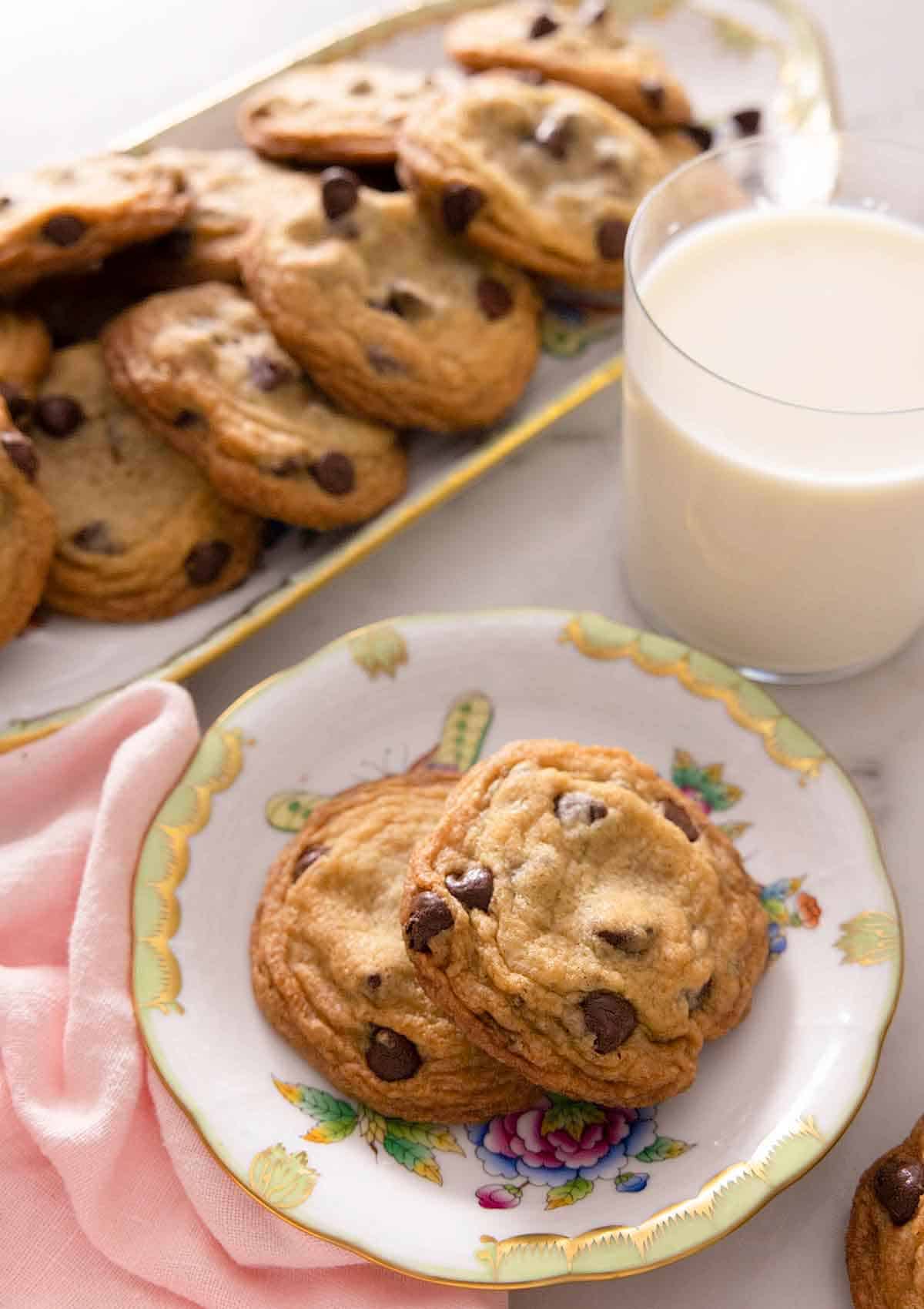
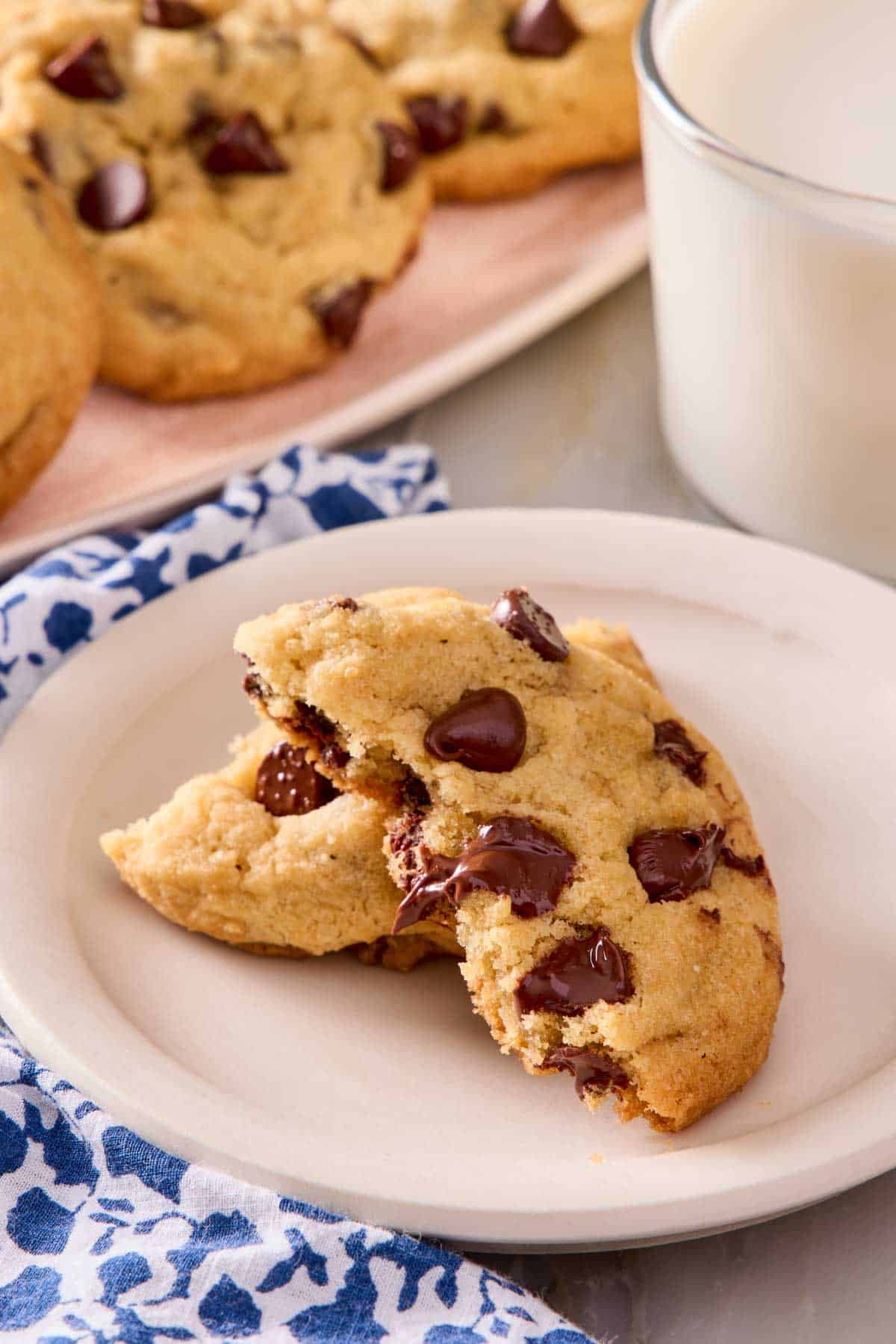
This is my classic chocolate chip cookie: crisp golden edges, a chewy middle, and puddles of semisweet chocolate all throughout. The dough needs no chilling, so you can have warm cookies about 30 minutes after you start.
When I tested this recipe, I baked the same 1½-tablespoon-sized dough balls three ways: straight from the bowl after mixing, after an hour in the fridge, and completely frozen. All three work, and below I’ll show you what I discovered changes about each one. Plus, I share my experience from making this recipe over 20 times to change the cookie texture by simply tweaking an ingredient ratio, baking time, or temperature.
“This is the best recipe for chocolate chip cookies that I’ve tried. The texture is perfect. Soft and melty in the middle and crispy on the edges. I went for the bigger sizes, maybe 3 tbsp, the shape held beautifully. Also added some flaky salt before baking. Such a hit!”
Sasha
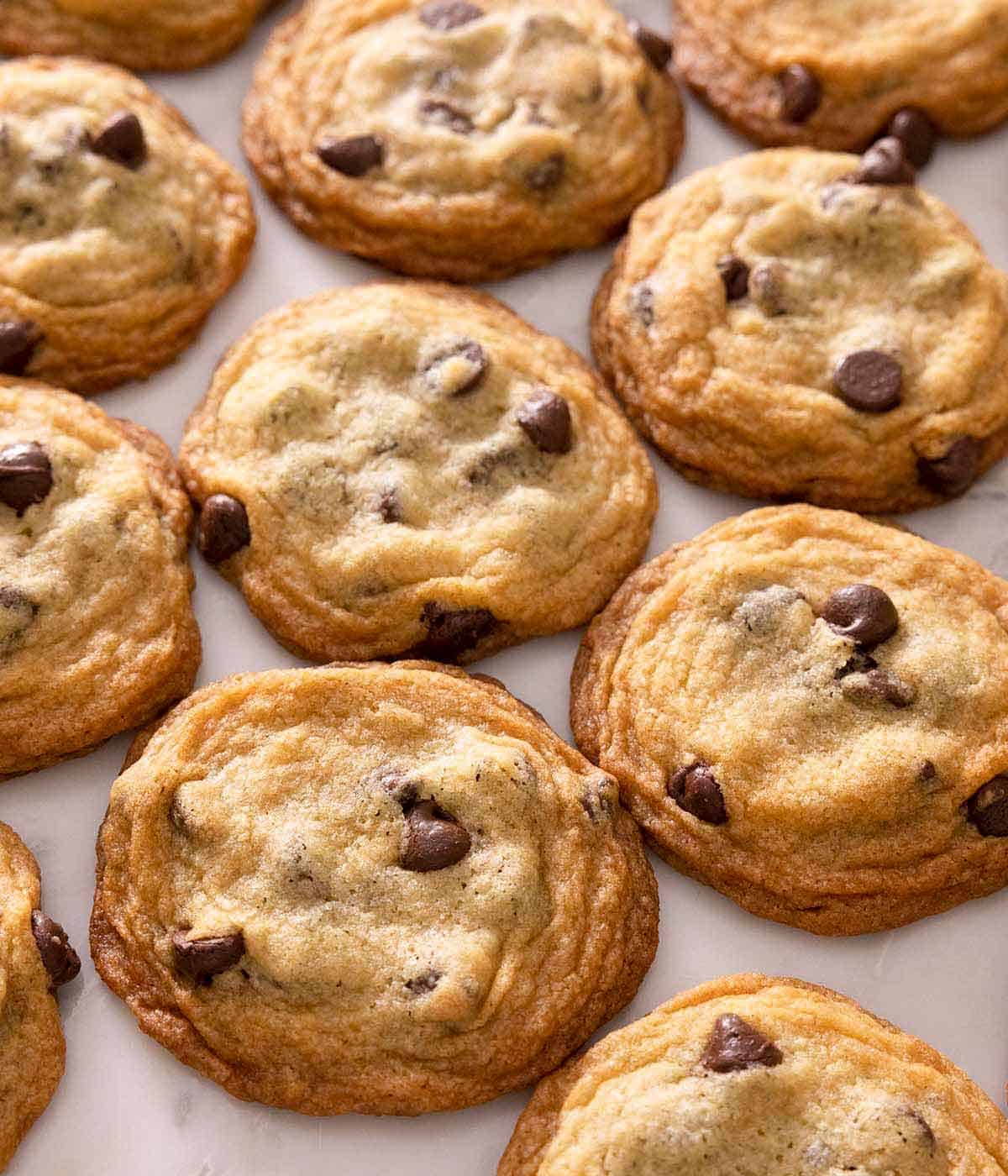
Why These Cookies Are Chewy in the Middle and Crisp at the Edges
There are three main components to this recipe that produce my perfect chocolate chip cookie texture.
- More brown sugar than white sugar. The dough uses a 2:1 ratio of light brown sugar to granulated sugar intentionally. Brown sugar carries molasses, which holds onto moisture and keeps the middle chewy, while granulated sugar caramelizes more easily and crisps the edges. When I’ve tipped the ratio toward more granulated sugar, the cookies baked flatter and crispier throughout.
- The right amount of flour. The right balance of flour makes the cookie spread just enough without being too thin. It also provides enough structure to hold a lot of chocolate chips in every bite. When I tested measuring methods, 1 cup scooped straight from the flour bag weighed 138g (1 cup should be 120g), so scooping all 2½ cups can add about 45g of extra flour. That’s the most common reason these come out dry and puffy instead of chewy. Weighing is the most accurate measurement method. Follow my spoon-and-level method in my guide on how to measure ingredients correctly if you don’t have a scale.
- Baking soda. Don’t swap this with baking powder! Baking powder makes the cookies puff up and turn cakey instead of spreading into crispy-edged rounds. Baking soda raises the pH of the cookies, lowering the temperature at which the sugars caramelize and reducing the strength of the gluten network in the flour. This means the cookies spread more than they puff.
There are so many other factors that go into cookie texture, and you can read about all of them in my guide to The 4 Cookie Textures! I tested this chocolate chip cookie recipe 20 times to make soft, chewy, crispy, and cakey cookies, and shared my findings in the guide. You can use it to make adjustments to this recipe for your perfect cookie texture by changing the fat, sugar, ingredient ratios, how the dough is mixed, and the baking temperature.
Key Ingredients
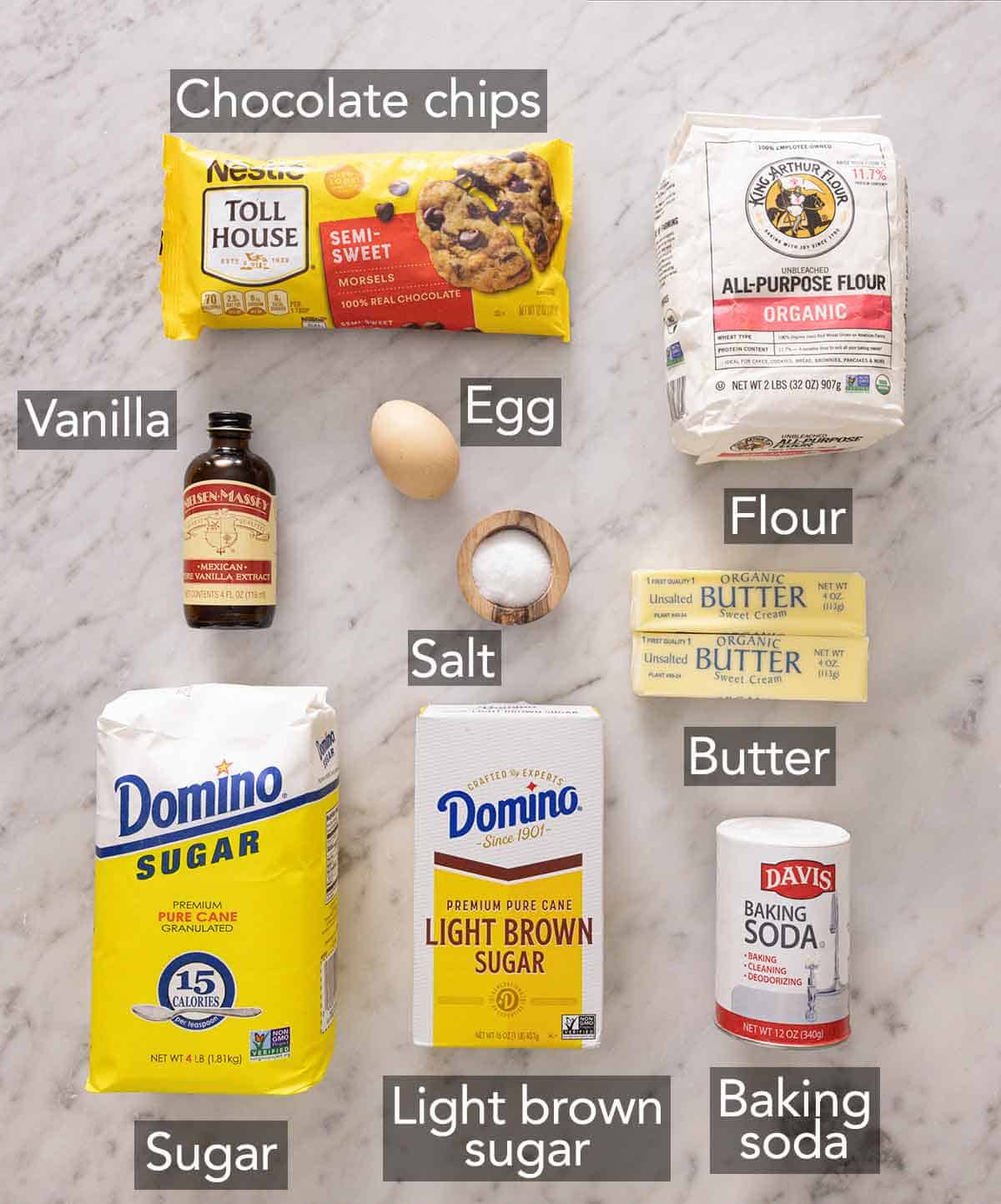
These are the main ingredients you need to make chocolate chip cookies. You can find the full list of ingredients and measurements in the recipe card below.
Flour — a standard all-purpose flour makes an excellent chocolate chip cookie. If you want more chewiness, you can replace up to half of the AP flour with bread flour. For a more tender, crumbly cookie, you can do the same but use cake flour.
Baking soda — make sure your baking soda has not expired and is lump-free. Sometimes it clumps if stored in the cardboard box on the shelf, so sift it if needed.
Salt — fine salt is mixed into the dough and rounds out the flavors in the cookies. Flaky sea salt is the perfect finishing touch for sprinkling on top of the chocolate chip cookies hot out of the oven. Learn the difference between these two types of salt in my Salt 101 guide.
Butter — you need softened unsalted butter. It should take a fingerprint but still feel cool with some resistance. Butter that’s gone so soft it’s greasy will make a flatter cookie because it doesn’t hold air as well and it is on the verge of melting. Using unsalted butter and adding the salt separately allows you to have control over the saltiness of the cookie dough. If you want to use salted butter, see my guide on Salted Vs. Unsalted Butter to make the correct swap.
Sugar — you need both granulated sugar and light brown sugar. Not only does brown sugar impart moisture and a subtle molasses flavor, but it also contributes to the chewy texture of the cookies. Granulated sugar creates the addictive crisp edges. If you want the cookies even chewier, you can use all brown sugar. Dark brown sugar works too, but the molasses flavor will be more pronounced.
Egg — an egg helps to bind the cookie dough ingredients. Without the egg, the dough will bake up thinner and crispier with a more crumbly texture.
Chocolate chips — you can use semisweet chocolate chips, chocolate chunks, or your favorite type of chocolate chips. For the ultimate chocolate chip cookies, use two kinds of chocolate. In testing, I made one batch with chopped Guittard semisweet bars plus bagged chips. The chopped bar breaks into tiny shards, and I found these pieces melted into streaks throughout the dough, making them taste even more chocolatey. I like to press a few extra chopped pieces or chocolate chips on top of each dough ball before baking, which is what gives you those pools of melted chocolate on top!
Pro Tips For Making This Recipe
Use room temperature ingredients, so they incorporate better. Set out the refrigerated ingredients in advance so they are not completely cold when you start working on the cookies. If you forget, simply set the egg in a bowl of warm water for 5 to 10 minutes and see my post for several ways to soften butter quickly.
Make sure the brown sugar is soft and moist. If your brown sugar has hardened, don’t worry! Check out my detailed post on how to soften brown sugar to rescue it.
Use a spring-loaded scoop for evenly sized cookies. This is a game changer if you bake cookies often because it easily and perfectly portions your dough so each cookie is the same size for even baking. You can order scoops of different sizes online. I used a #40 scoop for this recipe.
How To Make Chocolate Chip Cookies
Learn to make chocolate chip cookies with these step-by-step process images. You can find the full set of instructions in the recipe card below.
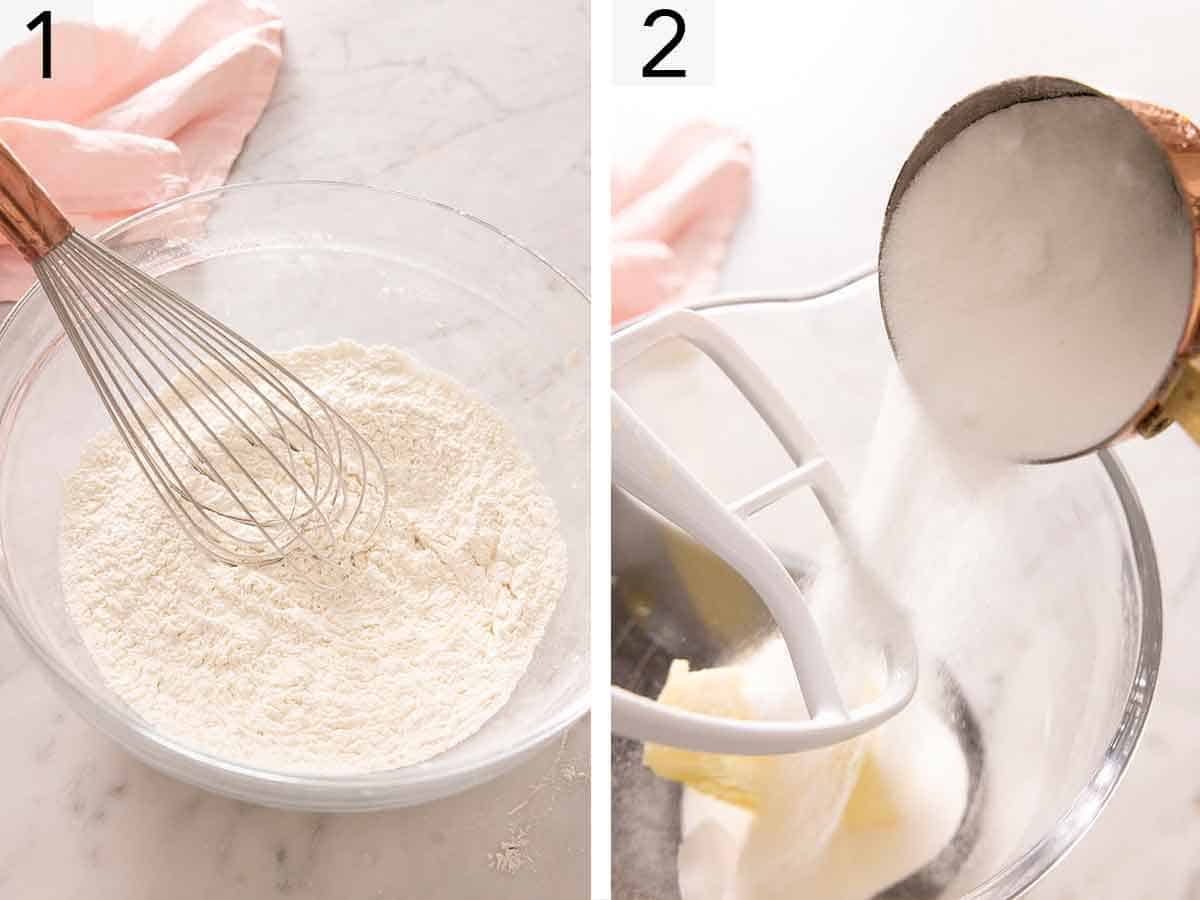
1. Mix the dry ingredients. Combining the salt and baking soda with the flour first ensures they incorporate evenly throughout the dough without having to overmix.
2. Combine the butter and both sugars. Beat on medium-low speed until very light and fluffy, about 5 minutes. Creaming beats tiny air pockets into the butter, and those help the dough lift and stay tender. When I’ve cut the creaming down to a minute or two, the cookies come out denser and greasier at the edges.
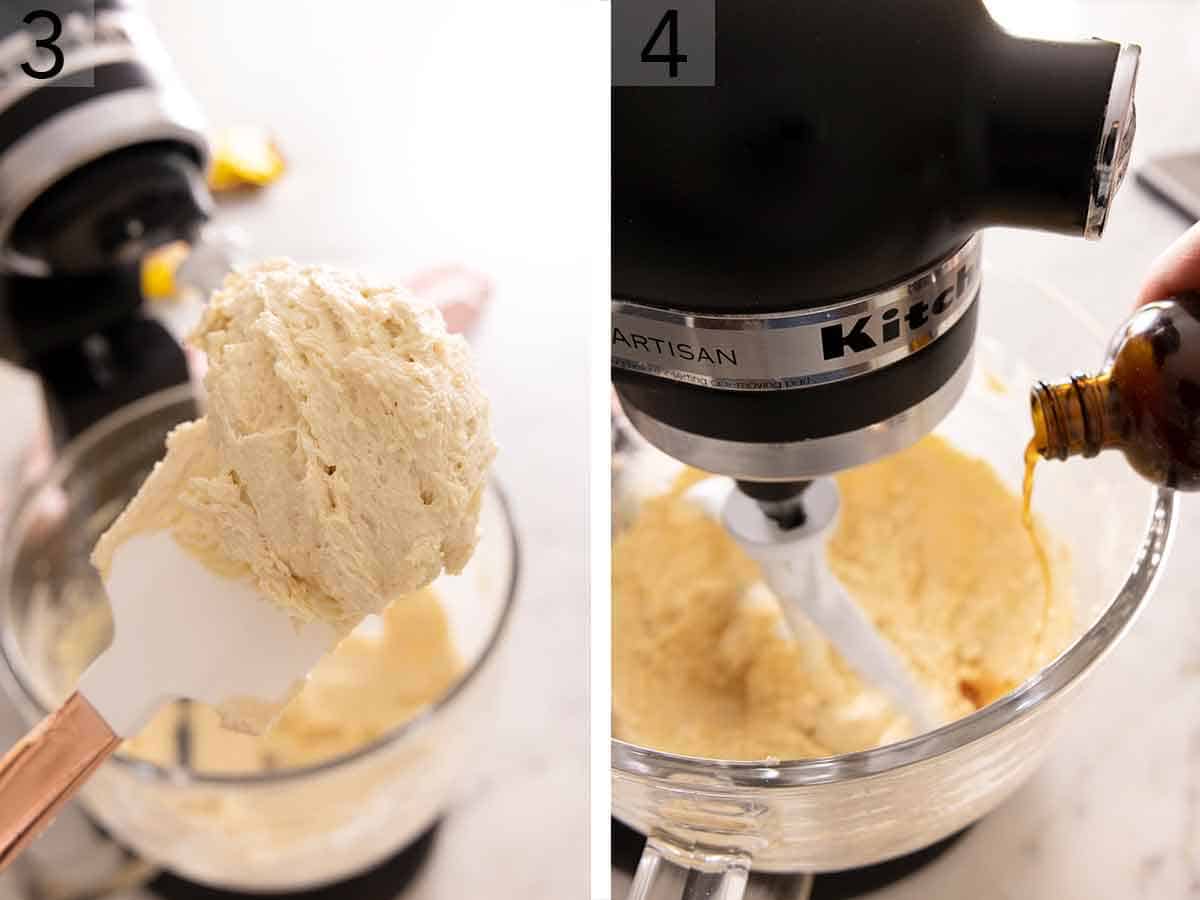
3. Mix in the egg thoroughly. Once the egg is added, you may need to stop and scrape down the sides of the bowl so the liquidy egg gets fully incorporated with the fluffy butter and sugar. The mixture should be thick and fluffy when the egg is fully mixed in.
4. Beat in the vanilla. It’s easier to incorporate the extract at this stage than once the dough gets stiff from the flour being added.
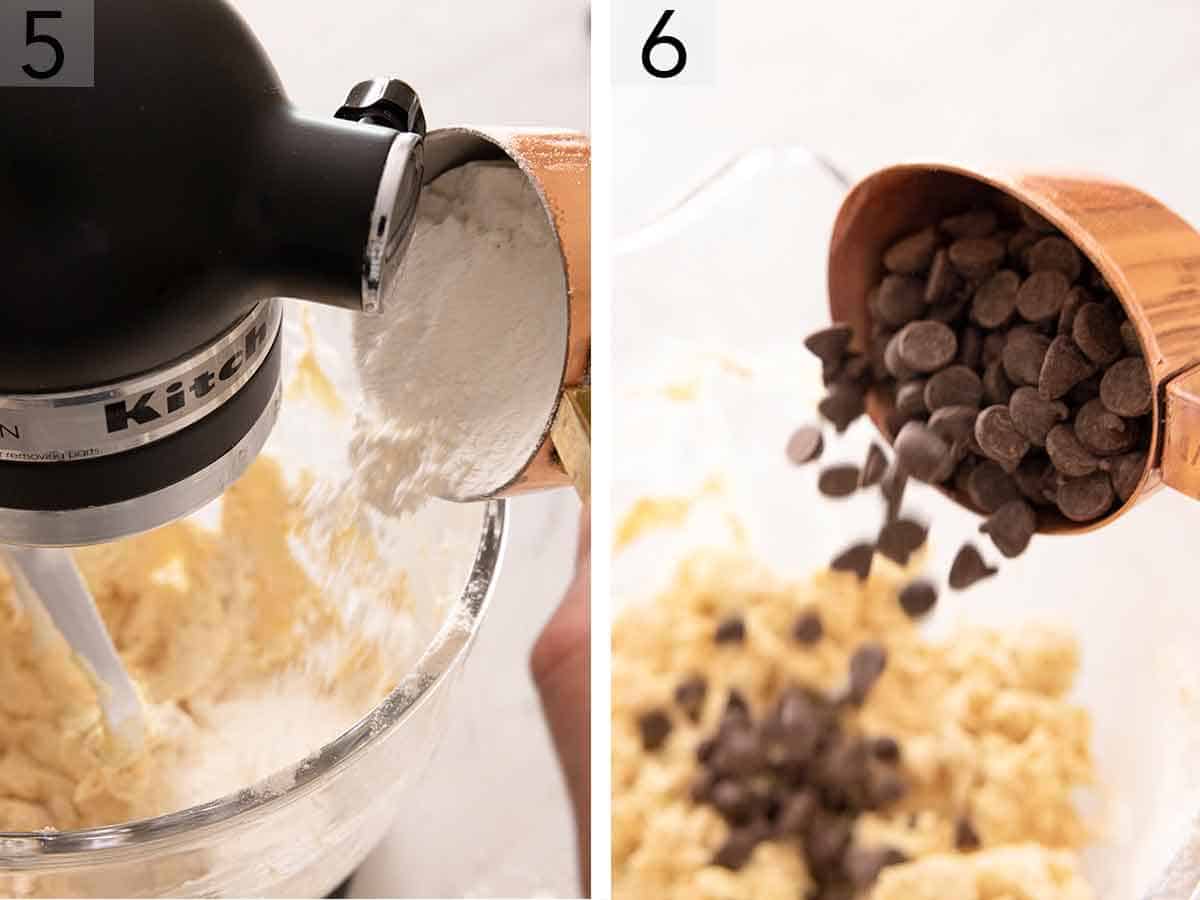
5. Add the flour mixture on low just until it disappears. Overmixing will make the cookies dense or tough and turn out flat.
6. I stir the chips in by hand with a rubber spatula, for the same reason I just mentioned—not overbeating the dough. Be sure to scrape down the bowl, getting down to the bottom so any dry bits of flour or pockets of butter are fully mixed.
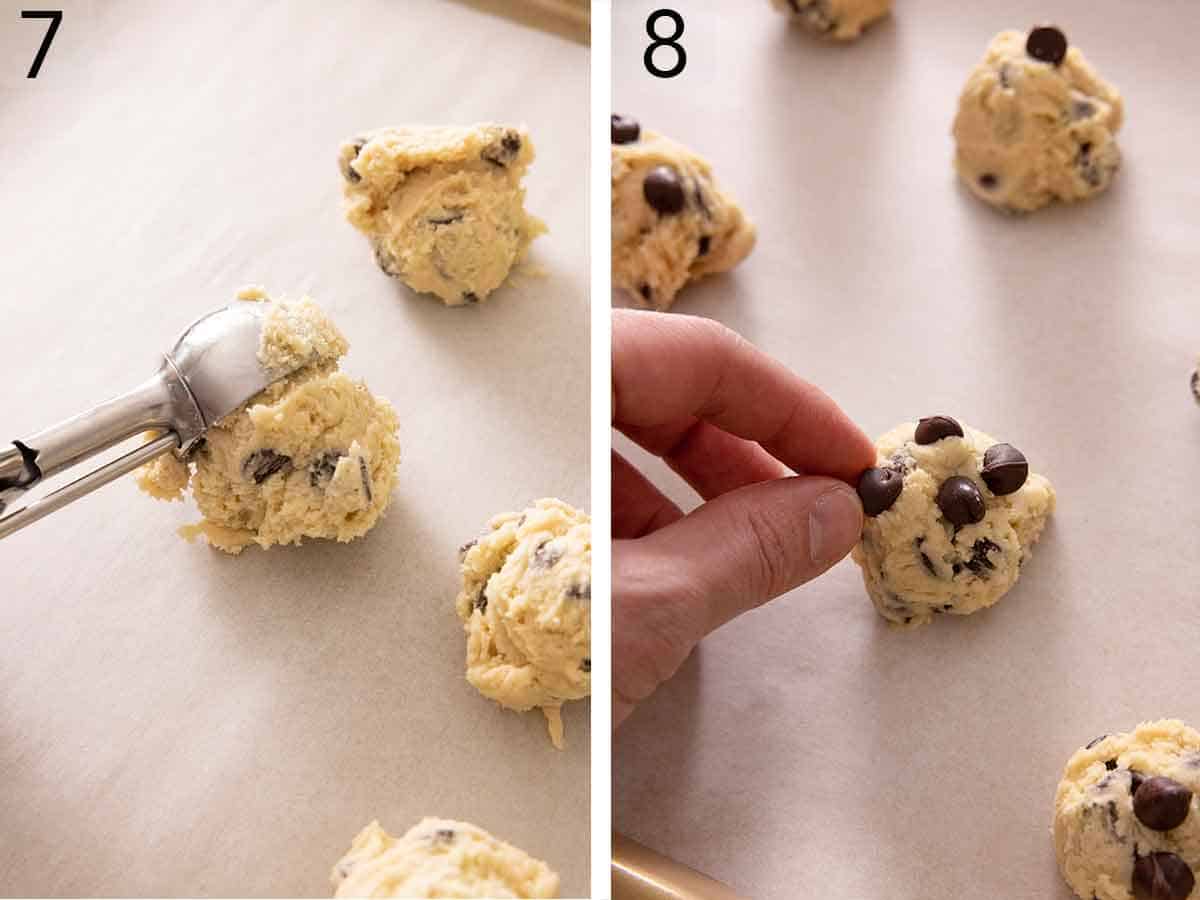
7. Scoop the dough balls. I use a 1½-tablespoon scoop so all 32 cookies are the same size and finish baking together.
8. Press a few more chips or chopped chocolate onto each ball. Bake one sheet at a time at 350°F for 12 to 14 minutes, until the edges are golden brown and the middle looks puffed and dry on top but is still soft to the touch. I bake one sheet at a time so they bake evenly. When I’ve crowded two sheets into the oven during testing, the top sheet spread more and didn’t get as golden, and the bottom sheet browned very quickly on the bottom and didn’t spread enough. Sprinkle flaky salt on top right away, then let the cookies cool on the pan for 5 to 10 minutes. The hot pan keeps cooking the centers, which is why you want the centers soft when you take them out.
Should You Chill Chocolate Chip Cookie Dough?
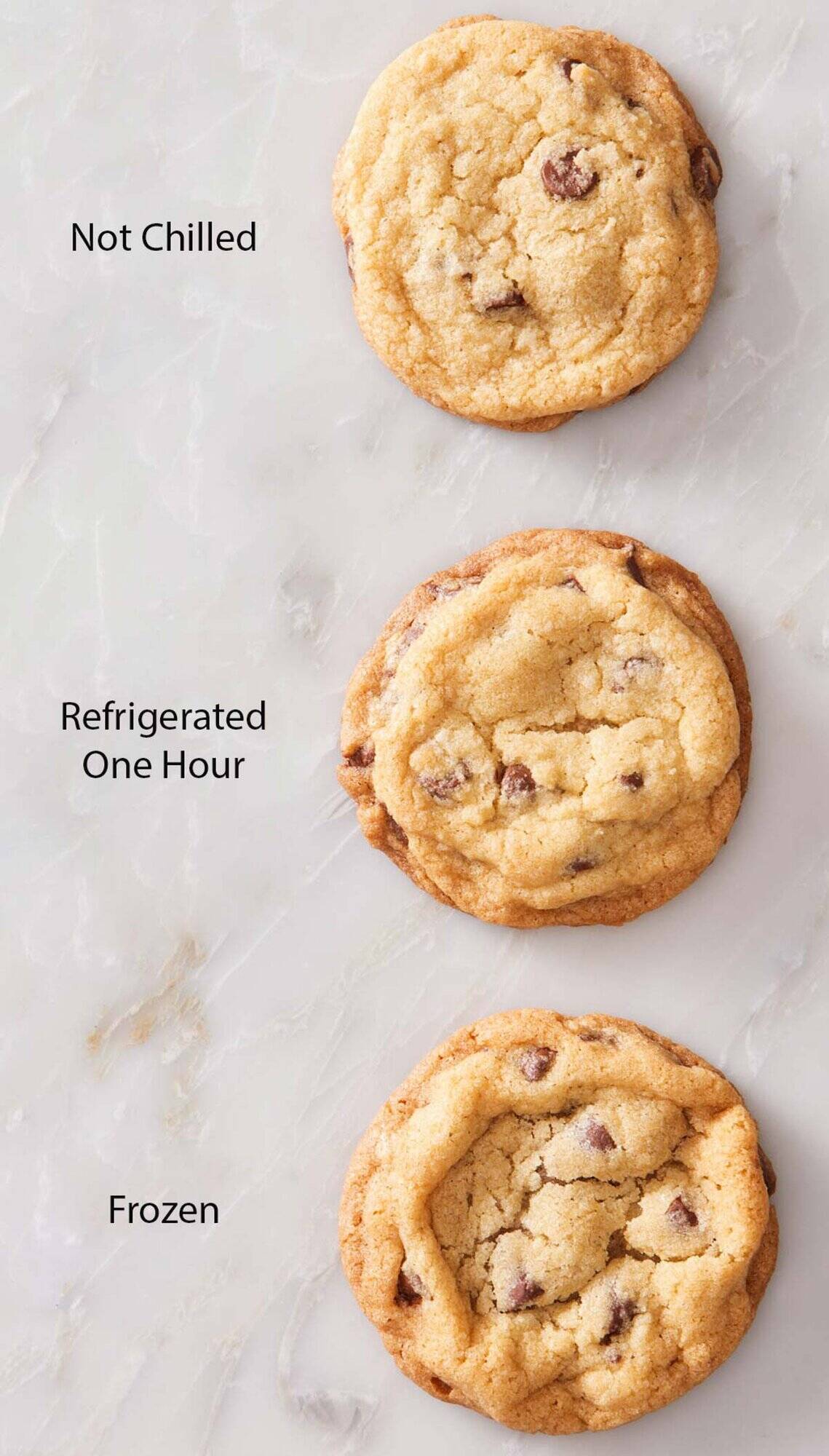
You don’t have to! I wrote this recipe so you can bake straight from the bowl when you want cookies now. In my tests, the cookies that were baked straight from the bowl had a good flavor, chewiness, and crisp edge.
Chilling is an added benefit: an hour in the fridge, or 30 minutes in the freezer, gives you a more deeply flavored, chewier cookie, and chilled dough doesn’t spread quite as much as dough baked straight from the bowl at room temperature. The flour has time to soak up moisture and the cold butter melts more slowly, so the edges set before the cookie spreads. Fully frozen cookies amplified this chilling effect even more, for thicker cookies with a more distinct difference between the crispy edge and soft center.
In my side-by-side bake, the chilled cookies came out noticeably thicker with a bigger variance in texture. The flavor definitely improved too. If you have time, it will make a great chocolate chip cookie even better!
To chill, scoop the dough first, then chill the balls. You can cover and refrigerate them for up to 72 hours. For more on timing and shelf life, see my cookie academy guide on how long to chill cookie dough.
Bake Times for Every Size
I wrote the recipe for 1½-tablespoon-sized dough balls, which make about 2¾-inch-round cookies. You can change the size of the dough balls to make them bigger! Here are my tested bake times at 350°F with different dough temperatures for each dough ball size. Start checking a minute early since ovens vary.
| Portion | Dough Temp | Bake time |
| 1½ – 2 tbsp. (#40 scoop) | Straight from the bowl | 12 minutes |
| 1½ – 2 tbsp. | Chilled 1 hour | 13 minutes |
| 1½ – 2 tbsp. | Frozen solid | 15 minutes |
| 3 tbsp.(#20 scoop) | Straight from the bowl | 13 minutes |
| 3 tbsp. | Chilled 1 hour | 14 minutes |
| 3 tbsp. | Frozen | 16 minutes |
| ¼ cup(#16 scoop) | Straight from the bowl | 14 minutes |
| ¼ cup | Chilled 1 hour | 15 minutes |
| ¼ cup | Frozen | 18 minutes |
For big bakery-style cookies, use the 3-tablespoon or ¼-cup portions and give them extra room on the sheet. I don’t go bigger than ¼ cup, because the edges burn before the middle bakes through.
How to Freeze Chocolate Chip Cookie Dough
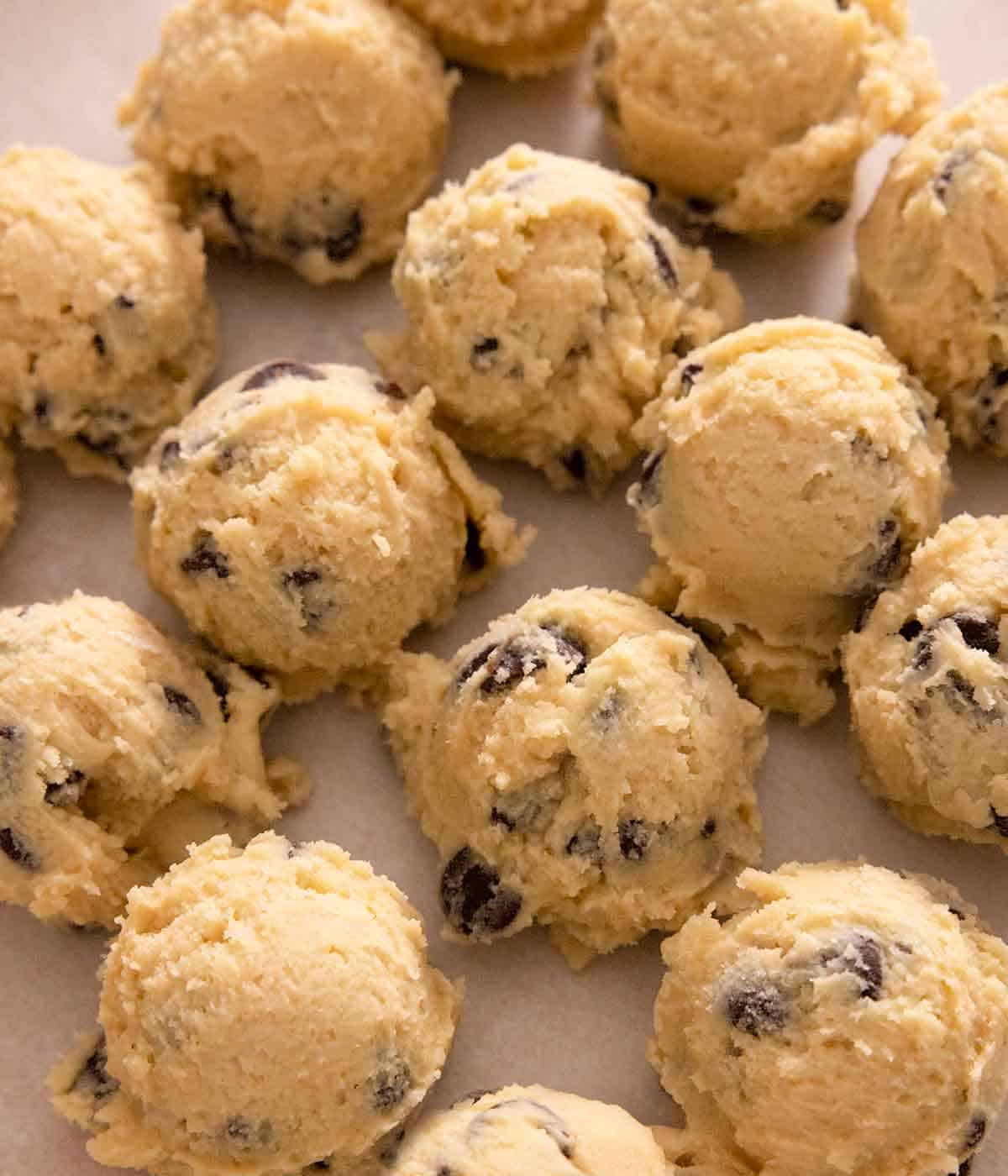
Scoop the dough, freeze the balls on a lined baking sheet until solid, then move them to a freezer container and bake within 3 months. There’s no need to thaw them before baking!
When I baked 1½-tablespoon-sized balls from completely frozen, they took 15 minutes, so plan on 2 to 3 minutes longer than fresh dough. For wrapping and storage details, see my guide all about how to freeze cookie dough.
Variations
This recipe is easy to adapt to change texture, flavor, or mix-ins! I often make one of these swaps based on my current craving or who I’m giving a batch to.
- Soft chocolate chip cookies. Whisk 2 tablespoons of cornstarch into the flour mixture for softer, chewier cookies with tender edges. The starch traps more water, keeping the cookie texture softer.
- Brown butter. Browning the butter adds a toasty, nutty flavor. Browned butter loses water as it cooks, so you’ll need to start with 2 tablespoons more butter than this recipe calls for. It also needs to cool down before you can cream it with the sugar. If brown butter is the cookie you’re after, my brown butter chocolate chip cookies are tested with the cooked butter from the start so you don’t have to make any adjustments.
- Nuts and other mix-ins. Chopped toasted walnuts or toasted pecans, white chocolate chips, peanut butter chips, toasted coconut, sprinkles, and M&Ms all work, as long as the total amount of mix-ins stays at 1½ cups. Past that, I find that the dough has trouble spreading and you end up with thicker baked mounds.
Troubleshooting
Use this section and my testing experience to help determine the cause of common cookie baking issues.
My Cookies Spread Flat
The usual causes are butter that was too warm to start or dough that was too warm before baking. When I’ve let this happen to test batches, the cookies spread into thin, greasy rounds in the oven. Chilling the scooped balls for an hour in the fridge or 30 minutes in the freezer is the quickest and easiest fix.
A cool oven also lets the dough keep spreading before the edges set, so an oven thermometer is worth having to check the actual bake temperature inside. Adjust the oven temperature setting as needed to compensate for the difference. Learn how to tell if your oven is accurate in my guide on Knowing Your Oven.
My Cookies Are Puffy and Didn’t Spread
Too much flour is the most likely culprit, especially if you scooped it instead of weighing. The added flour will make the dough too dry, so it holds its shape in the oven.
If you tried to reduce the sugar or fat content, the cookies also won’t spread. The sugar is not just for sweetness—it melts and softens the structure of the cookies so they spread out. With less butter, there’s less fat and less moisture, so the dough is drier and stiffer.
The Centers Look Raw
Pull the cookies when the edges are golden, and the middles look puffed and dry on top, even if they feel soft. They will finish setting on the hot pan. If the centers are still wet after cooling, you can give the next sheet 1 more minute. Again, this can vary by oven, so an oven thermometer is an ideal tool to have!
When I’ve pulled them after 10 minutes, the middles looked wet or shiny on top, and they stayed doughy once cooled. But at 12 minutes, the surface of the cookie looked dry in the center even though I could press my finger into the center and it was soft, holding the imprint. After cooling, they were gooey and chewy in the center but not raw.
Chocolate Chip Cookies Recipe

Equipment
- Mixer
- Baking Sheet
- Cookie scoop
Ingredients
- 2½ cups all-purpose flour (300g)
- ¾ teaspoon baking soda
- ¾ teaspoon salt
- 1 cup unsalted butter softened (227g)
- ¾ cup light brown sugar (165g)
- ½ cup granulated sugar (100g)
- 1 large egg
- 1 tablespoon vanilla extract
- 1½ cups semisweet chocolate chips (or chocolate chunks) (270g)
Instructions
- Preheat the oven to 350°F. Line two baking sheets with parchment paper or a silicone mat.
- In a medium bowl, whisk together the flour, baking soda, and salt.
- In the bowl of a stand mixer with the paddle attachment or a large mixing bowl with a handheld mixer, combine the butter and sugars. Beat on medium-low speed until very light and fluffy, about 5 minutes.
- Add the egg and vanilla. Beat until well combined, scraping down the sides of the bowl.
- With the mixer on low, gradually add the flour mixture. Beat just until combined. Stir in the chocolate chips.
- Using a 1½-tablespoon scoop, scoop the dough into balls and place on the prepared baking sheets. Press more chocolate chips on top. (If desired, chill the dough balls for 1 hour, or cover and chill for up to 72 hours.)
- Bake for 12 to 14 minutes or until the edges are golden brown. (If you’ve chilled your cookies, bake for 13 to 15 minutes.) For best results, bake one sheet at a time. Immediately sprinkle cookies with flaked salt, if desired.
- Let the cookies cool on the pan for 5 to 10 minutes. Finish cooling on a wire rack. Store any leftovers in an airtight container for up to 5 days.
Notes
- For extra chocolatey goodness: Add another chunk of chocolate to the top of the scooped balls for a big pool of gooey chocolate in the center of the baked cookies.
- For gooey chocolate chip cookies, don’t overbake them. Look for golden brown edges and a puffed center that appears dry but is still soft to the touch. The cookies will set as they cool.
- For crispier cookies throughout, bake for another 2 minutes until the centers turn golden and feel firmer on the surface.
Nutrition
Have you tried this recipe? Tag me today!
Mention @preppykitchen and tag #preppykitchen!
How to Store Chocolate Chip Cookies
I keep cooled cookies in an airtight container at room temperature. They have the best texture if eaten within 5 days, but they last for a few weeks and just get drier with time. I like to store them with a slice of sandwich bread or a few large marshmallows—the cookies will absorb their moisture to keep them chewy for longer.
To freeze baked cookies, set them on a lined sheet until solid, then move them to a freezer container for up to 3 months and thaw at room temperature.
Frequently Asked Questions
I suggest using my cookie cake, skillet cookie, or chocolate chip cookie bars recipe. They have the exact bake times needed with different ingredient ratios to make each version just the right texture.
I haven’t tested a gluten-free version yet. If you try a 1:1 gluten-free blend, add a tablespoon or two of milk, since those blends tend to soak up more liquid and the dough can bake up stiff. In previous gluten-free tests, I have found good results with King Arthur or Bob’s Red Mill gluten-free baking flour.
Doubling is straightforward: double everything, scoop, and bake in batches. When I’ve doubled it, the dough fits fine in my 5-quart KitchenAid stand mixer bowl. Halving is trickier because of the single egg. You can whisk it and use half (about 25g); otherwise, just make a full batch and freeze half of the dough balls to bake later!
More Cookie Recipes To Try
More classic cookie recipes you should bake:
- Oatmeal Chocolate Chip Cookies — rolled oats add extra chew to a brown sugar and chocolate chip cookie dough for a heartier cookie.
- Peanut Butter Cookies — soft, salty-sweet peanut butter cookies pressed with a fork for that classic crisscross pattern on top.
- Sugar Cookies — cut-out sugar cookies that hold a clean edge in the oven and are sturdy enough for decorating.
- Peanut Butter Chocolate Chip Cookies — a twist on the classic packed with chocolate chips!
- Double Chocolate Chip Cookies — cocoa goes into the dough itself for chocolate on chocolate, and the dough needs no chilling before you bake!
If you’ve tried this chocolate chip cookie recipe, then don’t forget to rate it and let me know how you got on in the comments below. I love hearing from you!