This post may contain affiliate links. Please read our disclosure policy.





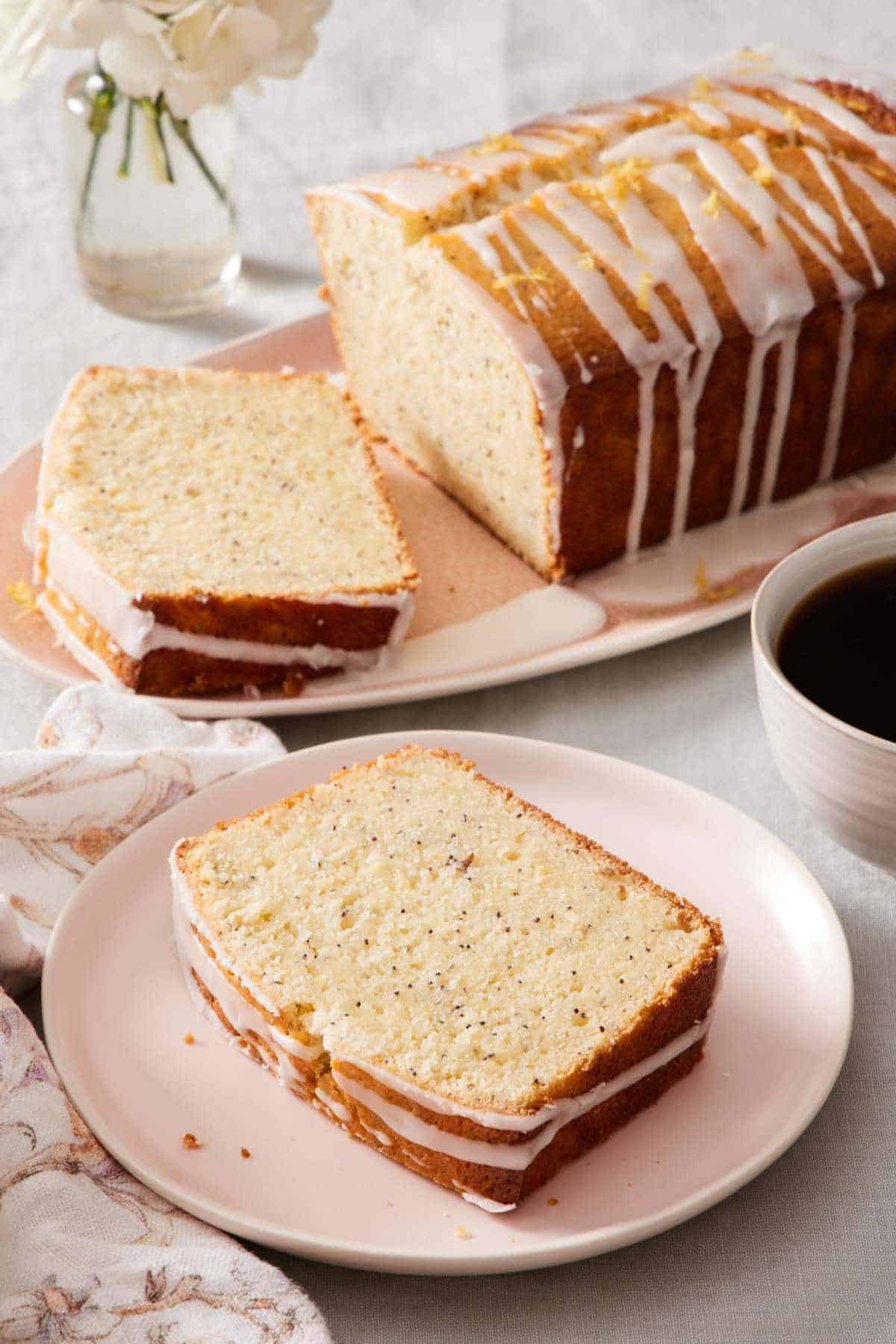
A moist, citrusy Lemon Poppy Seed Loaf features crunchy poppy seeds, lots of fresh lemon, and a hint of floral lavender steeped right into the milk before mixing. This adds a depth of flavor most lemon loaves miss. Plus, it’s easy to stir together in a matter of minutes with no mixer needed!

If you’re a fan of lemon poppy seed muffins, this lemon poppy seed loaf cake is an absolute must-try! It’s an easy stir-together cake—no need to haul out your mixer—and requires just a few minutes of prep time before your oven does the rest. The result? An unbelievably moist loaf with a pound cake-like texture, loaded with bright lemon flavor, the crunch of poppy seeds, and a gentle floral note from culinary lavender.
The lavender is what sets this loaf apart from every other lemon poppy seed recipe I’ve tested. Steeping the lemon zest and lavender in warm milk before mixing the batter releases the natural oils from both, which then infuse through the entire cake. The result is a rounder, more aromatic lemon flavor than you get from zest alone. And the lavender is so subtle that even people who think they don’t like lavender enjoy it. (You can leave it out, and the loaf is still excellent. More on substitutions below.)
I retested this recipe to include pan size variations so you can make cupcakes, mini loaves, a Bundt, or the standard loaf, plus a few small tips that make the recipe perfect every time. It’s the same recipe you’ve made before, just with more flexibility built in.
“One of the moistest cakes I have ever made. It was not your ordinary dry crumb-y pound cake. This was amazing and beautiful.”
Karen
Key Ingredients & Substitutions
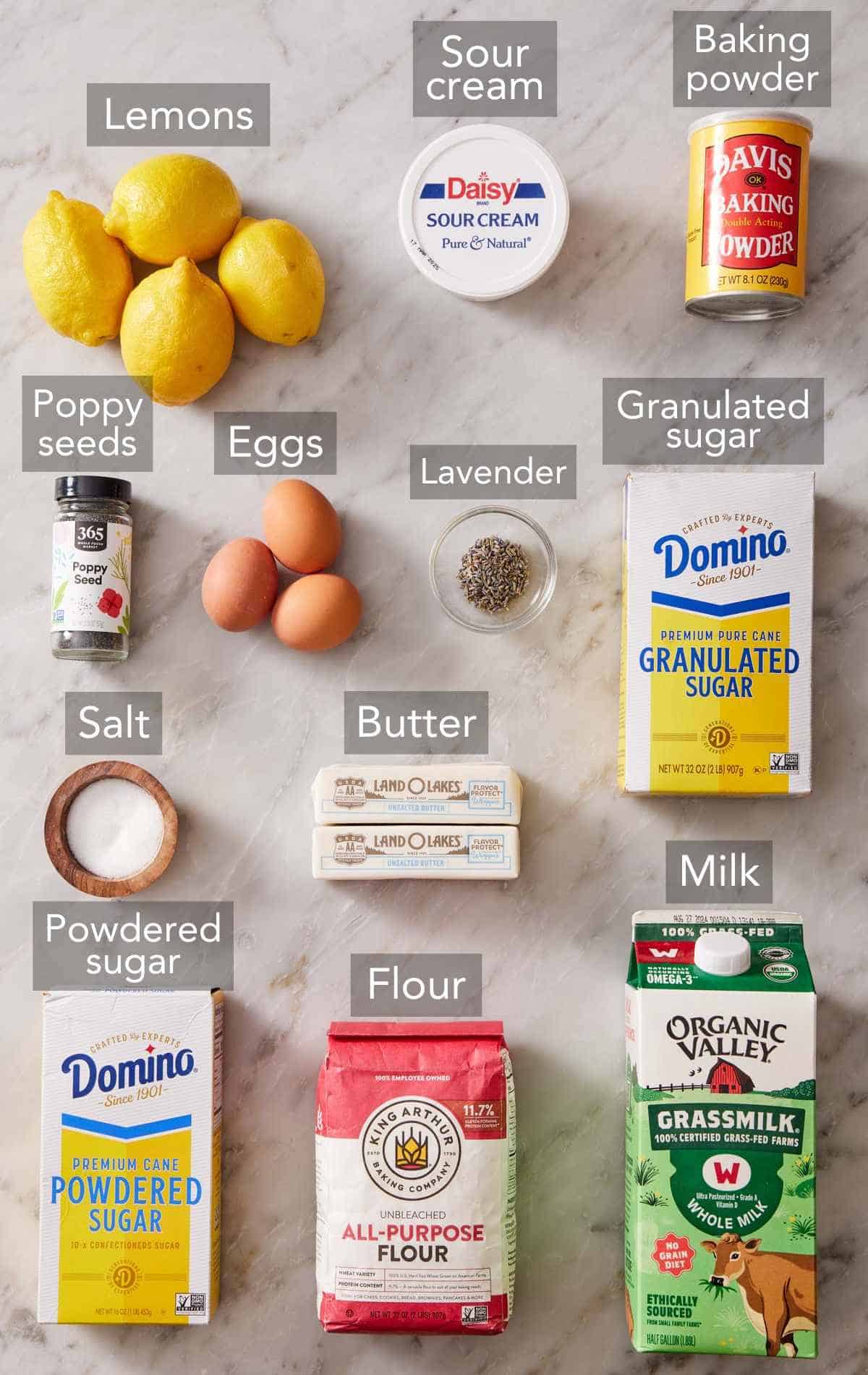
These are the main ingredients you need to make lemon poppy seed loaf cake. You can find the full list of ingredients and measurements in the recipe card below.
Lemon — there’s no shortage of fresh lemon flavor in this lemon poppy seed pound cake recipe. You’ll need lemon juice and lemon zest, so use fresh lemons, not the bottled kind. Bottled lemon juice tastes flat by comparison and won’t carry through in the cake. The zest is key to packing it with lemon flavor! Zest the lemons using a microplane or the smallest holes of a box grater before squeezing out the juice.
Lavender — culinary lavender is optional, but strongly recommended. It adds a subtle floral flavor that complements the lemon beautifully. I use just the right amount so the flavor is never soapy or too perfumed. If you leave it out, replace it with 1 teaspoon of vanilla extract or ½ teaspoon of almond extract.
Poppy seeds — if you love lemon poppy seed muffins, you already know what poppy seeds bring: a nice crunchy textural contrast against the soft cake plus a hint of nutty flavor. Just 1 tablespoon does the work. I once made this with poppy seeds that had been in my pantry for over a year — they tasted slightly bitter and the cake had an off-note I couldn’t place until I traced it back. Now I taste a few before every bake. Fresh poppy seeds taste mildly nutty; old ones taste sour or bitter.
Sour cream — sour cream helps keep the cake moist for several days. Combined with the acidity of the lemon juice, it also helps to inhibit the production of gluten, so it doesn’t form a network that’s too strong, and the crumb stays tender rather than tough. To substitute, use full-fat Greek yogurt or crème fraîche.
Butter — melted unsalted butter adds richness and flavor to the cake. Using melted butter instead of softened butter makes the cake batter easy to stir together with a spatula—no mixer needed!
Lemon glaze — like my lemon pound cake recipe, I finish this cake with a sweet lemon glaze. All you need is powdered sugar and fresh lemon juice.
Maximize Flavor Through Steeping
Here’s the technique that sets this loaf apart from a standard lemon poppy seed recipe: Steep the lemon zest and lavender in warm milk before mixing the batter.
The warmth of the milk pulls the natural oils from the lemon zest and the lavender flower buds, infusing the milk with both flavors. When you then mix that infused milk into the batter, those oils distribute through the entire cake, not just the parts the zest touched directly. The result is a much deeper, more aromatic lemon flavor than you’d get from just stirring in the zest, plus a subtle floral character from the lavender that even skeptics enjoy.
Steeping only takes 5 minutes. Warm the milk to about 110°F (warm to the touch, not hot), stir in the zest and lavender, and set aside while you mix everything else. Then pour it into the wet ingredients.

Pan Size Variations
This lemon poppy seed pound cake recipe is so easy to adapt to other pan sizes to suit your needs. Here’s a quick reference:
- 8½ × 4½″ loaf pan (the recipe default): Bake at 350°F for about 60-80 minutes, checking from 55 minutes onward.
- 9×5” loaf: The loaf will bake slightly faster. Start checking for doneness around 50 minutes.
- 3×5” mini loaves: Divide the batter among 4 mini loaf pans. Bake for 25 to 30 minutes.
- Bundt pan: Double the recipe and bake it in a 10-12-cup Bundt pan for about 1 hour. Be sure to grease the pan well with baking spray with flour, or butter and flour the pan, before adding the batter. Check out my poppy seed cake recipe for more details on baking in a Bundt pan.
- Cupcakes: Line two cupcake pans with paper liners. Fill the liners about two-thirds full with batter—you will get 18-20 cupcakes. Bake for 20-25 minutes. Frost the cupcakes with cream cheese frosting or strawberry buttercream for a fun dessert, or simply drizzle with the lemon glaze for an easy finish.

Pro Tips For Making This Recipe
Weigh your ingredients. Dry, crumbly cake is a common complaint with baking in general, and that is often due to measuring dry ingredients incorrectly. Flour, in particular, can really impact how the cake turns out if too much or too little is used (too much can yield a dry cake; too little can cause it to be gummy). To avoid this, weigh your ingredients using a kitchen scale. This is the most accurate way to measure flour and other ingredients. If you don’t have a scale, fluff the flour in its container to aerate it and spoon it into your measuring cup.
Gently fold the wet and dry ingredients together. Folding the batter too aggressively can cause the gluten in the flour to overdevelop, causing a dense, tough loaf instead of a soft, tender one. Fold the wet and dry ingredients together just until all the streaks of flour disappear, then stop.
Use a parchment paper sling. Cut a piece of parchment paper about 7½ inches wide and 13 inches long. Once the pan is greased, lay it in the pan so the long edges are parallel to the short sides of the loaf pan, and press it flush with the pan. This will allow the parchment to come up and over the long sides of the pan. You can crease the excess over the edge of the pan or use small binder clips to hold it in place, if you’d like.
How To Make Lemon Poppy Seed Pound Cake
Below, I’ve highlighted portions of the recipe in step-by-step process images along with instructions for making lemon poppyseed loaf cake. You can find the full set of instructions in the recipe card below.
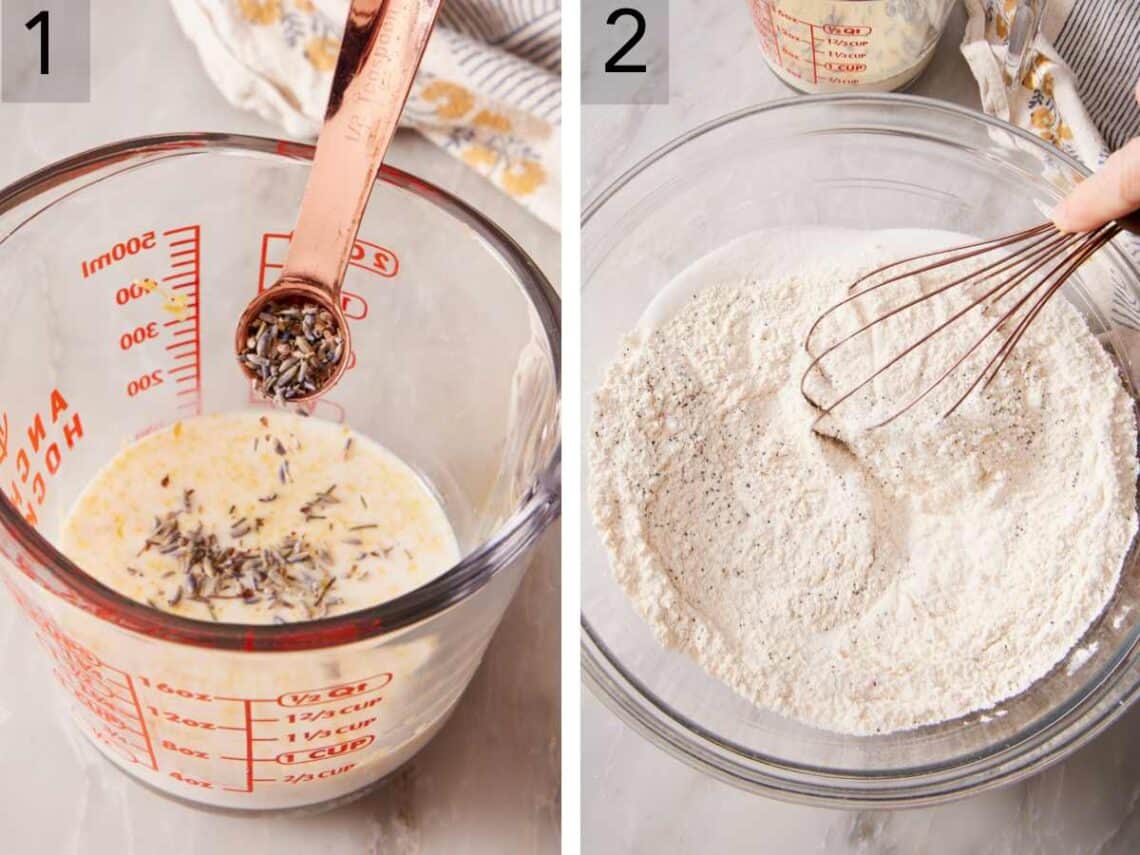
1. Steep the milk. Pour the milk into a microwave-safe bowl or measuring cup and warm it until it feels warm to the touch. Add the lemon zest and lavender, stir, and set aside to steep for 5 minutes.
2. Whisk the dry ingredients. To a large bowl, add the all-purpose flour, sugar, baking powder, poppy seeds, and salt, and whisk to combine.
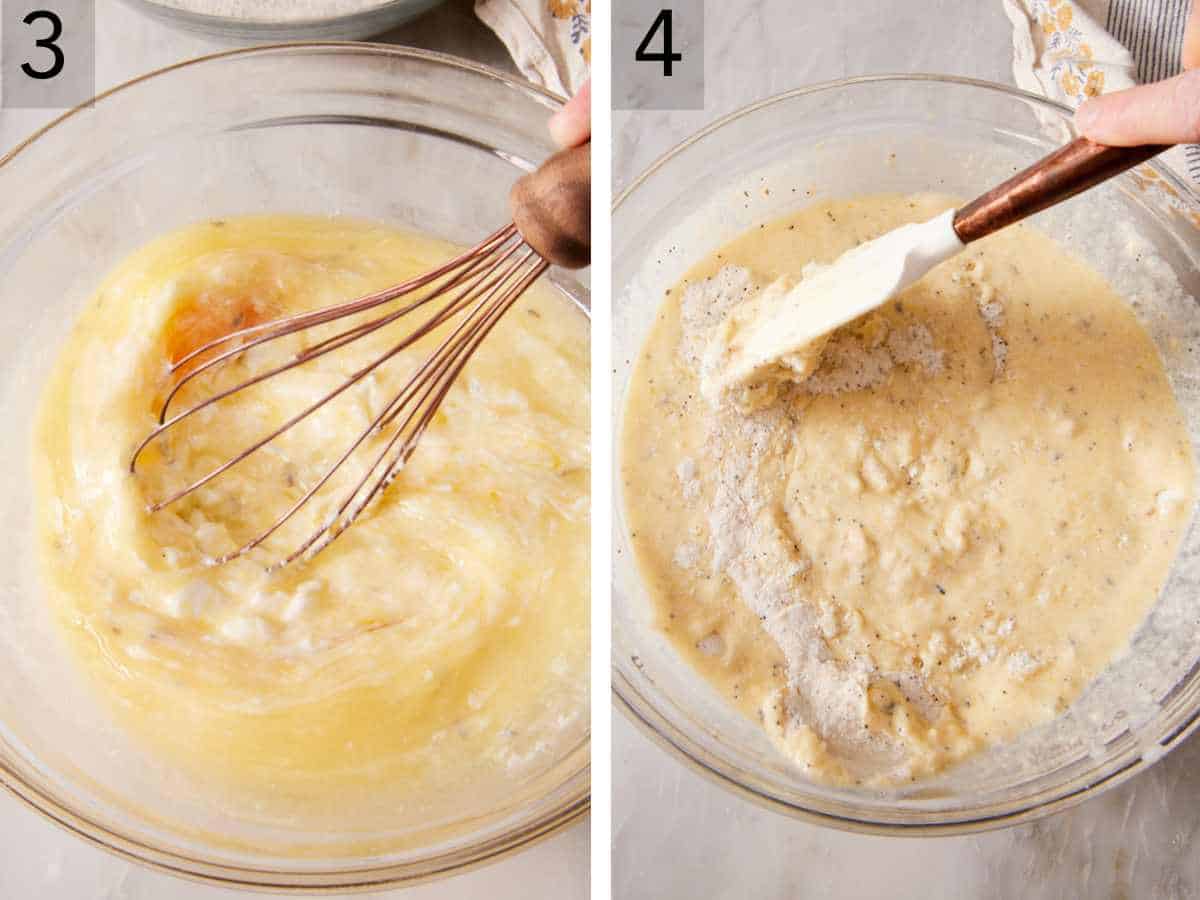
3. Whisk the wet ingredients. In a separate bowl, whisk together the sour cream, melted butter, lemon juice, eggs, and infused milk.
4. Fold together. Add the wet ingredients to the dry ingredients and mix gently with a rubber spatula.
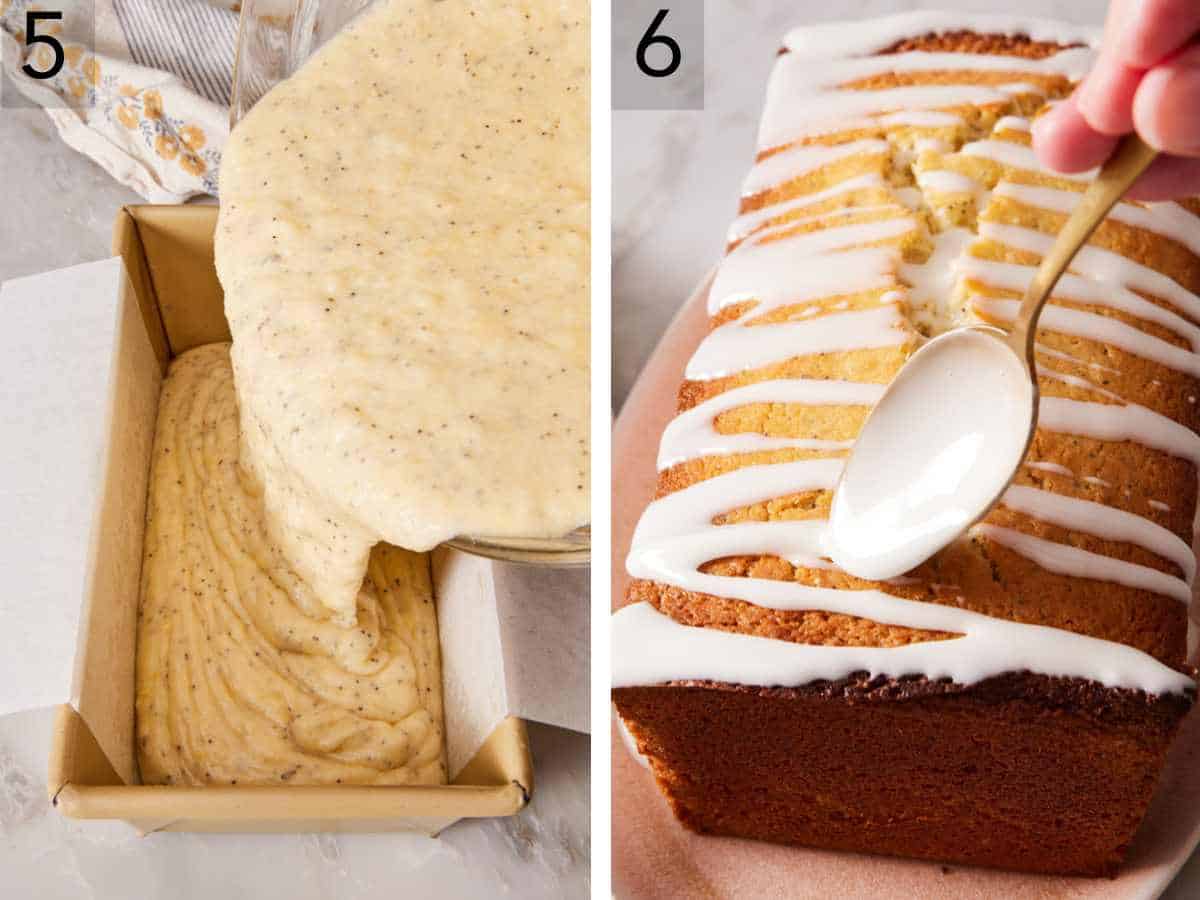
5. Bake. Pour the cake batter into a prepared loaf pan (lightly greased 8½ x 4½-inch loaf pan lined with a parchment paper sling). Bake at 350°F until a toothpick inserted into the center comes out clean. Let the cake cool in the loaf pan for 20 minutes, then use the parchment paper sling to help you remove the cake. Allow the lemon poppy seed pound cake to cool completely on a wire rack.
6. Glaze. Make the easy lemon glaze in a bowl by whisking together confectioners’ sugar and lemon juice. The mixture should be thick, but should drizzle off the whisk to make icing the cake easier. Drizzle the glaze over the cooled cake. Serve immediately or let the glaze set for about 1 hour before slicing and serving.
Lemon Poppy Seed Loaf Cake Recipe

Ingredients
For the Loaf:
- ½ cup whole milk (120ml)
- 1 tablespoon lemon zest (about 2 lemons)
- ½ teaspoon culinary lavender (optional)
- 2 cups all-purpose flour (240g)
- 1¾ cups granulated sugar (350g)
- 1½ teaspoons baking powder
- 1 tablespoon poppy seeds
- ¼ teaspoon salt
- ⅓ cup lemon juice (2-3 lemons) (80ml)
- ½ cup sour cream room temperature (120g)
- ¾ cup unsalted butter melted (170g)
- 3 large eggs room temperature
For the Glaze:
- 1 cup powdered sugar (120g)
- 1-2 tablespoons fresh lemon juice (about 1 lemon)
Instructions
For the Loaf:
- Preheat the oven to 350°F. Lightly grease a 8½ x 4½-inch loaf pan with butter or baking spray and line it with a parchment paper sling.
- In a small bowl or liquid measuring cup, warm the milk in the microwave for 20 to 40 seconds until it feels warm to the touch. Stir in the lemon zest and lavender, and set aside to infuse for 5 minutes.
- In a large bowl, whisk together the flour, sugar baking powder, poppy seeds, and salt.
- In another bowl, combine the sour cream, melted butter, lemon juice, eggs, and infused milk. Whisk everything together. Pour the wet ingredients into the dry, and mix together with a spatula just until the dry streaks of flour have all disappeared.
- Pour the batter into the prepared loaf pan, and bake for about 1 hour to 1 hour and 20 minutes, or until a toothpick inserted into the center comes out clean. You can loosely cover the top with foil after 50 minutes if the top is getting dark brown before the cake is done. Let the cake cool in the pan for 20 minutes, then use the parchment paper to help you remove the cake. Let it finish cooling on a wire rack.
For the Glaze:
- In a bowl, add confectioners sugar and 1 tablespoon of lemon juice. Whisk together until smooth and thick but it can drizzle off of the whisk. Add more lemon juice if needed.
- Drizzle the glaze over the cooled cake. You can serve it immediately or let the glaze set for about an hour before slicing.
Notes
- Tent the loaf if the top is browning too fast. Loaves bake longer than layer cakes, so the top can darken before the center is done (especially if your oven runs a bit hot). After 50 minutes, check the top for color. If it’s already deeply golden, lay a sheet of foil loosely over the top to help insulate it. Don’t tent it any earlier, or you risk the center underbaking.
- Let the cake cool completely before adding the glaze. If you glaze the cake while it’s still warm, the mixture will simply soak into the cake instead of setting on top. Let the loaf cool for at least an hour before drizzling it on top.
Nutrition
Have you tried this recipe? Tag me today!
Mention @preppykitchen and tag #preppykitchen!
Storing Lemon Poppy Seed Cake
Once the loaf has completely cooled, it will keep at room temperature covered or in an airtight container for up to 5 days. The sour cream and lemon glaze actually help it stay moist longer than most loaf cakes. Because of the moisture in the cake, the glaze may dissolve within a couple of days, but this will only contribute to the cake staying soft and tender!
Freezing: For longer storage, I wrap the cooled cake tightly in a layer or two of plastic wrap and aluminum foil and freeze for up to 3 months. Thaw overnight in the refrigerator, then bring to room temperature before serving. I like to glaze it after thawing, not before freezing. This way, the glaze doesn’t melt from condensation during thawing.
Frequently Asked Questions
Not for this recipe. Some traditional poppy seed cake recipes (especially Eastern European ones) call for soaking poppy seeds in milk overnight to soften them and release their flavor. For a 1-tablespoon amount in a quick loaf cake, soaking isn’t necessary. The seeds soften enough during baking and add the right amount of crunch and flavor as-is.
Yes, the loaf is still excellent without lavender. Replace the dried lavender buds with 1 teaspoon of vanilla extract or ½ teaspoon of almond extract for a still-flavorful version. The lavender is a layer of complexity, not a structural ingredient, so leaving it out doesn’t change how the cake bakes.
Three things together produce the best lemon flavor: (1) Fresh lemon zest and juice. Never use bottled juice—since the zest is key, you will need fresh lemon anyway. (2) The warm-milk steeping technique. This is the most important step and what most recipes skip. (3) Adding the glaze. The sweet and zippy lemon glaze is the first thing to hit your tongue, giving you a bright burst of lemon flavor from the start. Together, these three give you a loaf that tastes deeply, unmistakably of lemon.
The most common cause is too much flour, almost always from scoop-and-dump measurement instead of the spoon-and-level method or a kitchen scale. The fix: switch to a scale (120g per cup of all-purpose flour for this recipe), or fluff the flour first and spoon-and-level into the cup.
Other causes: overbaking (start checking at 50 minutes if your loaf baked faster), or using low-fat sour cream (use full-fat; the fat keeps the cake moist).
More Cake Recipes To Try
If you love this lemon loaf cake, try these other cake recipes next:
- Lemon Cake — a layered lemon celebration cake with lemon buttercream frosting. The same bright citrus flavor in cake form for special occasions.
- Lemon Bundt Cake — moist, tender crumb, and finished with the same sweet lemon glaze. Different shape, similar spirit.
- Lemon-Blueberry Cake — bright lemon paired with juicy blueberries, in layer-cake form. One of my most popular spring recipes.
- Lemon Cupcakes — the cupcake answer to this loaf. Same bright lemon flavor, individual portion size, perfect for parties.
- Strawberry Lemonade Cake — a beautifully decorated strawberry-lemon cake with fluffy lemon cake layers filled with strawberry reduction, for when you want a true showpiece bake.
If you’ve tried this lemon poppy seed pound cake recipe, then don’t forget to rate it and let me know how you got on in the comments below. I love hearing from you!