This post may contain affiliate links. Please read our disclosure policy.


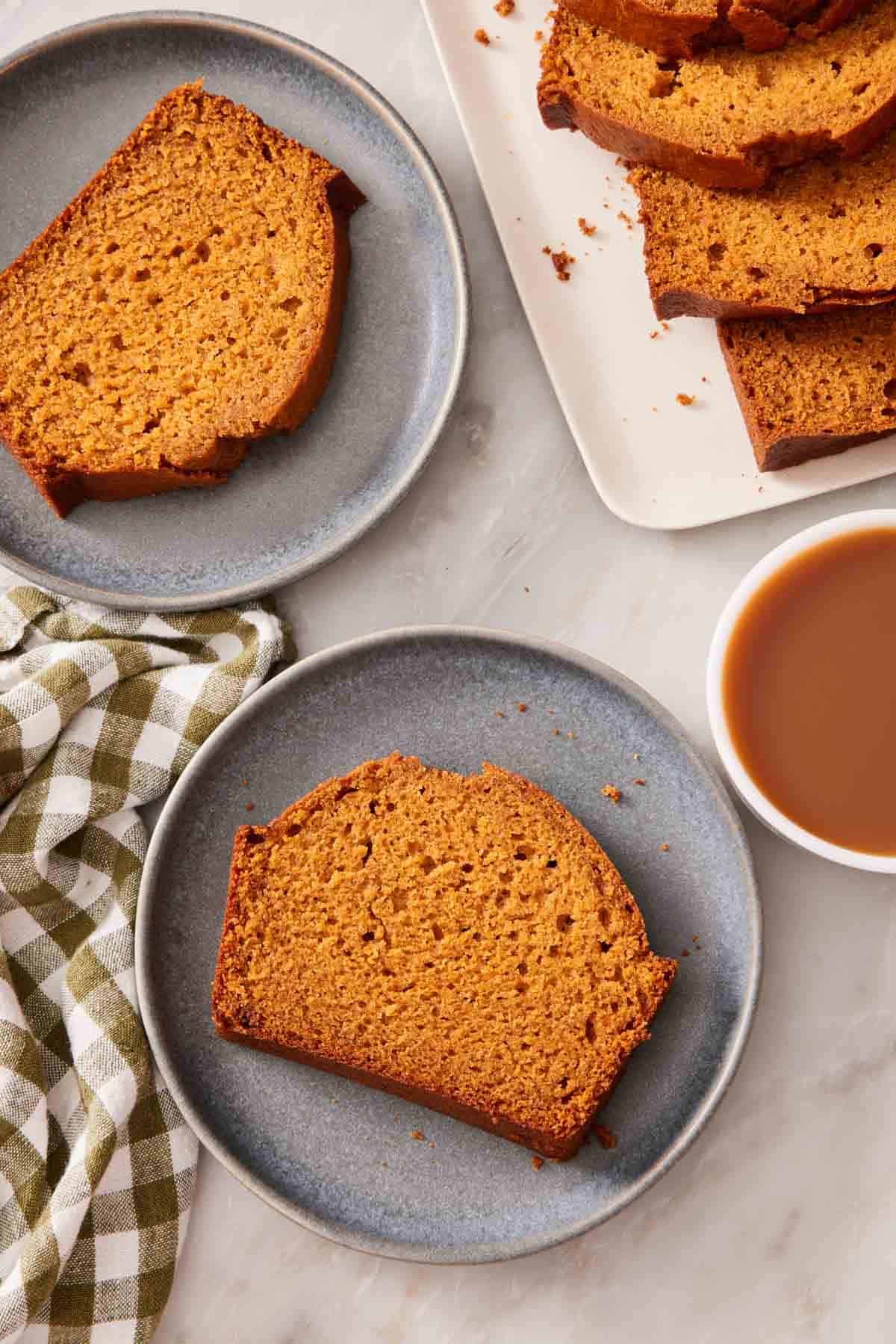
This easy pumpkin bread is soft, warmly spiced, and stays moist for days. With just ten minutes of stirring by hand, you can have the loaf in the oven fast. Use this same recipe to make mini loaves, muffins, or a streusel-topped bread, too!
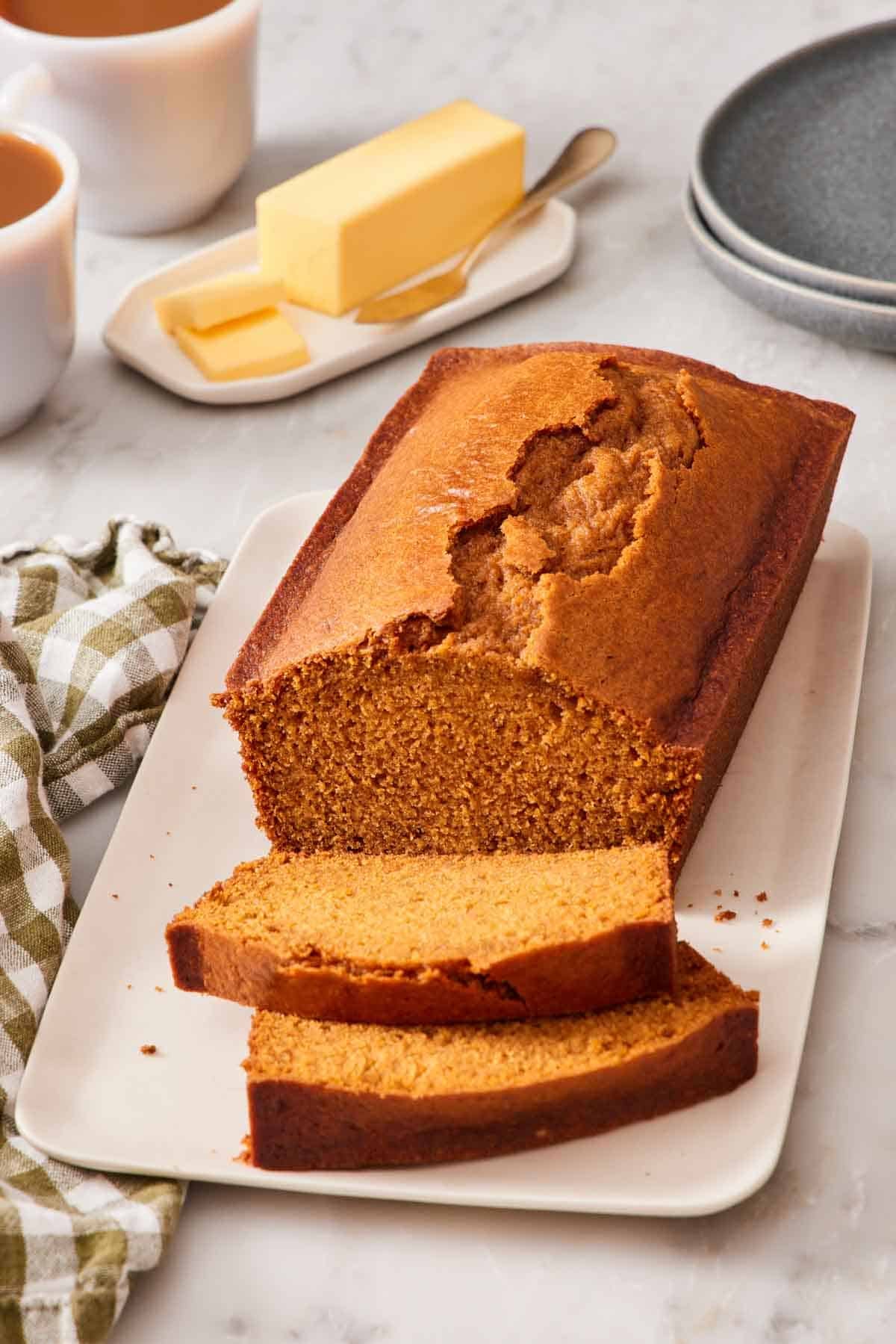
This pumpkin bread loaf is what I make when the first cold morning arrives, and I want something in the oven fast. Just two bowls, a whisk, a spatula, and 10 minutes is all you need to get the batter mixed together while the oven preheats.
I get three common questions about this recipe: why doesn’t the batter use a whole can of pumpkin puree, can I use a whole can, and how can I use the leftover puree? I’ve tested a whole-can variation for you, but I also explain why I prefer the partial can for texture and give you some good ways to use what’s left!
“All of your recipes are the best version I have tried! I added mini chocolate chips to this bread. It was the perfect consistency of fluffy, moist bread! I love it so much I want to make it weekly!”
Meredith
Key Ingredients

These are the main ingredients you need to make this easy pumpkin bread recipe. You can find the full list of ingredients and measurements in the recipe card below.
Pumpkin puree — use 100% pure canned pumpkin, not pumpkin pie filling. They are frequently on display next to each other on grocery shelves, so be mindful of the labels. The pie filling already has sugar and spices in it, which throws the loaf texture and flavor off. I use Libby’s brand for consistency—it’s always richly colored, flavorful, and not too wet.
Flour — weigh it if you can. Packing a measuring cup by scooping straight from the bag is the fastest way to end up with a dry, crumbly loaf, and it is the most common thing that goes wrong with quick breads. Learn how to measure ingredients correctly with the spoon and level method if you don’t have a scale.
Vegetable oil — I deliberately chose oil over butter because oil stays liquid at room temperature, so the loaf is still soft after it cools. Butter firms up as it cools and makes the crumb feel dry. I tested this exact swap on my chocolate chip pumpkin bread, and the oil version stayed noticeably moister for several days. Browned butter tastes wonderful here if you want it; just know the texture goes firmer. You can also do half melted butter and half oil if you want the butter flavor with the added softness from oil.
Granulated sugar — swap all or half for light or dark brown sugar if you want a caramel note and a slightly moister crumb.
Spices — cinnamon and nutmeg make the perfect pairing with the pumpkin puree. Grate the nutmeg fresh if you have a whole one. Its flavor lives in oils, and that fades quickly once ground, so the preground jars won’t ever be as strong as fresh. If you would rather use a spice blend, 2¼ teaspoons of pumpkin pie spice replaces both.
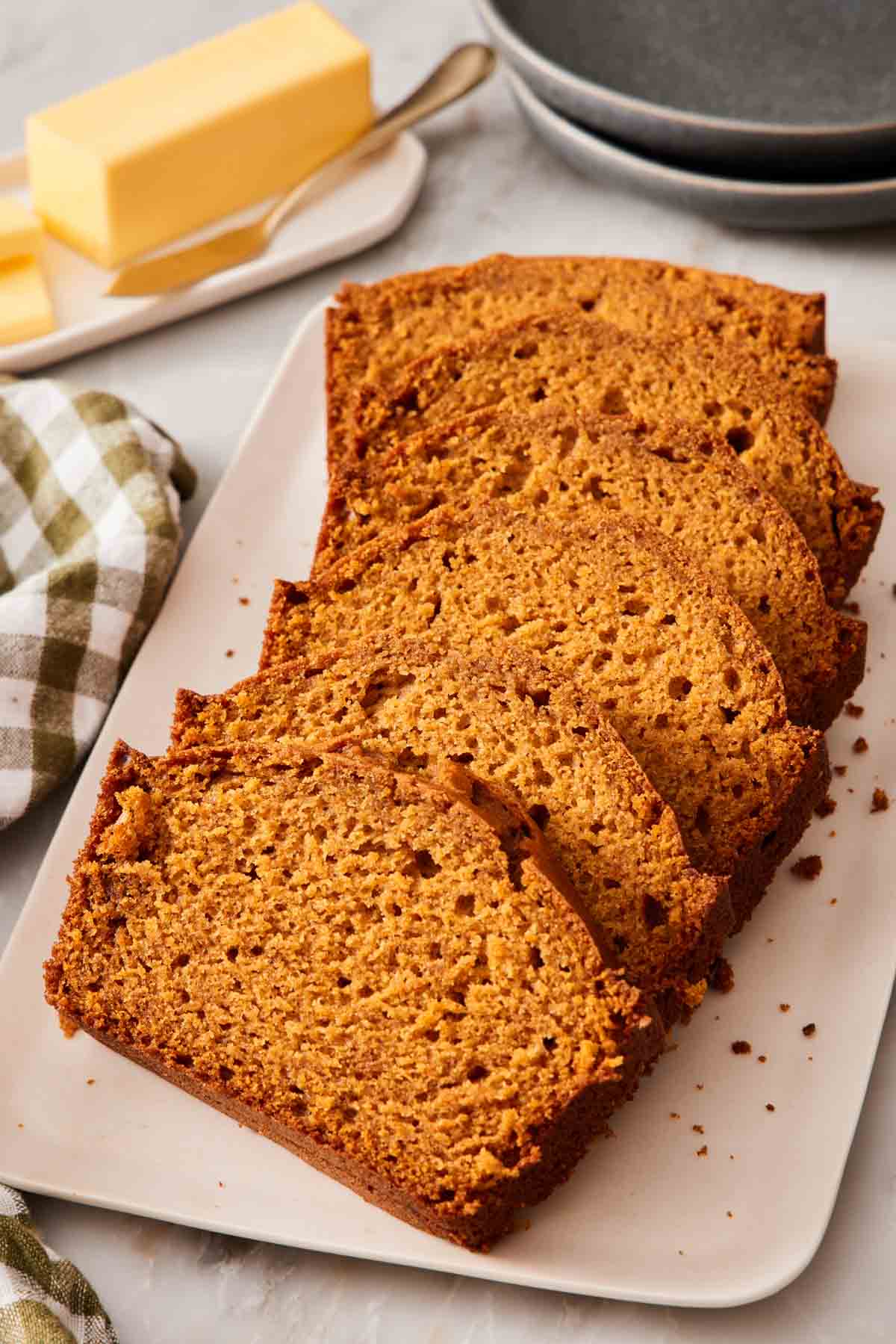
The Leftover Pumpkin Problem
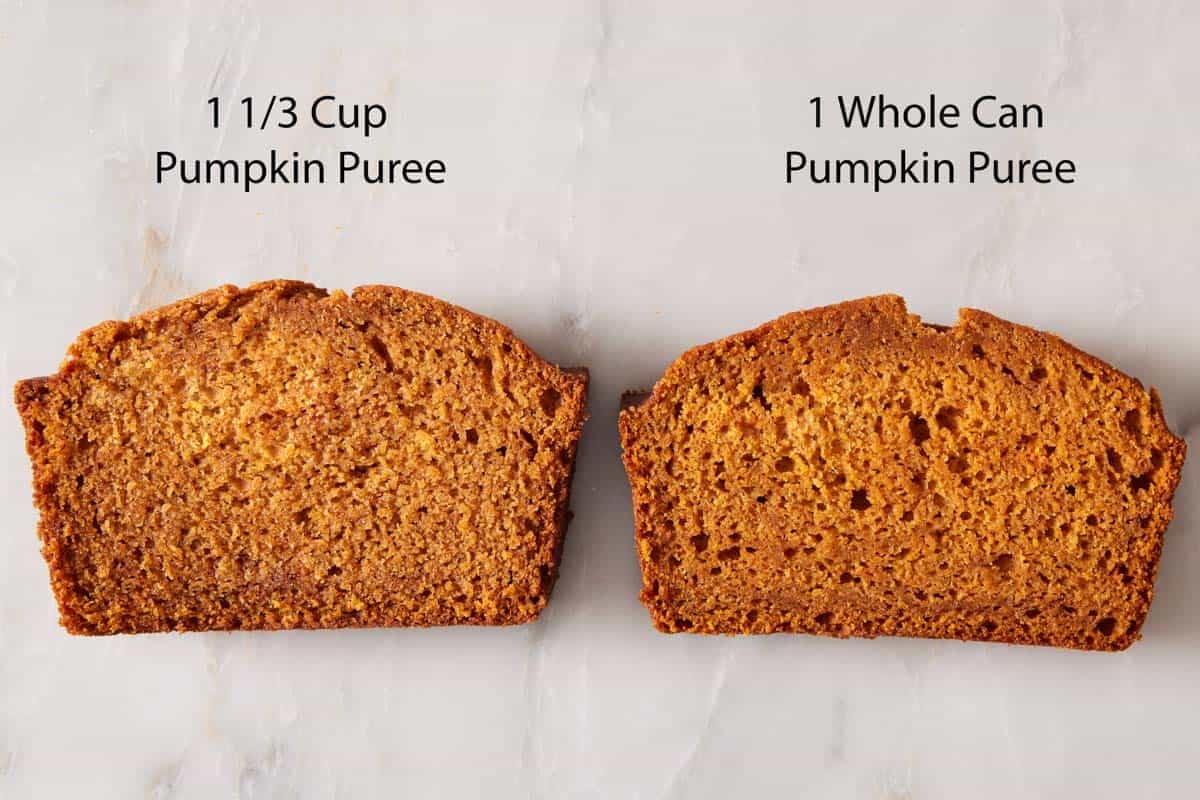
This is at the heart of the recipe questions I get from readers. The batter only uses 1⅓ cups (300g) of pumpkin puree—that’s just under three-quarters of a 15-ounce/425g can. I intentionally used this amount because, in recipe testing, I found that the loaf that used a whole can of pumpkin turned out gummier if I changed the ratio of ingredients. Instead, I would have to increase everything, and it was too much batter to fit in a single 9×5-inch loaf.
In this version, the loaf has the right balance of softness, density, and moisture without feeling gummy from too much moisture. You have three options if this frustrates you:
The first is to save the leftovers. Spoon it into a container (about 125g) and keep it in the fridge for up to five days. You can stir it into oatmeal, pancake batter, or a smoothie, add it to cream cheese frosting or buttercream, or use it as an egg replacer in certain recipes.
I like to put it in a container with some extra room and freeze it. Then when I make another recipe that uses a partial can, I can add the leftover to it and freeze that. Eventually, there’s enough to use to make this bread again or something else!
The second is to bake another treat! My pumpkin chocolate chip cookies and pumpkin snickerdoodles only need 80g (⅓ cup) of puree. Make the cookie dough while the pumpkin bread bakes. You can either bake the cookies once the loaf is done, or freeze the cookie dough balls for later.
The third is to use the whole can and adjust the oil. Reduce the oil from ⅔ cup to ⅓ cup. Don’t just add in the extra pumpkin—pumpkin is mostly water, and that extra moisture is what makes the loaf gummy. Reducing the oil helps account for that so the flour can absorb the additional water.
In my test, the whole-can variation looks almost identical to the original recipe. The texture does change, with the whole-can version having a bouncier chew and a slightly shorter height, but they are minor differences.
Pro Tips For The Best Pumpkin Bread
Don’t overmix the batter. Stir the wet ingredients and the dry ingredients until just combined, or until the bits of flour and dry ingredients are just incorporated. Continuing to mix the batter will develop more gluten strands, which can yield a dense, tough pumpkin loaf. This is also why I recommend mixing it together by hand and not with an electric hand or stand mixer. It’s easier and reduces the chance of overmixing!
If you have a smaller loaf pan, measure the exact dimensions. This batter will fit in a 1-pound (8½x4½ inch) pan, with the edges rising up just slightly above the rim. Anything smaller and the batter may spill out during baking.
How To Make Pumpkin Bread
Below are step-by-step process images for making pumpkin bread. You can find the full set of instructions in the recipe card below.

1. Whisk together the dry ingredients—flour, baking soda, baking powder, salt, cinnamon, and nutmeg—in a large bowl. This ensures all of the spices and leaveners are evenly distributed throughout the batter.
2. Add the pumpkin puree, sugar, oil, eggs, and vanilla to a medium bowl.

3. Whisk well to combine. You may want to start whisking slowly until the ingredients start to combine; otherwise, the oil can slosh out if you are too vigorous at the start!
4. Pour the pumpkin mixture into the bowl with the flour mixture.

5. Stir together by hand with a silicone spatula until just combined. Do not overmix! A few small lumps may remain, and that’s okay; just make sure no streaks of flour are in the batter.
6. Pour the batter into a 9×5-inch loaf pan greased with baking spray. Bake at 350°F for 1 hour, or until a toothpick inserted in the center comes out with a few moist crumbs and the center springs back when pressed lightly. Let the pumpkin bread cool in the pan for 15 minutes and then transfer to a wire rack to cool completely.
Muffins, Mini Loaves, and Variations
For muffins: Fill each paper liner three-quarters full, then bake for 5 minutes at 425°F, and, without opening the door, drop the oven to 350°F to bake for about 15 minutes more. That hot start is what pushes the tops up into a dome before the crumb sets, and it is the method behind almost every muffin recipe on my site. I tested this with my pumpkin muffins, so you can find more details in that recipe!
For mini loaves: Grease the pans and fill two-thirds full with batter. The yield and bake time depend entirely on your pan size. Start checking them after 25 minutes and remove them from the oven when a toothpick inserted into the center comes out with a few moist crumbs. Let them cool in the pans for a few minutes, then remove the loaves and cool on a wire rack.
The recipe doubles easily for two 9×5 loaves baked side by side. (Do not try to bake a double batch in one pan!)

Flavor and Topping Variations
Feel free to add mix-ins or toppings to your pumpkin bread:
- Add nuts: Mix ½ cup chopped toasted walnuts, toasted pecans, or toasted pumpkin seeds into the batter for a little crunch.
- Stir in chocolate chunks: Add up to ½ cup of chocolate chunks or chocolate chips. Depending on how much sweetness you want, use dark, semisweet, or milk chocolate.
- Add dried fruit: ½ cup of golden raisins or dried cranberries taste great in pumpkin bread!
- Top pumpkin bread with streusel: A simple, buttery streusel topping elevates the quick bread recipe. Add it on top of the pumpkin bread batter just before baking.
- Frost or glaze it: My favorite cream cheese frosting adds a tasty tang. You can also stir together powdered sugar with a dash of cinnamon and enough milk to make it drizzly. Wait for the pumpkin bread to cool completely before frosting or glazing it, or the frosting will melt and drip off.

Pumpkin Bread Recipe
Equipment
- 9×5″ Loaf pan
- Mixing Bowls
Ingredients
- 1¾ cups all-purpose flour (210g)
- 1 teaspoon baking soda
- ½ teaspoon baking powder
- ½ teaspoon salt
- 2 teaspoons ground cinnamon
- ¼ teaspoon grated nutmeg
- 1⅓ cups pumpkin puree (300g)
- 1¼ cup granulated sugar (250g)
- ⅔ cup vegetable oil (160ml)
- 2 large eggs
- 1 teaspoon vanilla extract
Instructions
- Preheat the oven to 350°F. Grease a 9×5-inch loaf pan with baking spray.
- In a large mixing bowl, whisk together the flour, baking soda, baking powder, salt, cinnamon, and nutmeg.
- In a medium bowl, combine the pumpkin puree, sugar, oil, eggs, and vanilla and whisk until well combined.
- Pour the wet mixture into the dry mixture and stir together until just combined. Pour the batter into the prepared pan.
- Bake for 1 hour, or until a toothpick inserted in the center comes out with a few moist crumbs and the center springs back when lightly pressed. You can loosely cover the loaf with foil after 30 minutes of baking to protect the top from browning too much if desired. Let cool in the pan for 15 minutes then remove the loaf and cool completely on a wire rack.
Notes
- Cover the loaf to prevent burning, if needed. You can loosely cover the loaf with a sheet of foil after 30 minutes if the top looks like it’s already taking on a lot of color. The thin layer of foil will protect the top from browning too much and possibly burning.
- How to tell when it is done: a toothpick into the center should come out with a few moist crumbs clinging to it, not wet batter and not bone dry. Then press the top lightly. If your finger leaves a dent, it needs longer. If it springs back, it is ready.
Nutrition
Have you tried this recipe? Tag me today!
Mention @preppykitchen and tag #preppykitchen!
Storing And Freezing
At room temperature in an airtight container, the loaf keeps for 2 to 3 days. In the fridge, up to a week, though it firms up cold and a few seconds in the microwave brings it back.
To freeze, slice the loaf first, wrap each slice in plastic, then wrap again in foil or drop the wrapped slices into a freezer bag. Slices thaw in minutes on the counter, and you are not committed to defrosting a whole loaf! Frozen, it keeps for 3 months.
Frequently Asked Questions
Yes, with one extra step. Homemade puree carries a lot more water than canned, and different pumpkin varieties carry different amounts, which is why canned puree gives more consistent results. Spread the homemade pumpkin puree on a double layer of paper towels, leave it for about 10 minutes, then scrape it off and measure it. Skipping this step bakes a gummy loaf.
There are three common causes: Too much flour, from scooping the measuring cup straight into the bag rather than spooning and leveling. Over-mixing, which develops too strong a gluten network. And undrained homemade pumpkin puree, which adds too much moisture to the batter. A fourth, less common cause is old baking soda or baking powder, both of which lose lift without ever looking or smelling wrong—always check the expiration date.
Use a gluten-free all-purpose blend that contains xanthan gum. If you measure by weight, use the gram weight given on the label per cup. I tested this using King Arthur’s gluten-free all-purpose baking flour and used 280g (1¾ cups). The batter may look slightly looser going into the pan, and the loaf usually needs a few extra minutes. My loaf baked up in 1 hour and 5 minutes, and I could barely tell the difference between the gluten-free and wheat flour loaves when I ate them!
More Recipes To Try
Make one of these quick bread recipes next:
- Banana Bread — mashed bananas bring the moisture and flavor to this easy bread loaf.
- Apple Bread — use diced or grated apple for the batter.
- Zucchini Bread — grated zucchini brings plenty of moisture, keeping this loaf fresh for days too!
- Chocolate Chip Banana Bread — chocolate chips pair perfectly with the sweet bananas throughout each slice.
- Cranberry Orange Bread — tart pops of cranberries burst in every bite.
If you’ve tried this pumpkin bread recipe, then don’t forget to rate it and let me know how you got on in the comments below. I love hearing from you!