This post may contain affiliate links. Please read our disclosure policy.
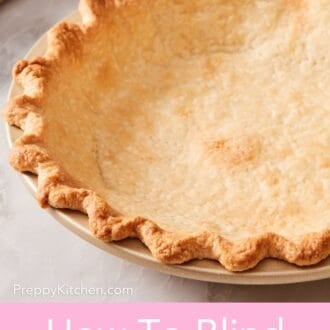
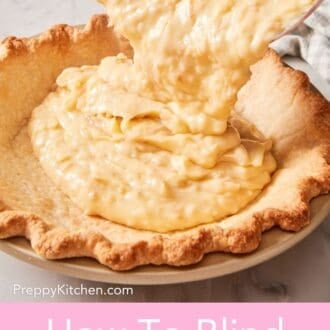
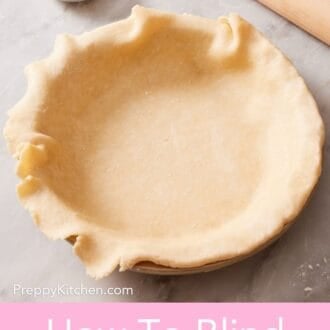


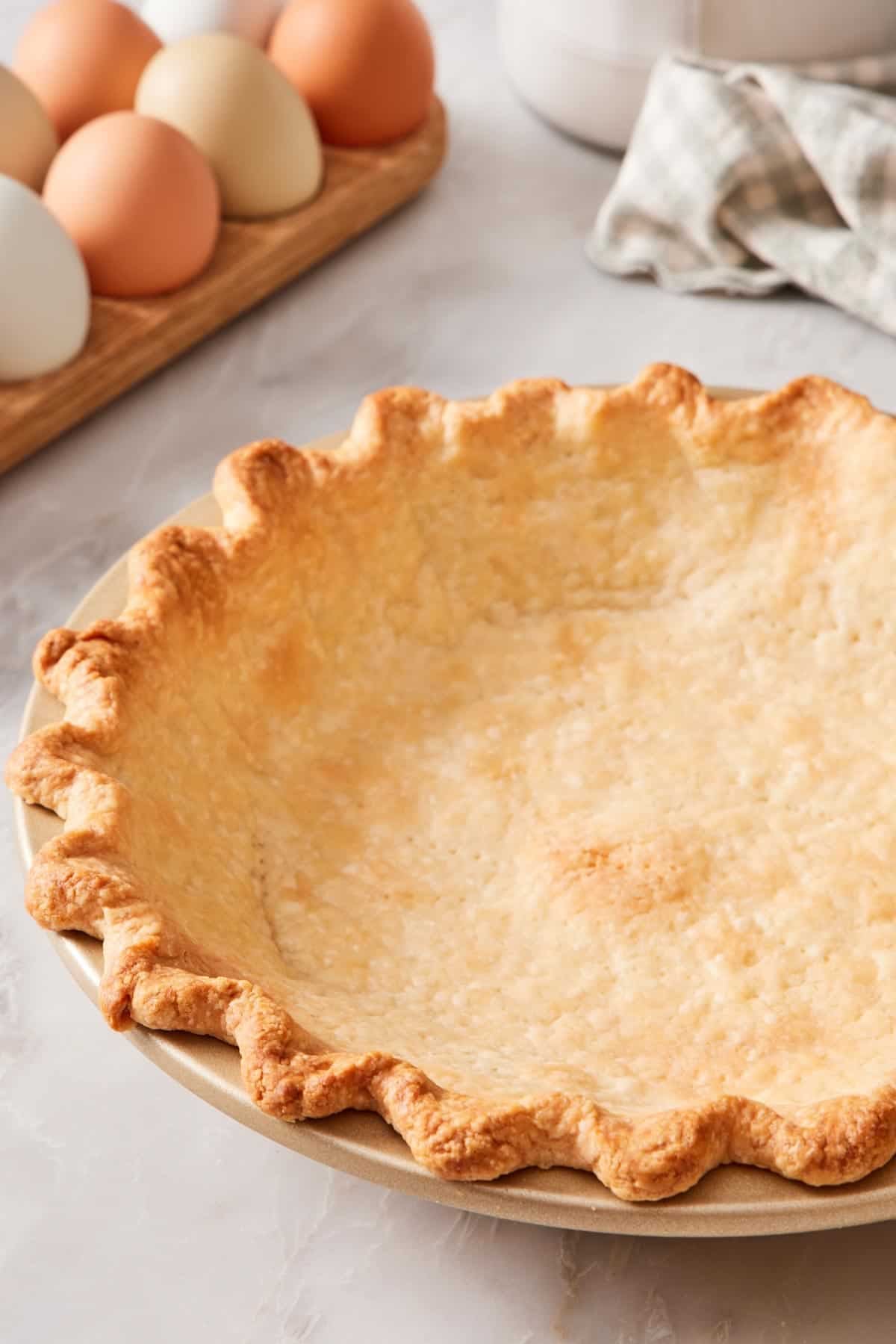
Learn How to Blind Bake a Pie Crust for any pie recipe! Use my method for a par-baked or fully baked crust that doesn’t shrink and turns out with a golden, crisp bottom every time.
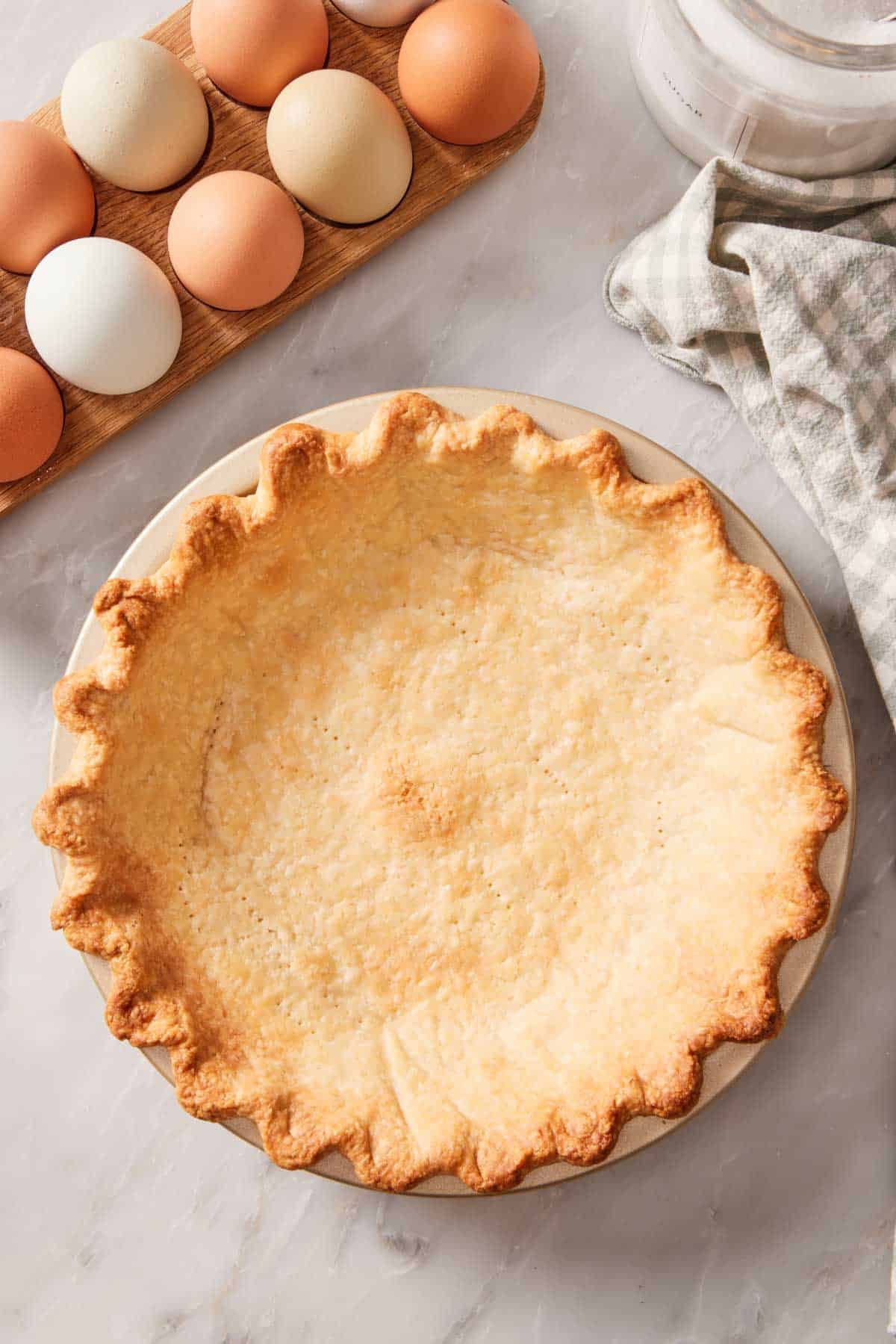
Blind baking means baking a pie crust before any filling goes in. Par-baking, pre-baking, and blind baking are the same thing—the only difference is how far you take it!
You can use my method for any pie recipe that calls for a pie crust to be baked before the filling is added. I’ve tested a few tricks to prevent the crust from shrinking (freezing it first, docking the crust, and using enough pie weights), and I show you how to tell the difference between a par-baked and fully baked crust so you never underbake your pie crust again.
“I never froze pie crust before blind baking it, and it would always slide down into the sides of my pan which was SO frustrating. After finding your advice, I froze my shell and it turned out PERFECTLY!! You have changed my pie baking life!”
Taylor
When Do You Actually Need To Blind Bake?
Blind baking is typically done with a single-crust pie that uses either a no-bake filling, a very runny or wet filling, or when the filling cooks faster than the crust so the crust needs a head start.
You need it if the filling is wet and sets fast, so the crust would still be raw when the filling is done. Use it for quiche, sweet potato pie, chess pie, and anything where a wet filling would soak into raw pastry before it had a chance to cook.
You need it if the filling never gets baked at all. Your pie crust should be baked until it is fully cooked, golden, and crispy throughout. Use it for banana cream pie, coconut cream pie, French silk pie, and anything with a no-bake filling.
You do not need it for a standard double-crust fruit pie. An apple pie bakes for well over an hour, which is plenty of time for the bottom crust to cook, and there is a lid on top holding everything in place. Plus, the top and bottom crusts are typically crimped together on the edges to seal in the filling—that’s impossible to do if you blind bake the bottom crust first.
Some recipes can work either way: My pumpkin pie and pecan pie recipes can be blind baked for a crispier crust, especially if you use a homemade pie dough. But I use an oven trick for both (baking in the lower third) to ensure the crust bakes thoroughly along with the filling without the added blind baking step. If your recipe calls for blind baking, though, follow its instructions for the best results!
If a recipe asks for a “cooked and cooled” crust, that means fully baked. If it says “par-baked” or “partially baked,” then you blind bake it for a shorter time, and add the filling before the pie crust is completely cooked.
What You Need
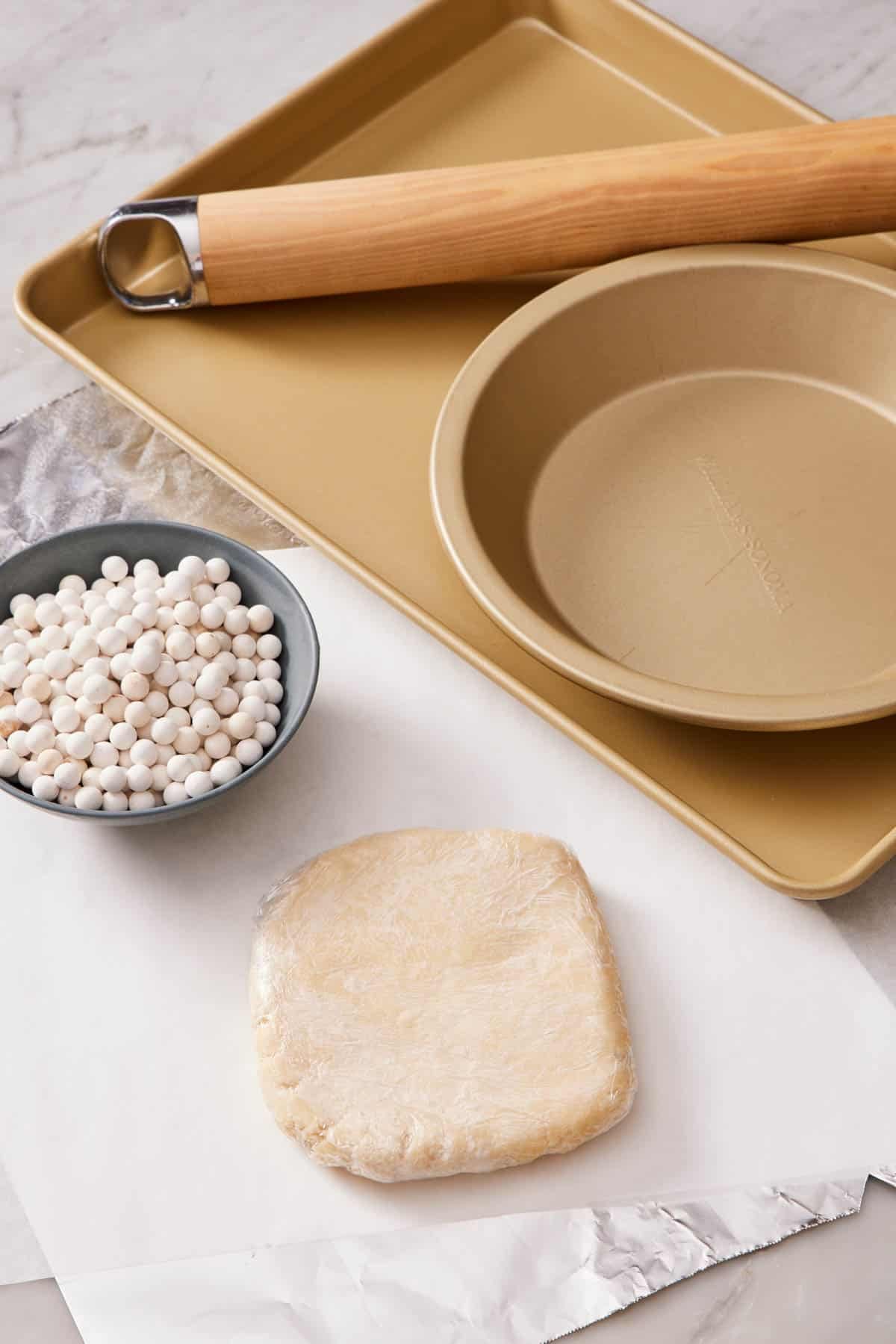
These are the supplies you need to blind bake a pie crust! Instructions are in the recipe card below.
A disk of pie dough — my homemade pie crust recipe makes two, so you will have one spare. You can use store-bought pie dough sheets as well, but follow the box instructions for specific baking temperatures and times.
Pie weights — these will weigh the dough down so the bottom doesn’t puff up, and they support it in the pan so it doesn’t slump down the sides. You can use ceramic pie weights, or a bag of dried beans, uncooked rice, and lentils all work great, too. If you use beans or rice, once you have baked them, they are no longer edible, so label the jar and keep them for next time—they last for years! Use more than feels necessary. The weights are not just stopping the base from puffing; the ones pressed against the sides are what stop the sides from slumping down.
Parchment paper — this will line the dough so the pie weights can be added without baking into the crust and then be easily removed. You can add an optional layer of foil over it. It holds its shape against the sides and gives the crust extra support while the pastry is still soft before it sets.
A rimmed baking sheet — this catches any butter that leaks out when baking. If you don’t have a baking sheet with a rim, place a sheet of foil a few inches larger than your pie pan on your flat baking sheet and turn up the edges slightly.
Keep The Crust Cold To Avoid Shrinking
A warm crust is the main reason crusts shrink, so chilling it first helps to prevent that. Chilling the crust firms up the butter, which makes the dough firm and more sturdy, and helps it hold its shape. When the butter is cold, it takes more time to warm up and melt, allowing the hot oven air to set outside of the crust.
If the dough has warmed up on the counter, the butter has already started melting into the flour before it ever enters the oven. When it hits the heat, it melts very quickly, before the crust can set, and you get a crust that shrinks down the sides. The butter also doesn’t steam as well, so it bakes greasy rather than flaky.
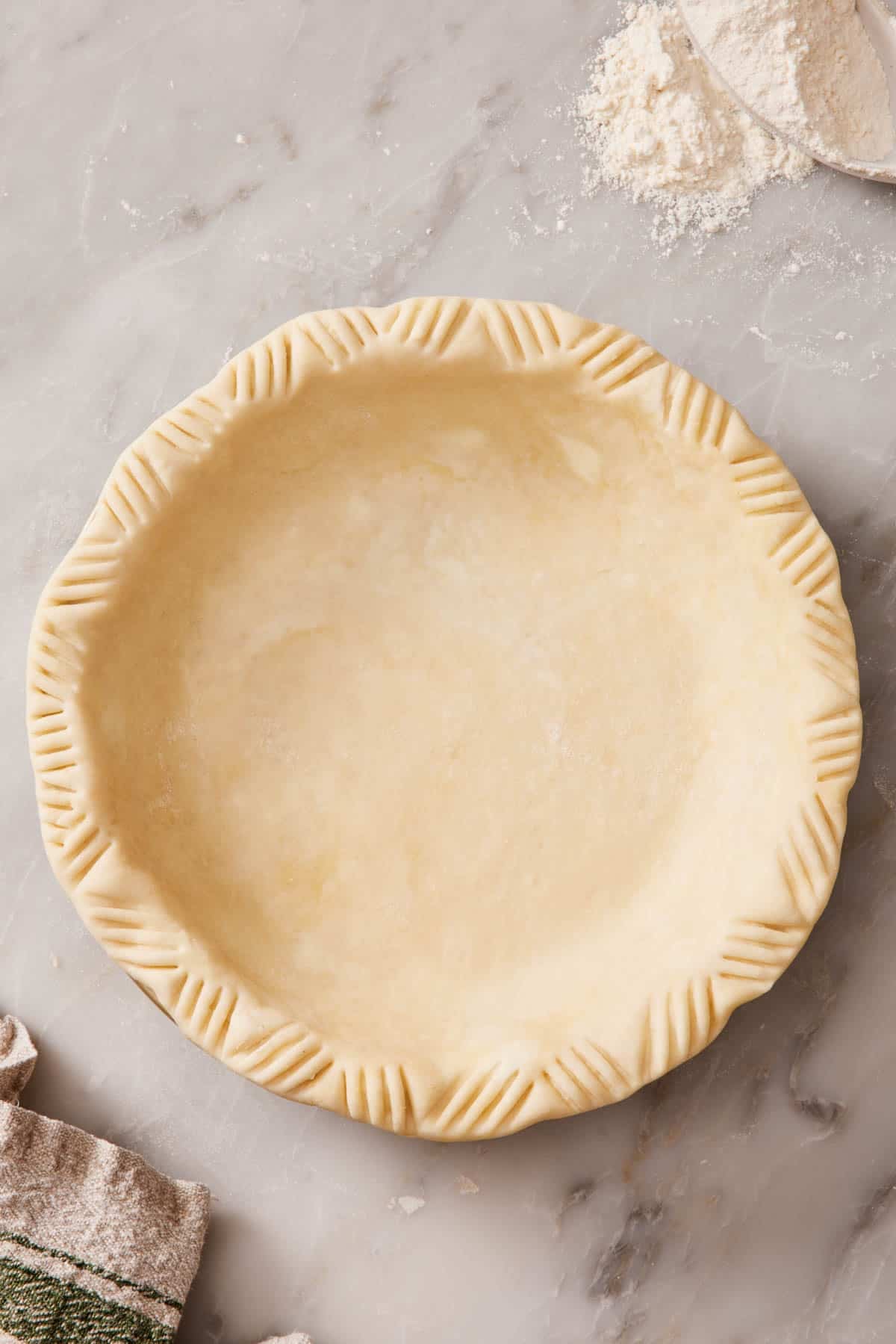
I have tested blind baking two homemade crusts at different temperatures. One I baked immediately after crimping and shaping it (no chill). The other I froze while the first shell baked (30 minutes). The first pie crust shrank, moving the crimped edge down just inside the rim. This reduced the amount of filling the pie crust could hold and destroyed some of my decorative edge. The second frozen pie crust didn’t change size at all! The crimped edge stayed on the rim of the pan, and the decorative design stayed sharp.
Freeze the shaped crust for 20-30 minutes or chill it in the fridge for 1 hour before it goes in the oven. The freezer is ideal because the butter gets much colder, but both turn out well, and either one is better than not chilling it at all.
Pro Tips For Blind Baking Pie Crusts
Choose your pie pan appropriately: if you are using a glass or ceramic pie dish, do not take it from the freezer straight into a hot oven. Glass can crack from that kind of temperature swing. Chill in the fridge for an hour instead, or let the frozen dish sit out for 10 minutes while the oven finishes heating. Metal pans are fine to go straight in and are my ideal choice. Metal also conducts heat better, making the crust set faster and brown better on the bottom.
Prick the base of the unbaked crust all over with a fork. Those holes let steam out so the bottom does not balloon. If you are fully blind baking for a very loose filling, a lemon curd or a thin custard, some of it can seep into the dock marks and soften the base. If that worries you, brush the inside of the crust after the pie weights are removed (par-baked) with a light layer of egg wash. It forms a thin seal.
Position an oven rack in the bottom third for the crispest bottom. The bottom of a pie crust is the part that has to cook the longest and most thoroughly. Putting the pan lower in the oven gets it closer to concentrated heat so it browns better.
Bake in a hotter oven. Blind baking the crust at 425°F is the same principle used for starting a double crust pie at a high temperature. The higher heat will quickly set the crust, reducing the risk of shrinking and making the butter steam more so the crust is flakier. Since there isn’t a filling in the pie crust (meaning it bakes much faster and more evenly), you don’t need to drop the temperature during the baking process.
How To Blind Bake A Pie Crust
I’ve highlighted portions of the process in step-by-step images. You can find the full set of instructions in the recipe card below.
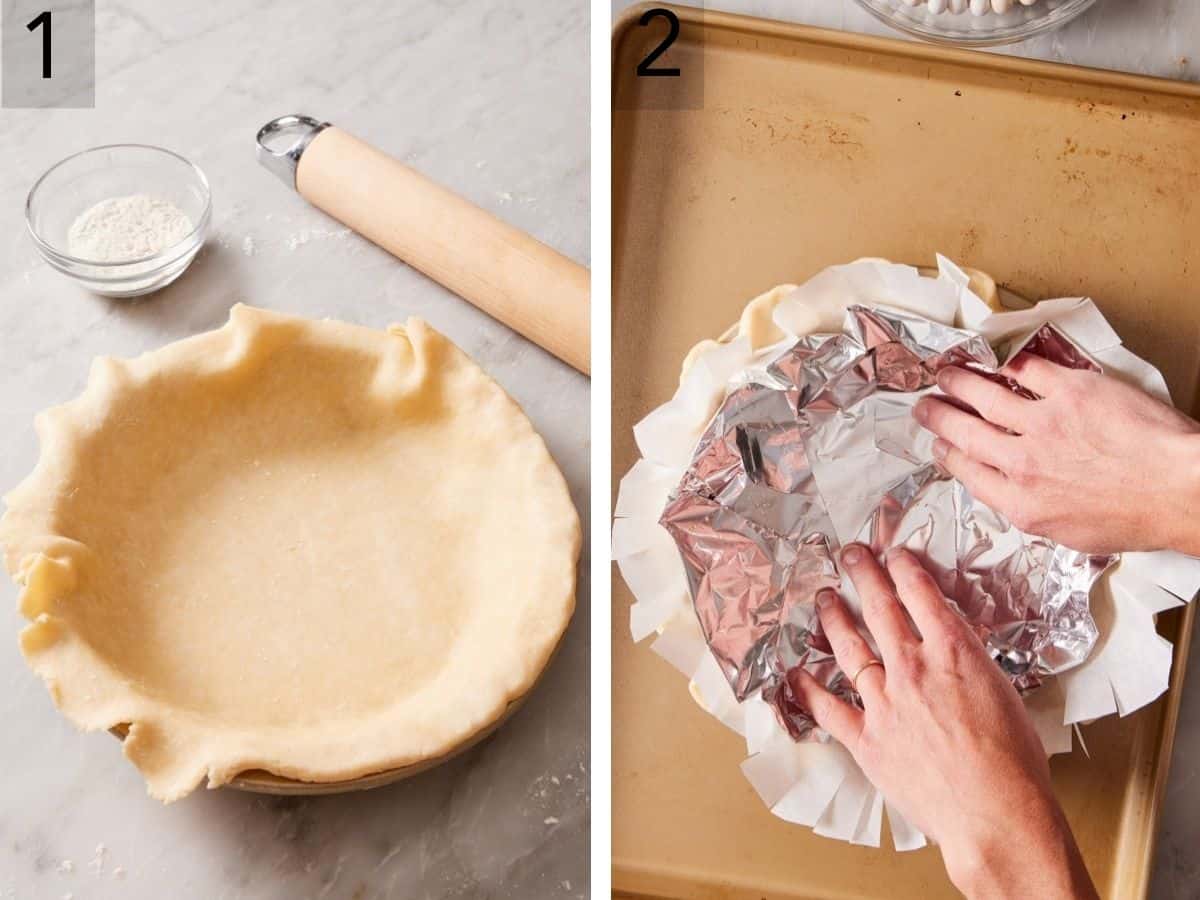
1. Shape and chill the crust: Roll the chilled dough into a 14-inch circle and line a 9-inch pie pan. Tuck the overhanging dough under itself and crimp. Prick the base all over with a fork, then freeze for 30 minutes or refrigerate for at least 1 hour. This chill time sets the crust and prevents shrinking, so don’t skip it!
2. Line the crust: Meanwhile, set a rack in the bottom third and heat the oven to 425°F. Set the frozen crust on a rimmed baking sheet. Press a square of parchment into it, tall enough to reach the top of the crust. Add a layer of foil over the parchment if you want extra support.
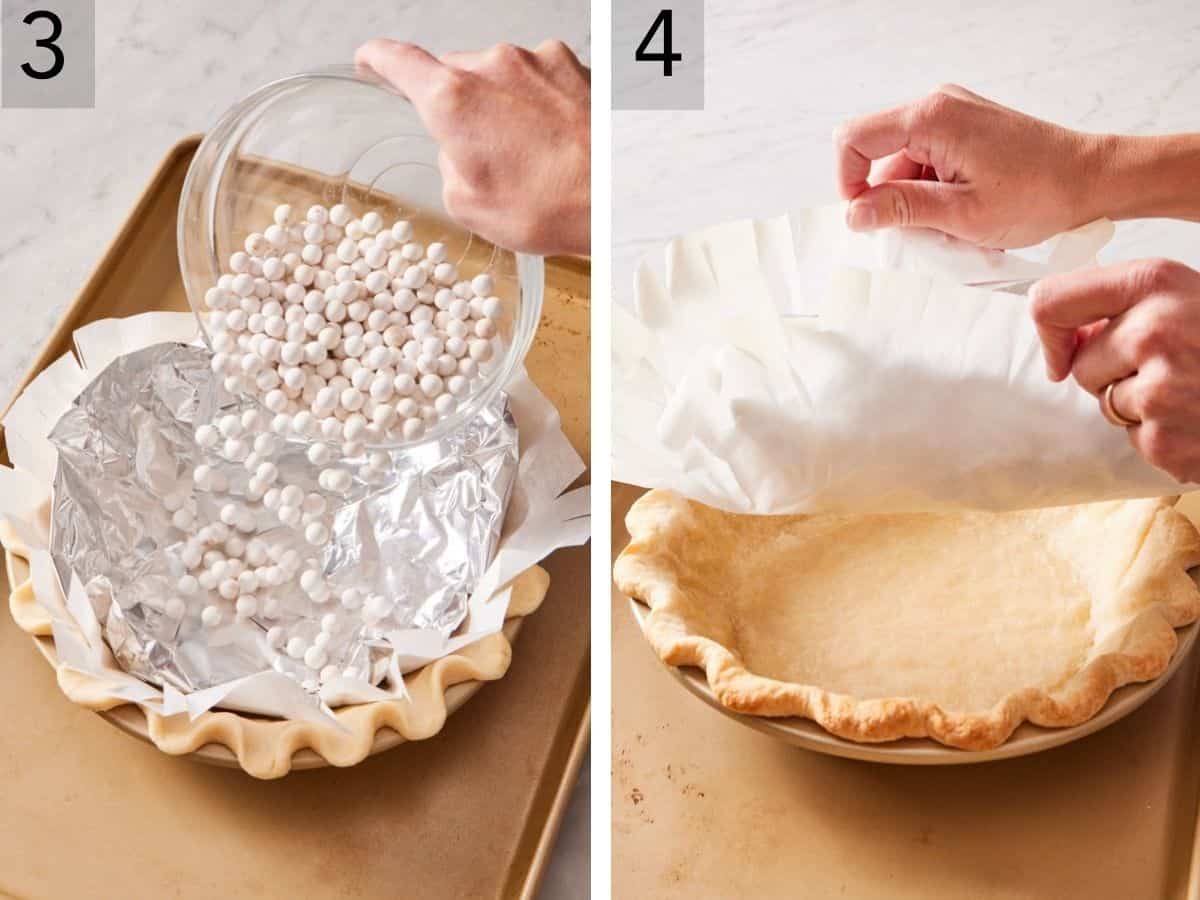
3. Bake the crust: Fill with enough weights to reach the top, pressing them against the sides. Bake for 20 minutes. Lift an edge of the parchment and look. If there is melted butter pooled on the base, give it another 5 minutes. It should still look wet and underbaked, but with no pools. Pooled butter means the dough hasn’t baked quite long enough to start setting its shape, and pulling it out at that point means the crust might slump or sag in the pan once the pie weights are removed.
4. Remove the weights, and finish baking if needed. Very carefully lift the parchment and weights out and set them aside to cool. Stop here for a par-baked crust. If you want a shine, brush with egg wash now. For a fully baked crust, return it to the oven for about 10 minutes more, until the bottom inside the crust looks dry with small bubbles or flakes across the surface and is golden brown in the center. Cool the blind baked crust completely before filling it.
Par-Baked versus Fully Baked
Par-baked is a pie crust that is blind baked with the weights, then goes back into the oven with a filling to finish baking. It comes out pale and set but not baked through.
Fully baked is a pie crust that is blind baked until fully cooked, golden, and crispy without a filling in it. Once the pie weights come out, the crust goes back into the oven until it is golden all over, bottom included. You may need to shield the edges of your pie to prevent them from burning when you return it to the oven. Make a pie shield with foil and add it after the parchment and weights are removed.
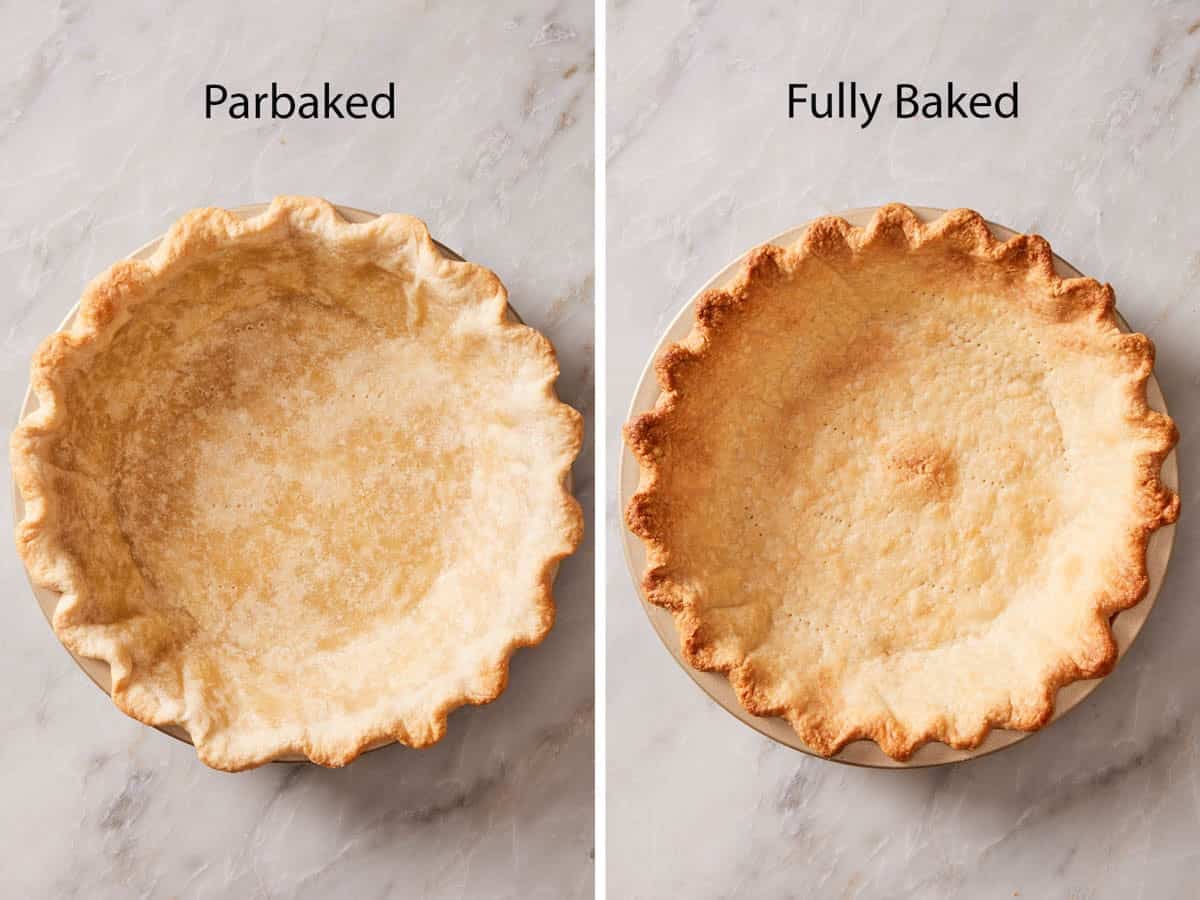
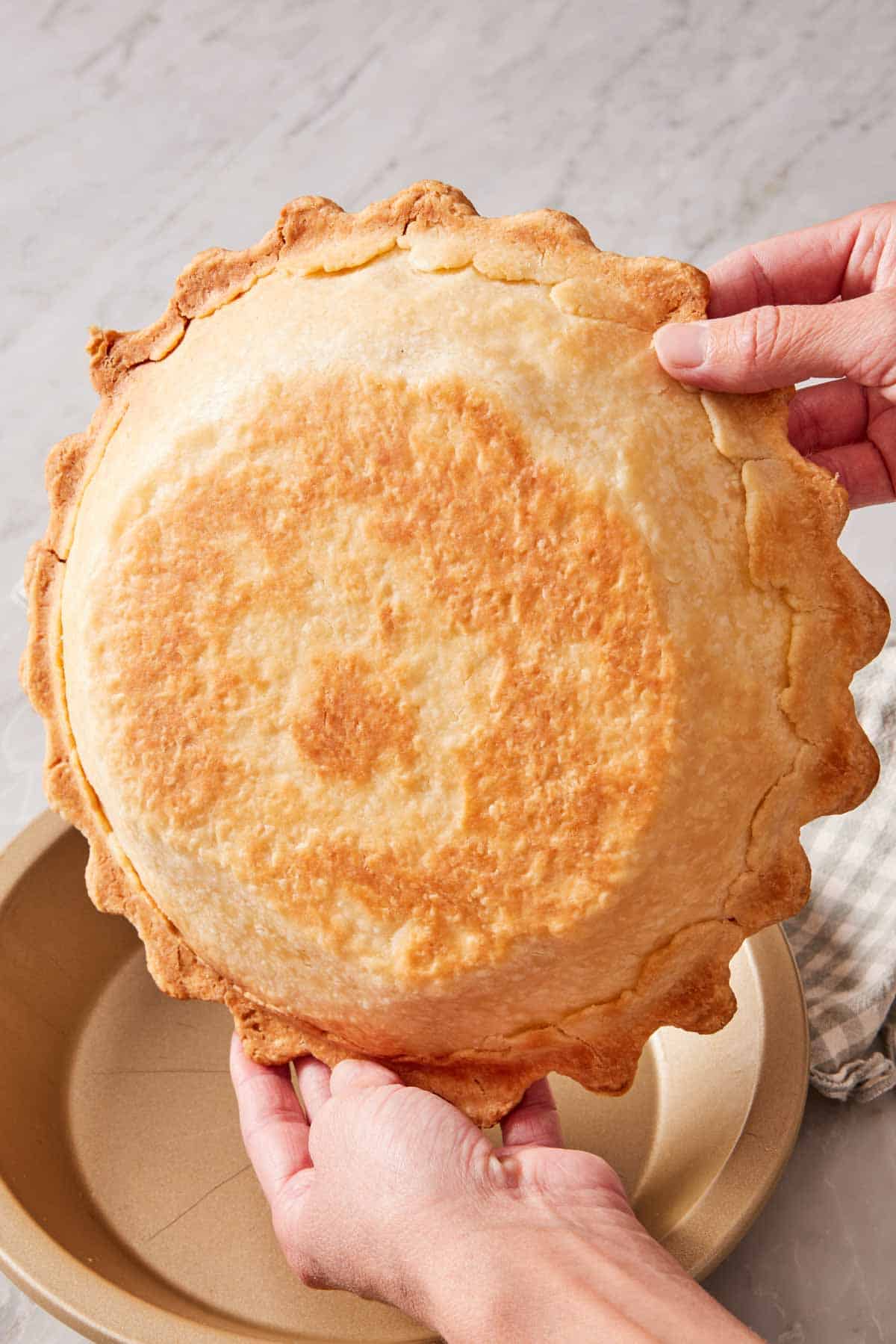
A well-baked crust means it can release from the pan without sticking and is sturdy enough on its own when fully baked. I don’t recommend removing your pie crust from the pan for slicing and serving (it tends to break more easily when slicing it), but it’s an easy way to check and make sure it’s properly cooked! The bottom should be a rich golden brown, too.
If it’s under-baked but has cooled, you can return it to the oven at 350°F and bake for another 10 to 15 minutes.
How to Blind Bake a Pie Crust
Equipment
- Pie pan
- Parchment paper
- Pie weights, dried beans, or rice
- Baking Sheet
Ingredients
- 1 disk homemade pie dough my recipe makes two
- Dried beans or pie weights
Instructions
- Prepare the crust as directed in the recipe until it’s ready to use.
- Roll the pie crust into a 12-14-inch circle and line a 9-inch pie pan with the dough. Fold the ends under and crimp the edges as desired. Poke the bottom all over with the tines of a fork. Freeze for 30 minutes.
- Meanwhile, position an oven rack in the bottom third and preheat the oven to 425°F.
- Once the oven is hot, remove the pie from the freezer and place on a rimmed baking sheet. Press a square of parchment paper into the frozen crust, making sure it’s high enough to come up to the top of the crust at least. If you’d like, you can also add a layer of aluminum foil. This adds additional structure that helps keep the side from slumping.
- Fill the lined crust with enough dried beans or pie weights to fill the center.
- Bake for 20 minutes. Take a peak under the parchment by carefully lifting up an edge. If the bottom of the crust is pooled with melted butter, cook for another 5 minutes. (It should still appear wet and under-baked but without pools of butter.)
- Remove the pie crust from the oven. Carefully lift out the parchment paper and pie weights and set them aside to cool. At this point, your pie crust is par-baked and could be used in recipes that call for partially baking the crust before filling. (If a shiny crust is desired, you can brush the crust all over with egg wash.)
- Return the crust to the oven and continue baking until the bottom appears dry with bubbles or flakes on the surface, and is golden brown in the center, about 10 more minutes.
- Let the pie crust cool completely before filling.
Notes
- You must line the pie dough with parchment paper. This will prevent you from baking the pie weights into the dough.
- If you use a store-bought pie crust, keep in mind that they’re usually on the thinner side and often use different fats instead of butter, so they’ll bake faster. I recommend following the directions on the package if using a frozen store-bought crust.
- Make sure to use enough weights to hold down the dough, as the pressure against the sides of the dough will keep it from shrinking.
Nutrition
Have you tried this recipe? Tag me today!
Mention @preppykitchen and tag #preppykitchen!
Storing A Blind-Baked Crust
A par-baked or fully baked crust keeps in the pie pan covered tightly with foil at room temperature for up to 2 days. Do not store it with the weights still in it.
If you are making it further ahead than that, freeze the shaped raw dough in the pan instead and blind bake it on the day. Raw dough freezes far better than a baked shell. You can freeze a pie crust for up to 3 months before you blind bake it, if you wrap it tightly in plastic wrap and foil.
Frequently Asked Questions
It’s usually because the dough was too warm. Freeze the shaped crust for a full 30 minutes and make sure your weights come right up the sides rather than sitting in a heap in the middle. Over-worked or over-hydrated dough shrinks too, so go easy on the water when you make it.
Yes, and you should if the recipe calls for a baked shell. Store-bought crusts are usually thinner than homemade, so they bake faster. Follow the timings on the package rather than the ones above, and start checking it early.
Dried beans, uncooked rice, or lentils, all of which work well and are reusable indefinitely for this purpose. Use enough to fill the shell, not just cover the bottom.
No. A fruit pie with a lid bakes long enough to cook the base, and a par-baked bottom makes sealing the top crust virtually impossible.
After the weights come out, before the crust goes back in the oven. That way the wash sets rather than being lifted off with the parchment. If your pie recipe specifies its own timing, follow that instead.
Recipes That Use A Blind-Baked Crust
Use one of these pie recipes to fill your pie crust:
- Strawberry Pie — the crust is fully baked until crisp, then filled with fresh strawberries.
- Quiche Lorraine — par-baked so the runny custard filling does not soak into raw pastry.
- Chocolate Pie — fully baked because the chocolate custard filling never goes in the oven.
- Pumpkin Meringue Pie — par-bake it before adding the pumpkin filling for a crisp crust.
- Shoofly Pie — you should par-bake a homemade crust for the flakiest results.
If you’ve tried to blind bake a pie crust, then don’t forget to rate it and let me know how you got on in the comments below. I love hearing from you!