This post may contain affiliate links. Please read our disclosure policy.
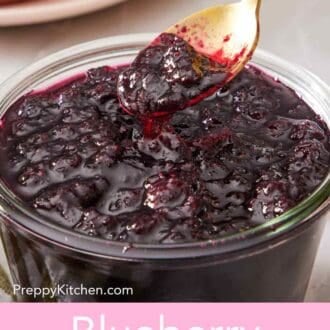
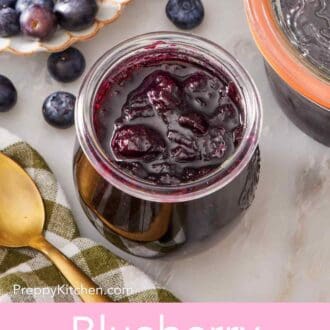
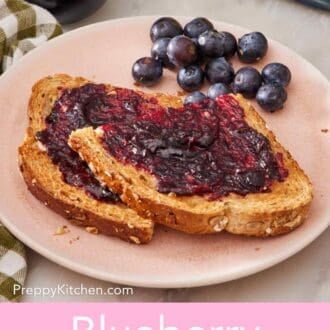
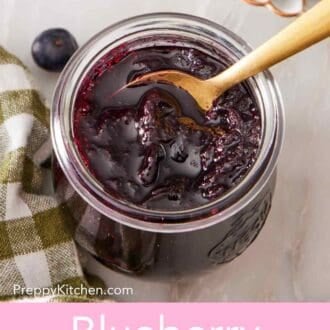
My Easy Blueberry Jam recipe is the perfect place to start if you’ve yet to try your hand at making homemade fruit preserves. This flavorful 3-ingredient jam is bursting with fresh blueberries and cooks start-to-finish in just 30 minutes!
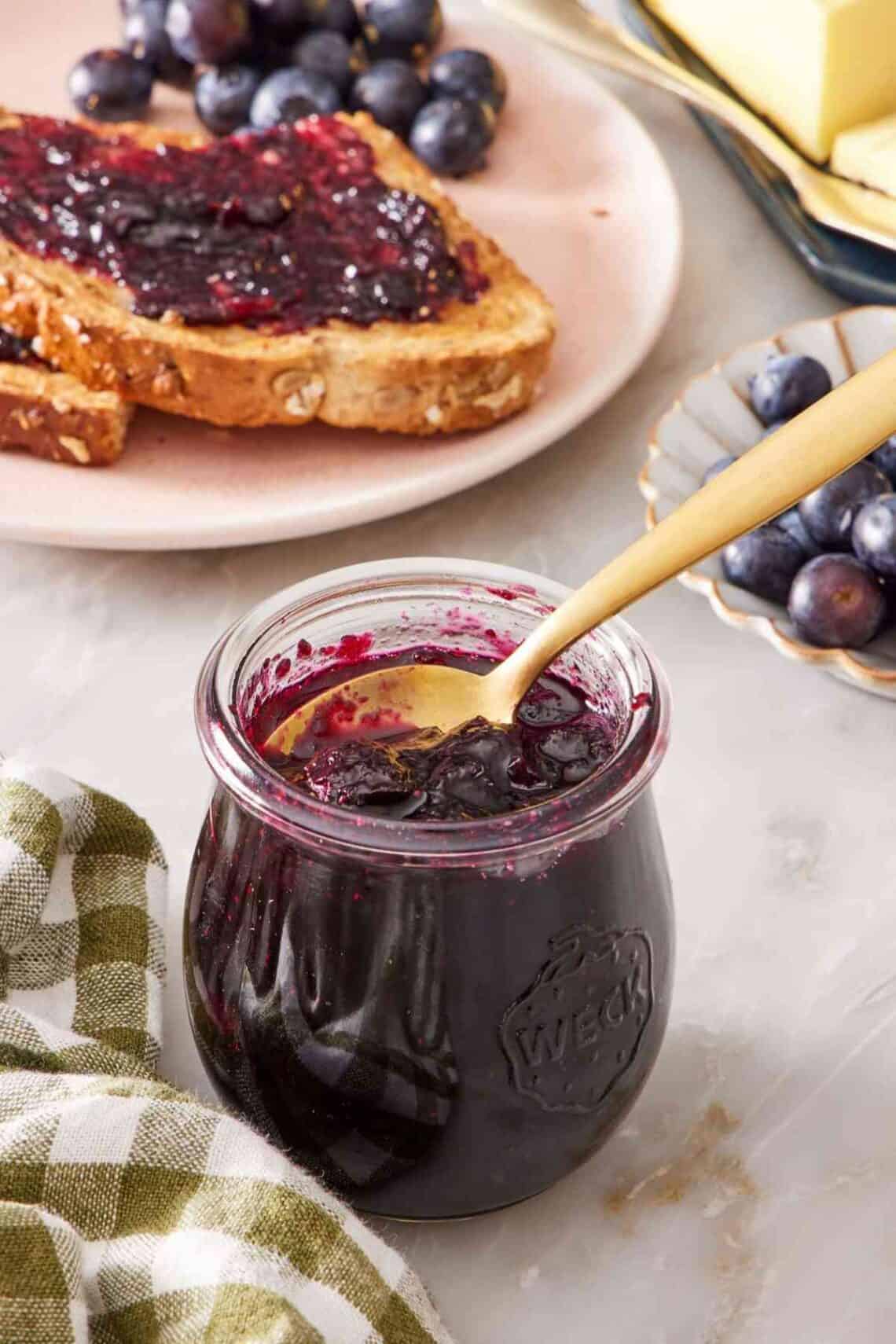
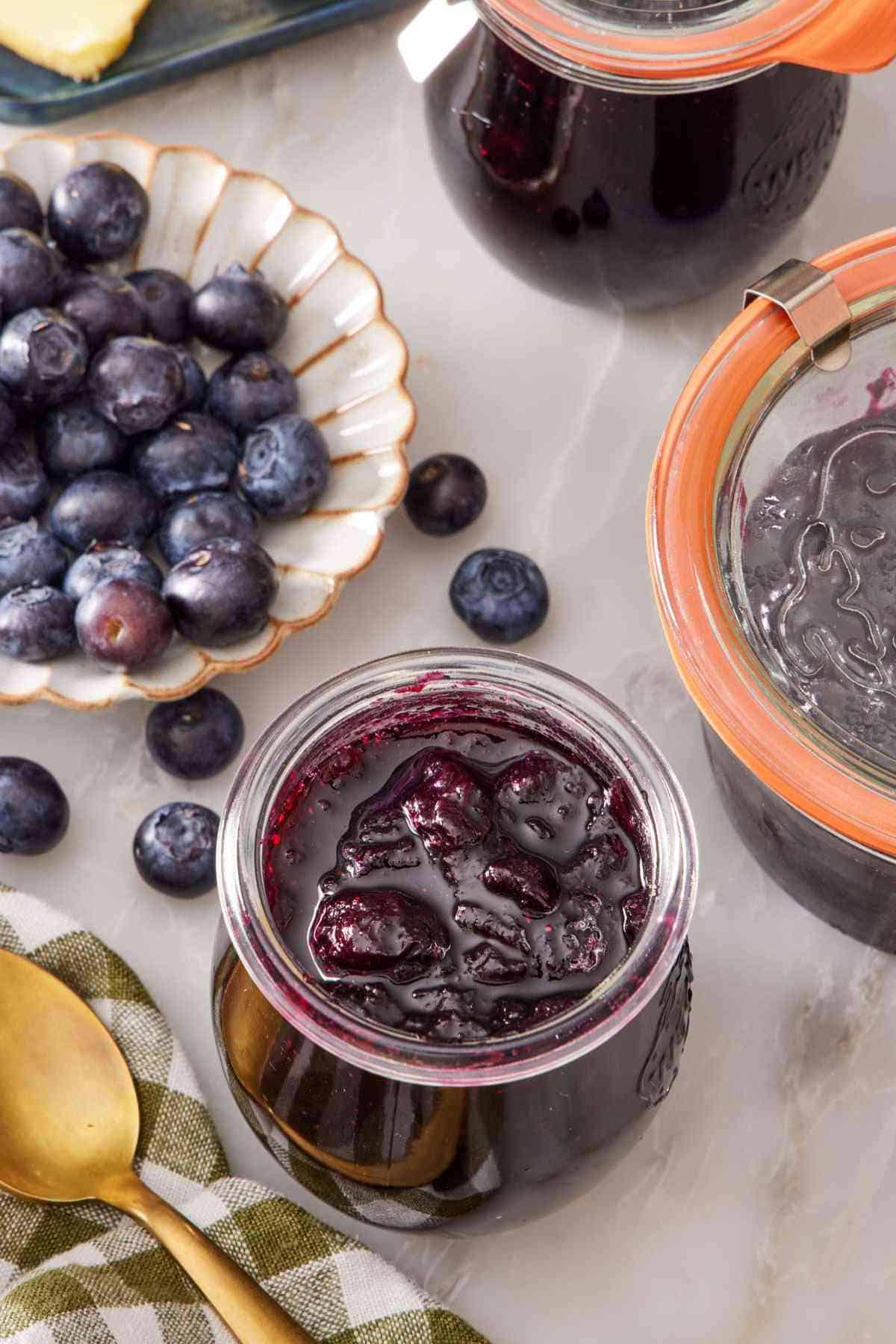
Whether you’re looking for a way to bottle your favorite summer flavors, give a thoughtful hostess gift, or simply upgrade your condiment selection, this blueberry jam recipe is a great choice. Each bite is loaded with the sweet-tart, faintly floral flavor of fresh blueberries. It’s just begging to be spread on your morning English muffin or flaky buttermilk biscuits.
Making homemade blueberry jam is simpler than you might think, and the results are so much better than store-bought! Unlike jelly, which is made from fruit juice, jam is made with whole fruit, giving it a thick, spoonable texture that’s literally bursting with flavor. I like to keep one or two jars of blueberry jam in the fridge and give another one away to a neighbor or friend with a batch of fresh scones. This recipe is also easy to scale up! So if you’re flush with blueberries and you’ve already made blueberry pie and blueberry muffins, this homemade jam is a great way to preserve them!
You Only Need 3 Ingredients
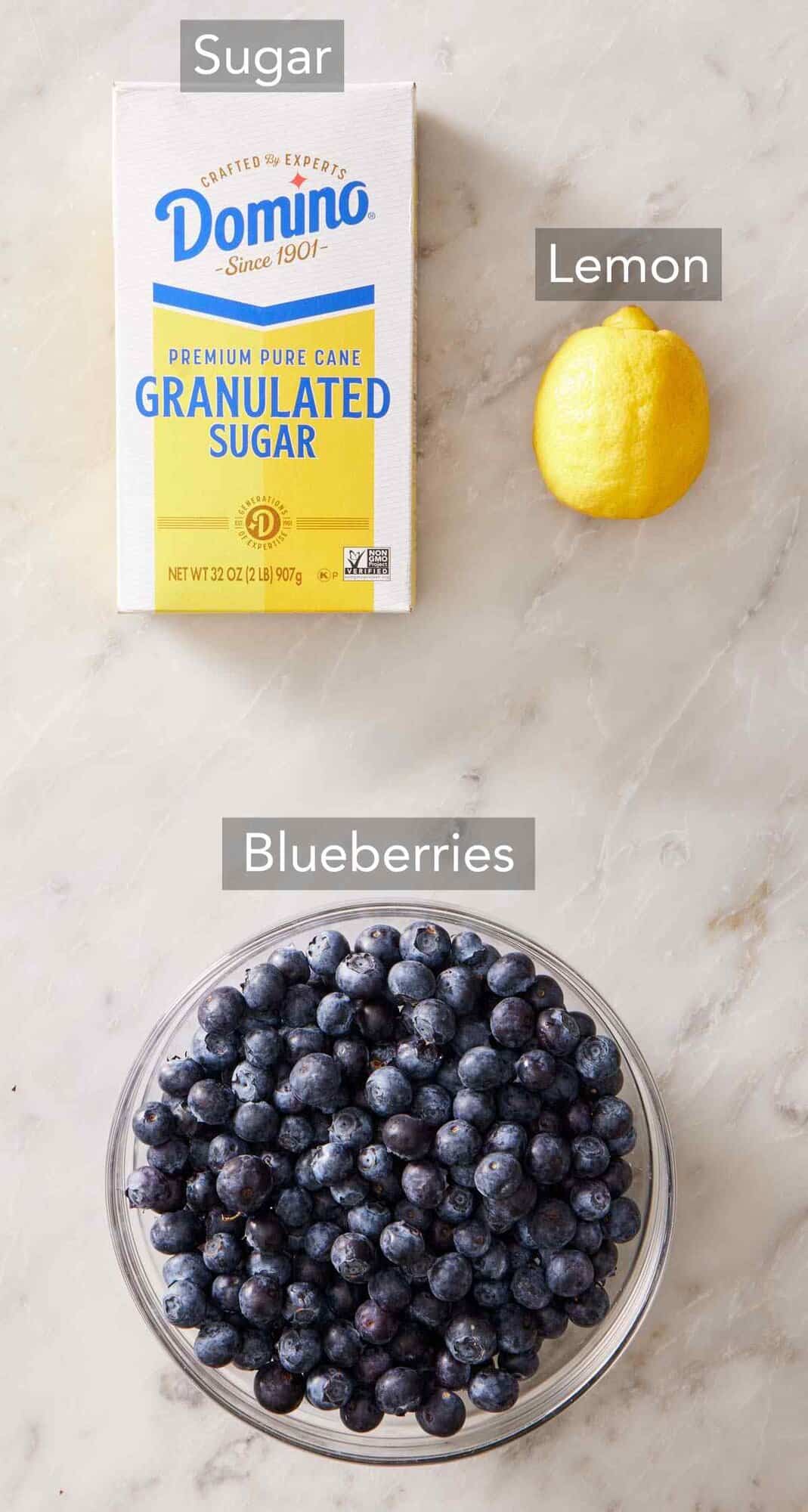
This blueberry jam recipe is so simple you only need three ingredients to make it! You can find the method with ingredient measurements in the recipe card below.
Fresh Blueberries — when blueberries are in their peak season, I always prefer to buy them fresh for making jam. However, if you get a craving for blueberry jam outside of the blueberry season, you’re always welcome to use frozen!
Sugar — plain white sugar has a neutral flavor profile, ensuring the delicate flavor of blueberries isn’t overpowered. This ingredient is also key to thickening the jam as well as preserving it, so don’t try decreasing the amount of sugar in the recipe.
Lemon Juice — I love to brighten fruit preserves like blueberry or strawberry jam with a squeeze of fresh lemon juice. Plus, the added acidity helps the jam maintain freshness and color in the fridge.
Optional Flavorings — you’re welcome to experiment with other flavors. Lavender petals, orange or lemon zest, a splash of juniper-scented gin, a sprinkle of ground cardamom, or a grated knob of ginger would all add their own delicious kiss of flavor to the jam. This is a great way to customize the jam based on your preference or if you are giving it as a gift!
Can I Use Another Sweetener Instead Of Sugar?
For best results, stick with the recipe as written. Regular granulated sugar isn’t just for sweetness. It also helps thicken the jam and acts as a natural preservative. Alternative sweeteners like honey, maple syrup, or stevia won’t set the same way and can affect both texture and shelf life.
That said, you can swap in caster (superfine) sugar or pure cane sugar with no issues. Brown sugar will also work, but it’ll give the jam a deeper, slightly molasses-like flavor that may muddle the bright blueberry notes.
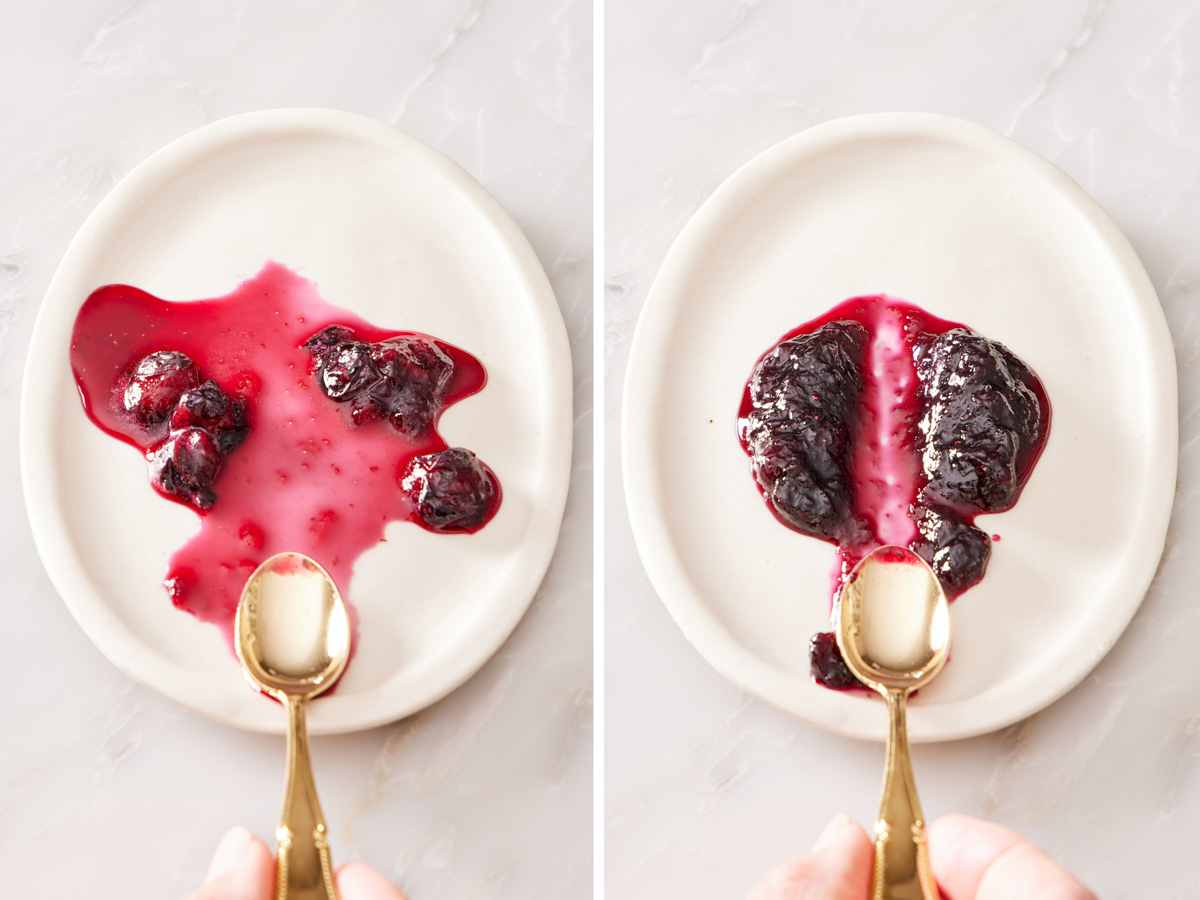
Tips for Testing Jam Consistency
When your jam is hot and bubbling, it’s hard to know exactly how thin or thick it will be once cooled. These easy tricks will give you good indicators to know when the jam is done and see if it’s thick enough for your preference.
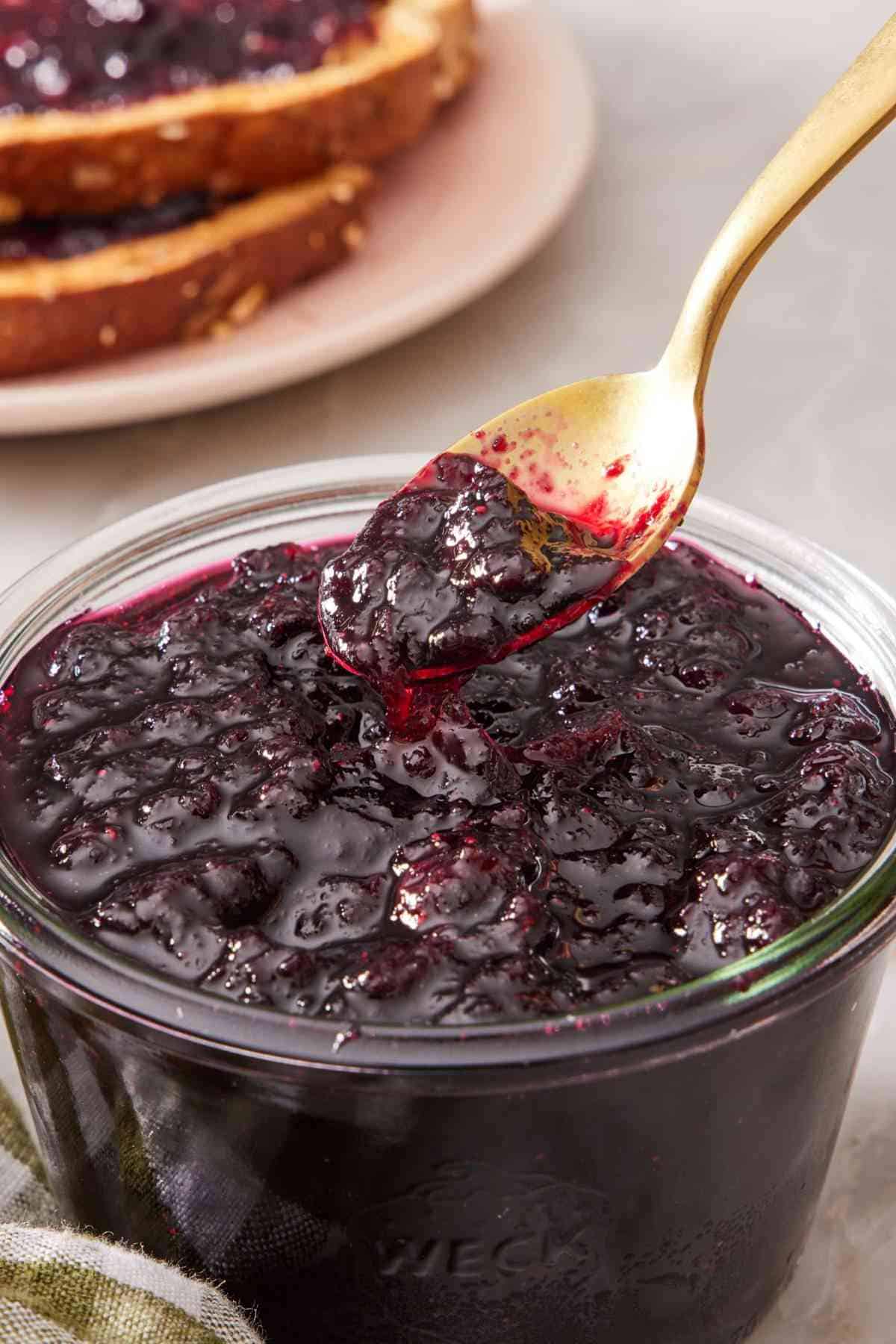
Use a candy thermometer. The most reliable way to know your jam is ready is to cook it until it reaches 218–220°F. At this temperature, the natural pectins in the fruit activate with the sugar, and the jam will properly thicken as it cools.
Watch the bubbles. As your jam cooks down, the bubbles will become smaller, slower, and glossier—another good sign it’s reaching the right consistency.
No thermometer? Try the freezer plate test. Place two small plates in the freezer before you start cooking. When the jam looks syrupy and thickened, spoon a bit onto one cold plate and return it to the freezer for 1–2 minutes. Push your finger through the chilled jam—if it wrinkles slightly and holds its shape, it’s done. If not, continue cooking and test again on the second plate.
Remember, it thickens as it cools. Don’t expect the jam to look perfectly set while it’s still hot; it will firm up more as it cools, especially after a night in the fridge.
How to Make Blueberry Jam
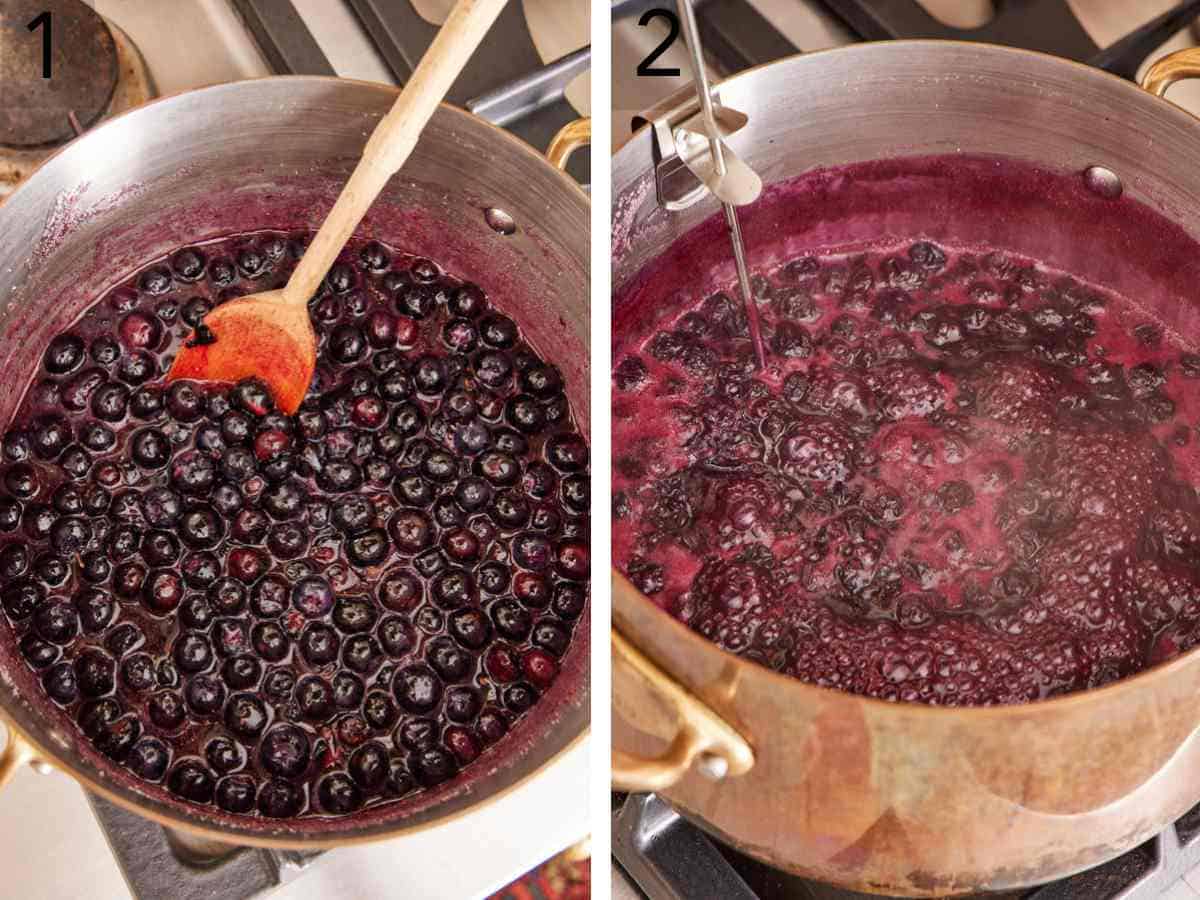
1. Give the blueberries a rinse and gently dry them off with a kitchen towel. Add the clean berries, along with the sugar and lemon juice, to a large pot.
2. Cook over medium heat until the berries start to pop, releasing their juices, and the sugar dissolves.
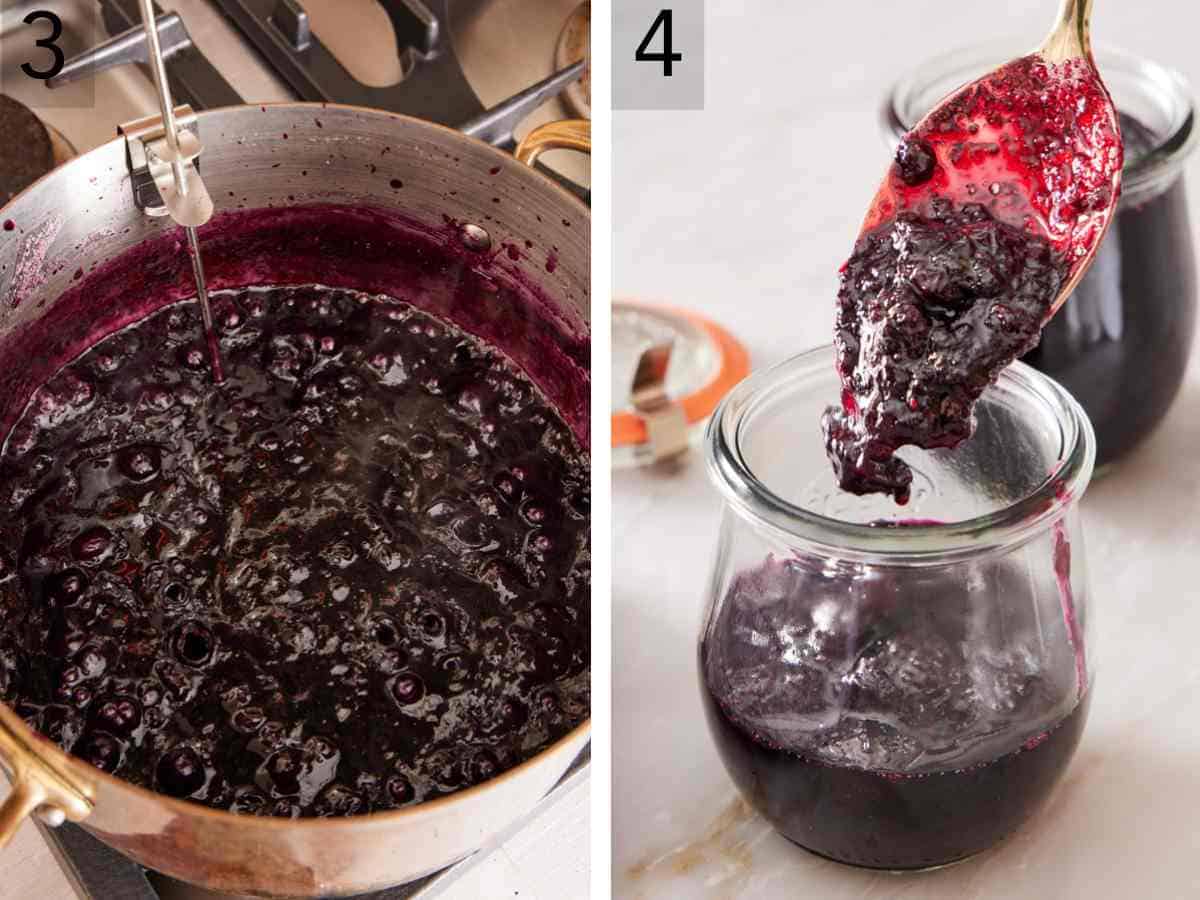
3. Mash some of the berries with a potato masher and place a thermometer in the pot. Cook until the mixture boils, turns thick and syrupy, and reaches 218–220°F, then remove it from the heat.
4. While the jam is still very hot, carefully fill clean jars with the hot jam, seal the lids, and let them cool at room temperature before refrigerating.
Blueberry Jam Recipe
Equipment
- Large pot (at least 5 quarts)
- Long-handled wooden spoon or silicone spatula
- Candy thermometer
Ingredients
- 6 cups fresh blueberries (900g)
- 2 cups granulated sugar (400g)
- 2 tablespoons freshly squeezed lemon juice
Instructions
- Wash the blueberries and dry them well. Add them to a large pot (at least 5 quarts), along with the sugar and lemon juice.
- Place the pot over medium heat. Cook the blueberries, stirring frequently, for 5 to 7 minutes, until they release their juices and the sugar dissolves. (Scrape the sides of the pot frequently). Mash about half of the blueberries with a potato masher.
- Attach a candy thermometer to the side of the pot. Bring the mixture to a boil over medium-high heat, stirring frequently.
- Gently boil the jam for 15 to 20 minutes, stirring frequently, until the jam is thick and syrupy and the temperature reaches 218 to 220°F. (Stir more regularly during the last 10 minutes of cooking. As the jam thickens, it is more likely to scorch on the bottom or sides of the pot. Adjust the heat between medium and medium-high to keep the jam at a strong simmer, moving closer to 220°F, but not boiling too rapidly.)
- When it’s done, pour the hot jam into sterilized mason jars and chill overnight. Store in the refrigerator or freezer, or follow the directions provided by the canning jar manufacturer for how to sterilize, process and seal your jam jars safely.
Notes
- It’s important to use a pot at least 5 quarts in size to make the jam safely. Using a smaller pot for this amount of fruit could cause the hot, syrupy jam to bubble up and possibly over the sides of the pot. Stirring the jam with a long-handled spoon or spatula is also helpful and will keep you a safe distance from the bubbling mixture.
- Whether you store the jam in glass jars in the refrigerator or process it for long-term storage, I recommend sterilizing the jars first. Bring a large pot of water to a boil. Reduce the heat to a simmer and submerge the jars. Let them sit in the barely simmering water for about 15 minutes. Drain and cool before using.
Nutrition
Have you tried this recipe? Tag me today!
Mention @preppykitchen and tag #preppykitchen!
Storing Your Blueberry Jam
Refrigerating: Generally speaking, a batch of homemade blueberry jam should last upwards of 3 weeks in the fridge. The sugar acts as a natural preservative, so it should act similarly to high-quality store-bought jam made with minimal ingredients.
Freezing: To extend the shelf-life of your blueberry jam without processing it for canning, the freezer is a great option. Freeze the jam in freezer-safe jars or containers, leaving about ½ inch of space at the top to allow for expansion. The frozen jam will stay fresh for up to 6 months—just thaw it overnight in the fridge and give it a stir before using.
Canning: If you want to can your blueberry jam for shelf-stable storage, check out my jalapeño jelly post, where I walk you through all the steps for water bath canning.
Creative Ways to Use Blueberry Jam
This blueberry jam is endlessly versatile. It’s perfect for adding a pop of fruity flavor to all kinds of dishes!
- Stir a spoonful into your overnight oats for a quick and easy breakfast upgrade.
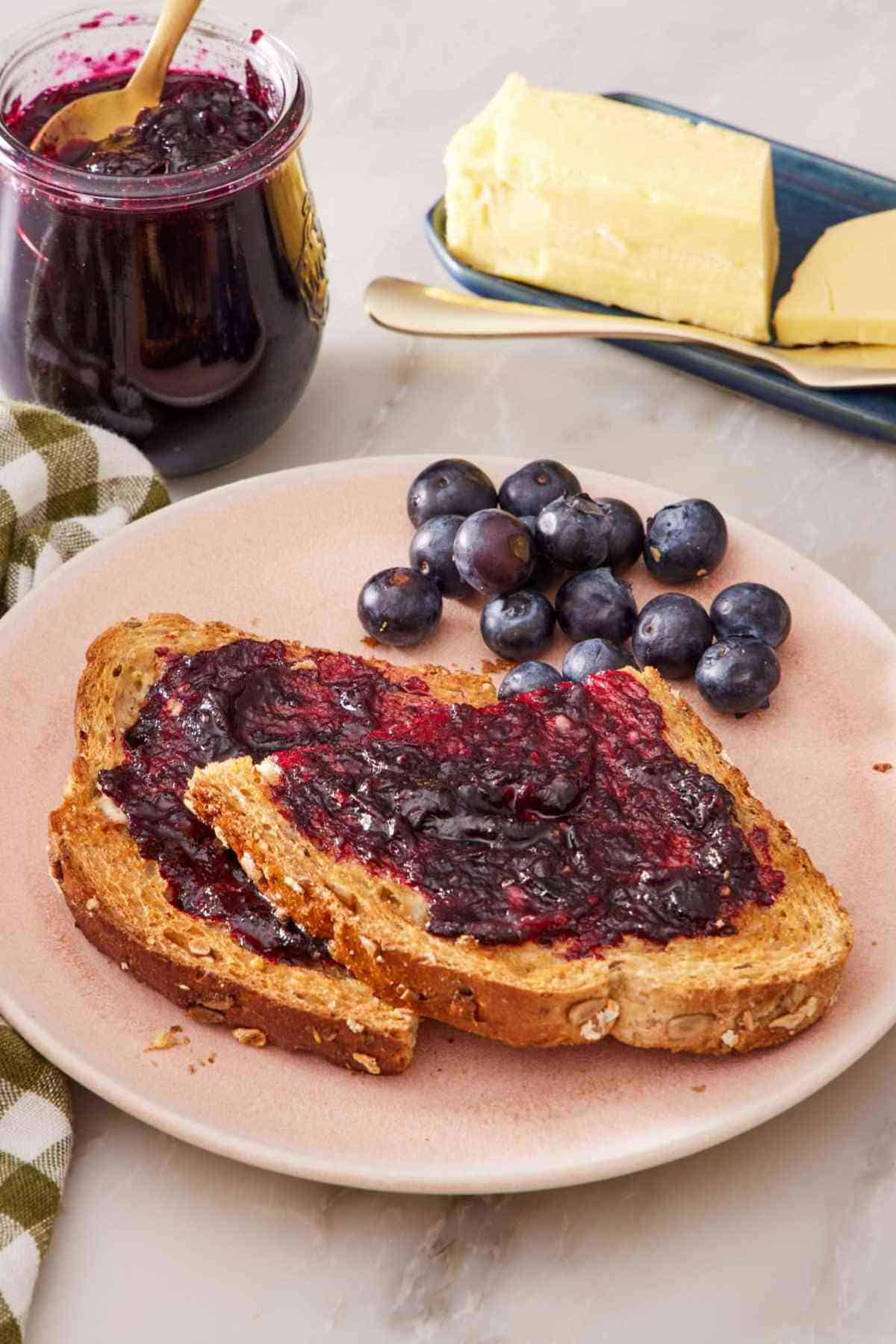
- Use it in place of maple syrup for a simple yet delicious breakfast topping—try it with blueberry pancakes or classic French toast.
- Want to level up your desserts? Add a bit of jam to vanilla buttercream to create a blueberry twist on my strawberry buttercream frosting. Or, use it as a fruity filling between cake layers—it works beautifully in place of the blueberry reduction in my blueberry lemon cake. And you can’t go wrong with a generous spoonful over ice cream—it’s particularly good over classic vanilla ice cream or pistachio ice cream.
Frequently Asked Questions
Nope! This easy recipe thickens up beautifully without any added pectin. The natural pectin in the blueberries, combined with the sugar and lemon juice, is enough to get a classic jammy texture. That said, if you prefer an even firmer set, you can absolutely add pectin—just be sure to follow the instructions on the package for the best results.
Absolutely! This homemade jam recipe works great with other berries like strawberries, blackberries, raspberries, or even a mix. Just keep in mind that different berries have slightly different water and pectin levels, so the cooking time may increase, or you may want to consider adding extra pectin.
If you’re using especially juicy options (like strawberries), you might need to simmer a little longer to reach a perfectly thick strawberry jam consistency. Additionally, note that some berries will be sweeter than others. Typically, I use 1 cup of sugar per 1 pound of fruit. If your fruit is very tart (like raspberries can be), you may want to add a few extra tablespoons.
If you’ve tried this Easy Blueberry Jam recipe, then don’t forget to rate it and let me know how you got on in the comments below. I love hearing from you!