This post may contain affiliate links. Please read our disclosure policy.

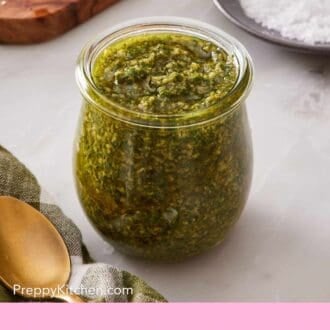

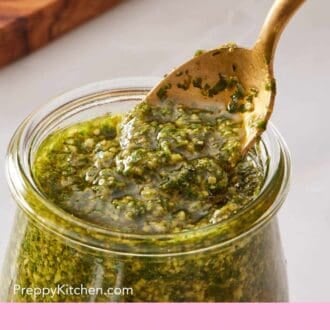
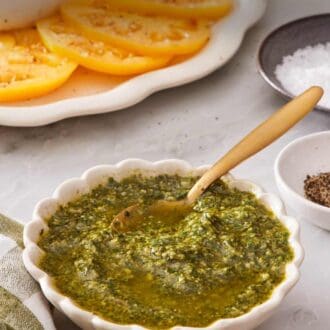
Herby, zesty, and nutty, this is sure to be your favorite Pesto recipe! Toss it with pasta, use it to jazz up soups, or serve it as a dipping sauce for bread. Blend it up in just a few minutes and freeze some for later.
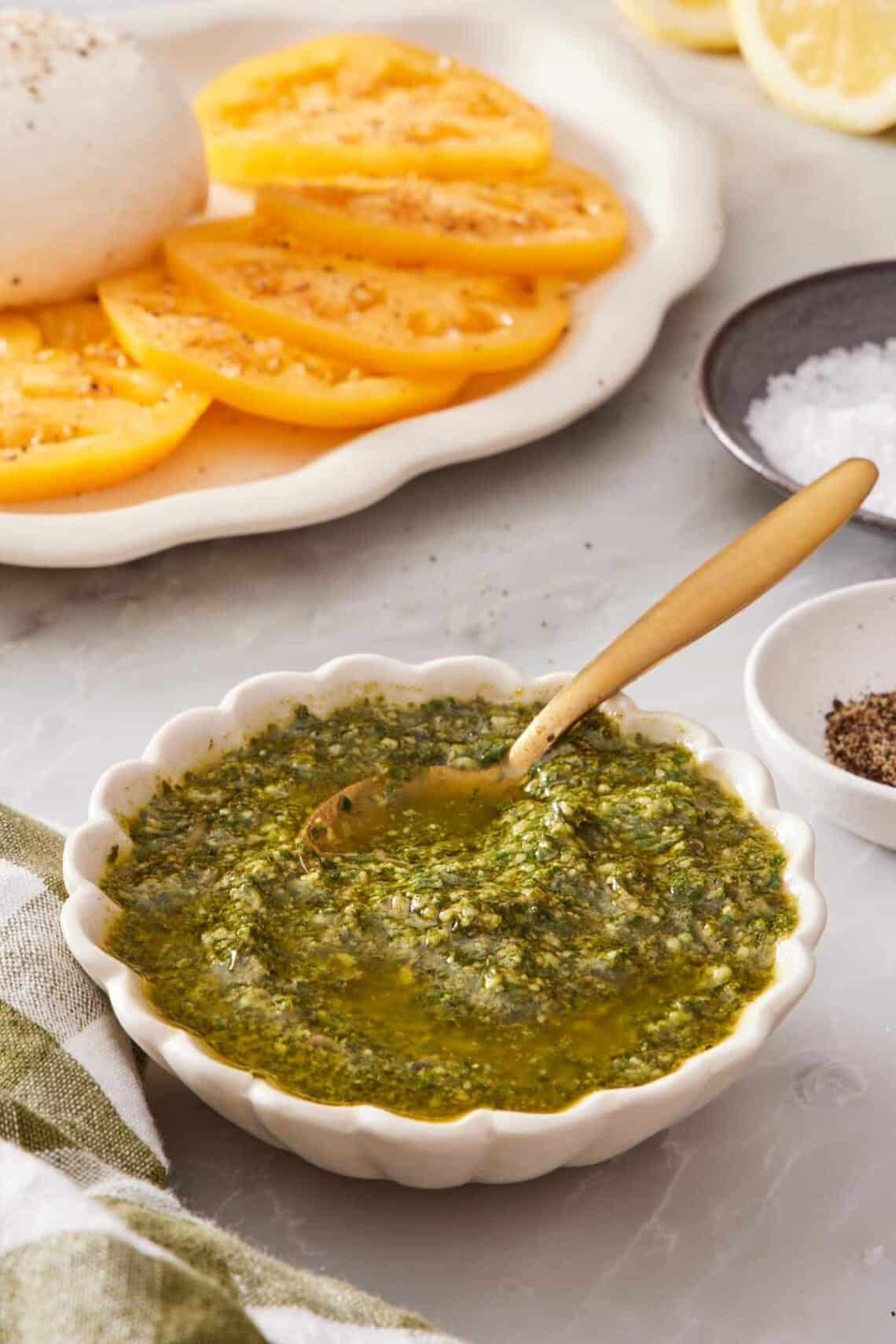
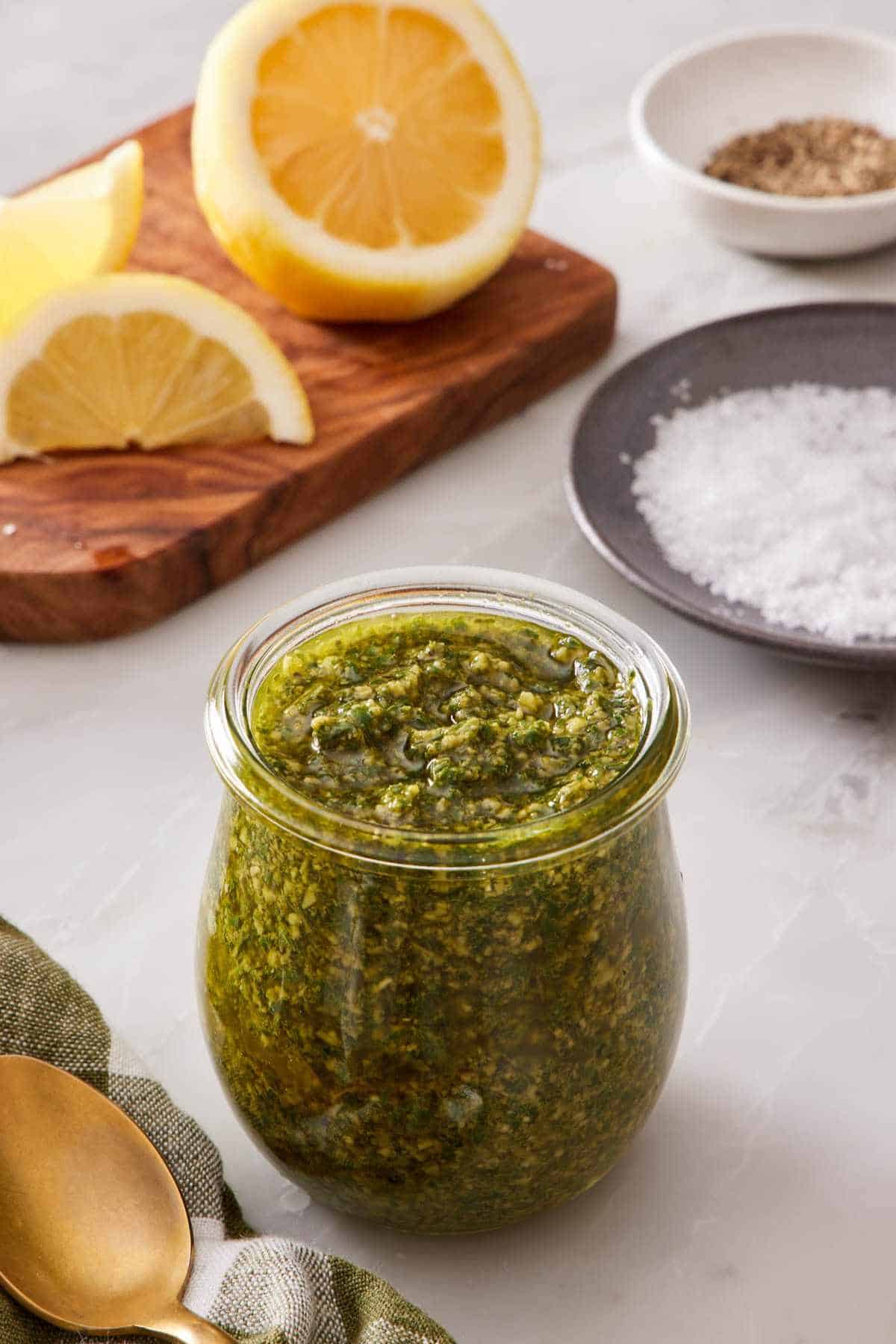
Pesto is a classic Italian sauce made by blending fresh basil, pine nuts, parmesan cheese, garlic, and olive oil to create an addictive bright green sauce that can be used in a variety of ways. My pesto sauce recipe comes together in a food processor in a matter of minutes and can be used immediately or frozen for several months.
Homemade basil pesto tastes so much better than store-bought pesto! If you make your own, you can control its flavor, consistency, and the quality of the ingredients. And since it freezes so well, I like to make a large batch and store it for use whenever I need to add a little something special to my meals. For more pasta sauce recipes, try my spaghetti sauce, vodka sauce, and marinara sauce.
Ingredients
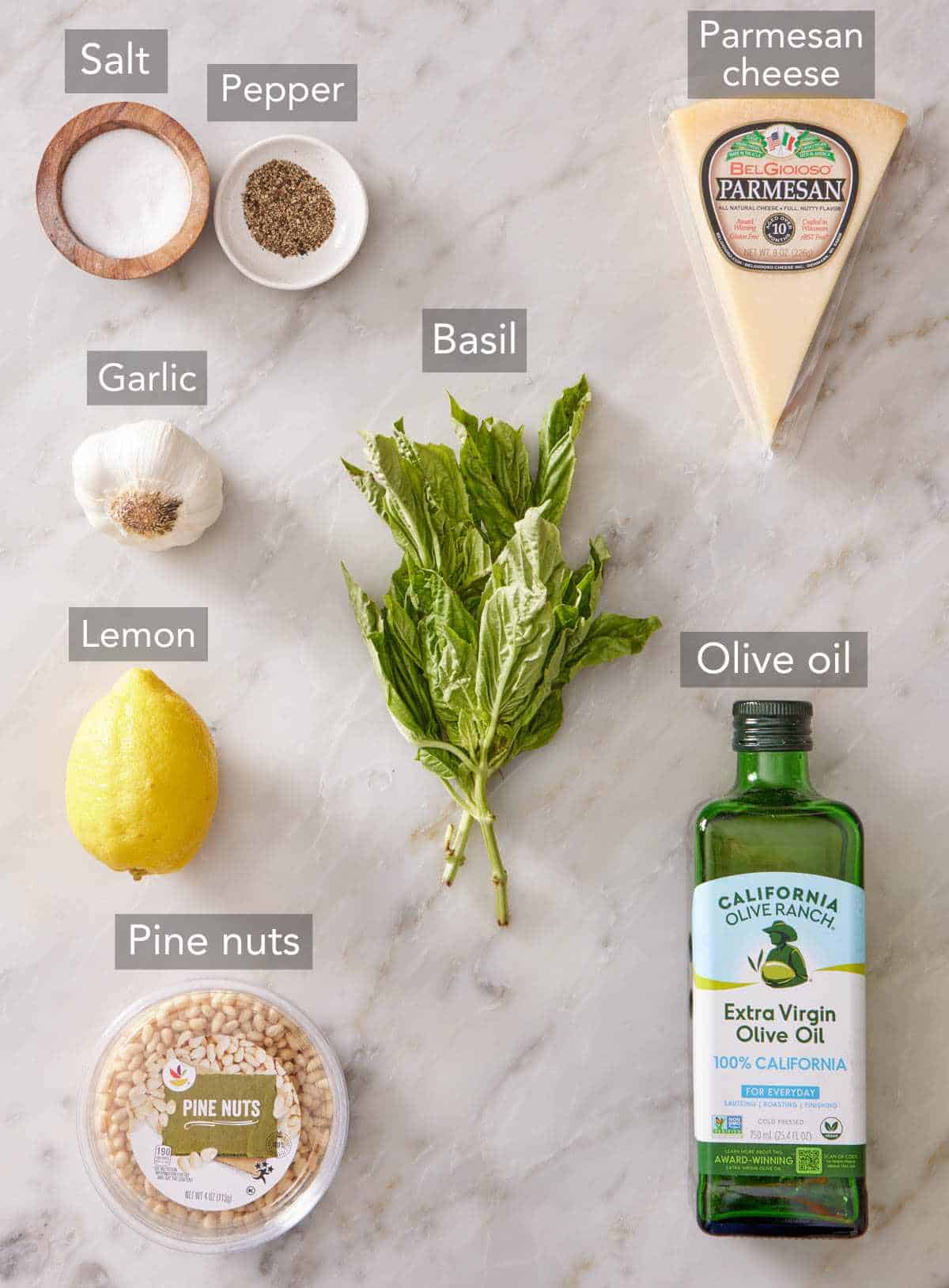
You only need a handful of ingredients to make the best basil pesto! You can find the full list of ingredients in the pesto recipe card below.
Basil — use vibrant, green basil leaves and remove the fresh basil leaves from the stems. This is a great way to use up basil that is starting to wilt or if you have an abundance from the garden! You will need 2 packed cups of basil for this recipe.
Pine nuts — you’ll love their rich, slightly sweet flavor (similar to cashews). Pine nuts are the classic choice for making pesto, but if you don’t have them, I have substitution ideas for you below.
Cheese — parmesan cheese adds a salty, sharp flavor to homemade pesto. I always prefer to use freshly grated parmesan because the flavor from a block of parm is always better than the pre-grated tubs. However, a tub is totally fine to use here for convenience if you wish!
Garlic — you just need 1 clove of garlic. Raw garlic is potent when it’s blended, so a little goes a long way!
Lemon — for a kick of citrus, add lemon zest and lemon juice. While not always a typical ingredient in traditional pestos, I love the brightness it adds. Feel free to leave it out if you wish.
Oil — olive oil will turn this from a paste into a sauce. Quite a large amount of olive oil is needed to make basil pesto, so choose a quality extra-virgin olive oil. It’s a must for good pesto!
Pesto Recipe
Equipment
- Food Processor
Ingredients
- 2 cups basil leaves packed (70g)
- ¼ cup pine nuts or walnuts (30g)
- ¼ cup coarsely chopped Parmesan cheese (30g)
- 1 garlic clove peeled
- 2 teaspoons lemon zest
- ¼ teaspoon salt
- ¼ teaspoon black pepper
- ½ cup olive oil (120mL)
- Lemon juice to taste
Instructions
- In a large bowl of a food processor, combine the basil, nuts, cheese, garlic, lemon zest, salt, and pepper. Process for 10 to 15 seconds, until coarsely chopped. Scrape down the sides of the bowl.
- With the processor running, drizzle in the olive oil. Season with more salt and black pepper to taste.
- Just before serving, stir in the lemon juice.
Notes
- If you aren’t using the pesto right away, hold the lemon juice and stir it in right before using. Otherwise, the acid from the juice can turn the pesto brown. The zest is fine to blend into the pesto as directed.
- This makes enough pesto to coat 8 to 12 ounces of pasta. Use a little bit of the pasta water to loosen the pesto and create a silky sauce, if desired.
Nutrition
Have you tried this recipe? Tag me today!
Mention @preppykitchen and tag #preppykitchen!
How To Make Pesto
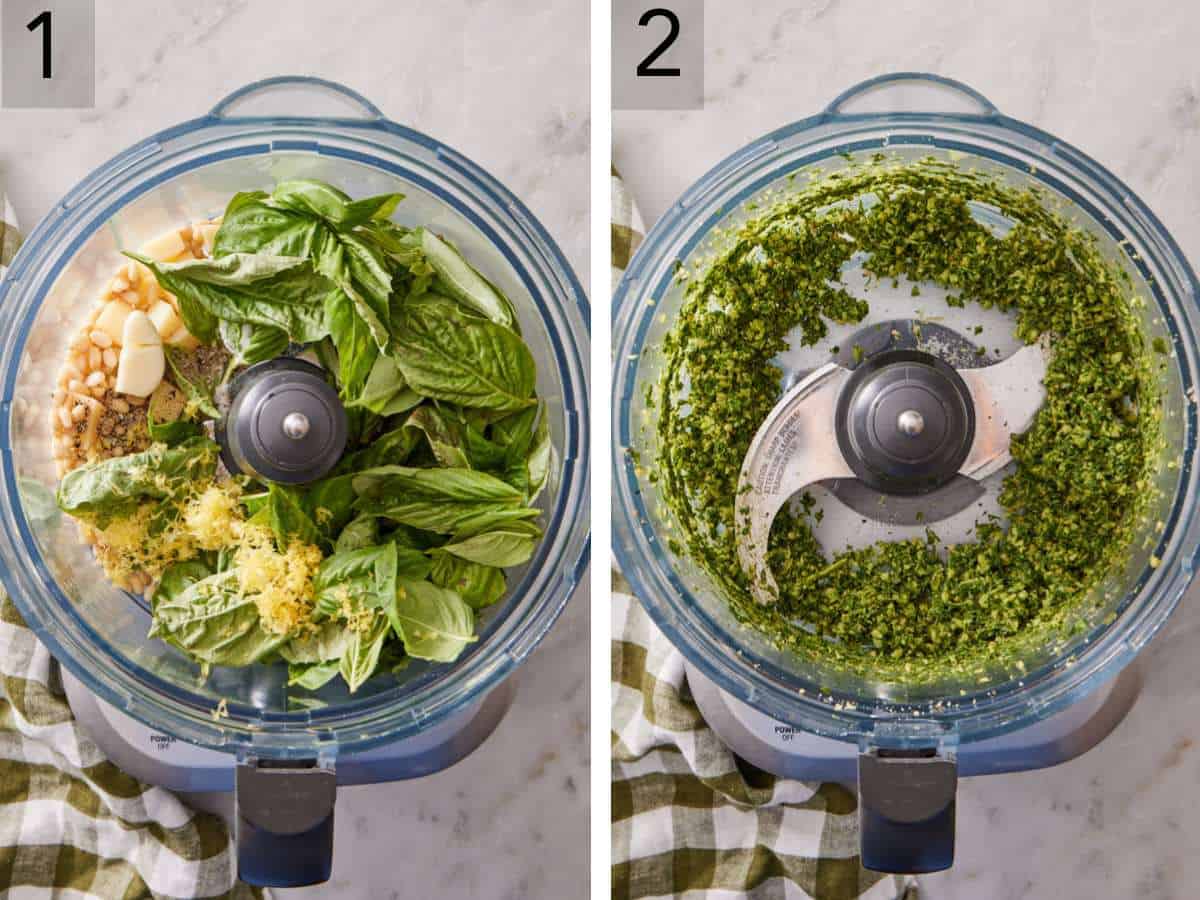
1. Add the basil, pine nuts, parmesan, garlic, lemon zest, salt, and pepper to the bowl of a food processor.
2. Process until a coarse mixture forms.
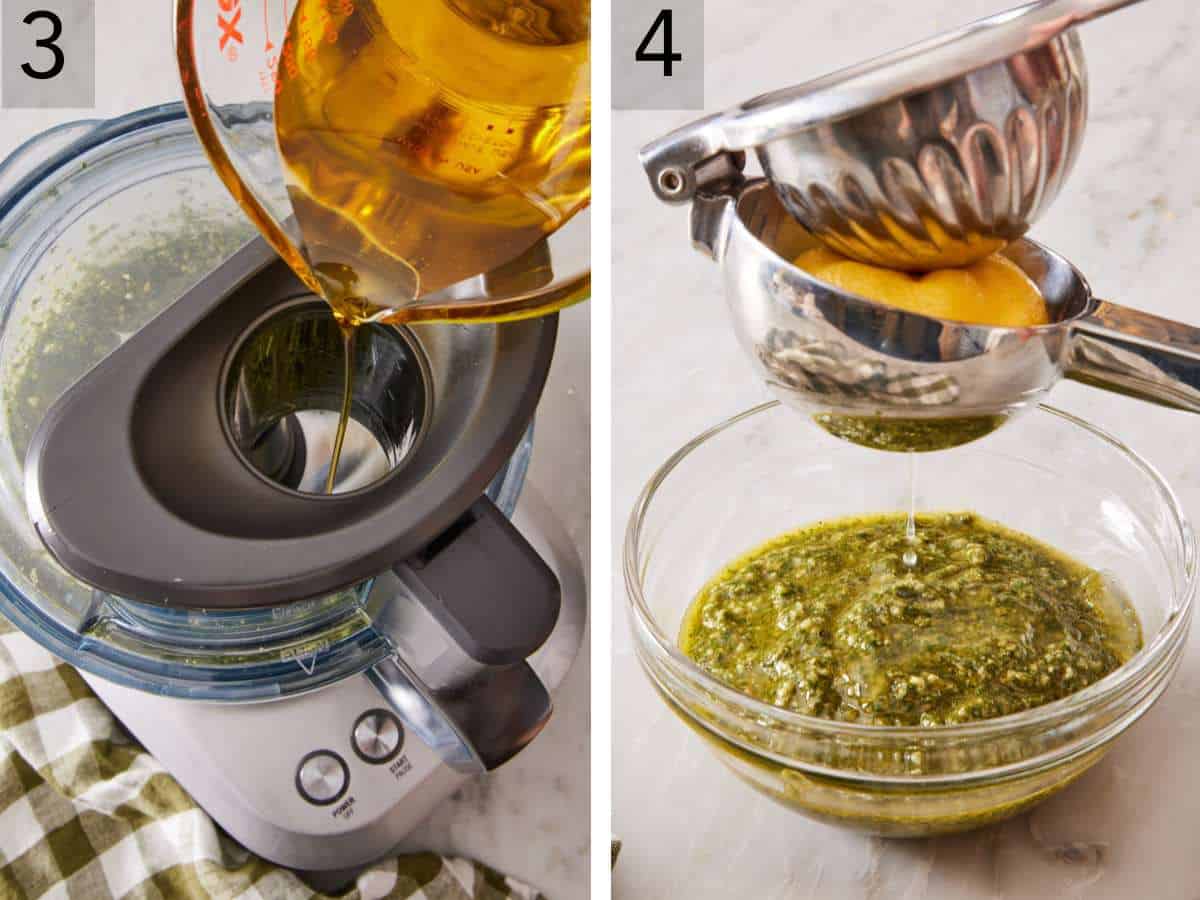
3. Drizzle in the olive oil while the food processor is running, then season with more salt and pepper to taste.
4. Squeeze in the lemon juice and stir together right before serving.
How Do I Keep The Pesto Bright Green?
If you are making this best pesto recipe and storing it for several hours or days, try these tips to keep it green for longer!
- Wait to add lemon juice until just before using it. Lemon juice is often used to prevent oxidation in fresh fruits and vegetables, but in the case of pesto, the lemon juice usually turns the pesto brown after a few hours. Chlorophyll (what makes basil green) tends to turn brown in an acidic environment, so when you add acidic lemon juice to very green basil pesto, it will cause it to turn brown more quickly.
- Blanch the basil first! This added step is so easy, and I highly recommend it if you want to store pesto for several days or put it in the freezer. To blanch basil leaves, follow my method for blanching asparagus, cooking the basil leaves for a quick 20 to 30 seconds in the simmering water before scooping them out with a slotted spoon or strainer and adding to the ice bath. Then, drain and squeeze out the excess water.
Variations and Substitutions
- Use other types of nuts: Toasted walnuts or blanched almonds can be used in place of pine nuts. You can make this basil pesto recipe with lightly toasted or raw nuts, based on your preference, but toasted nuts will add the best flavor. You can even use sunflower seeds for a nut-free option! Keep in mind that nut substitutions will change the pesto’s flavor slightly.
- Add other herbs: Feel free to change up the flavor by replacing a ¼ to ½ cup of basil with other fresh herbs like cilantro, parsley, dill, and oregano.
- Leave out the cheese for a vegan pesto: You can also add 2 tablespoons of nutritional yeast, which will add a cheesy flavor without the dairy.
- Make arugula pesto: Trade part or all of the basil for baby arugula leaves. This pesto variation will be slightly spicy and is delicious with fish and chicken or as a dip for French bread and radishes!

Ways To Use Homemade Pesto
There are endless ways to use this classic pesto recipe! Here are a few tantalizing ways I like to use it:
- In pasta dishes: Use homemade pesto to make chicken pesto pasta, toss it with gnocchi, or add it to lasagna.
- On pizzas: Use pesto as the sauce base for pesto pizza or drizzle it over a margherita pizza or flatbread pizza.
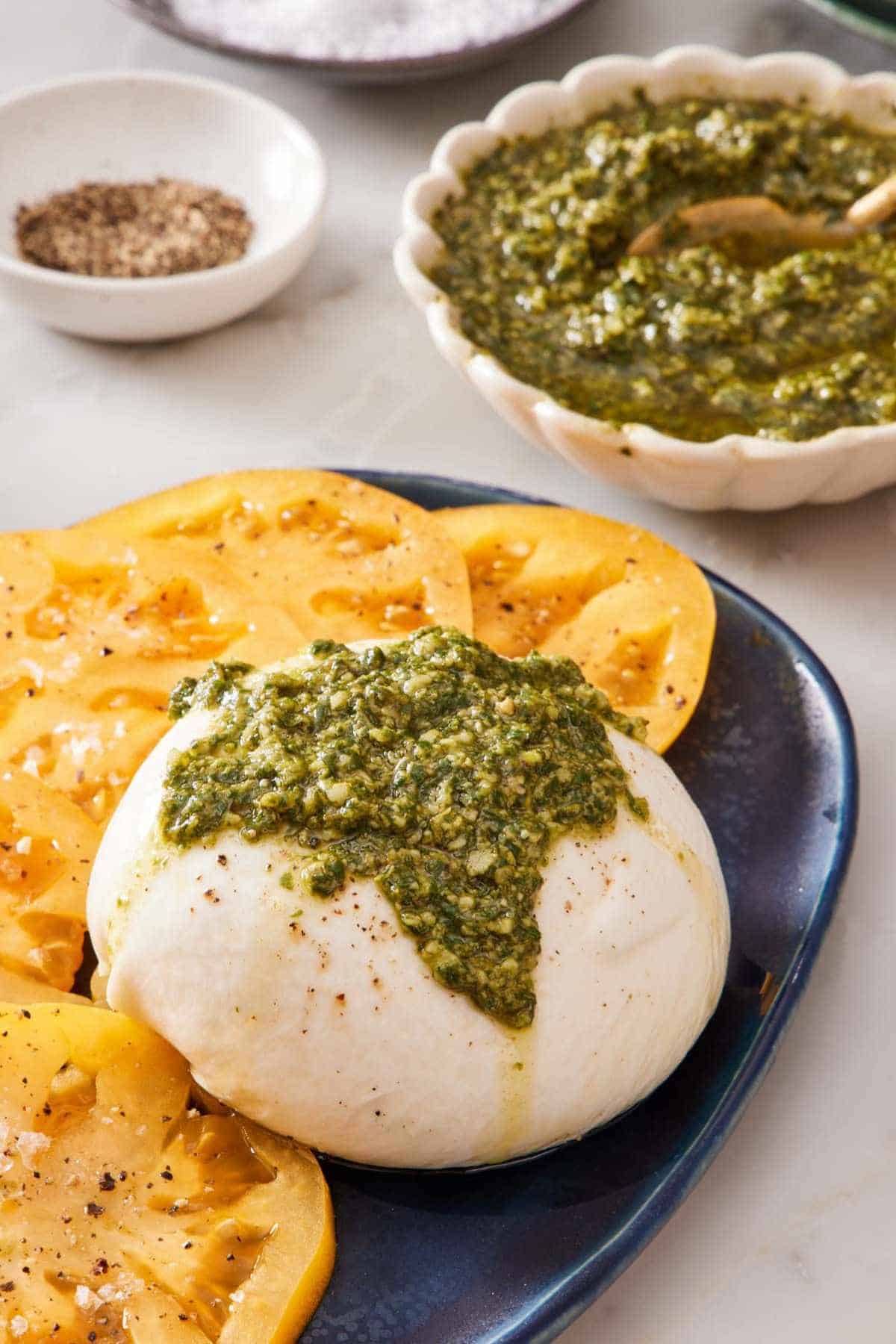
- Add a spread of pesto on the plate before assembling a caprese salad. It complements the fresh basil and tomatoes so beautifully!
- Spoon it over soups like tortellini soup, tomato soup, and minestrone soup.
- Use pesto as a dip for bread, like sourdough bread or focaccia bread.
How Long Does Pesto Last In The Refrigerator?
Pesto will keep in the refrigerator for up to 1 week in an airtight container, though oxidation will slowly cause it to turn brown as time passes. To help prevent this, pour a thin layer of olive oil on top of the pesto once it’s in its storage container. This will keep the top from being exposed to air and slow the oxidation process.
How To Freeze
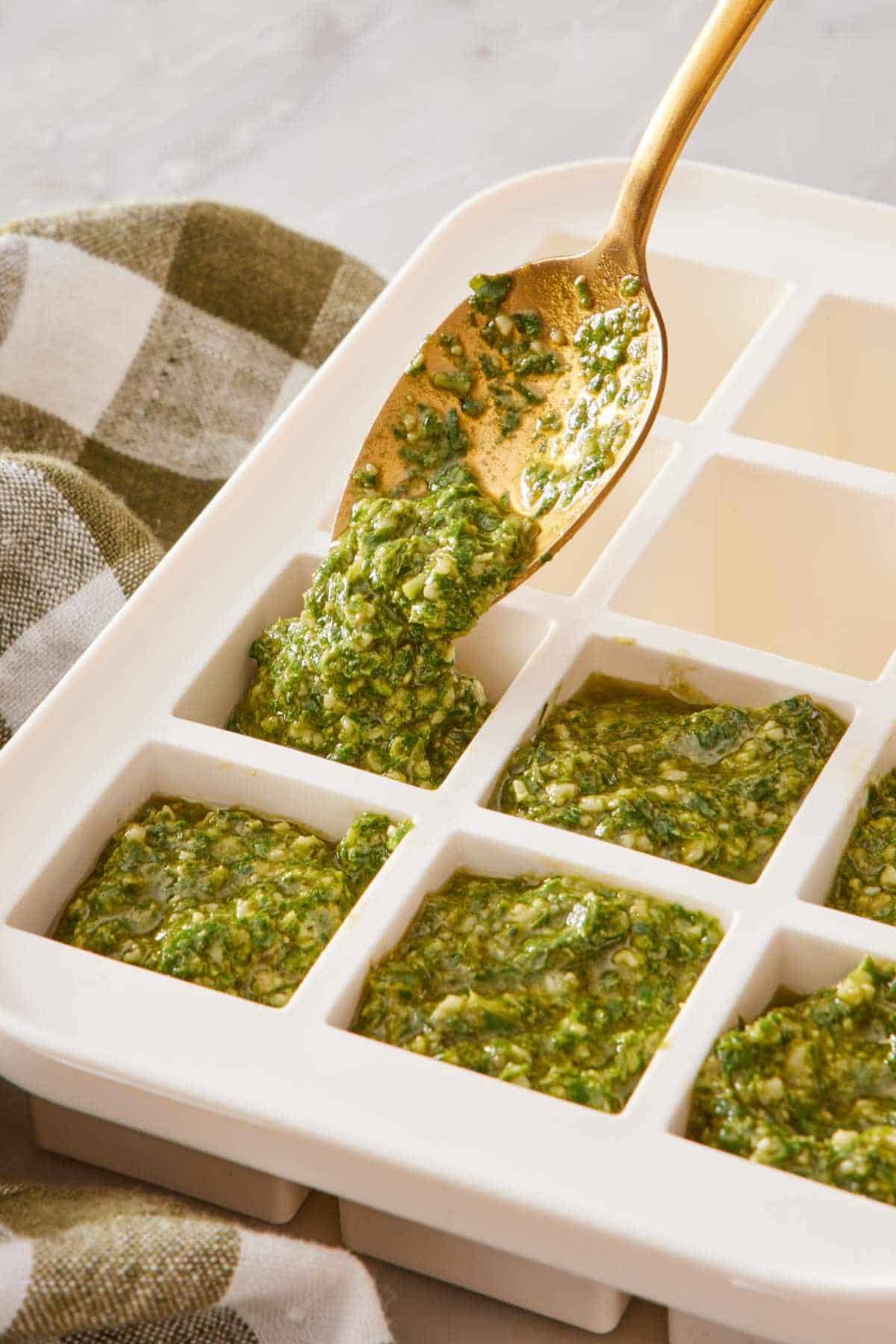
My favorite way to freeze pesto for easy use is to divide it among ice cube trays! Simply spoon the pesto into the trays and freeze for up to 6 months in the trays, Or remove the frozen pesto from the ice cube trays and store the cubes in a freezer bag. Just pop a few cubes into a soup, stir cubes directly into hot pasta, or defrost just the amount that you need.
You can also store it all in a freezer-safe container and thaw it in the fridge overnight before use. Avoid microwave defrosting since the pesto contains cheese.
I recommend measuring the amount of pesto you put in each cube or container and labeling it with the date and measurement. This way, you know exactly how much to thaw for use or a specific recipe!
Pro Tips For Making This Recipe
- Use Genovese basil for the best flavor. Genovese basil (also called sweet basil) is used in classic Italian pesto and is readily available at most grocery stores. You can vary your pesto flavor by using other varieties, but sweet or Italian basil will make a pesto with the most classic flavor.
- Storage container: I like to store pesto in a glass jar with a smaller opening to expose the smallest surface possible to the air and help prevent oxidation. A narrow opening also means you’ll use less olive oil to cover the surface of the pesto. (Just be sure you can fit a spoon or spatula in the container to get the pesto out!)
- Thin the pesto to your liking with more oil or water. If you want to drizzle the pesto on salads, vegetables, or pizzas, you can stir in more olive oil or a bit of cool water to loosen the texture.
Frequently Asked Questions
Most firm cheeses that you can grate will work in a pesto recipe! Pecorino Romano is a popular choice. Asiago also works well. Just keep in mind that you may want to use less if it’s a strongly flavored cheese.
Traditionally, this is made with a mortar and pestle. You can go that route if you don’t have a food processor or use a blender on low speed for a smoother pesto.
It’s up to you! I like my pesto fairly smooth, but you can easily control the consistency to suit your preferences by processing it for more or less time.
If you’ve tried this pesto recipe, then don’t forget to rate it and let me know how you got on in the comments below. I love hearing from you!