This post may contain affiliate links. Please read our disclosure policy.


This homemade puff pastry bakes into buttery, flaky layers with only five ingredients. I use a rough-puff shortcut, so there’s no separate butter block to roll into the dough!

Puff pastry, also known as pâte feuilletée, gets its layers from laminating dough with butter. Frozen sheets are convenient, but I’ll admit I much prefer the flavor of homemade puff pastry.
If the idea of making puff pastry from scratch feels intimidating, I use a shortcut method to make it quick and easy! Essentially, it combines the technique of making pie dough with the lamination of puff pastry. This is referred to as a rough puff pastry method, and it doesn’t require a food processor, a butter block, or several rounds of chilling and rolling. This method is shockingly easy and tastes so much better than anything pre-made!
“I’ve been using your recipe for quite some time now, and I love it…I never noticed before making homemade, but that store bought puff pastry left a weird almost shortening-like after taste in my mouth. Thank you for sharing this recipe.”
Bekka

What Is Laminated Dough?
It simply means rolling and folding dough with cold butter to create thin, stacked layers. In the hot oven, the butter melts and steams, creating air pockets that puff up the dough. That’s how you get those big, flaky layers! Think of a flaky croissant or a turnover.
If laminating dough sounds intimidating, don’t worry! I tested this recipe with a quicker and easier rough puff method that’s easy enough for any beginner baker.
Key Ingredients

You only need a few ingredients to make homemade puff pastry! You can find the full list of ingredients with specific measurements in the recipe card below.
Butter — since this recipe already calls for salt, use unsalted butter to prevent over-salting the pastry. Cold butter is an absolute non-negotiable for the perfect puff pastry. You need cold butter to easily grate it and to form the layers within the pastry. Warm butter can melt into the dough and won’t create distinctive layers, resulting in a less flaky pastry. I’ve had many readers ask about swapping the butter for margarine or lard, but I recommend sticking with real butter for the best flavor. Margarine or a dairy-free butter does work, but keep in mind that the flavor will be different.
Sugar — a small amount of sugar helps the pastry brown in the oven. It does not produce very sweet puff pastry, so don’t worry if you need to use it for savory recipes!
Cold water — while cold water might not seem that important at first, it is a key ingredient to keep the dough cold so the butter doesn’t melt.
American Butter vs. European Butter: Which Is Better?
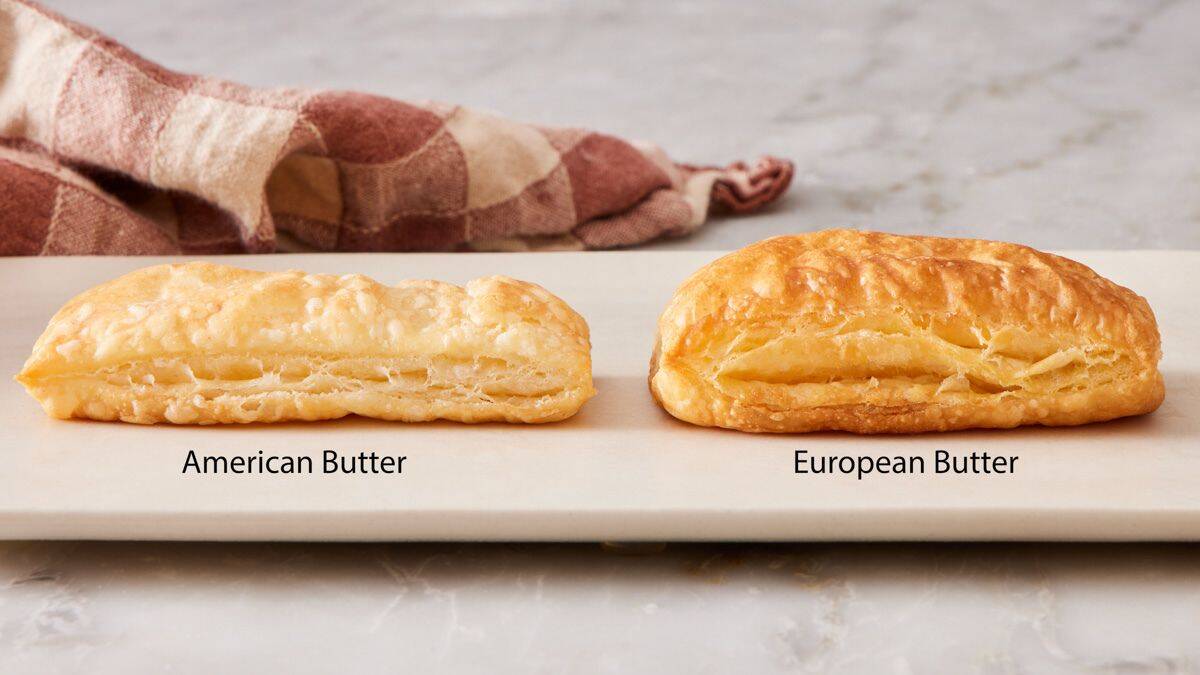
You can use either, but I recommend European butter. I tested different types of butter while developing this recipe, and the difference in flavor and flakiness really stood out. European butter has a higher fat content and less water than American butter.
As you can see in the image below, American butter created a flaky pastry, but it turned out paler and puffed less than the European butter pastry. The European butter produced big, impressive layers and became more golden in the oven thanks to the higher fat content in the butter. The higher fat also made the European version more tender than the American butter version.
Pro Tips For The Best Puff Pastry
Be sure to grate the frozen butter with a box grater. The butter is grated to make the laminating process faster. If you spend too long trying to roll the dough, you risk the butter getting warm and melting into the dough instead of creating defined layers. Do not cube or roughly chop the butter instead of grating it, or you risk tearing the dough when rolling it out.
If your kitchen is warm, keep a close eye on the ingredients and dough. You can chill your mixing bowl and flour in the fridge for 15 to 20 minutes before starting. This helps keep the butter cool when you mix the dough together. When you start to roll and fold the dough, if you feel the dough is getting too warm at any point (it may feel very soft, sticky, or greasy from the butter warming up), put it back into the fridge to chill it for 5 to 10 minutes before continuing.
If the dough feels rubbery or starts shrinking during the laminating process, wrap it back up and place it in the fridge to rest for 10 to 20 minutes. The gluten in the flour will start to form as you work the dough, and sometimes, this will cause the dough to spring back and be hard to roll. When this has happened to me, I just give it a short rest period in the fridge, and it allows the dough to relax so I can continue rolling it out with ease.
How To Make Puff Pastry

1. Place butter in the freezer for 10 minutes, then grate it using a box grater. In testing, I tried grating butter straight from the fridge, and it was too soft to form the individual shreds. Instead, it was sticking and hard to press through the grater. Popping the butter into the freezer firmed it up just enough to make it easier to grate.
2. Combine the grated butter with whisked flour, sugar, and salt. Toss the mixture to coat the butter pieces with flour. This helps them stay separated so you get little pieces of butter throughout the dough.

3. Add 6 tablespoons of cold water to the mixture and fold the mixture until it clumps together. You may need a little bit more if the mixture still has dry, crumbly sections.
4. Knead the dough gently and then shape it into a 1-inch-thick square. Wrap in plastic wrap, then chill for an hour. This chill time hydrates the dough so it rolls more easily, and it keeps the butter cold so it doesn’t melt into the flour as you roll.

5. On a lightly floured surface, start to laminate the dough by rolling it out into a ½-inch thick rectangle, then fold it into thirds (like a letter). This forms multiple layers at one time, so you have to do less folding in total.
6. Turn the dough 90 degrees and repeat rolling, folding, and rotating 3 more times. (You will make a total of 4 turns, rolling and folding.) Fold the puff pastry dough back into thirds, wrap it tightly with plastic wrap, and chill for at least 2 hours or up to 2 days before use.

Ways To Use Homemade Puff Pastry
Use this homemade puff pastry just like you would store-bought. This recipe yields 1 sheet or half of a standard 17.3-ounce box purchased from the store. After it has chilled, roll the dough to 1/4-inch thickness and cut or shape it according to your recipe.
It’s often used in traditional French pastries like palmiers, mille-feuille, and tarte tatin. I love to use it for quick pastries like apple turnovers. Some of my favorite dessert recipes using puff pastry are pastelitos de guayaba and cream cheese danishes (add fresh fruit or jam for fun flavors!).
You can also roll out the puff pastry, sprinkle it with cinnamon sugar, and twist strips of it together before baking. You’ll end up with delightful little golden-brown cinnamon twists!
For savory options, try my asparagus tart and potato tart. Puff pastry also makes a great alternative topping for chicken pot pie.

Puff Pastry Recipe

Equipment
- Rolling Pin
- Whisk
Ingredients
- 1 cup unsalted butter cold (227g)
- 2 cups all-purpose flour (240g)
- 1 tablespoon sugar (12g)
- ½ teaspoon kosher salt (2g)
- 8 to 10 tablespoons cold water (120-150 mL)
Instructions
- Place butter in the freezer for 10 minutes.
- In a large mixing bowl, whisk together flour, sugar, and salt.
- Grate the frozen butter into the flour. (Dice the remaining end of butter that you can’t grate.) Toss the butter into the flour mixture with your hands until well coated.
- Drizzle 6 tablespoons of water over the mixture and begin folding the mixture together until the mixture starts to clump together. Continue adding water a tablespoon at a time until a loose and crumbled dough forms. (It should hold when squeezed.)
- Gently knead the dough a few times in the bowl until a cohesive mass is formed. Shape into a 1-inch thick square and wrap tightly in plastic wrap. Chill for 1 hour.
- On a lightly floured surface, roll the chilled dough into a 1/2-inch-thick rectangle. Fold the dough in thirds like a letter. Turn 90 degrees. Repeat rolling, folding, and rotating 3 more times.
- Fold back into thirds, wrap tightly, and chill for at least 2 hours or up to 2 days, or placed in a freezer bag and freeze for up to 2 months.
Notes
- Only use as much flour as necessary to roll out the dough. If you are over-flouring your surface, you will incorporate more flour into the dough than needed. Too much flour leads to a tougher pastry and prevents the layers from sticking together when laminating.
Nutrition
Have you tried this recipe? Tag me today!
Mention @preppykitchen and tag #preppykitchen!
How To Freeze Puff Pastry Sheets
I like to freeze homemade puff pastry in rolled-out sheets that are ready to use, just like their store-bought counterparts. Roll out the laminated dough into a ¼-inch-thick sheet. Place it on a sheet of parchment paper, folding about 1 inch of the paper over one end of the dough. From that end, roll it up into a tight log. Wrap the dough log in plastic wrap and freeze it in a freezer bag for up to 3 months.
If you decide to freeze the dough after its final fold into thirds, you will need to roll it out once it thaws before use. Both freezing methods work well, but rolling it into a sheet before freezing just saves you a step and a little time when you need to use the puff pastry.
Thawing: Thaw puff pastry in the fridge for several hours or overnight. Unroll it carefully and give it a light roll again with a lightly floured rolling pin just to flatten the sheet. It’s now ready to use as directed in your recipe!

Frequently Asked Questions
Once you have completed the sets of folds (lamination), you can roll the dough into any shape! If you roll it into a circle, I recommend trimming the edges to make a perfect round shape and to expose the layers for a more even rise.
Follow the recipe if you are using it to make something specific. Otherwise, puff pastry typically bakes up best at 425°F. This is hot enough to steam the butter and produce good flaky layers but not so hot that it burns on the outside before it’s cooked through.
More Recipes To Try
Try one of these dessert recipes next:
- Cream Puffs: choux pastry bakes into golden, crispy puffs, and they are filled with a silky vanilla pastry cream.
- Pastry Cream: a thick vanilla custard makes an excellent filling for French pastries or layered with flaky puff pastry.
- Eclairs: custard-filled choux pastry
- Tart Crust: this sweet pate sucree bakes into a crisp base for French tarts.
- Lemon Tart: a buttery tart crust filled with tart lemon curd.
If you’ve tried this puff pastry recipe, then don’t forget to rate it and let me know how you got on in the comments below. I love hearing from you!