This post may contain affiliate links. Please read our disclosure policy.
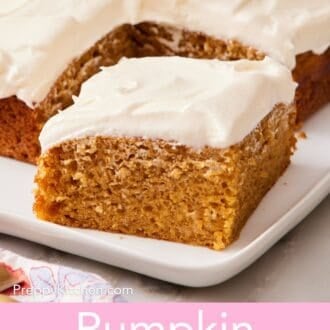
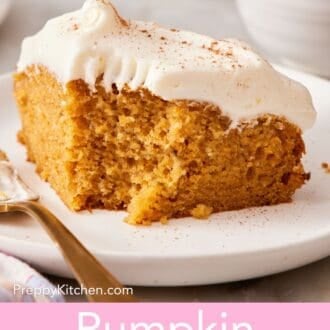
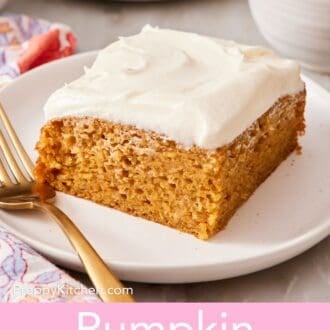
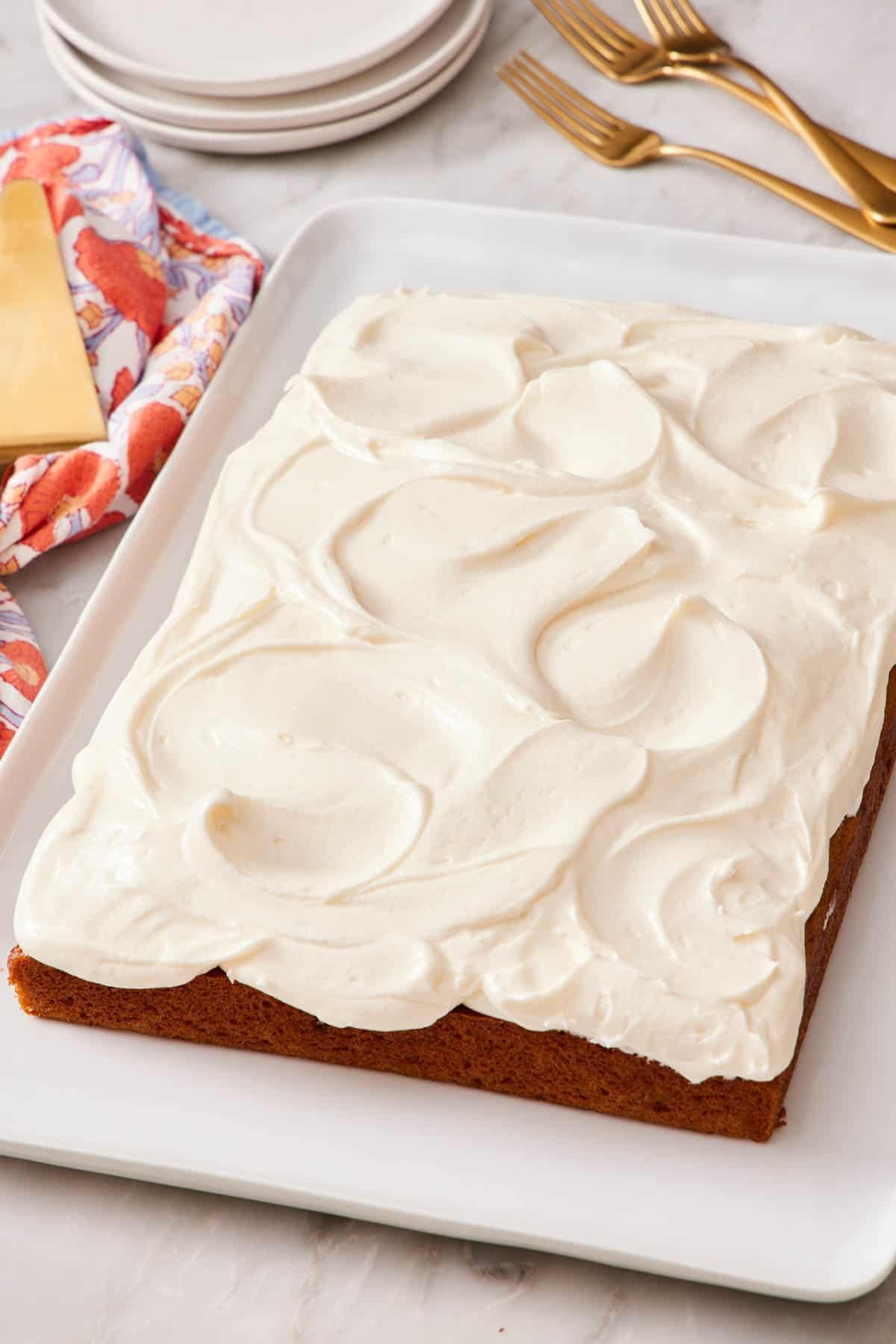
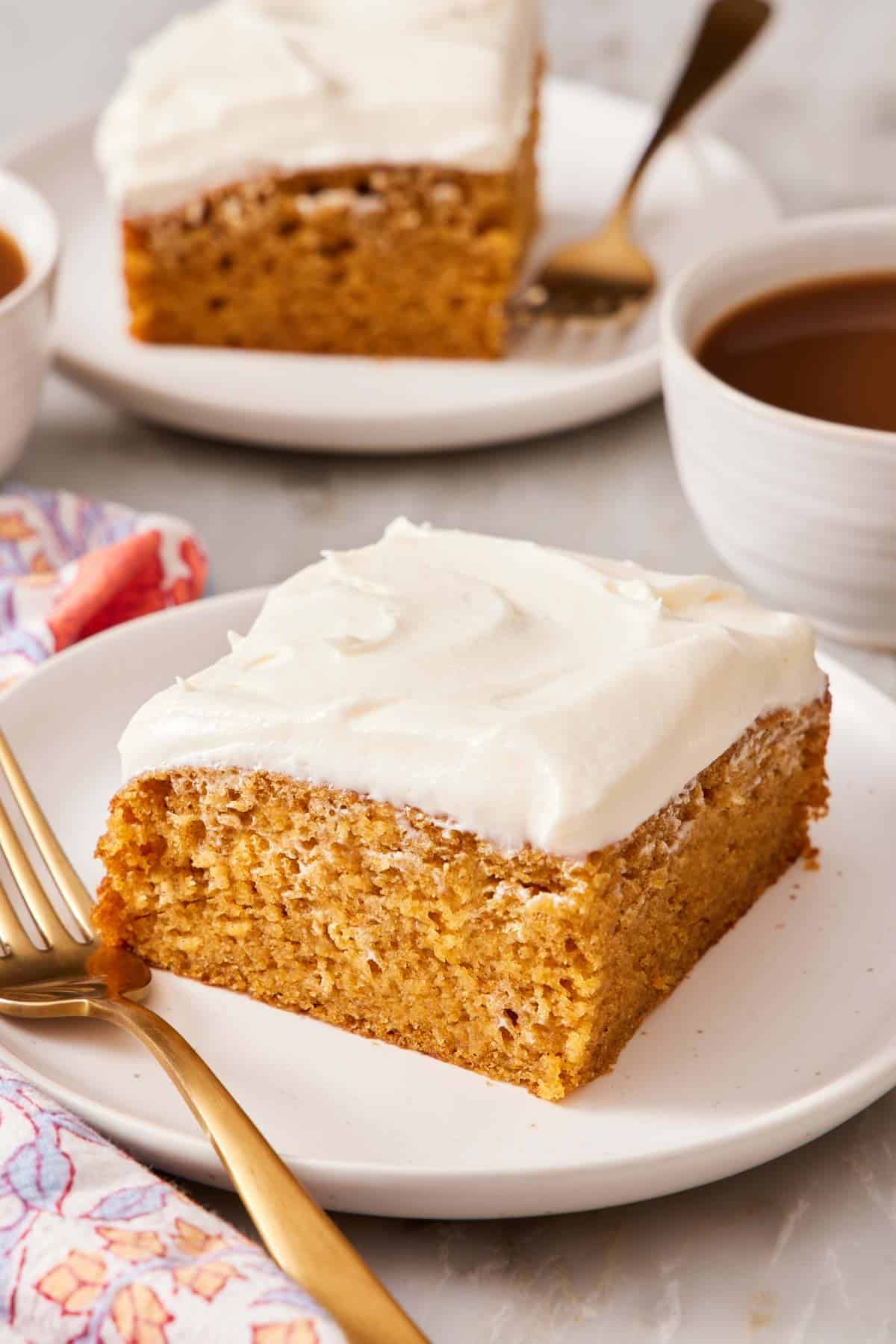
This Pumpkin Cake bakes into a moist, fluffy sheet cake topped with perfectly sweetened cream cheese frosting. You only need two bowls and no mixer for the batter, and it’s ready to bake in 10 minutes.
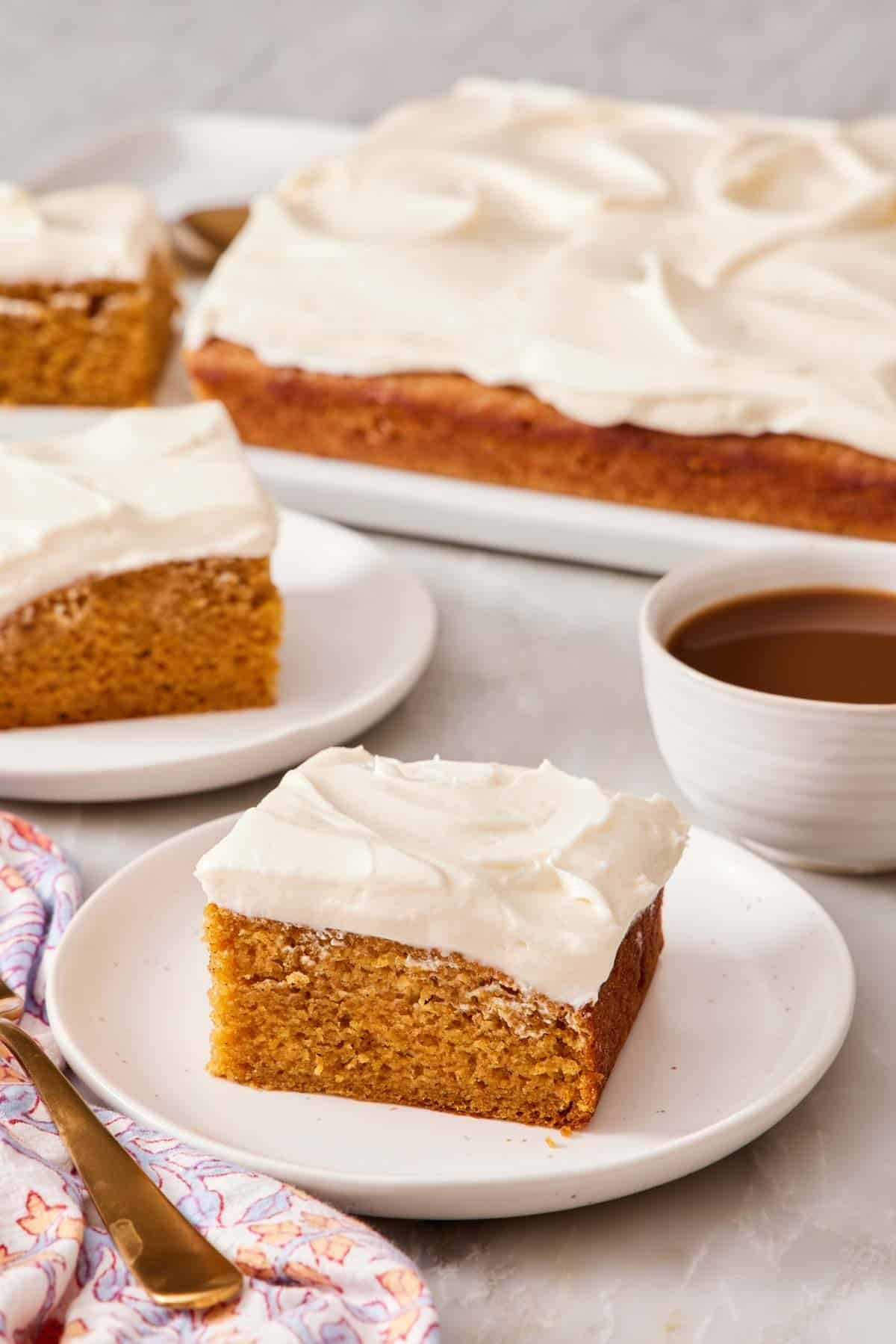
This pumpkin cake is soft, moist, and warmly spiced, with canned pumpkin puree for convenience and your favorite baking spices. A thick layer of tangy cream cheese frosting finishes it off. The batter comes together by hand with no mixer needed until the frosting.
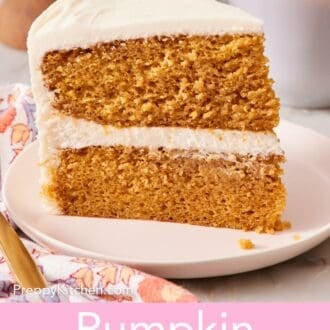
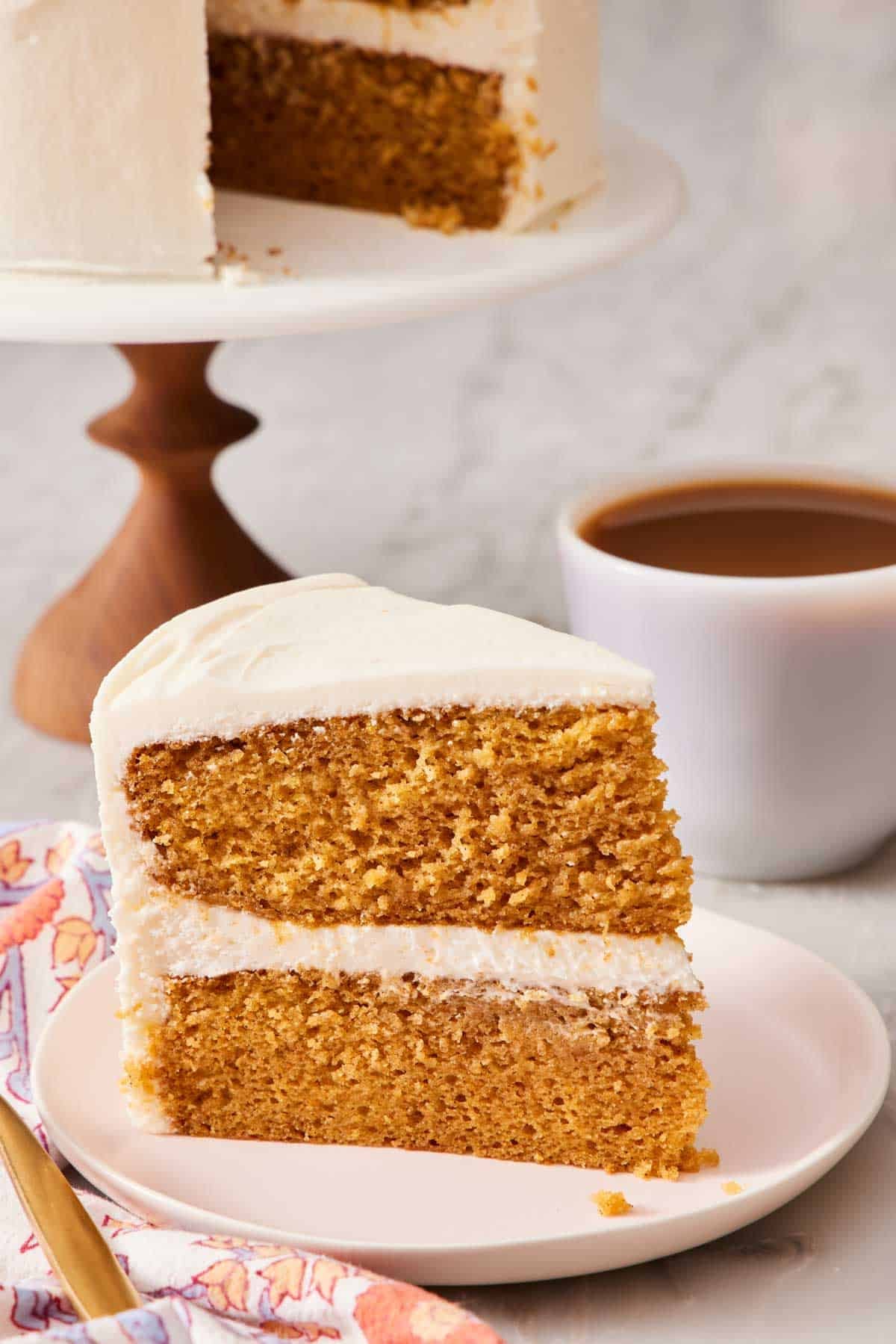
Use my tested variation to bake it as a two-layer cake too! The sheet cake and both cake layers bake for the same amount of time (30 minutes); you just change the pans you use.
“This recipe is AMAZING!!! Such a beautiful light and fluffy cake. I have made it countless times over the last couple of years and it turns out perfect every single time…It freezes with the cream cheese icing perfectly.”
Denise
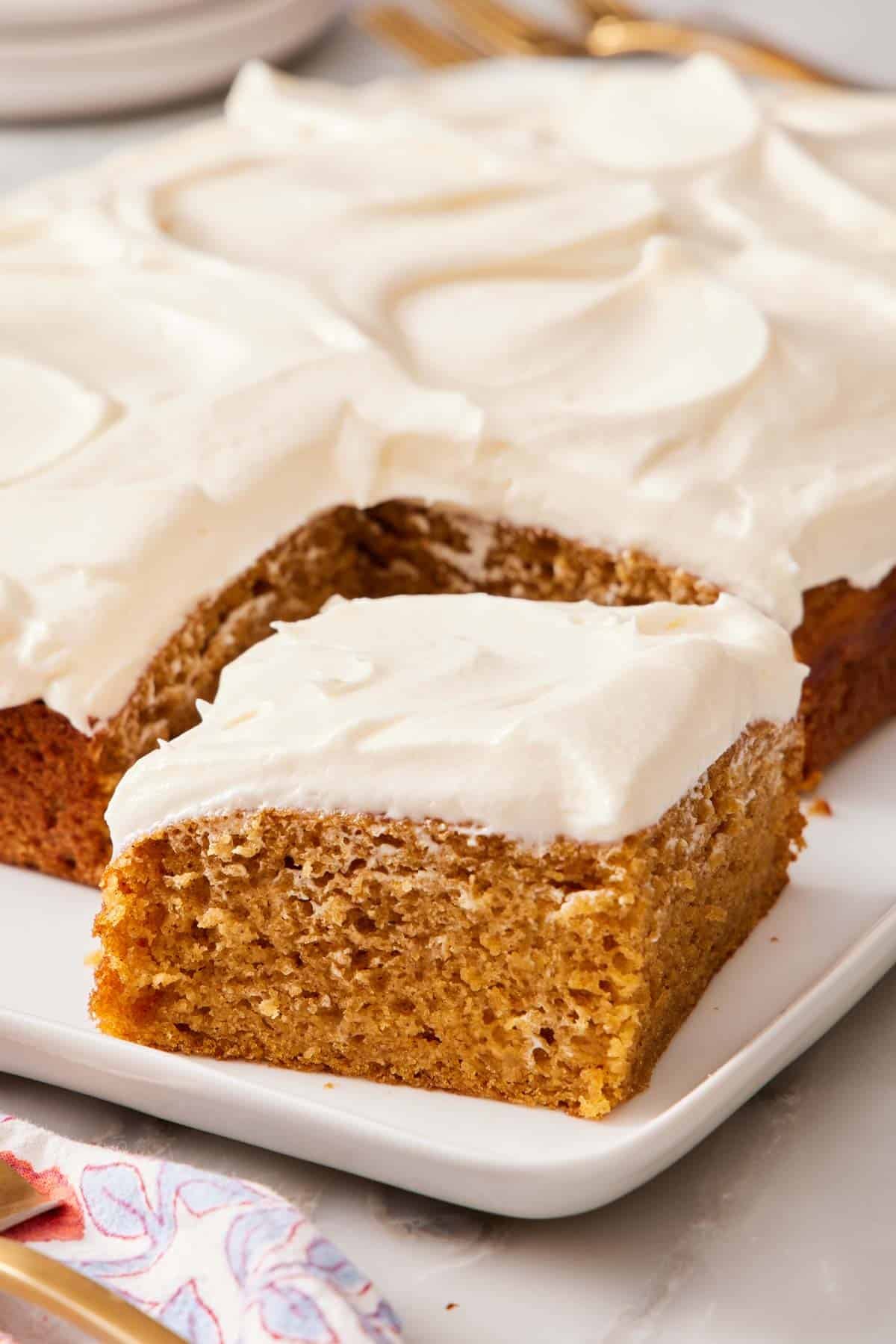
What Makes This Pumpkin Cake So Moist?
Three things contribute to the cake’s texture: oil, pumpkin, and a gentle hand.
- Vegetable oil stays liquid at room temperature, so an oil-based cake stays soft long after it cools and, if stored in the fridge, while butter firms up. I’ve tested this cake with butter in place of the oil, and it tastes delicious, but the texture was firmer, and that made it feel drier. With the pumpkin, spices, and rich frosting taking center stage, there wasn’t enough of a flavor difference between the butter and oil cake to recommend the swap.
- A full 15-ounce can of pumpkin puree adds moisture and that deep orange color.
- Because the batter is stirred together by hand just until combined, very little gluten develops, so the crumb stays tender instead of tough.
Key Ingredients
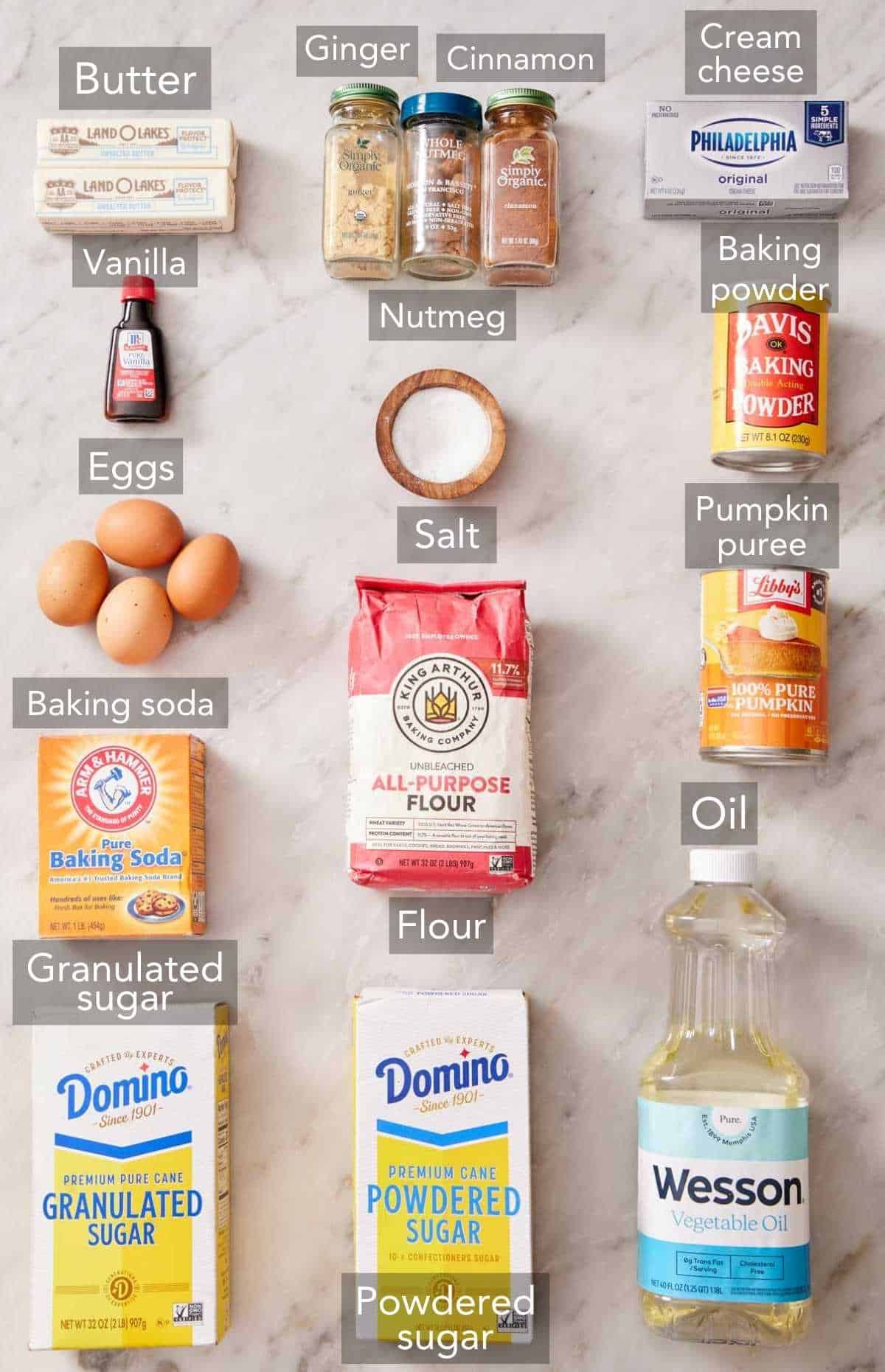
These are the main ingredients you need to make this easy pumpkin cake. You can find the full list of ingredients and measurements in the recipe card below.
Pumpkin puree — check your can to be sure you are using 100% pure pumpkin puree, not pumpkin pie filling, which is already sweetened and spiced. I developed this recipe with Libby’s. I love it for its consistency in texture, moisture, and rich color. Some brands are wetter, so if yours looks thin, blot it on paper towels first. Follow the blotting method in my pumpkin chocolate cookie recipe.
All-purpose flour — the key ingredient for structure. Wheat proteins develop gluten when they are hydrated, and this forms a network with the eggs to hold the tiny carbon dioxide bubbles produced by the leaveners (baking soda and baking powder) so your cake rises. Weigh it if you can. Scooping straight from the bag packs in extra flour and bakes up dense and dry. See How To Measure Ingredients Correctly for my scoop and level method if you don’t have a scale.
Baking powder and baking soda — these two leaveners work together here: the soda gives the batter an initial lift (reacting with acid in other ingredients) and raises the pH of the batter, which contributes to tenderness and browning, while the baking powder provides a secondary lift in the oven (reacting with heat) for fluffiness.
Vegetable oil — keeps the cake moist. Light olive oil or another neutral liquid oil works too. Some readers have asked if they can reduce the amount of oil. I’ve tested replacing half the oil with applesauce; the cake works, but it’s a bit denser, though still moist. Fat molecules work their way into the gluten structure and inhibit it from forming as tight as a web, so if you reduce the fat, the cake won’t feel as tender.
Spices and vanilla — canned pumpkin doesn’t have a strong flavor on its own, but spices, salt, and vanilla extract enhance it to make the pumpkin spice cake flavor you’re expecting! I use cinnamon, ginger, and nutmeg. Short on one? Use 1 tablespoon of pumpkin pie spice instead. Ground cardamom, cloves, or allspice can stand in for the nutmeg, too.
Eggs — they should be at room temperature so they blend smoothly into the oil. Set cold eggs in warm water for 5 to 10 minutes, or place them on your counter for at least 30 minutes before you mix the cake batter.
Cream cheese — the frosting must be made with full-fat, brick-style cream cheese. Tub cream cheese has more water and makes a runny frosting texture. I tested using tub cream cheese versus blocks in my cream cheese frosting recipe if you want to see my results (hint: tub cream cheese is bad and turns loose and gummy!). Bring it and the unsalted butter to room temperature for 1 to 2 hours so the frosting beats up smooth, without lumps. If you’re short on time, use my tricks for how to soften butter quickly (you can use most of them for cream cheese too!)
Pro Tips For Making This Recipe
Avoid overmixing the batter. After pouring the wet ingredients into the dry ingredients, mix them together by hand just until combined. If you continue mixing the batter, you will overdevelop the gluten in the flour, which will cause the cake to turn out tough and dense instead of fluffy. This is why I don’t use an electric mixer. I give more detail on this pumpkin cake’s style of mixing (the Blended Method) and how to avoid overmixing in my guide on 5 Cake Mixing Methods.
To easily remove the cake from the pan, line it with parchment paper. A sling is enough to lift the cake out, without needing to fully line all sides of the pan. See my guide on how to line a cake pan with parchment paper if you’re unsure of how to make a parchment paper sling.
How To Make Pumpkin Cake
Below, I’ve highlighted portions of the recipe in step-by-step process images along with instructions for making this pumpkin sheet cake. You can find the full set of instructions in the recipe card below.

1. Sift the dry ingredients. Sift the flour, baking powder, baking soda, spices, and salt into a large bowl. Sifting breaks up lumps of soda and spices, so you don’t get bitter pockets.
2. Combine the wet ingredients. In a second bowl, add the sugar, pumpkin, oil, eggs, and vanilla until smooth.

3. Whisk until smooth. Be gentle at first since you have some liquid ingredients and some thick or pasty ingredients (the oil may want to slosh out the sides).
4. Stir together by hand. Pour the wet ingredients into the dry and stir with a spatula just until no dry streaks remain. Stop there. More mixing makes a tougher cake.

5. Bake. Spread the batter into a greased and parchment paper-lined 9×13” baking pan and bake for 30 minutes, or until a toothpick in the center comes out with a few moist crumbs. Cool completely in the pan on a wire rack.
6. Make the frosting. Beat the butter until smooth, then add the cream cheese and beat on medium-low for about 2 minutes. Beat in the vanilla and salt. Keep the speed down; overbeating cream cheese can make the frosting runny or break it, turning it into a curdled texture rather than smooth.

7. Gradually add the powdered sugar on low, stopping occasionally to scrape the bowl down. Once all of the sugar is added, beat on medium speed for about 1 minute until fluffy.
8. Frost the cooled cake. If desired, remove the cake from the pan, using the excess parchment as handles. Place it on a serving tray with the paper removed. Spread the frosting over the top with an offset spatula. You can serve it immediately or chill it for several hours before slicing.
Can I Make It A Layer Cake?
Yes, and my team tested it for you! The full batch of batter makes 5 cups (1,384g), so we divided it evenly between two 8-inch round pans (692g/2½ cups each). Both layers baked in 30 minutes, the same as the sheet cake.
The layers come out a touch thicker. Here’s why: a 9×13-inch pan has 117 square inches of surface, and two 8-inch rounds have about 100 sq. in. together, so the batter is slightly deeper (about 15%) in the rounds. But since the overall distance from the center of the batter to the edge is shorter for the 8-inch cake pans, this means the heat gets through to the center faster, so it baked in about the same time despite being slightly deeper. (Yes, I had to use my math teacher skills here!)
Two things to know before you stack:
- Expect a slight dome. Ours domed a little bit even with cake strips wrapped around the pans. Level the tops with a serrated knife before stacking (see: How To Bake Flat Cake Layers).
- Make the frosting firmer. At 3 cups of powdered sugar, the frosting was too soft to hold the layers in place. My team added 2 more cups (240g) for 5 cups total. That’s in line with my cream cheese frosting, which uses up to 6 cups when it needs to hold its shape. Chill the frosted cake to help it set before you slice it. I wrote a whole post with my best tips for how to decorate a cake, if you’re frosting a two-layer cake for the first time!
For cupcakes, use my pumpkin cupcakes recipe. If you want to adapt this recipe to other cake pan sizes, use my Baking Pan Sizes and Conversions guide.
Why Did My Pumpkin Cake Sink?
Underbaking is the most common cause. Bake the full 30 minutes and check with a toothpick. A few moist crumbs mean it’s done; wet batter means it needs more time.
Too little flour is the other usual culprit, which means there isn’t enough gluten structure to hold the cake up as it rises. Weigh it, or fluff, spoon, and level your cups.
A gummy, heavy cake usually means very wet puree or overmixing. Blot the thin puree, and stir only until the flour disappears.
Ways To Change It Up
Swap the frosting. Try chocolate cream cheese frosting or marshmallow frosting, or swirl caramel through the cream cheese frosting. Skipping frosting? Dust the top with powdered sugar!
Add citrus or maple. Stir 1 to 2 teaspoons of orange zest into the batter and 1 teaspoon into the frosting, or replace 2 to 3 tablespoons of the powdered sugar with maple syrup.
Pumpkin Cake Recipe
Equipment
- Mixer
- Offset spatula
- 9×13-inch cake pan
Ingredients
For the Pumpkin Cake:
- 2 cups all-purpose flour (240g)
- 2 teaspoons baking powder
- 1 teaspoon baking soda
- 2 teaspoons ground cinnamon
- 1½ teaspoons ground ginger
- ¼ teaspoon freshly grated nutmeg
- 1 teaspoon salt
- 1½ cups granulated sugar (300g)
- 1 (425g/15-ounce) can pumpkin puree
- 1 cup vegetable oil (240mL)
- 4 large eggs room temperature
- 2 teaspoons vanilla extract
For the Cream Cheese Frosting:
- ¾ cup unsalted butter room temperature, (170g)
- 1 (8-ounce/226g) block cream cheese room temperature
- 1 teaspoon vanilla extract
- pinch of salt
- 3 cups powdered sugar sifted (360g)
Instructions
For the Pumpkin Cake:
- Preheat the oven to 350°F. Butter and flour a 9×13-inch cake pan or spray with baking spray with flour. If you want to remove the cake from the pan to serve it, line it with a parchment paper sling after it’s greased.
- In a large bowl, sift together the flour, baking powder, baking soda, cinnamon, ginger, nutmeg, and salt.
- In a separate bowl, whisk together the granulated sugar, pumpkin, oil, eggs, and vanilla, until smooth. Pour into the flour mixture and stir together just until combined. Pour into the prepared cake pan.
- Bake for 30 minutes or until a toothpick inserted into the center comes out with a few crumbs. Let the cake cool completely in the pan on a wire rack.
For the Cream Cheese Frosting:
- In a large mixing bowl or the bowl of a stand mixer fitted with the paddle attachment, beat the butter until smooth. Add the cream cheese and beat on medium-low speed until the mixture is well combined, about 2 minutes. Scrape down the bowl as needed. Beat in the vanilla and salt.
- With the mixer on low speed, slowly add in the confectioners’ sugar. Once incorporated, increase the speed to medium and beat until light and fluffy, about 1 minute. Spread over the top of the cooled cake.
Notes
- Frost the cake once it has cooled. If you try to frost the cake while it’s still warm, the frosting will melt or slide off. Set the cake on a cooling rack after baking to cool completely a little bit faster.
- Add decorations on top! You can use chocolate or candy pumpkins, fall-themed sprinkles, or pipe decorations on top. You can also keep it simple with a light sprinkling of cinnamon.
- Storing: Since the cake is covered with cream cheese frosting, you’ll want to refrigerate it after 24 hours. Cover the cake in the pan and keep it refrigerated for up to 5 days.
Nutrition
Have you tried this recipe? Tag me today!
Mention @preppykitchen and tag #preppykitchen!
How To Store And Freeze Pumpkin Cake
Cream cheese frosting is perishable, so don’t leave the frosted cake out for more than 24 hours. Cover the pan and refrigerate for up to 5 days, and let slices sit out briefly before serving for the softest texture.
To freeze, chill the frosted cake until the frosting is firm, then wrap it well. Frosted or unfrosted, it keeps up to 3 months. Thaw overnight in the fridge. You can bake the cake ahead, too, and freeze it without the frosting. For specific wrapping, storing, and thawing details, use my guide on How To Freeze Cakes.
Frequently Asked Questions
Yes. Swap in an all-purpose gluten-free baking blend that contains xanthan gum. If the batter looks very thick, stir in ¼ cup of milk or water, then bake as directed. In this case, it’s fine to add more liquid after the batter is mixed since there’s no gluten to risk overmixing!
Yes. Homemade puree is usually wetter than canned, so blot it on paper towels before measuring. Use about ⅓ cup more than the can’s volume to start and measure it after blotting. My homemade pumpkin puree shows how.
They’re close cousins. Both are oil-based spice cakes topped with cream cheese frosting. Pumpkin cake has a smoother, more uniform crumb, while my carrot cake has shredded carrots and walnuts for texture.
More Recipes To Try
For more fall baking, make one of these recipes next:
- Pumpkin Roll — a very thin version of this pumpkin cake with cream cheese frosting spread onto it, then rolled into a log.
- Pumpkin Bread — The classic holiday pie, with a smooth, spiced pumpkin custard filling.
- Apple Bread — use chopped or grated apples, depending on how uniform you want the texture of the bread.
- Pumpkin Cheesecake — creamy cheesecake flavored with pumpkin and warm spices, made for fall gatherings.
- Spice Cake — Two 9-inch layers with cinnamon, ginger, cloves, and nutmeg, finished with cream cheese frosting, no pumpkin.
If you’ve tried this pumpkin cake recipe, then don’t forget to rate it and let me know how you got on in the comments below. I love hearing from you!