This post may contain affiliate links. Please read our disclosure policy.
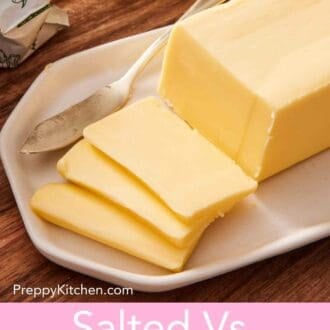
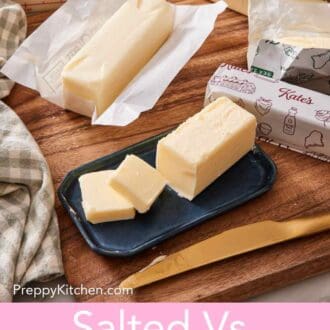
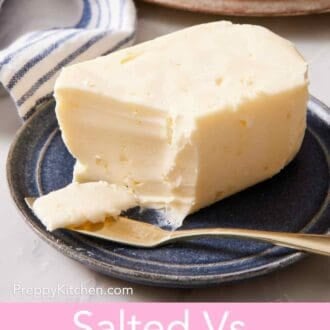
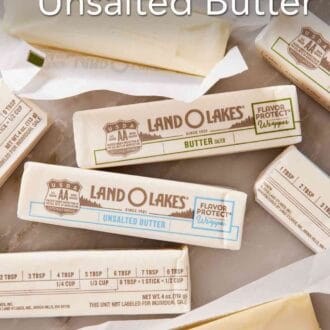
Choosing whether to use salted versus unsalted butter is a simple choice that discreetly changes the way your recipes taste. Here’s exactly when each one belongs in the bowl, and the simple salt conversion when you only have one type on hand.
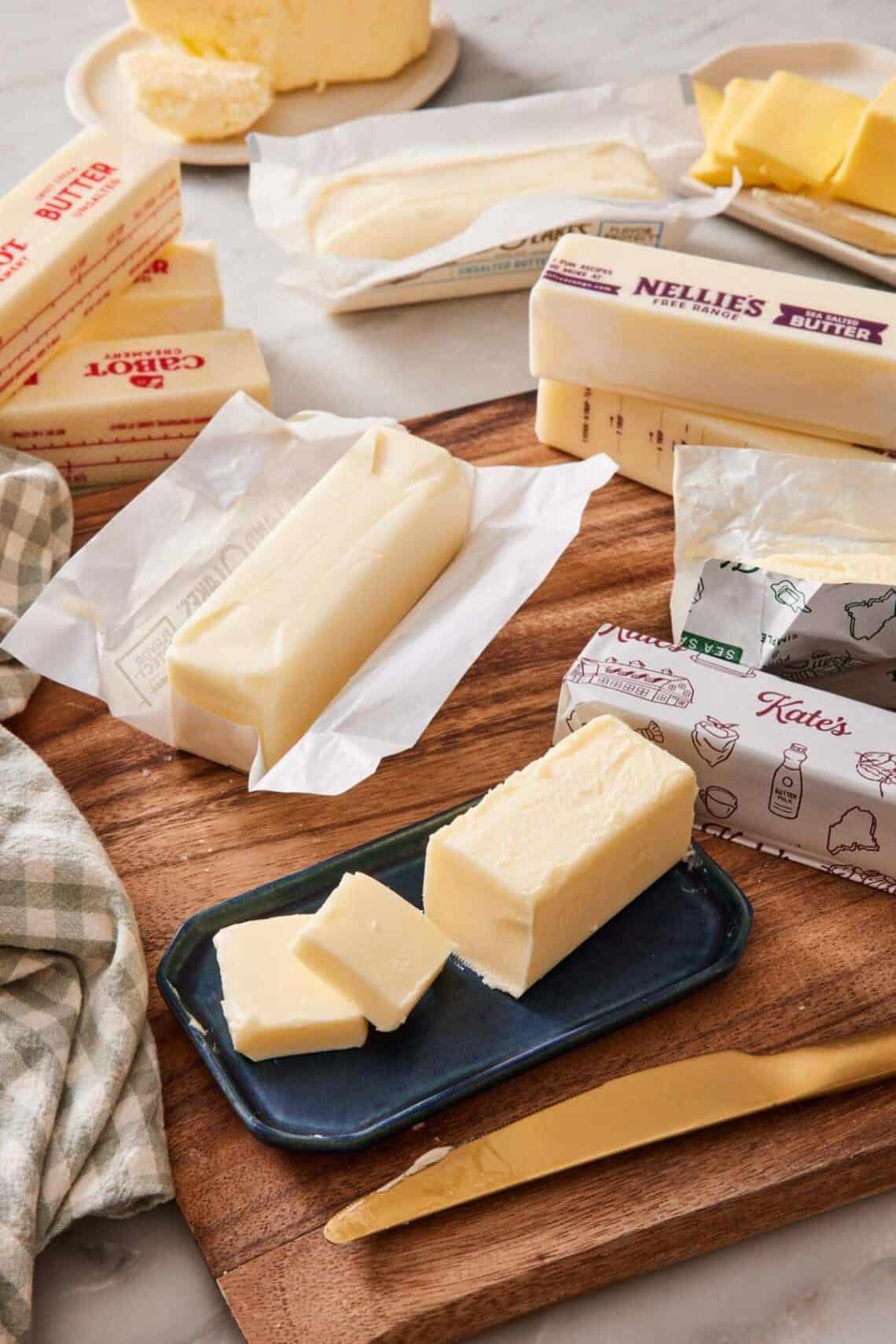
Salted or unsalted butter—it seems like an unimportant distinction for one of the most common ingredients in the kitchen. But which one to use is one of the most common questions I get from readers. The short answer: For most baking, reach for unsalted butter and add the salt yourself. For cooking, spreading, and finishing, salted is fine and often better. That’s the rule I follow in nearly every recipe on this site, and once you understand the reason behind it, you’ll never have to second-guess your butter choice again.
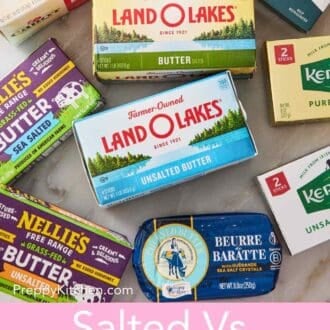
Here’s why it actually matters. American salted butter has no federally mandated salt level. Instead, every brand sets its own. When I lined up four mainstream supermarket brand labels, the sodium per tablespoon varied by nearly 30 percent from the lowest to the highest. That difference is less noticeable on a slice of toast, but in a sugar cookie or a sweet buttercream, you’ll taste it. Using unsalted butter and measuring salt separately is how I make sure the recipes I publish here taste the same in your kitchen as they do in mine.
In this guide, I’ll walk you through everything I’ve learned from testing both kinds across cookies, cakes, pastries, sauces, and savory cooking. What changes between them beyond just salt, when each is the better choice, and the exact conversion to swap one type for another.
“I always felt like buying unsalted butter for baking felt a bit fussy, until I tried it with your vanilla cake recipe. The flavor was perfectly balanced! Now I keep a pound in my fridge for baking and save my salted butter for toast.”
Lisa
What’s the Difference Between Salted And Unsalted Butter?
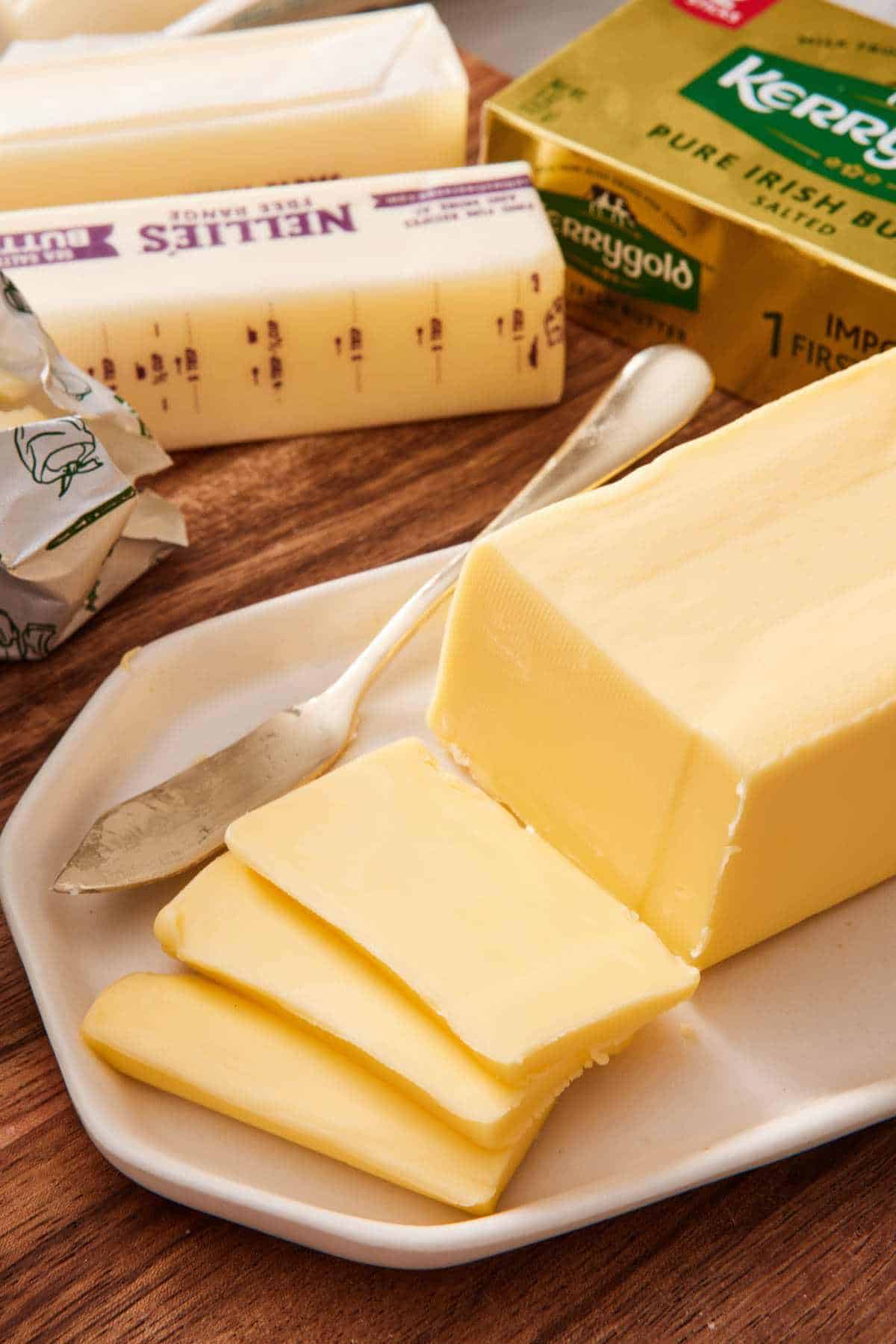
Just what the name suggests, salted butter has salt added to it, and unsalted butter doesn’t. Both start from the same churned cream. After churning, salted butter gets salt mixed in (typically somewhere between 1 and 2 percent of the total weight). That’s the only difference between the two products on the same shelf at the grocery store.
That single ingredient additional does three things, though, and they all matter once you start using the butter in real recipes:
- It adds salt to whatever you’re making. This is obvious, but the amount is unpredictable. (More on that below.)
- It extends shelf life. Salt acts as a preservative, so salted butter generally lasts longer in the fridge than unsalted butter.
- It changes the water content slightly. Salt is more soluble in water than in fat, so salted butter pulls water into its salt molecules and tends to release more moisture during creaming and baking. The shift is small, though—most American butter sits around 80 percent fat regardless.
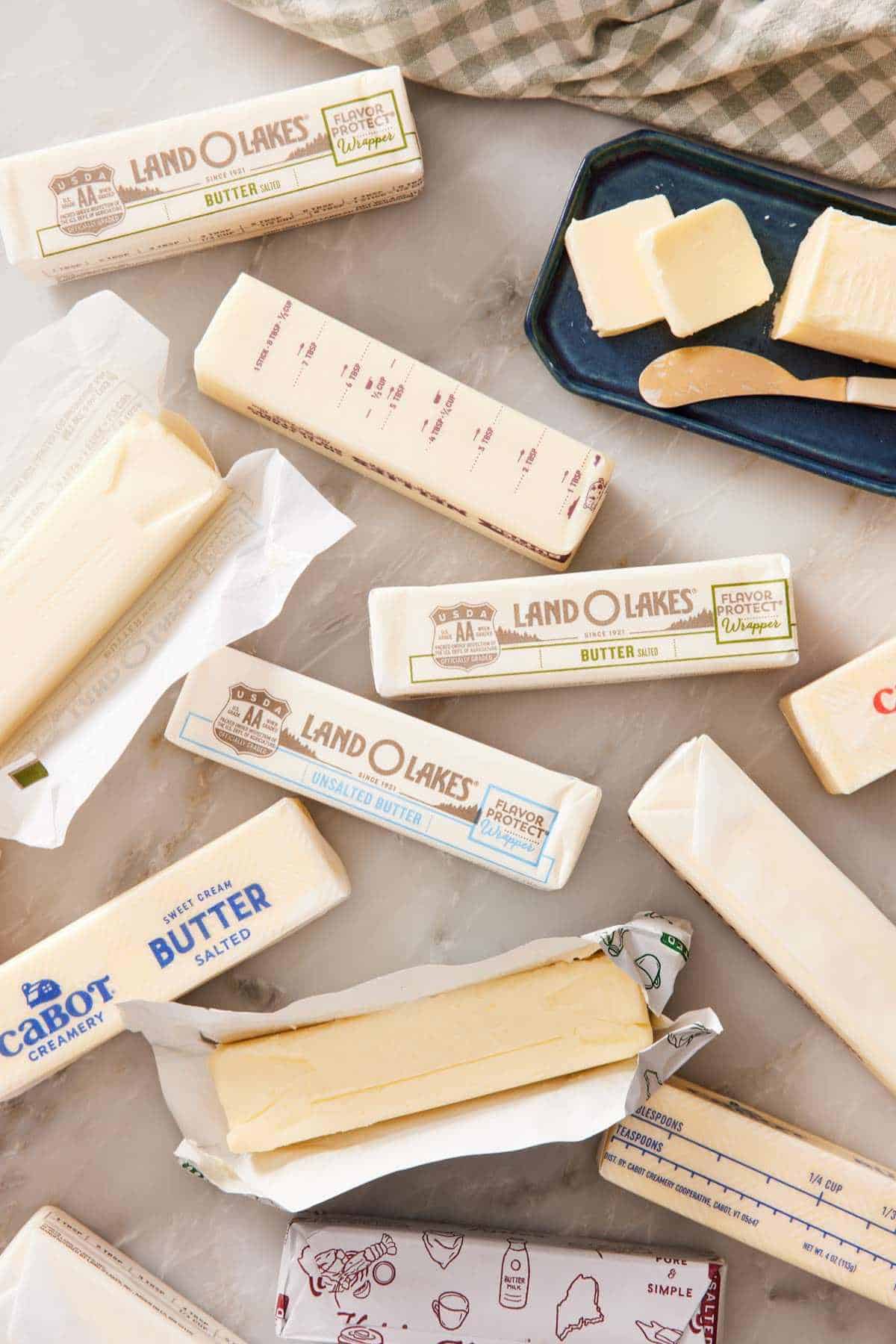
It’s worth noting that salt is actually a measured characteristic in the USDA federal grading system for butter. Butter manufacturers can voluntarily seek USDA grading (Grade AA, A, or B) where butter is evaluated on appearance, composition, and flavor—and salt is one of the characteristics inspectors review. The sticks at your grocery store with the “USDA Grade AA” shield have passed that review. But the amount of salt in any given salted butter is still up to the manufacturer.
How Much Salt Is Actually In Salted Butter?
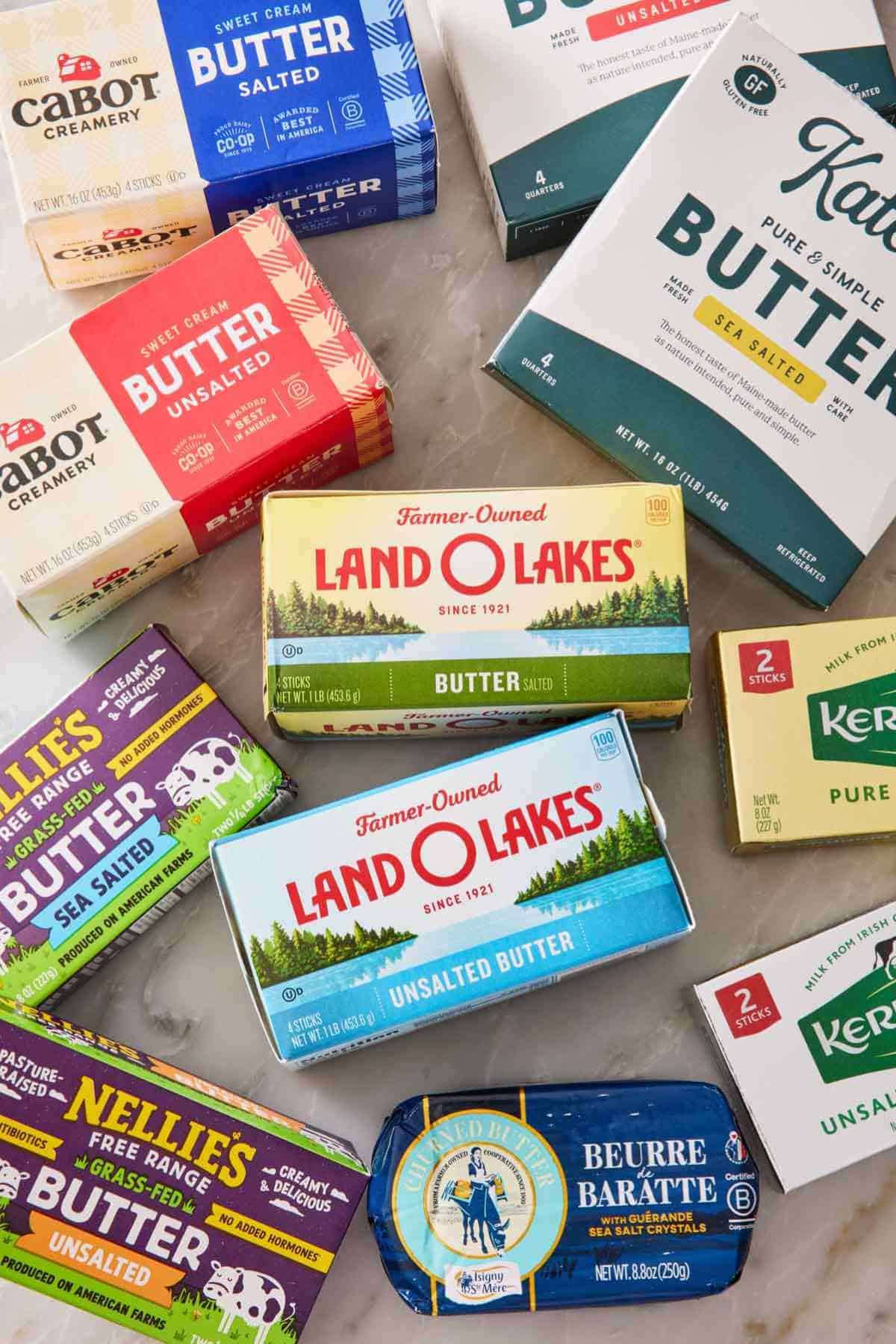
This is the part that surprises most home bakers—it varies by brand. There is no federal standard for how much salt American butter manufacturers can add to a product labeled “salted butter.” Each brand picks its own level. When I checked four common brands at my grocery store recently, the sodium content per tablespoon ranged like this:
| Brand | Sodium per teaspoon* | Approx. salt per stick (½ cup) |
| Land O’Lakes Salted | 90 mg | ~¼ tsp (1.25g) |
| Cabot | 90 mg | ~¼ tsp (1.25g) |
| Kerrygold (irish) | 100 mg | ~⅓ tsp (1.5g) |
| Kate’s | 120 mg | ~⅜ tsp (2g) |
*Values found from package nutrition labels at the time of testing; check your own carton for the most current numbers.
Land O’Lakes and Cabot, at the low end, were roughly 28 percent different in sodium per tablespoon than Kate’s at the high end. That’s already a wide gap. Some specialty European salted butters with visible salt flakes—St. Isigny, Les Prés Salés, certain finishing butters—can push it dramatically further. I’ve worked with French finishing butter that delivered nearly double the sodium of a Land O’Lakes American salted stick.
So when a recipe just says “1 cup of butter,” the salt content of the finished bake can swing from barely noticeable to clearly salty depending on which brand came home with you. That’s the problem unsalted butter solves.
Why Do Your Recipes Call For Unsalted Butter?
There are three reasons I default to unsalted butter for nearly every baked good on this site, and they all come down to flavor control and freshness.
Precise salt control. This is the big one. When I develop a recipe—let’s use my buttercream frosting, for example—I’m dialing in the salt to the exact amount. The recipe calls for ½ teaspoon of salt to balance the sweetness. If you swap in 1 cup of salted butter without adjusting, you’ve just added the equivalent of roughly an extra ½ teaspoon of salt (or more, depending on the brand) on top of what’s already there. In a frosting that is supposed to be on the sweet edge, that extra bit can be the difference between “perfect” and “too salty,” completely changing your cake-eating experience. Unsalted butter plus measured salt means the recipe tastes the same whether you bake it with Land O’Lakes or Tillamook brand.
Better freshness on the shelf. Salt is a preservative, so unsalted butter has a shorter shelf life. That sounds like a downside for unsalted butter, but for the baker, it’s actually the opposite. Supermarket inventory turns over faster on unsalted, so the stick you’re buying tends to be fresher even when the printed sell-by dates look identical. You can taste this in butter-forward recipes like butter cookies or pound cake, where the dairy itself is the headline flavor.
More predictable water content. As I mentioned earlier, salted butter holds onto slightly more water once the salt is added. In a pie dough or laminated pastry where you’re working with a tight fat-to-water ratio to build flaky layers, that small extra bit of water from salted butter can shift the dough from flaky to slightly tougher. For most cookies and cakes, the difference is below the noticeable threshold. For laminated croissants, puff pastry, and a properly flaky pie crust, it’s worth the precision.
When To Use Salted Butter
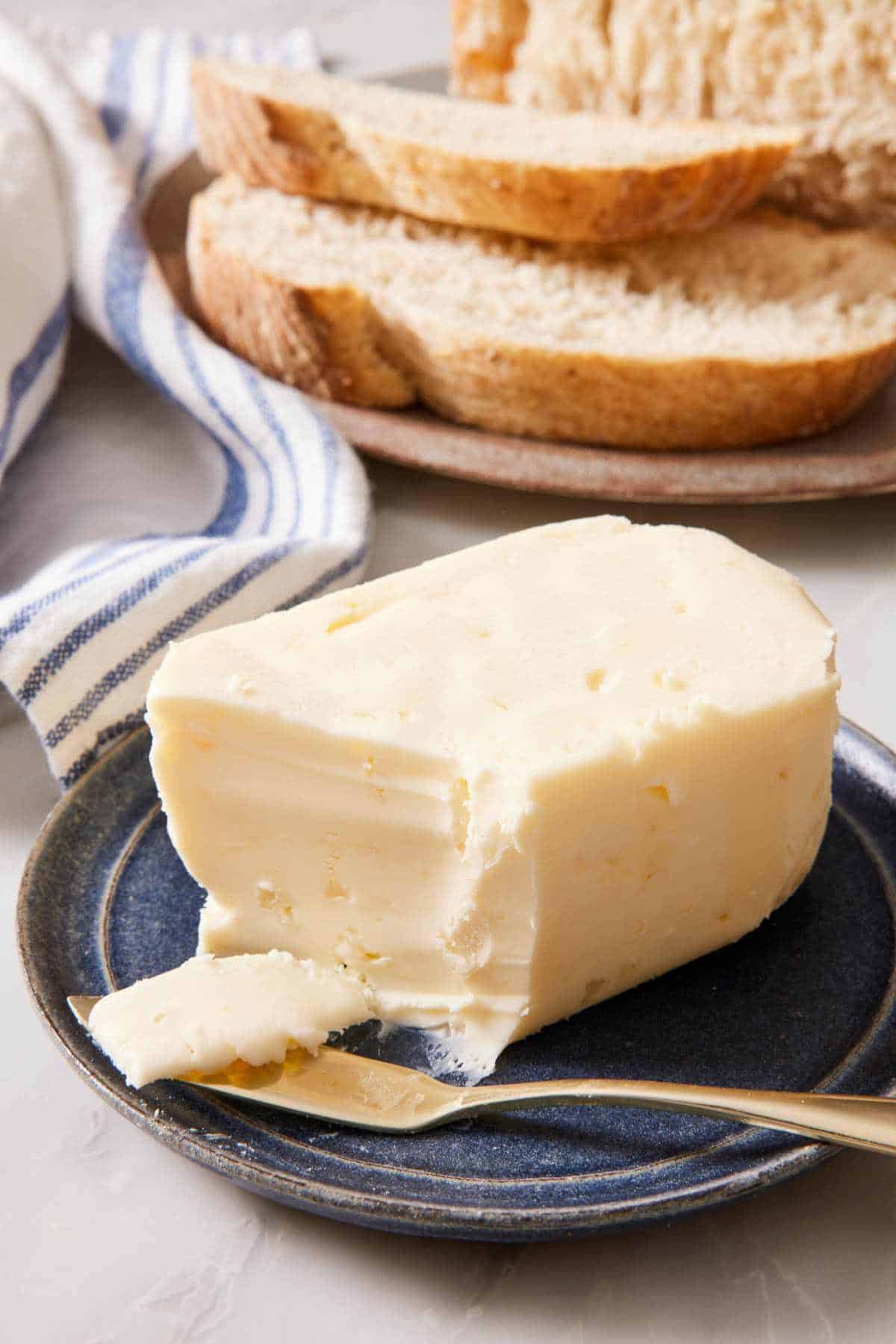
Salted butter is the “all-purpose” butter, and it’s what I keep in the door of my fridge for everyday use for finishing. Use it whenever the dish doesn’t depend on precise salt control:
- Spreading. Toast, garlic bread, bagels, biscuits — anything where the butter is the finishing touch, and you want it to taste like butter. Plain unsalted butter on toast genuinely tastes flat to me. The salt is the point.
- Cooking a savory dish. Sautéing vegetables, scrambling eggs, finishing pan sauces, melting over pasta. When I’m cooking, I’m tasting and adjusting as I go, so an imprecise salt baseline in the butter doesn’t cause problems—it just gives me a head start on seasoning.
- Topping cooked vegetables. A pat of salted butter melting over air fryer broccoli, roasted carrots, or a baked potato is one of the easiest upgrades in the kitchen and adds flavor.
- Some baking, when salty-sweet is the point. This is where home bakers get tripped up—yes, you can bake with salted butter; you just have to be intentional about it. I use salted butter in my chocolate chip cookie recipe variations when I want a more pronounced salty-sweet edge, and in rustic bakes like biscuits and shortbread where a little extra salt is welcome. Same with caramel sauce when you want a saltier punch.
When To Use Unsalted Butter
Unsalted butter is what I reach for any time precision matters. That’s most of my baking, plus a handful of savory applications.
- For most baked goods. Cakes, cupcakes, buttercream of any kind, pound cakes, pie doughs, croissants, puff pastry, and butter-forward cookies all benefit from unsalted plus measured salt. The difference is most noticeable in recipes where butter flavor leads and an extra-salty edge would be out of place—my butter cake is a good example. With unsalted butter and a measured ¾ teaspoon of fine salt, the dairy flavor is rich, and the crumb is balanced. With salted butter from a high-sodium brand, the same recipe edges into “savory” territory.
- For cookies specifically. Almost every cookie recipe I publish—peanut butter, oatmeal chocolate chip, peanut butter blossoms—uses unsalted butter. Cookies are the place where salt-content variance shows up most clearly, because the dough is small, the baking time is short, and there’s no other dominant flavor (sauce, frosting, fruit) masking the difference. A flaky sea salt sprinkled on top after baking gives you the salty-sweet contrast people love without surrendering control over the dough itself.
- For savory recipes with other salt sources. Gravies, pan sauces, anything finished with salted stock, soy sauce, or anchovies. There’s already plenty of sodium coming in from the other ingredients. Using unsalted butter as the fat keeps you in control of the total salt level, so you don’t end up over-salted by the time the dish hits the plate.
How To Swap Them Out
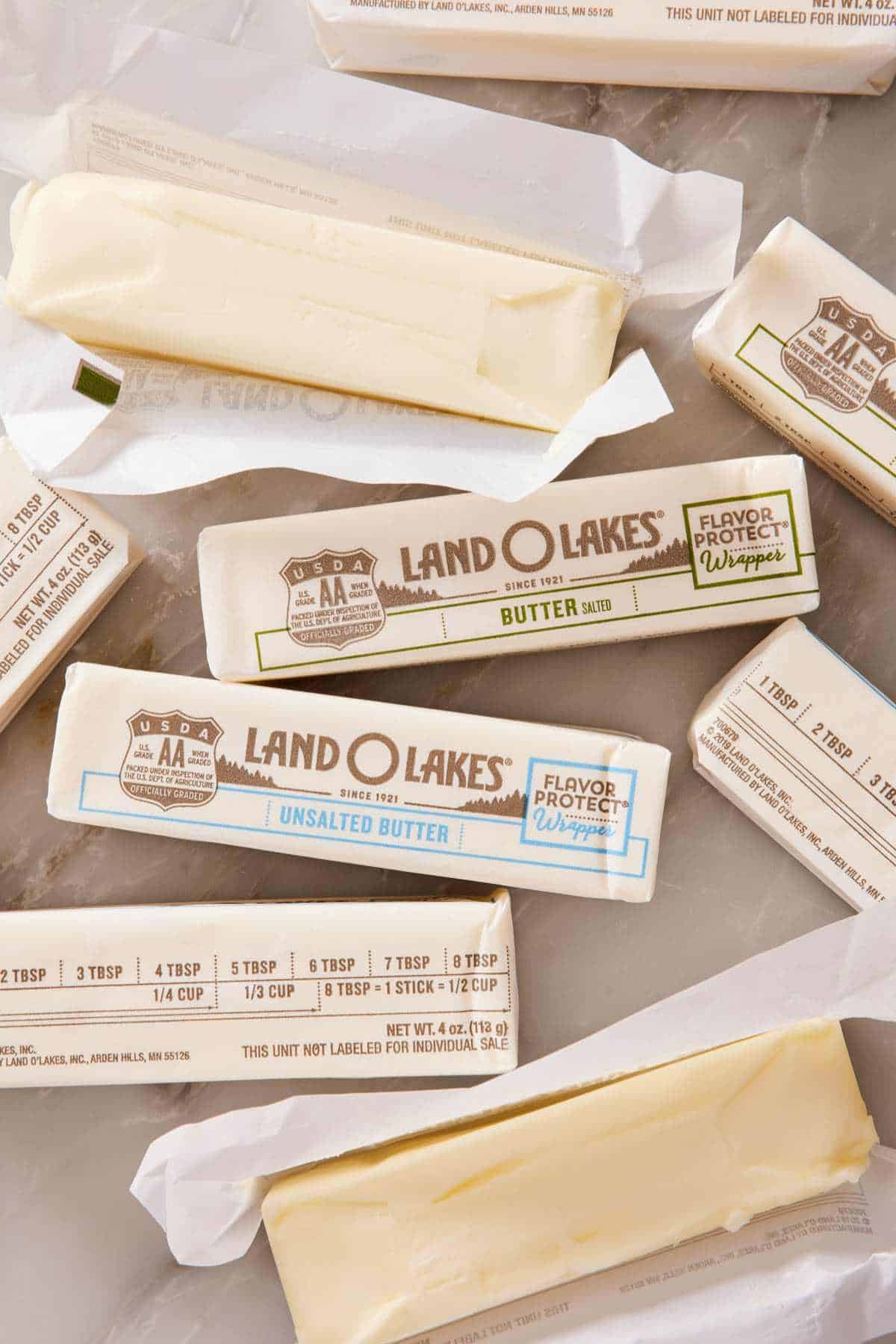
The conversion is simple and works for almost any recipe. For my recipes, the math is the same in both directions. I always use Land O’Lakes butter for American sticks and Kerrygold for European-style butter. Each brand contains roughly ¼ teaspoon of salt per stick (½ cup or 113 grams). (Generally, most standard American butter brands are around this amount, too.)
| If your recipe calls for… | And you only have… | Adjust the salt by… |
| Unsalted butter | Salted butter | Reduce added salt by ¼ tsp per stick |
| Salted butter | Unsalted butter | Increase added salt by ¼ tsp per stick |
A few caveats from my own kitchen testing:
- The one swap I don’t recommend is using salted butter when a recipe calls for unsalted butter and no added salt at all. In that case, the recipe was almost certainly tested with the assumption of zero butter-salt, and adding ¼+ teaspoon by accident will push the result somewhere the recipe author didn’t intend. Reduce wherever you can in other added ingredients, or just go buy unsalted.
- For European salted butters, especially the ones with visible salt flakes (Bordier, Échiré, fleur de sel finishing butters), the ¼ teaspoon-per-stick assumption breaks down—they can have nearly double the sodium. Treat those as finishing butters, not baking butters, unless the recipe specifically calls for them.
- For taste-testable doughs and batters (cookie dough, frosting), I taste before baking after a swap. If it tastes balanced raw or on its own, it’ll taste balanced baked or spread on a cake.
Frequently Asked Questions
Brands of salted butter vary widely in sodium content, so adding measured salt to unsalted butter is the only way the recipe can guarantee consistent results across every kitchen. This prevents your sweet baked goods from unintentionally having a salty edge.
Yes, if you want a salty flavor, or if you reduce the added salt in the recipe by about ¼ teaspoon per stick (½ cup) of butter. For most drop cookies, the result is excellent. A flaky sea salt sprinkle on top after baking is a great upgrade if you’d rather stick with unsalted but add a finishing touch.
The butter type mainly matters in baking because of its fat content. The salt content for everyday salted European butters (Kerrygold, Président, Plugrá) is roughly in the same sodium range as American salted butter—the ¼-teaspoon-per-stick conversion still works. For premium finishing butters with visible flakes of sea salt, the salt content can be nearly double, and they’re best used as finishing butters rather than baking butters. The package usually makes it obvious when butter is in this category. Also, if the sodium per tablespoon is higher than 90-100mg, you will know the butter is on the saltier end.
Generally yes. Salt acts as a preservative, drawing moisture away from bacteria and creating a less hospitable environment for microbial growth. North Dakota State University Extension confirms that unsalted butter loses flavor faster, so its storage time is shorter. As a practical rule, that’s also why supermarket unsalted butter tends to be fresher on the shelf—stores cycle through inventory faster.
Both salted and unsalted freeze well in their original wrapper. North Dakota State University Extension recommends freezing only high-quality butter made from pasteurized cream, with the original store-wrapped butter sticks placed in a freezer container for best protection. Unsalted will lose flavor faster than salted, but putting it in the freezer preserves the flavor and extends the shelf life. Thaw overnight in the fridge—never microwave from frozen, since uneven thawing will give you patches of melted butter that won’t cream properly.
More Tutorials To Try
Learn more kitchen fundamentals with these lessons:
- Academy: Salt 101 — learn the true differences between kosher, table, sea, and flaked salt and how to measure each one.
- Academy: How To Measure Ingredients Correctly — the foundation for good, consistent results in baking and cooking starts with the correct ingredient amount.
- Academy: Mise En Place — for stress-free baking and cooking with delicious results.
- Academy: Knowing Your Oven — learn how to find hot spots, the best oven rack positions, and how to calibrate your oven to the right temperature.
If you’ve tried this “salted versus unsalted butter” post, then don’t forget to rate it and let me know how you got on in the comments below. I love hearing from you!