This post may contain affiliate links. Please read our disclosure policy.





Buttery, tender Lemon Scones are flavored with fresh zest and finished with an easy lemon glaze for a scone that has plenty of citrusy brightness. Serve them for breakfast, brunch, or enjoy as an afternoon treat with a cup of tea.

These easy lemon scones are tender and buttery with a crunchy golden top. I tested this recipe to find that perfect balance of textures: a fluffy, flaky interior and a crisp, golden exterior. I used buttermilk and baking powder to achieve this with excellent results!
I also included a tiny amount of baking soda to get the crunchy crust. (Read more below about how baking soda helps brown baked goods!) They’re a breeze to assemble in about 10 minutes, and bake up in a flash, so you can have lemon scones in under an hour from start to finish!
“I just baked this recipe, and it yields a wonderful product – slightly crunchy on the outside with a light as a feather interior and the most lovely lemony flavor ever.”
Rosemary
Key Ingredients
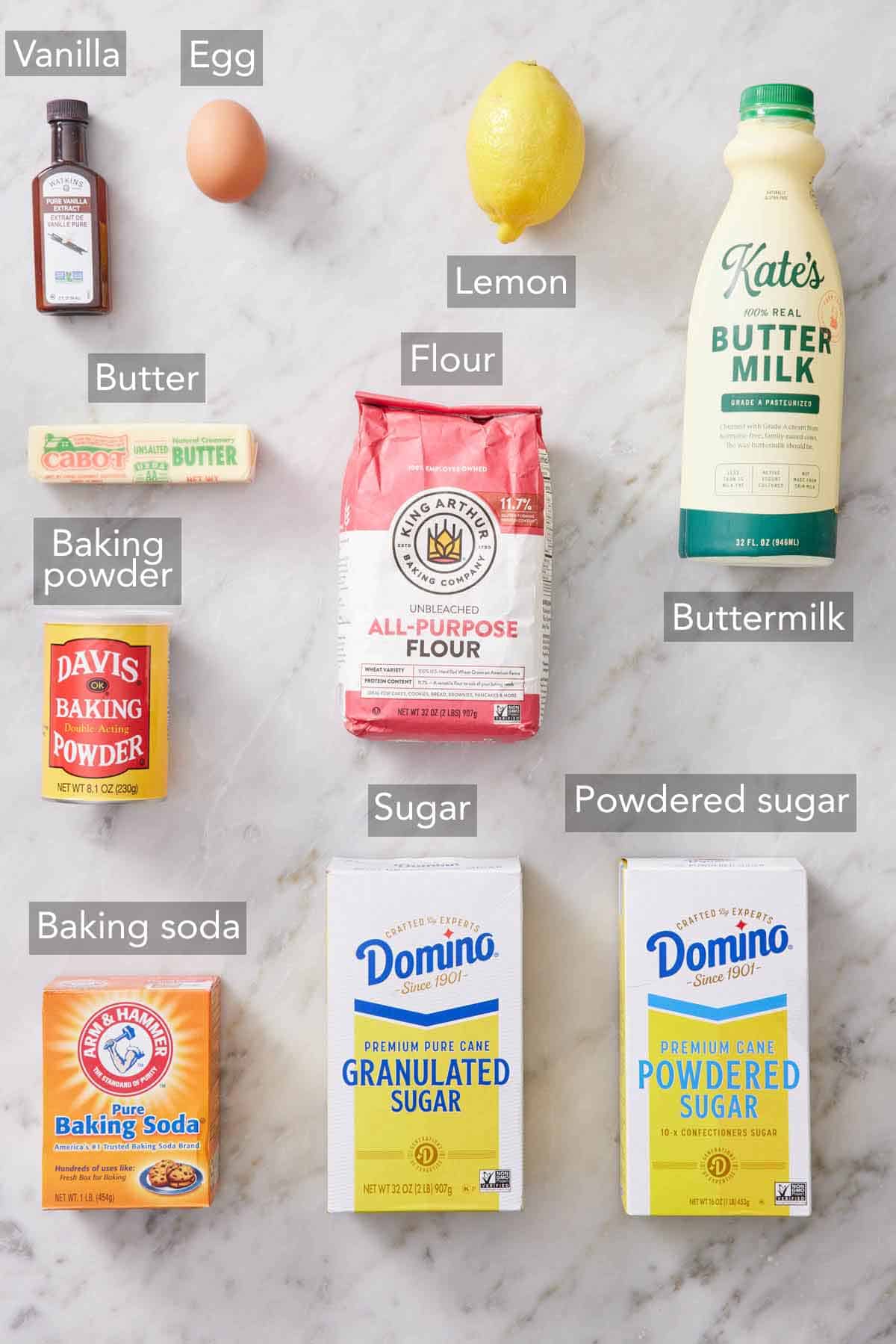
These are the main ingredients you need to make homemade lemon scones. You can find the full list of ingredients and measurements in the recipe card below.
Lemon zest — you’ll rub the lemon zest into the granulated sugar before mixing it with the other dry ingredients. This releases the natural oils in the zest for a perfect lemony flavor. Once the lemon is zested, you can juice it to make the lemon glaze!
Leavening — while you need both baking powder and baking soda to make lemon scones, you only need a small amount of baking soda in the recipe. Most of the rising power comes from the baking powder and butter. Baking soda is included to slightly raise the pH of the dough, which helps the scones produce a more golden crust! By doing so, part of the proteins in the flour react with the sugar and kick off the Maillard reaction (a.k.a. browning!).
Butter — cold unsalted butter is cut into the dry ingredients. Since the butter needs to be very cold to produce flaky scones, cube it and keep it in the refrigerator until you’re ready to use it. If you only have salted butter, reduce the added salt to ¼ teaspoon.
Buttermilk — the acidity in buttermilk tenderizes the crumb in these lemon scones. Be sure to use whole or low-fat buttermilk, not fat-free. The fat keeps the scones from being too dry. If you don’t have buttermilk on hand, try my 2-ingredient homemade buttermilk!
Glaze — to make the easy lemon glaze, whisk together powdered sugar, fresh lemon juice, and a pinch of salt.
Acid: The Key To Scones With The Best Texture
Acid plays an essential role in producing the best scones. I chose buttermilk as the liquid for my scones instead of using other common options like cream or whole milk because it contains acid. The proteins in flour that form gluten don’t like acidic environments, so the acidity from the buttermilk helps inhibit gluten formation and makes the scones more tender.
Too much gluten formation would make the scones dense and tough. Adding this acidic element lowers the risk of overworking the scone dough, making this an easier recipe and excellent for beginner bakers!

Variations
There are so many ways to make my easy recipe for lemon scones your own! Here are some ideas:
- Lemon Blueberry Scones: Fold 1 cup of fresh or frozen blueberries into the dough after the butter has been cut in. See my blueberry scone recipe for more details on adding the fruit!
- Lemon Poppy Seed Scones: If you like lemon poppy seed muffins, try this easy variation! Add 1 tablespoon of poppy seeds to the flour mixture. Sprinkle more on the glaze after drizzling it on the scones before it sets.
- Fruit-Glazed Scones: Mash a strawberry or a small handful of blueberries into the glaze to flavor it. Add more powdered sugar to adjust the consistency, since the berries will release more liquid and can make the glaze runny.
- Gluten-free scones: Use a 1:1 gluten-free flour blend. Add a bit more buttermilk (2-4 tablespoons) as needed to prevent a too-dry dough since gluten-free flour absorbs more moisture. Several readers have commented that they have excellent results with this swap!

Pro Tips For The Best Lemon Scones
Keep the butter cold. Cold butter is best for scones because it helps create flaky yet tender layers. When the cold butter hits the high heat of the oven, it steams, producing flaky pockets in the scones and helping them rise. After cubing the butter, return it to the refrigerator until you are ready to cut it into the flour mixture.
Don’t overwork the dough. Scone dough does not require much kneading to come together, and it is best to handle the dough as little as possible and gently press it together. Overworking the dough causes additional gluten to form and may also warm the butter too much, both of which will lead to a dense texture.
You can refrigerate the unbaked scones for up to 4 hours. If your oven is still preheating or you are timing multiple components of your meal, pop the tray of unbaked scones in the refrigerator to keep them cold. Letting them sit at room temperature will warm the butter in the dough, causing the butter to leak out, so they don’t rise well and feel drier after baking.
How To Make Lemon Scones
Below, I’ve highlighted portions of the recipe in step-by-step process images along with instructions for making easy lemon scones. You can find the full set of instructions in the recipe card below.
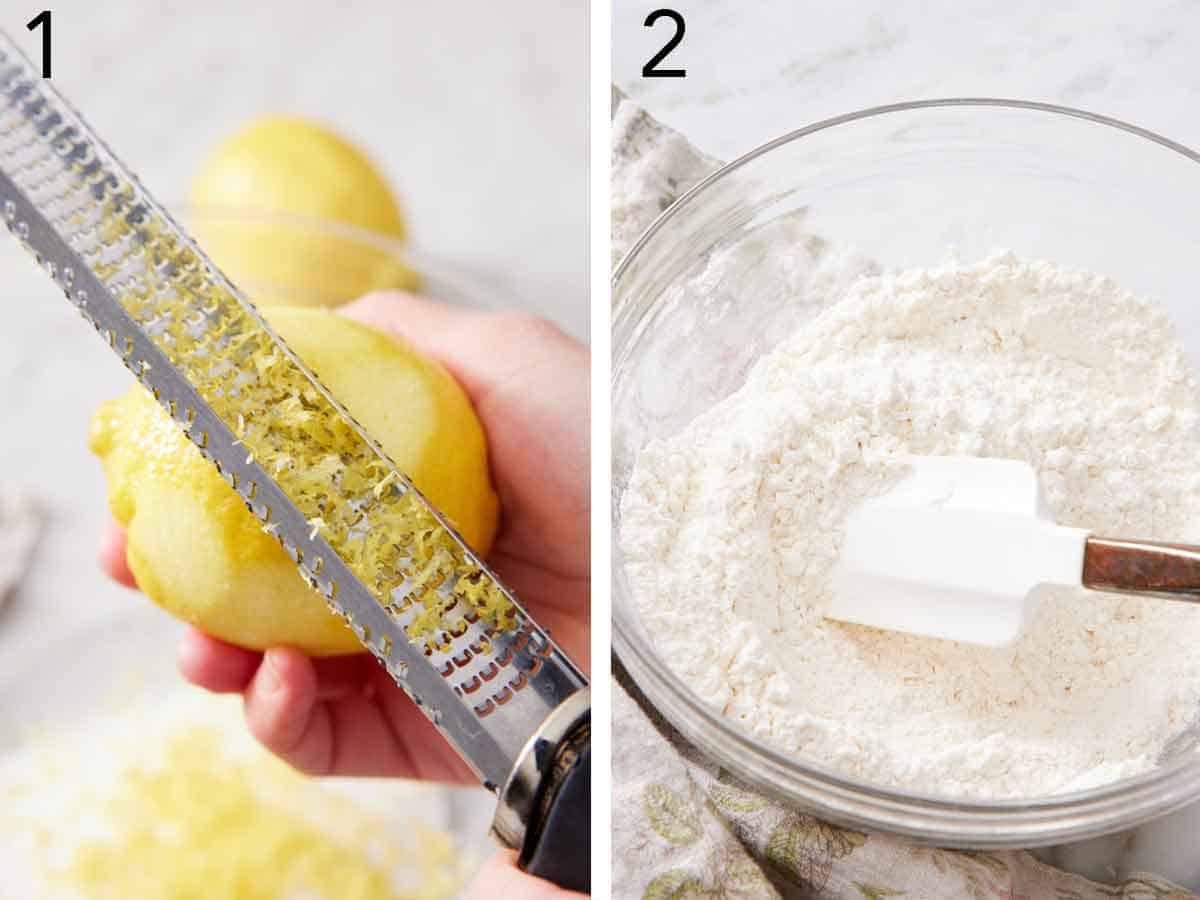
1. Zest a lemon and place it into a large bowl with granulated sugar. Massage the mixture with your fingers until the sugar becomes pale yellow in color.
2. Add the all-purpose flour, leaveners, and salt, and stir together with a rubber spatula.
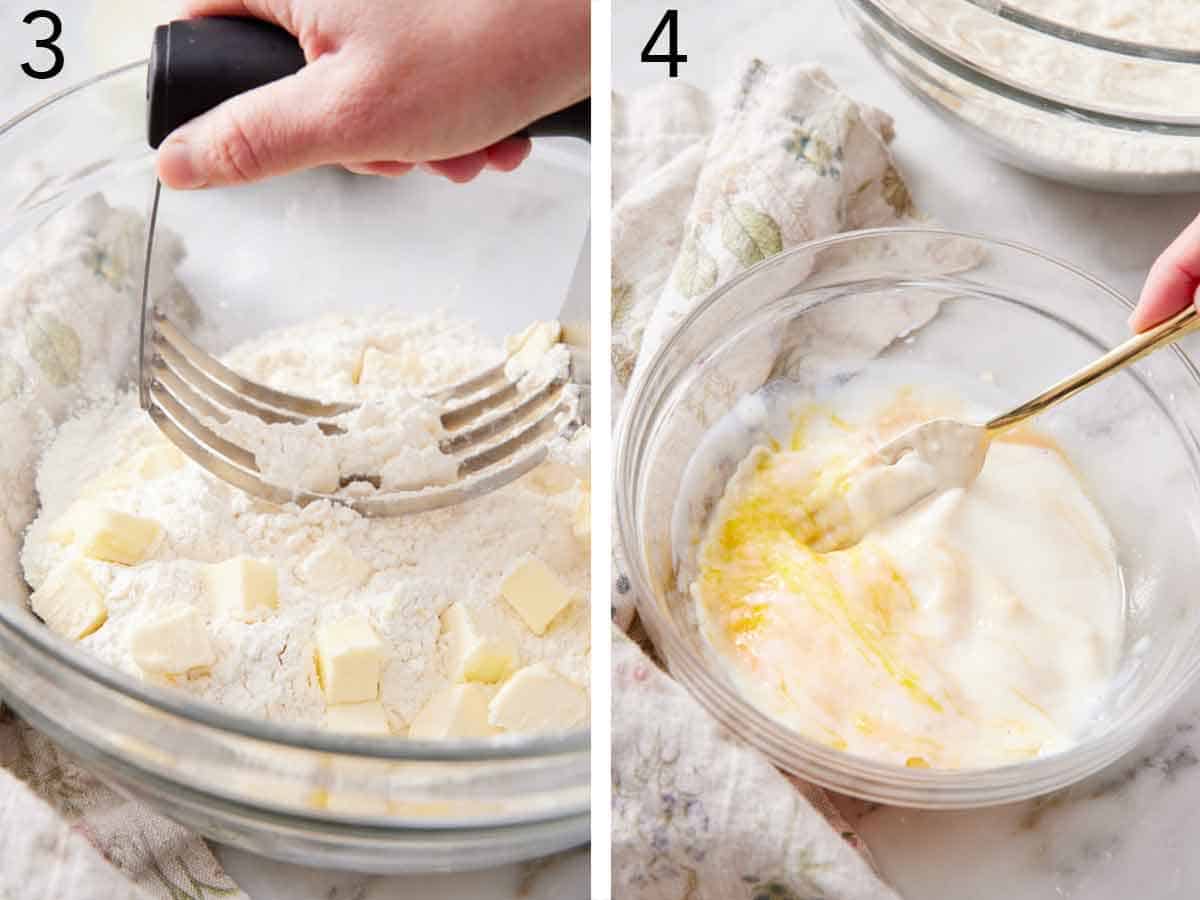
3. Toss in the cold cubed butter and use a pastry cutter or fork to cut it into the flour mixture until the pieces of butter are no bigger than pea-sized. Set aside for the moment.
4. Whisk together buttermilk, egg, and vanilla extract.
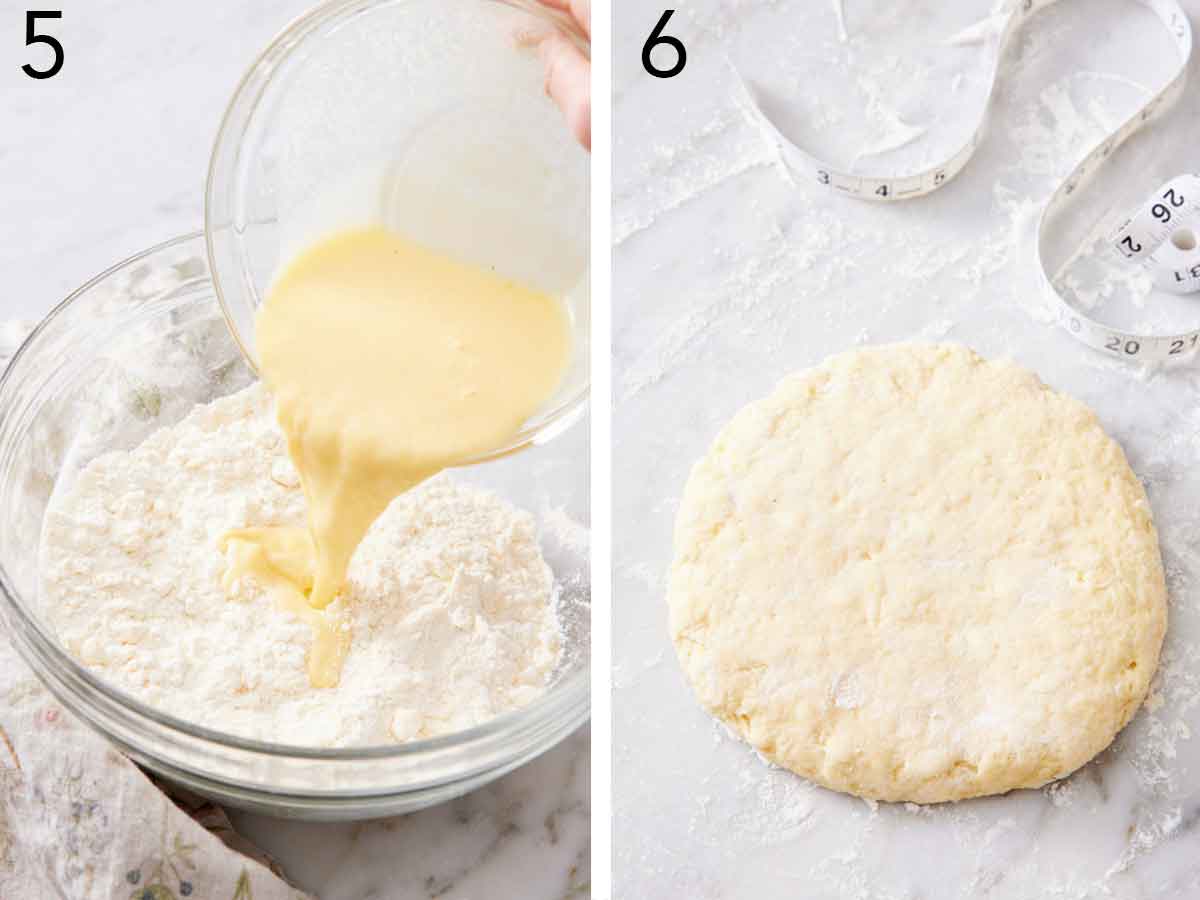
5. Add the wet ingredients to the dry ingredients and stir together to form a shaggy dough.
6. Place the dough on a lightly floured surface and knead once or twice to bring the dough together. Then press the dough into a disc.
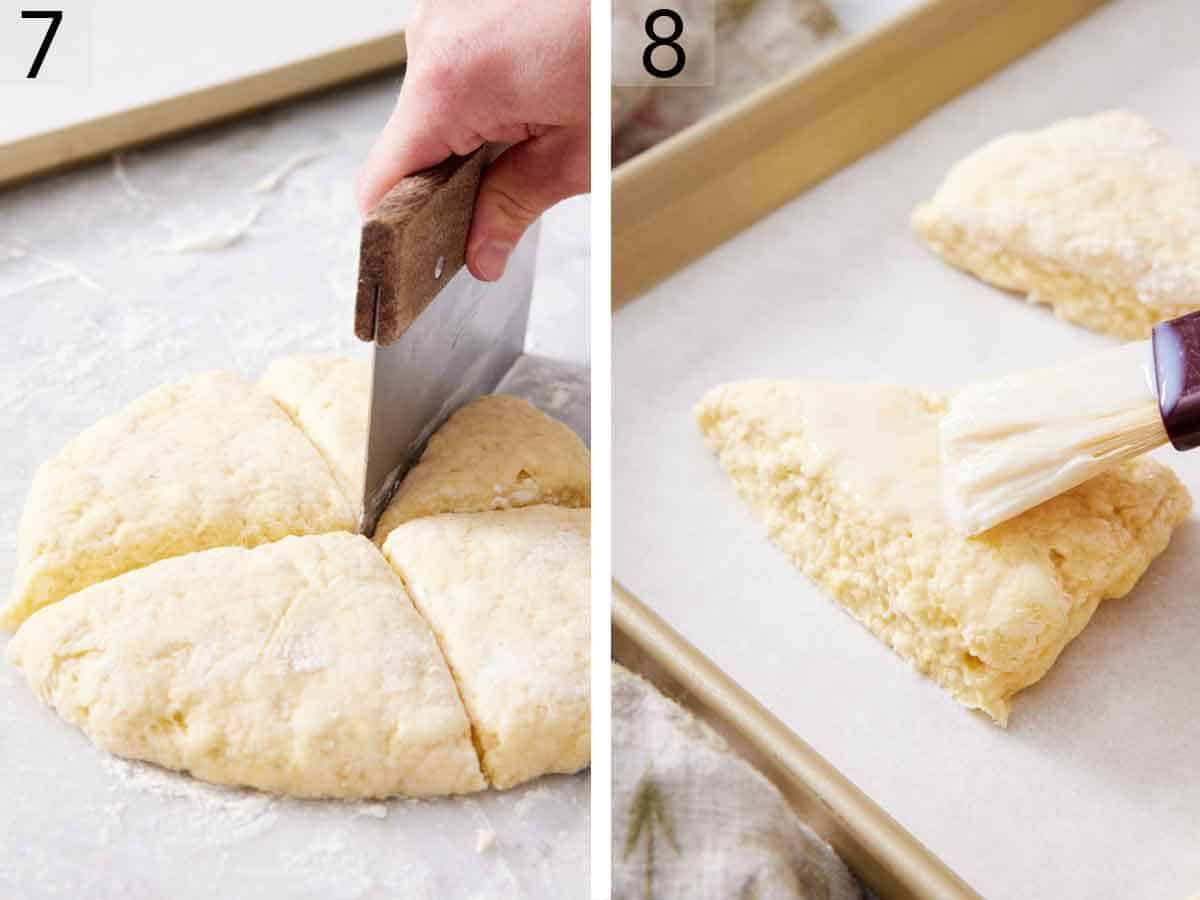
7. Use a floured sharp knife or metal bench scraper to cut the disc of dough into 8 triangles. Place them, about 2 inches apart, on a large prepared baking sheet lined with parchment paper.
8. Brush the top of each lemon scone with buttermilk. Bake them at 400°F until puffed with lightly golden brown tops. Rotate the pan halfway through baking so they all bake evenly. Let the lemon scones cool in the pan set on a wire rack for 20 minutes before glazing.
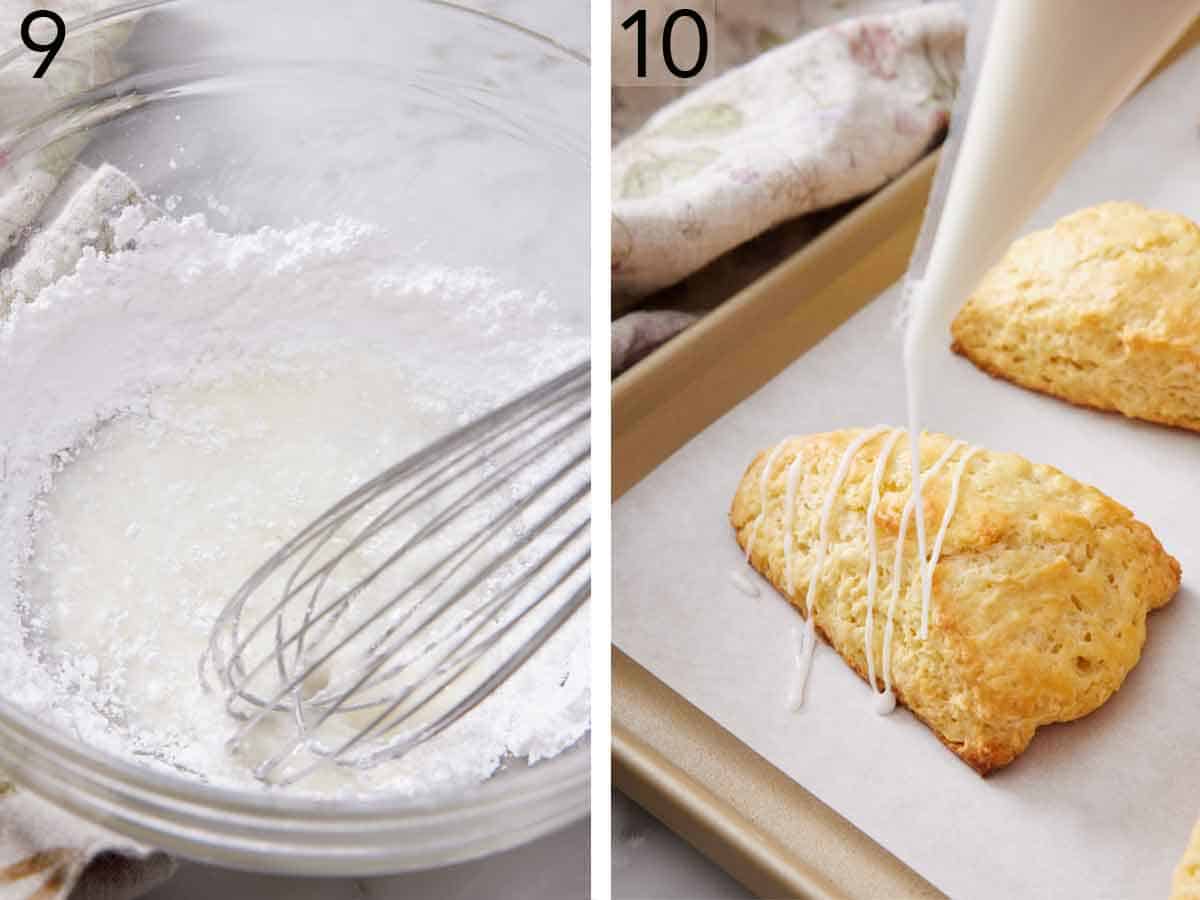
9. Make the easy glaze by whisking together powdered sugar, fresh lemon juice, and salt in a small bowl.
10. Drizzle the glaze over the warm scones before serving. I like to place the glaze in a piping bag for a prettier, more even glaze drizzle. But you can use a fork or spoon to apply the glaze, too!
Lemon Scone Recipe

Ingredients
For the Scones:
- ⅓ cup granulated sugar (67g)
- 1 tablespoon lemon zest (about 2 lemons)
- 2 cups all-purpose flour (240g)
- 2 teaspoons baking powder
- ½ teaspoon salt
- ⅛ teaspoon baking soda
- ½ cup cold unsalted butter cubed (113g)
- ½ cup plus 1 tablespoon buttermilk divided (135 mL)
- 1 cold large egg
- 1 teaspoon vanilla extract
For the Glaze:
- ½ cup powdered sugar (60g)
- 1 tablespoon lemon juice
- Pinch of salt
Instructions
For the Scones:
- Preheat the oven to 400°F. Line a large baking sheet with parchment paper.
- In a large bowl, combine the sugar and lemon zest. Massage the mixture with your fingers to infuse the sugar with the lemon oils until the sugar color is light yellow. Stir in the flour, baking powder, salt, and baking soda. Using a pastry cutter or fork, cut in the cold butter until the pieces are no larger than the size of peas.
- In a small bowl, whisk together ½ cup (120ml) of buttermilk, the egg, and vanilla. Add the buttermilk mixture to the flour mixture, and stir together using a fork or spatula until a shaggy dough forms. Turn out the dough onto a lightly floured surface and knead once or twice to bring the dough together. Press the dough into a 7½-inch round (about ¾-inch thick) disc.
- Using a floured knife, cut the disc into 8 equal triangles and place them on the prepared baking sheet about 2 inches apart. Brush the top of each scone with the remaining 1 tablespoon of buttermilk.
- Bake for 20 to 25 minutes or until puffed, and the tops are lightly golden, rotating the pan halfway through baking. Cool the scones on the pan on a wire rack for 20 minutes.
For the Glaze:
- In a small bowl, whisk together the powdered sugar, lemon juice, and salt until smooth. Drizzle glaze over warm scones before serving.
Notes
- A microplane is the best tool to zest the lemon. It’s great at getting just the zest, not the white pith, and makes the zest fine enough so that it doesn’t affect the texture of the scone. If you don’t have one, use the small holes of a box grater. You could also use a vegetable peeler to remove the zest (no white pith!) in strips, then finely mince it.
- Glaze the scones using a pastry bag, zip-top bag, or fork. For a thin line of glaze, use a pastry bag, zip-top bag with a corner cut off, or fork to drizzle the glaze over each scone for a bakery-fresh look.
- Serving: These scones are delicious with a smear of strawberry jam! They also make a great pairing with a breakfast casserole or Quiche Lorraine for a larger brunch spread.
Nutrition
Have you tried this recipe? Tag me today!
Mention @preppykitchen and tag #preppykitchen!
Storing and Freezing The Scones
Storing baked scones: Keep leftovers in an airtight container at room temperature for up to three days. If glazed, the glaze may start to melt into the scone after a day or two. They can also be frozen in a freezer-safe container for up to 3 months. I recommend leaving off the glaze for freezing and glazing them once they have thawed. (Otherwise, the glaze will turn runny once thawed.)
To make ahead, freeze the dough. Place the cut scones on a baking sheet lined with wax paper or parchment paper just far apart enough so they aren’t touching. Freeze until solid, about 1 hour. Wrap tightly in plastic wrap or store in an airtight freezer container. They are best if used within 3 months to avoid freezer burn. Bake the scones from frozen, adding 3 to 5 minutes to the baking time.

Frequently Asked Questions
Scones require the fat and moisture that cream or buttermilk can provide. My classic scones are made with heavy cream, bringing the dough together and adding sufficient fat to create a tender crumb.
Buttermilk offers similar benefits to the dough and has a slightly tart taste, working to complement and balance other tart flavors such as citrus. The added benefit of buttermilk is that it is also acidic. Like previously mentioned, I use buttermilk in this recipe since the acidity prevents too much gluten formation, ensuring a more tender scone.
I don’t recommend using bottled lemon juice in this recipe. The main source of lemon flavor in these scones comes from fresh lemon zest. The juice is only used in the glaze (there isn’t any in the scones themselves).
Dense or flat dough can be caused by a few different factors and is most commonly caused by using inadequate or ineffective leavening, using too much flour, or letting the dough become warm before baking. For fluffy scones, use cold butter, don’t overwork the dough, and make sure your dry ingredients are carefully measured and not expired.
More Scone Recipes To Try
If you want more breakfast or brunch ideas, I have lots of scone recipes for you to try!
If you love tart, tangy flavors, my cranberry orange scones are a must-try! With lots of citrus flavor and bright pops of cranberries in every bite, they’re a festive breakfast treat to serve during the holidays!
A fall favorite of mine, pumpkin scones are perfectly spiced and so cozy. A sweet icing is the perfect finishing touch.
Melt-in-your-mouth chocolate scones are such a lovely treat for chocolate lovers. They’re filled with chocolate chips and finished with a sweet chocolate glaze.
If you’ve ever wanted chocolate chip cookies for breakfast, give these chocolate chip scones a try! They’re tender and flaky, and have lots of melty chocolate chips in every bite.
English scones are wonderful with clotted cream and jam, perfect for afternoon tea! They are tender on the inside and crisp on the outside.
If you’ve tried this lemon scones recipe, then don’t forget to rate it and let me know how you got on in the comments below. I love hearing from you!