This post may contain affiliate links. Please read our disclosure policy.


This Butter Pecan Cake is moist and fluffy, with pecans toasted in butter, folded into three buttermilk cake layers, and wrapped in cream cheese buttercream. Get my tested conversions for other pan sizes too.

Butter pecan is the flavor of a classic ice cream: rich butter, a few caramel notes from the pecan toasting, and crunchy nuts in every bite. This cake recipe turns that flavor into three tall layers. The pecans get toasted in butter before they go into a buttermilk batter, and the whole cake is coated in a fluffy cream cheese buttercream.
It’s a big cake, built for birthdays and holidays! I’ve included the batter weight per pan, so your three layers bake evenly for a sturdy layer cake. I’ve also tested other cake pan sizes and tell you how to convert it if you don’t want to bake a layer cake! Plus, how to store a cream cheese–frosted cake safely.
“I grew up with my grandmother making butter pecan cake, but I didn’t have her recipe. I made this, and it tastes just like hers!! It’s fluffy and tender, but the crunch of the toasted butter pecans balances it nicely. And it’s perfect with cream cheese frosting. Thank you for taking me back to my childhood!”
Trinity
Key Ingredients

These are the main ingredients you need. The full list of ingredients and measurements is in the recipe card below.
Pecans — you can buy already chopped pecans (pecan pieces) or chop pecan halves. I developed this cake by chopping pecan halves because it’s what I already had in the pantry. Toasting them first is what makes this taste like butter pecan instead of a plain cake with nuts in it. It’s the same technique I use in my butter pecan cookies, if you’ve tried those!
Unsalted butter — you will use butter to toast the pecans, cream with the sugar for the cake batter, and beat into the frosting. The butter in the frosting gives it enough structure to frost a three-layer cake since cream cheese frosting is softer than a classic buttercream. The cake batter uses the Creaming Method (see The 5 Main Cake Mixing Methods for details), whipping air into the butter and sugar to produce a light and fluffy cake. Use unsalted so you control the salt level overall. My Kitchen Fundamentals guide on Salted Vs. Unsalted Butter explains how to make the swap if you only have salted butter.
All-purpose flour — I use King Arthur all-purpose flour, which gives the layers enough structure to hold the pecans without sinking while still being fluffy. I don’t recommend swapping in cake flour in this recipe. I tested the layers to be very light, tender, and fluffy using all-purpose flour, which is most likely to already be in your pantry. Switching to a lower protein flour can make the layers hard to handle or even sink in the oven since there is less gluten structure.
Buttermilk — buttermilk’s acidity reacts with the baking soda for lift and keeps the crumb tender by inhibiting some of the wheat proteins from developing as strong of a gluten network. If you don’t have buttermilk, make my buttermilk substitute so you don’t lose the benefit of the acid.
Eggs — bring them to room temperature so they blend into the creamed butter smoothly instead of seizing it into curds. Set them out on your counter for 30 minutes, or soak them in a bowl of hot tap water for 5-10 minutes.
Cream cheese — use blocks of full-fat cream cheese, not the spread from a tub. We use Philadelphia. Tub cream cheese has more water and makes a runny frosting. I tested the tubs in my cream cheese frosting recipe and showed the results there. Make sure you have soft, room-temperature cream cheese for the frosting. Cold cream cheese leaves lumps that won’t beat out.

Pro Tips For The Best Cake
Weigh your ingredients for the best results. Measuring ingredients by volume isn’t the most accurate, and it can throw off your flour and sugar ratios easily, which changes the texture of the cake. I always use a scale for ingredients like flour, sugar, and heavier mix-ins like the pecans. Ingredients like butter sticks, which are meticulously measured when they are produced, are fine to measure by the markings on the package. Use my guide for How To Measure Ingredients Correctly for tips on how to use a scale, or measure accurately when you don’t have one.
Cool the cake layers completely before frosting. Warm cakes will melt the frosting, making the cake unstable or causing the layers to slide off of each other. To speed up the cooling process, you can chill the turned-out cakes on a wire rack in the refrigerator or freezer. If chilling in the freezer, check the cakes frequently and remove them as soon as they are chilled to prevent freezing. Get more tips for assembling and decorating layer cakes in my guide on how to decorate a cake.
How To Make Butter Pecan Cake
I’ve highlighted step-by-step process images for making this butter pecan cake. You can find the full set of instructions in the recipe card below.
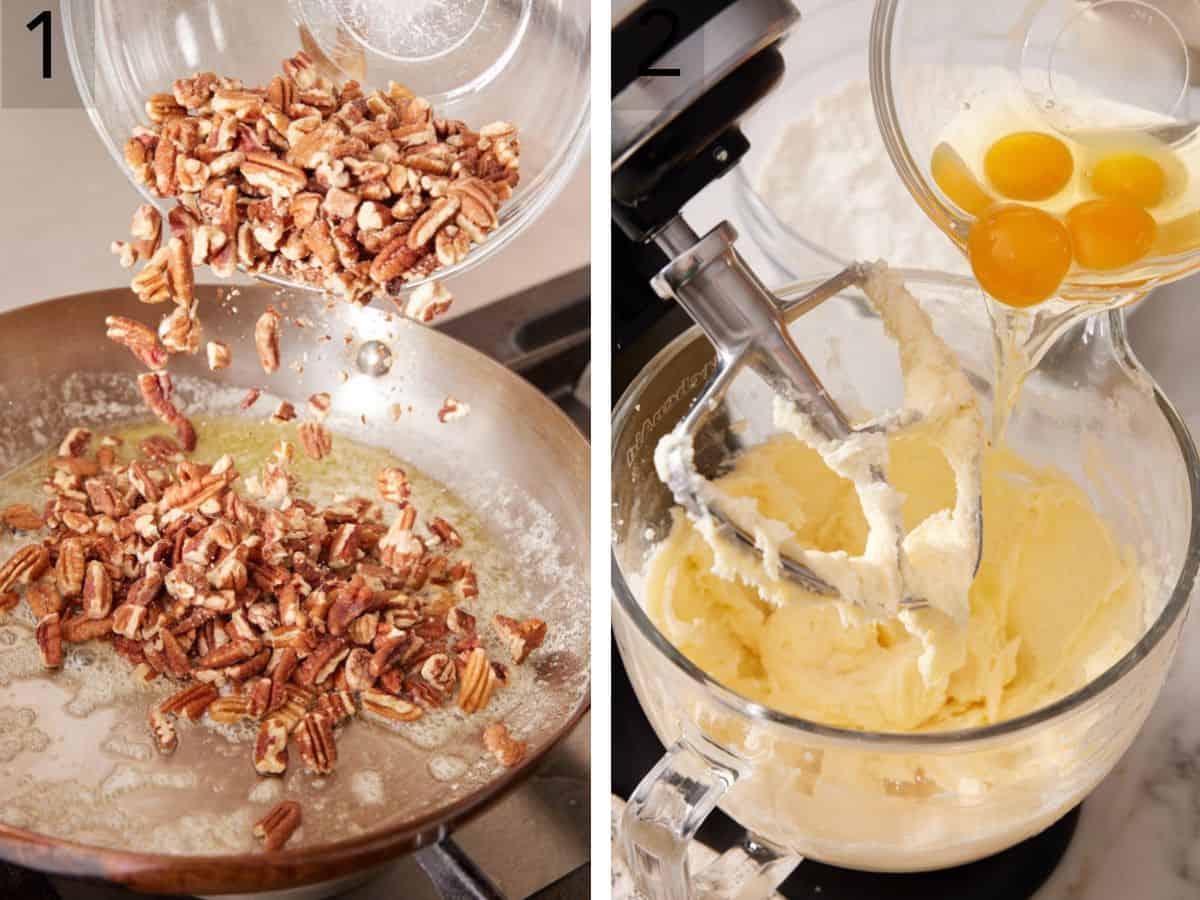
1. Toast the pecans in butter. Melt 3 tablespoons of butter in a skillet over medium heat, add the chopped pecans, and stir now and then for 5 to 8 minutes, until they smell nutty and are a shade darker. The heat browns the nuts’ surface and the milk solids in the butter at the same time, and that toasty, slightly caramel flavor is what “butter pecan” means.
Let them cool completely. Set aside ½ cup of toasted, finely chopped pecans for the frosting and decoration. To toast pecans in the oven or air fryer instead, see my guide to how to toast pecans.
2. Make the dry mix. In a large bowl, whisk together the flour, baking powder, baking soda, and salt. Beat the remaining butter and the granulated sugar together until light and fluffy, or for 3 to 4 minutes, using a stand mixer fitted with a paddle attachment or an electric hand mixer. Add the eggs, one at a time, beating until each is combined. Stop to scrape down the sides of the bowl as needed. Beat in the vanilla.
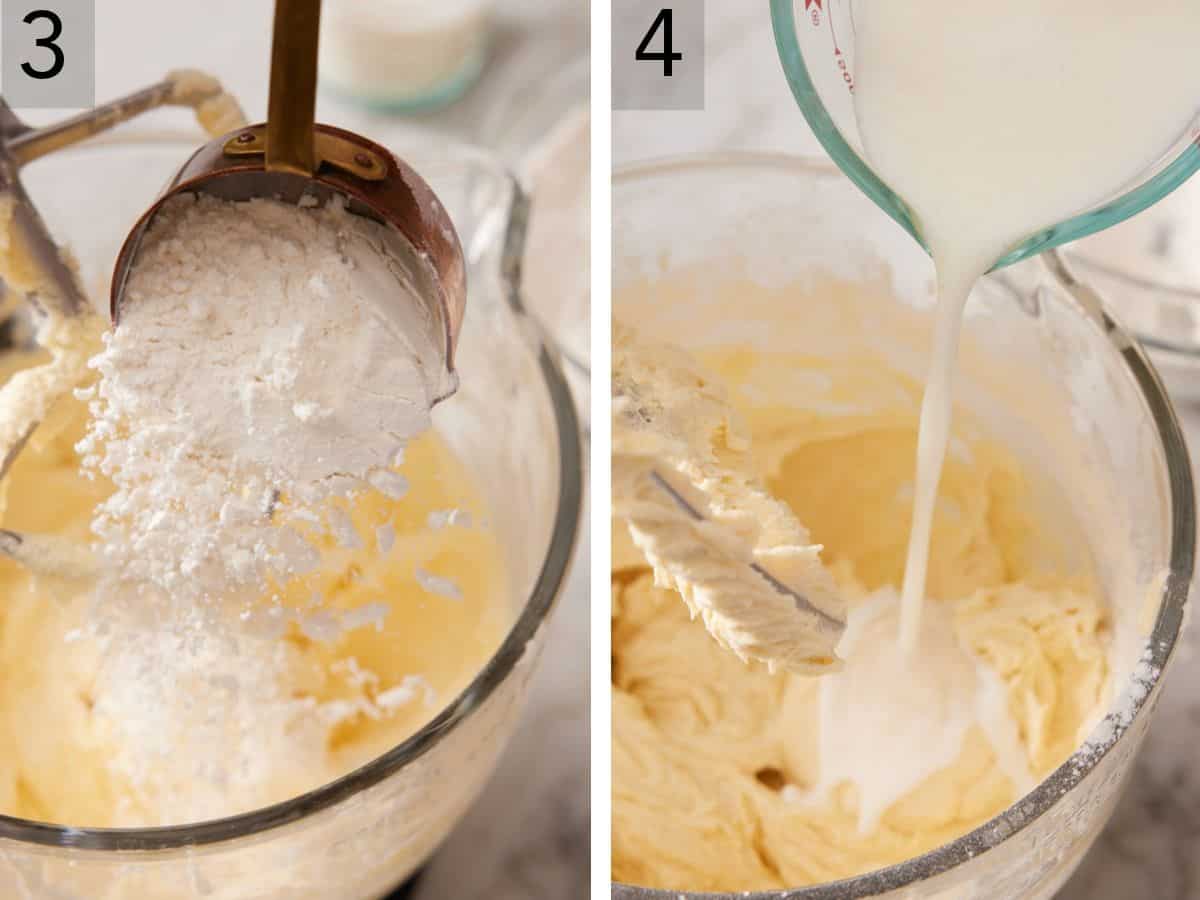
3. Mix the batter by alternating the wet and dry ingredients. With the mixer on low speed, add a third of the flour mixture. Let it mix until the flour is mostly combined, then follow it with half of the buttermilk. You don’t need to stop the mixer between each addition, only to stop and scrape down the bowl once or twice to make sure everything is mixing together.
4. Repeat, alternating between the dry ingredients and buttermilk until both are fully combined. Stop and scrape down the bowl occasionally.
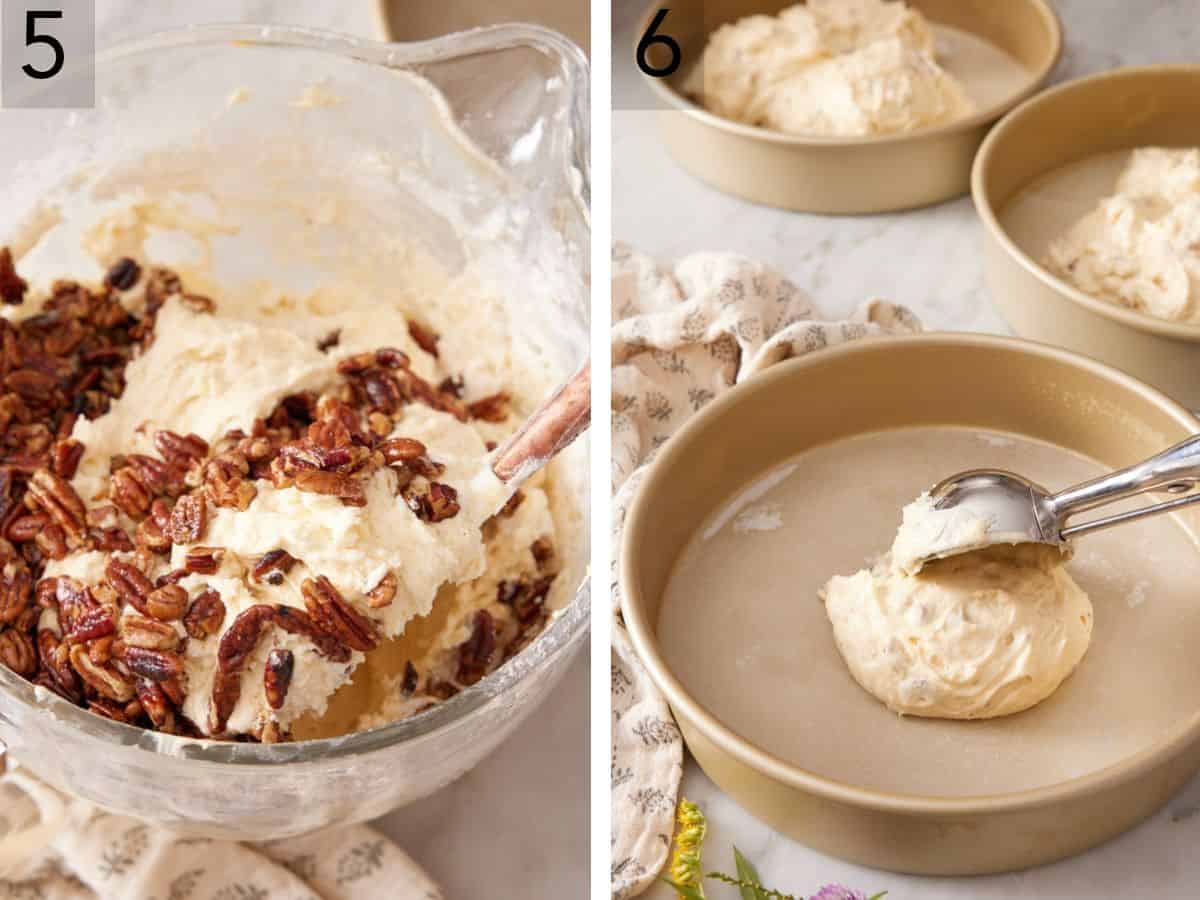
5. Fold in the cooled buttered pecans until evenly distributed. Make sure they have cooled completely, or the warm pecans will melt the creamed butter and deflate the batter. I made this mistake in one test, and my batter went from thick and fluffy to runny and greasy.
6. Divide the cake batter among the greased and parchment paper-lined cake pans. Bake at 350°F for 25 to 30 minutes, until a wooden pick comes out with just a few crumbs. Cool the layers in the pans for 20 minutes, then turn them out to cool completely.
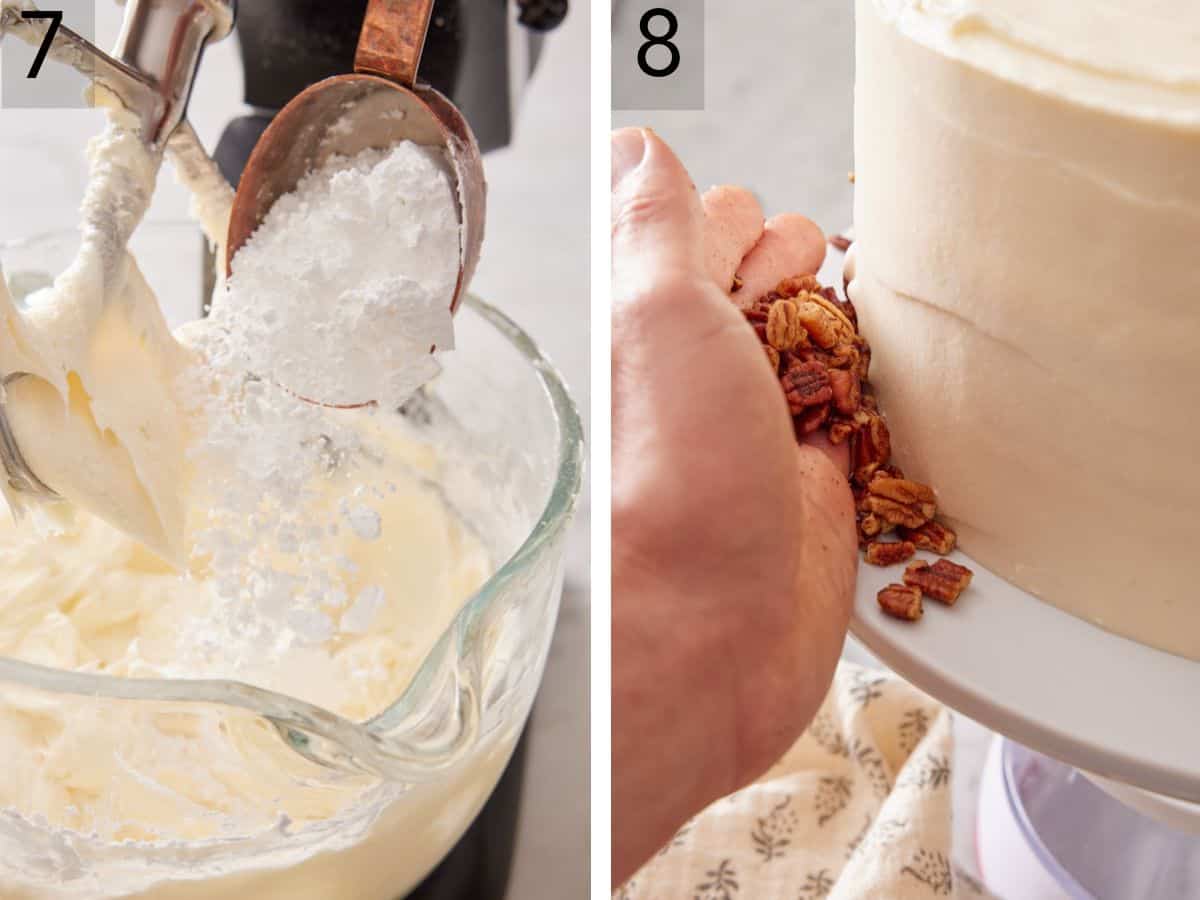
7. Make the frosting. Beat the butter, cream cheese, and salt together on medium speed, then drop to low speed and gradually add the powdered sugar. Beat in the heavy cream and vanilla extract and mix for about a minute until fluffy. Don’t overbeat once the sugar is in. One minute on medium-low is enough, because cream cheese turns runny if it’s whipped too long.
8. To assemble, spread about 1 cup of frosting between each layer and the rest over the outside. Press additional toasted pecans on the outside of the cake and pipe decorations on top, if desired. Chill the frosted cake for 30 minutes before slicing so the frosting sets and the slices hold clean edges.
How To Get Even Cake Layers
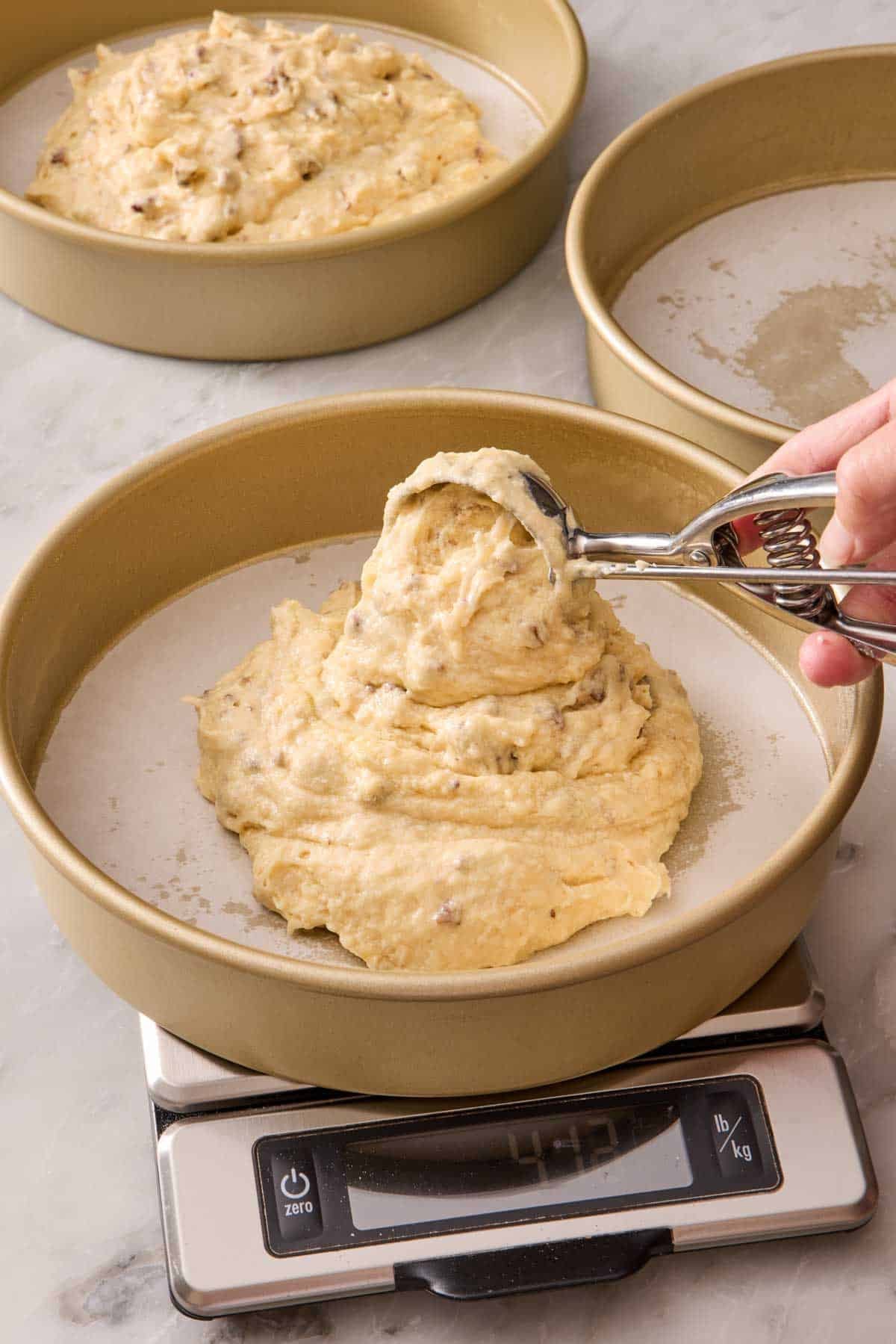
Weigh the batter in each pan. You should have about 690g of batter per pan, but you can weigh your full batch of batter and divide by three to get a precise amount. Set each prepared pan on a kitchen scale, tare it, then add the batter. This way, the three layers will bake at the same time and stack evenly. Grease and line the pans first, following How to Line a Cake Pan with Parchment Paper.
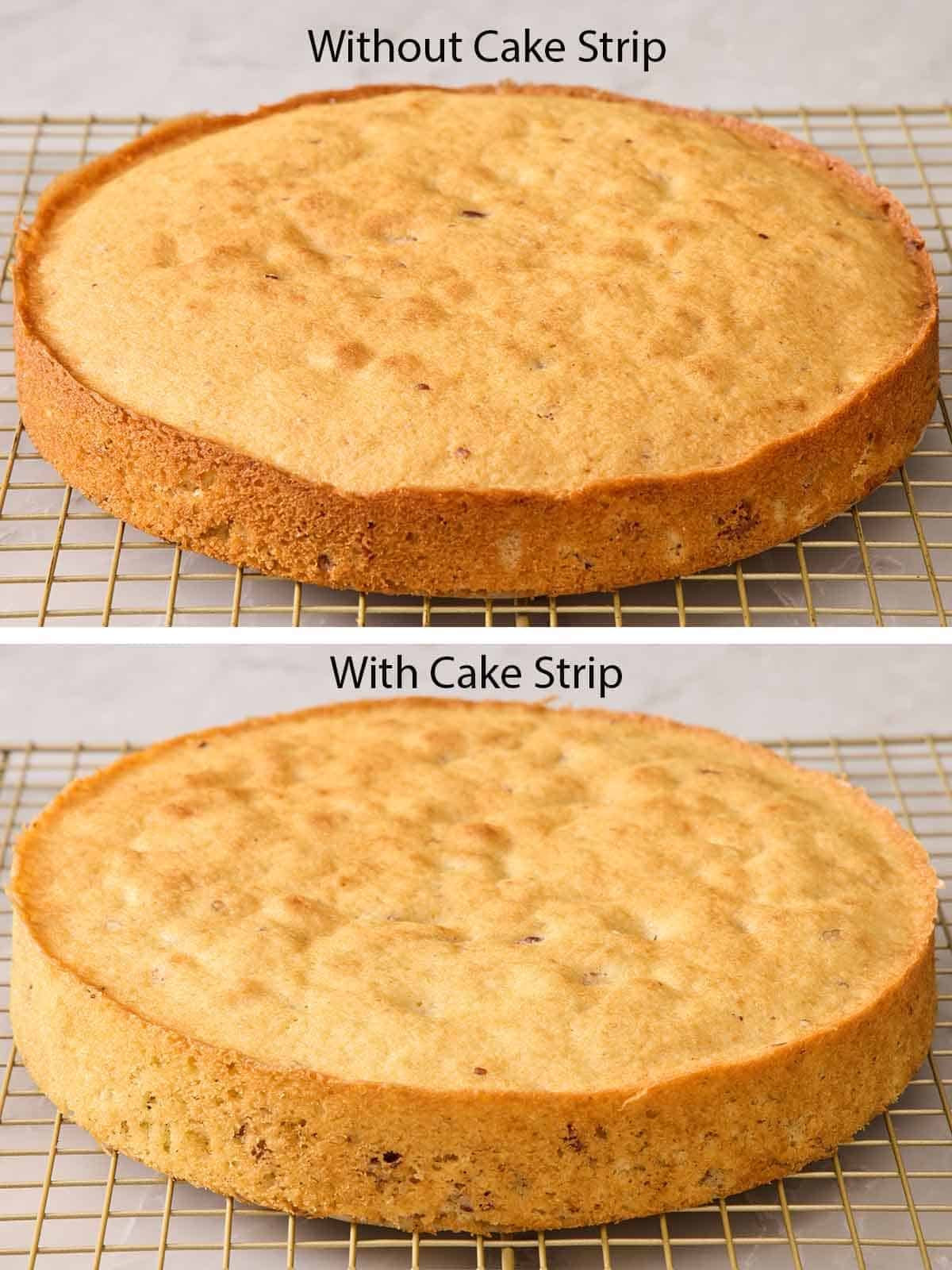
When my team tested this cake without fabric baking strips, we found the layers without the strips domed a little. The edges were also darker and formed a firmer crust. Water-soaked strips around the pans keep the edges cooler so the layers bake flatter. For how to use them, or make your own, see my guide on How to Bake Flat Cake Layers. If yours dome, level them with a serrated knife before stacking.
Baking Pan Conversions
Several readers have commented asking me if you can make this recipe in other cake pans. Yes, and I tested some of them for you!
- Cupcakes: Line a cupcake pan with paper cupcake liners, and fill each one with ¼ cup (60g) of batter. Bake at 350°F for 20 minutes. You will get 32-34 cupcakes from one recipe. Pipe or swoop the frosting on top once the cupcakes have cooled.
- Sheet cake: Grease the pan, then line it with a parchment paper sling if you want to remove it for serving. Add all of the cake batter to the pan, smooth it out, and bake at 350°F for 45 minutes. In my test, the cake turned a bit dark on top with the longer bake time, so I recommend loosely covering it at 30-35 minutes with a sheet of foil.
If you’d like to convert this recipe to another cake pan size, use my Cake Academy guide to Baking Pan Sizes and Conversions. This recipe makes about 8½ cups of batter (2090g total weight).
Butter Pecan Cake Recipe

Ingredients
For the Cake:
- 1¼ cups plus 3 tablespoons unsalted butter softened and divided (325g)
- 1½ cups chopped pecans (180g)
- 4¼ cups all-purpose flour (540g)
- 2½ teaspoons baking powder
- 1 teaspoon salt
- ¾ teaspoon baking soda
- 2½ cups granulated sugar (500g)
- 5 large eggs room temperature
- 1 tablespoon vanilla extract
- 1¼ cup buttermilk room temperature (300ml)
For the Buttercream:
- 1½ cups unsalted butter softened (340g)
- 2 (8-ounce/227g) blocks cream cheese room temperature
- ¼ teaspoon salt
- 7 cups powdered sugar (840g)
- 1 tablespoon heavy cream
- 1 teaspoon vanilla extract
- ½ cup toasted pecans finely chopped (60g)
Instructions
For the Cake:
- In a skillet over medium heat, melt 3 tablespoons of butter. Add chopped pecans and cook, stirring occasionally, until toasted, 5 to 8 minutes. Transfer the toasted nuts to a small bowl and let cool completely.
- Preheat the oven to 350°F. Grease 3 (9-inch) round cake pans with baking spray and line the bottoms with parchment paper. Wrap with water-soaked fabric baking scrips, if desired.
- In a large bowl, whisk together the flour, baking powder, baking soda, and salt.
- In a large mixing bowl or the bowl of a stand mixer fitted with a paddle attachment, beat the remaining 1¼ cups butter and granulated sugar together until light and fluffy, 3 to 4 minutes.
- Add the eggs, one at a time, beating until combined between each addition. Stop to scrape down sides as needed. Beat in the vanilla.
- With the mixer on low speed, add a third of the flour mixture followed but half of the buttermilk. Repeat, alternating between the flour mixture and buttermilk until both are fully combined. Stop to scrape down the bowl occasionally. Fold in the cooled buttered pecans until evenly distributed. Divide the batter among the prepared cake pans.
- Bake for 25 to 30 minutes, or until a wooden pick inserted into the center comes out with just a few crumbs. Let the cakes cool for 20 minutes in the pans. Invert onto cooling racks, remove the parchment paper, and let the cakes cool completely.
For the Buttercream:
- In a large mixing bowl or the bowl of a stand mixer fitted with the paddle attachment, beat the butter, cream cheese, and salt together on medium speed until creamy and well combined, about 1 minute.
- With the mixer on low speed, gradually add the powdered sugar. Stop occasionally and scrape down the bowl. Beat in the cream and vanilla. Once combined, increase the speed to medium-low and beat until smooth and fluffy, about 1 minute.
For the Assembly:
- Place one cooled cake layer on a cake stand or serving plate. Top with 1 cup frosting, spreading smoothly out to the edges. Place another cake layer on top and repeat with 1 cup of frosting. Top with the final cake layer, and spread the remaining frosting all over the top and sides of the cake. Press finely chopped pecans around the bottom of the cake, and sprinkle any remaining on top of the cake around the edge. Chill for 30 minutes to set the frosting before serving. Cake can be covered and stored at room temperature or refrigerated for up to 5 days.
Notes
- The frosting makes about 6 cups (1,520g). This leaves enough for you to reserve ½ cup if you want to pipe dollops on the top of the cake. Or you can make a naked cake-style design and have thicker frosting between layers and on top.
- To stretch the servings for a party, use my trick for how to cut a round cake and cut smaller, evenly sized pieces. You can stretch an 8-inch layer cake from 12 up to 48 slices.
Nutrition
Have you tried this recipe? Tag me today!
Mention @preppykitchen and tag #preppykitchen!
How To Store Butter Pecan Cake
Keep it in the fridge. Cream cheese frosting is perishable, so refrigerate the cake within 2 hours of frosting or serving (USDA FSIS). Stored covered in the refrigerator, it keeps for up to 5 days. Let slices sit at room temperature for about 20 minutes before serving so the crumb texture softens.
In my tests, I found the cake to be firm and feel drier when served straight from the fridge. Since the fat in the cake is butter, and butter firms up when cold and softens at room temperature, temperature changes the texture of the cake.
Freeze it. Freeze the whole cake or individual slices uncovered for 1 to 3 hours until the frosting is firm. Then wrap tightly in plastic wrap and foil and freeze for up to 3 months. Thaw overnight in the refrigerator. (I have a whole guide about how to freeze cakes to avoid freezer burn!)
Make ahead. Bake the layers up to a day ahead, cool completely, and wrap tightly. You can also freeze the unfrosted layers for up to 3 months.
More Recipes To Try
For more tasty recipes filled with butter and pecans, try one of these dessert recipes:
- Carrot Cake: a spiced, pecan-studded layer cake with the same cream cheese frosting style as this butter pecan cake.
- Hummingbird Cake: a Southern banana and pineapple layer cake with pecans and cream cheese frosting.
- Pecan Pie: the classic pecan dessert, with a gooey brown sugar filling and a flaky crust.
- Italian Cream Cake: coconut and pecan layers under cream cheese frosting; it’s a close Southern cousin of butter pecan cake.
- Pecan Sandies: the same butter-toasted pecan flavor in a crisp, buttery sugar cookie.
If you’ve tried this butter pecan cake recipe, then don’t forget to rate it and let me know how you got on in the comments below. I love hearing from you!