This post may contain affiliate links. Please read our disclosure policy.
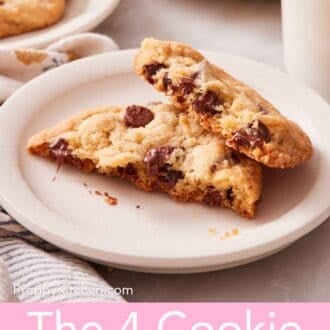
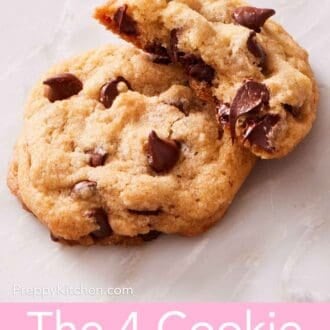
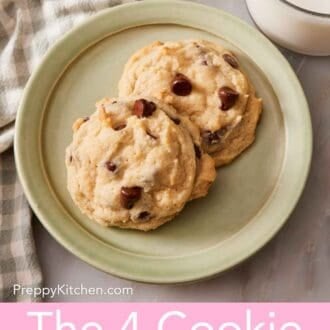
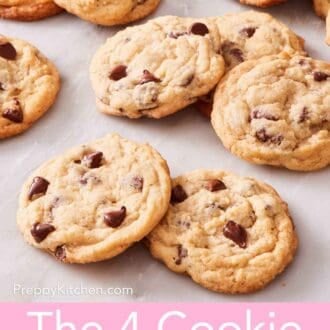

If your cookies turn out chewy, crispy, cakey, or soft, learn why! In this article, I teach you what makes cookies a certain texture and how you can bake the texture you want every time.
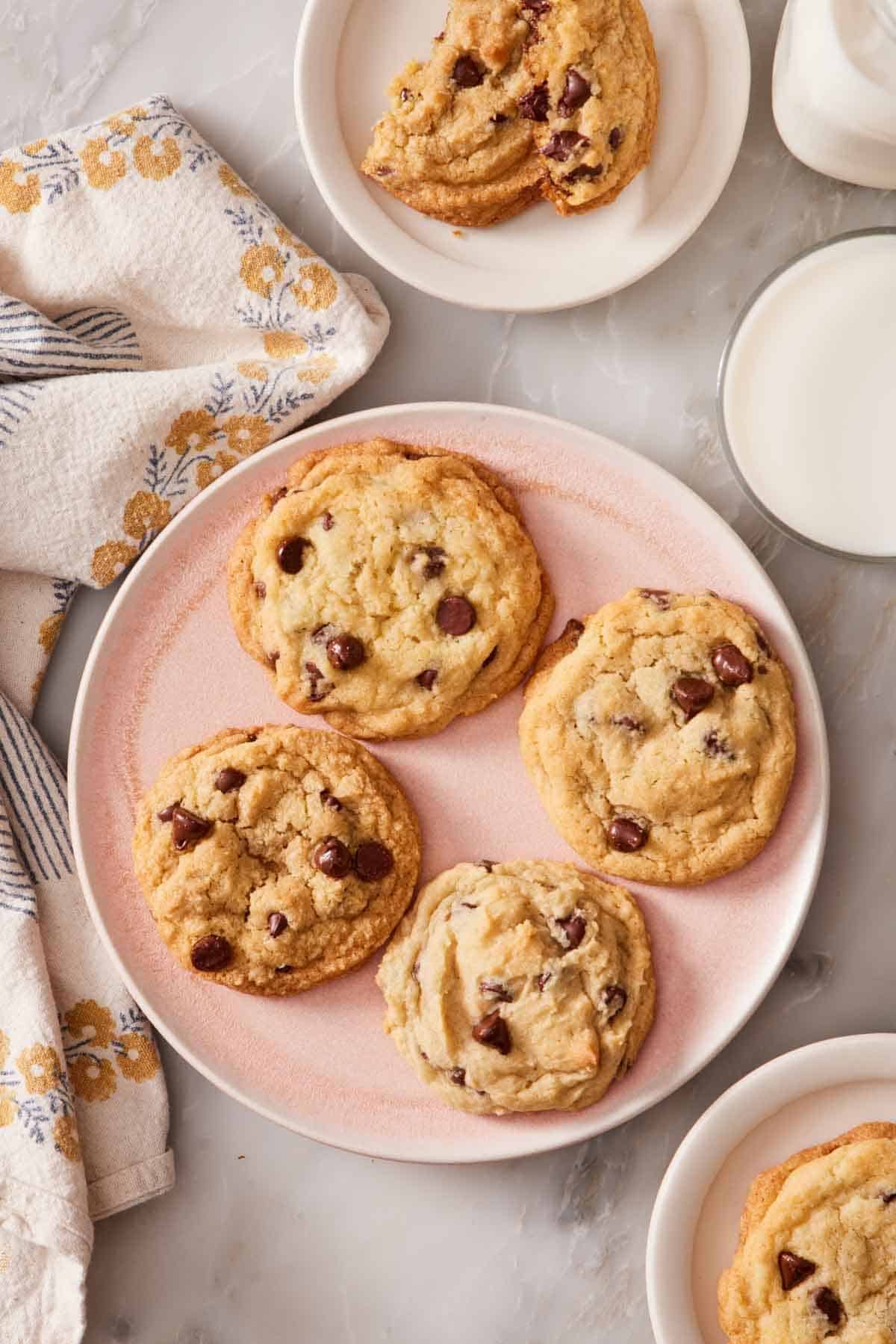
Cookies fall into four texture categories—chewy, crispy, cakey, and soft—and roughly a dozen variables decide which one you end up with. This means the texture you get when you bake a batch of cookies isn’t random! It’s all about the ratio of ingredients, the state of those ingredients (melted, cold, etc.), how they are mixed, rest time, and the baking temperature. Once you know the main elements that affect how cookies bake, you can stop chasing “the perfect chocolate chip cookie” and start baking the cookie you actually want.
I have tested and published over 150 cookie recipes—that’s a lot of cookie testing! Over the years, I distilled all of the variables down to 12 Elements of Cookie Texture. These are the main points in a recipe that change texture, teaching you exactly what you can do to bake your perfect cookies or how to troubleshoot a recipe gone wrong.
If you’ve baked a batch of cookies and wondered why yours spread more, browned deeply on the edges, or baked as mounds instead of flat, you will learn everything you need to know to diagnose and fix it in this article!
“I have been trying to make my grandmother’s chocolate chip cookies for years but I don’t have her recipe. Nothing I found is quite like hers, but after reading this, I tried to modify one that was close and I got it!!! Cornstarch, melted butter, and a splash of cream made them just the right softness with a little chew. THANK YOU!”
Kylie
Why This Matters
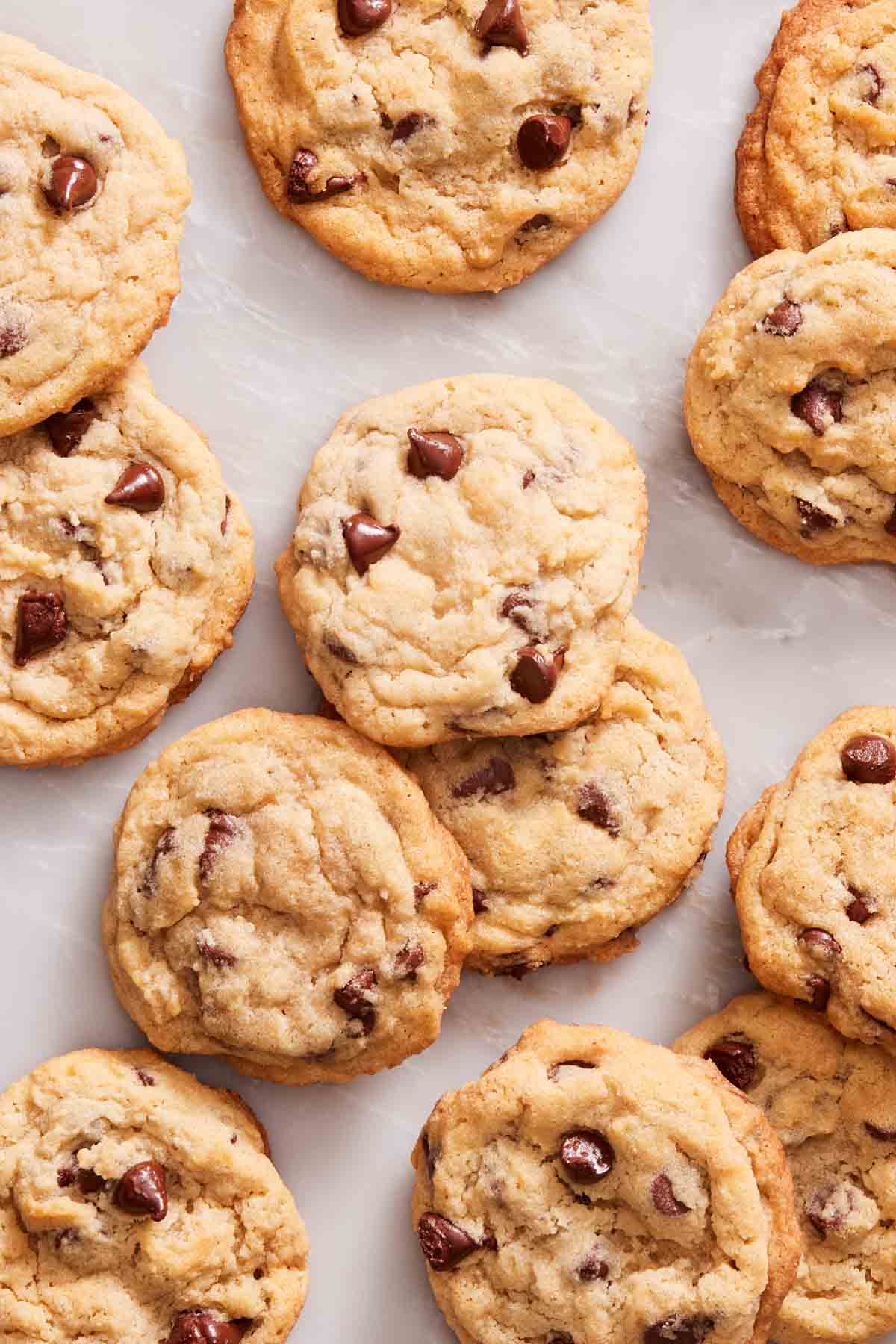
I think cookies are the most sensitive baked goods in the home kitchen, despite being very easy to make. Every little variable you change shows up on the sheet pan. You can make the same recipe and change one thing about it—like switching from brown sugar to granulated sugar because you were out—and you will change how the cookie spreads, browns, and ultimately, the finished texture.
I tested my best chocolate chip cookie recipe 20 times to show you exactly how the elements bake differently, and I walk you through each test and the results. Once you know this, you can either diagnose why your cookies baked differently than you’d like or intended. Or, you can change an element to create the texture you’d prefer, like turning a thicker chewy cookie into a thinner crispy one.
The 4 Cookie Textures
Before the elements make sense, let’s define the four textures:
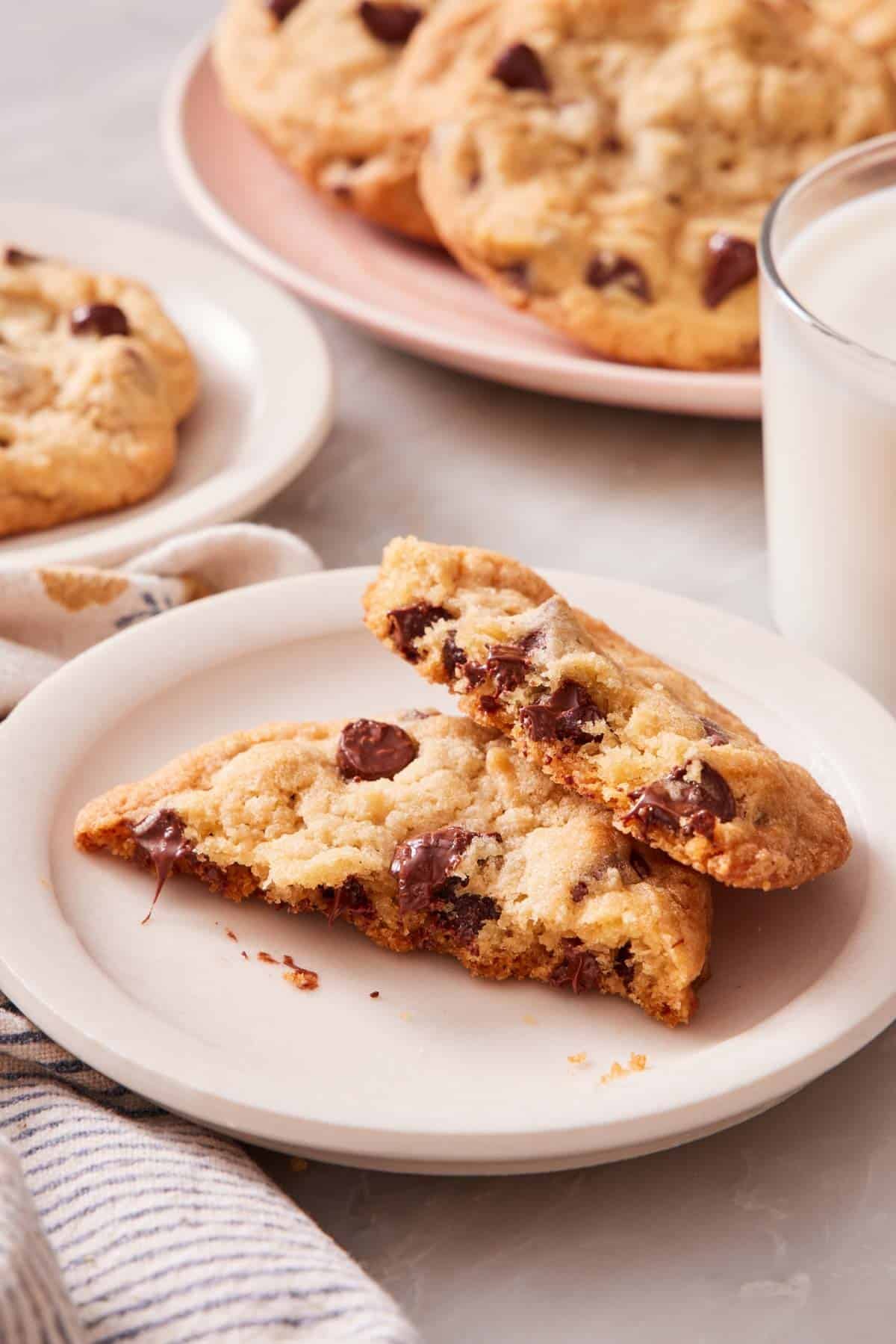
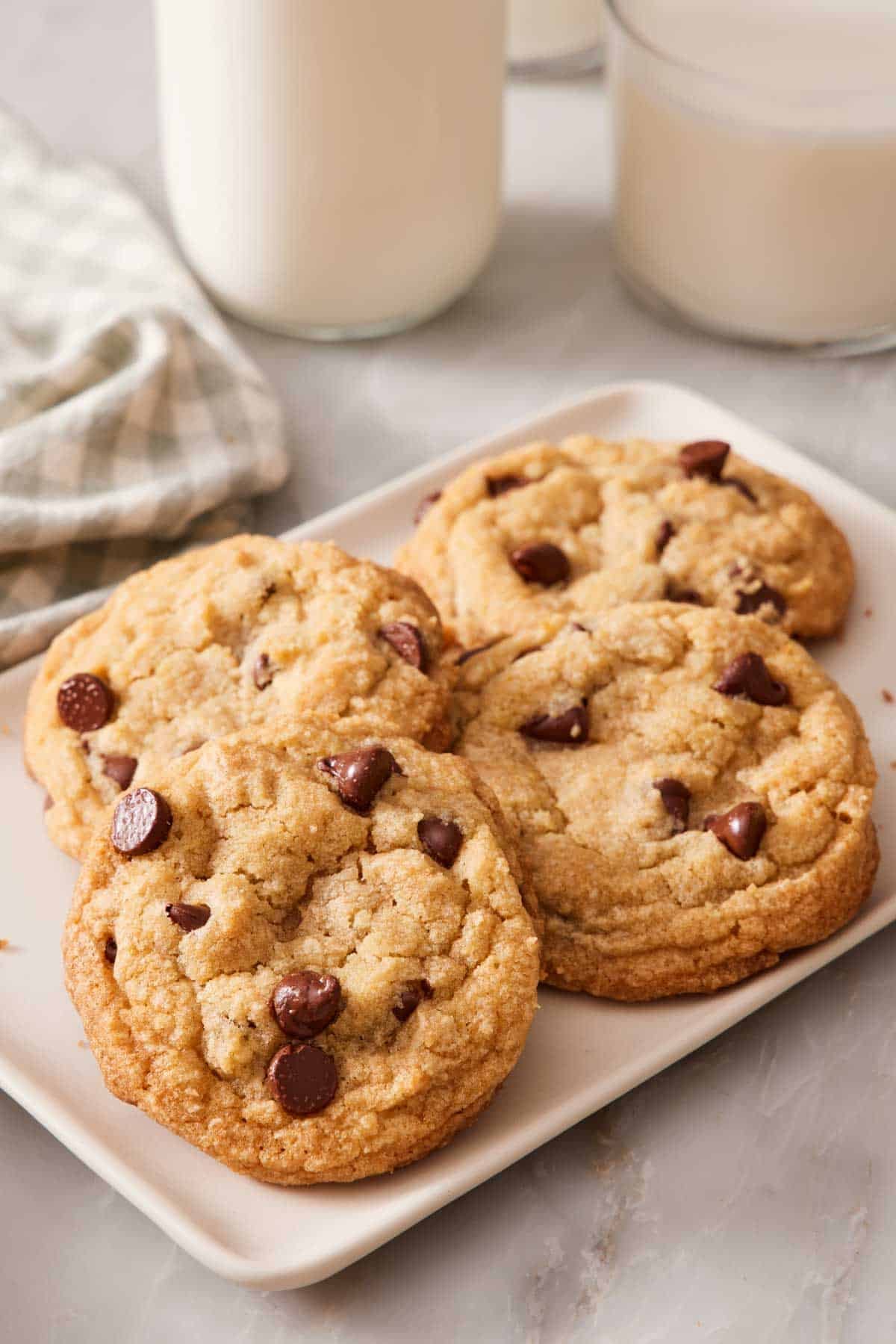
Chewy cookies have resistance when you bite into them, and there’s some tension that takes a moment to release (think caramel). They’re usually thicker than crispy cookies but not as puffy as cakey ones, with a moist interior and edges that are set but not hard. A chewy chocolate chip cookie—like my chocolate chip cookies or molasses cookies—bends before it breaks.
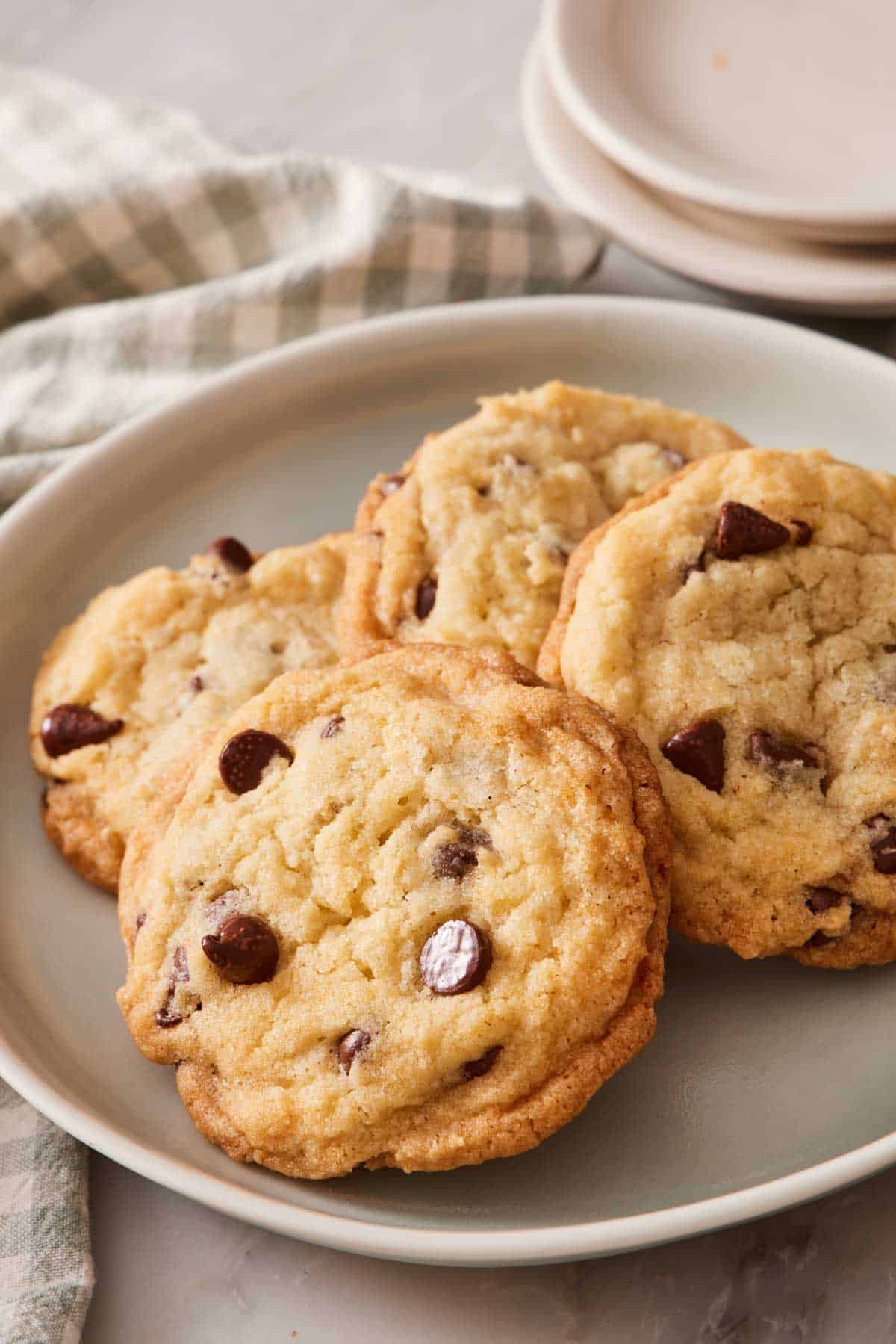
Crispy cookies are typically thin and dry or crumbly, with a clean snap when you break them. They shatter rather than bend. The interior and exterior are essentially the same texture all the way through. Classic meringue cookies are an extreme example; ultra-thin lace cookies and the wafer-thin chocolate chip cookies that some people prefer over thick ones are crispy by design.
Cakey cookies are puffy and tender, with an open, slightly fluffy crumb structure. They tend to be paler in color since browning often makes a cookie crispy, and the recipe may contain an ingredient with a lot of moisture, like cream cheese or sour cream. Lofthouse cookies, cake mix cookies, and ricotta cookies are cakey on purpose. Most of the time, when people ask “why are my cookies cakey,” they get a cakey texture by accident, so we’ll get into that later.
Soft cookies are tender but don’t have to be puffy or cake-like. The give comes from moisture rather than air, and the crumb is often dense and short rather than open. Snickerdoodle cookies and peanut butter blossoms live here, and so does any cookie that uses cornstarch as the “soft cookie secret” (we’ll cover why that works later).
Cookie Texture Is On A Spectrum
Cookies can have one texture, but quite often they coexist with others. For example, a chewy chocolate chip cookie can have an overall chewy texture, especially at the center, but have a golden, crisp edge and bottom.
Chewiness moves along an axis of changing moisture and resistance. Crispy shifts along the thinness and dryness axis. Cakey lives along an aeration axis. And Soft shifts along a moisture and density axis. You can have a cookie that is both soft AND cakey (Lofthouse) or chewy with crisp edges (the most popular CCC profile). My funfetti cookies are a good example of chewy and soft coexisting. As we go through each element, keep this in mind!
The 12 Elements That Control Cookie Texture
Now to the toolbox. Over the years, I have identified about a dozen variables in a cookie recipe that shift texture in a predictable direction. Once you know what each one does, you can read any cookie recipe and better predict what the result will be. And you can adjust an existing recipe to push it toward the texture you actually want!
Keep in mind there are multiple factors in a recipe that can cause a cookie to spread, puff, or be a certain texture. These elements each contribute a certain property, but in different ratios with other ingredients, the overall cookie can change in numerous ways. (More on that later!)
Element 1 — Fat type. The fat in cookies makes them tender, crispy, or contributes to spread, depending on the ratio and type used. Butter gives flavor and helps dough spread. Brown butter—butter cooked until the milk solids caramelize—adds nutty depth and removes water in the process, which slightly reduces spread. Shortening and lard give structure like in my biscochitos. They are both pure fat and contain no water, with a higher melt point, so cookies hold their shape easily and rise rather than spread. A 50/50 mix of butter and shortening is a classic combo that produces a thicker, less spreading cookie with some of the butter flavor. Solid coconut oil behaves somewhere between butter and shortening.
Element 2 — Fat state. This is the element most home bakers underestimate as having an effect on texture. Cold-butter cookies (like shortbread) hold their shape and bake up dense and short (crispy but crumbly). Softened butter creamed with sugar incorporates air and gives lift, leading to a dough that puffs in the oven. Melted butter introduces no air at all, so it spreads more, so the cookie ends up denser and can also be thinner.
Element 3 — Fat ratio. This is where you can control how the fat changes the dough. More fat relative to flour means more spread and a crispier, thinner cookie. Less fat means a thicker, more cake-like result. A cookie with 100g flour to 100g butter spreads more than one with 100g flour to 60g butter.
Element 4 — Sugar type. Granulated (white) sugar promotes spread and crisp edges; it crystallizes as the cookie cools, which gives the snap of a crispy cookie. Brown sugar (especially dark brown) holds onto moisture because of the molasses, which lends chewiness. Powdered sugar, used in some shortbread and Mexican wedding cookie recipes, produces a finer, denser, or more tender crumb. The ratio of sugar types matters more than the measured amount—a recipe at 50/50 granulated/brown gives crisp edges and a chewy middle; one at 80/20 brown to white gives an almost candy-like chew.
Element 5 — Sugar quantity. More sugar means more spread and more crystallization. The first time I cut sugar in a chocolate chip recipe to reduce sweetness, the cookies came out puffy and cakey—not bad but not the same cookie. Sugar isn’t just a sweetener, it’s a structural ingredient! It’s hygroscopic, meaning the molecules absorb water. So more sugar means there’s water for the flour to absorb and less strength to the gluten structure. Higher sugar cookies often spread more and more quickly. It also caramelizes, so the cookies can turn more golden, especially on the bottom and edges.
Element 6 — Egg ratio. A whole egg adds water, fat, protein, and emulsifiers. An extra yolk adds fat and emulsifiers without much additional water. That pushes the cookie toward chewy and rich. An extra white adds water and protein without the fat, pushing the cookie toward cakey, dry, or crumbly. If a recipe asks for “1 egg plus 1 yolk,” it’s deliberately targeting chew. If you’re getting cakey cookies, check whether you accidentally used two whole eggs when the recipe wanted one whole plus one yolk.
Element 7 — Flour type. All-purpose is the default for most recipes. Its protein content is medium-range (10-12%), so it’s not too chewy or too tender. Bread flour (higher protein) gives more chew. Some recipes use bread flour exclusively for thick, chewy cookies. Cake flour (lower protein) gives a more tender, cakey result—it’s what makes cake mix cookies so soft and cake-like! Whole wheat or whole-grain flour adds nutty flavor and absorbs more moisture, often leading to drier, denser cookies unless you adjust the liquid. You can also mix ratios (like 1:1 AP and bread) to have slightly more chew without being too much.
Element 8 — Flour quantity. This is the biggest source of accidental texture problems in home baking! Too much flour = cakey, dry, cookies that don’t spread. Too little flour = greasy, thin, extra crispy or burnt cookies. The reason it goes wrong so often is volume measurement. A scooped cup of flour can weigh anywhere from 120g to 160g depending on how packed it is. A kitchen scale eliminates the variable. (I use 120g per cup for all-purpose, every time.)
Element 9 — Leavening type. Baking soda promotes spread and edge browning. It reacts once and dies in the heat. It also changes the pH of the dough, which drops the caramelization point of the flour and sugar (why you get more browning). Baking powder promotes lift. It’s double-acting and keeps producing gas in the oven heat, leading to puffier cookies. Most chewy cookies use baking soda only, or a higher ratio of it to baking powder. Cakey cookies often use baking powder, sometimes alongside a small amount of baking soda. Swapping one for the other is a guaranteed way to accidentally change the texture of your favorite cookie.
Element 10 — Liquid additions. Any liquid in the dough—milk, cream, sour cream, cream cheese, ricotta, yogurt—pushes the texture toward soft or cakey depending on quantity. A few ounces of cream cheese in a CCC dough makes a noticeably softer cookie. A quarter cup of sour cream takes you into cakey Lofthouse territory.
Element 11 — Oven temperature. Higher temperature (375-400°F) sets the edges quickly and leaves the middle softer. That’s better for chewy, thick cookies, especially if you like a bit more browning. A lower temperature (325-350°F) gives the cookie time to spread and dry through but also reduces browning. It’s better for crispy, thin cookies or soft, cakey cookies. Most cookie recipes default to 350°F because it’s a good middle-ground, but pushing one direction or the other unlocks different textures from the same dough.
Element 12 — Pan choice. Dark-colored pans absorb more heat and bake the bottom faster. Cookies set their edges sooner, spread less, and brown more on the bottom. Light-colored aluminum pans (especially with parchment or silicone mats) give the cookie more time to spread before the bottom sets, leading to thinner, more even cookies. Silicone mats produce the most spread of the three because they add a heavy layer of insulation from direct heat. Nonstick dark pans are the most common cause of “my cookies are burnt on the bottom but pale on top.” If you have dark pans, the fix is to adjust the rack one position up or down (farther from your main heat source) or switch pans.
Chewy: What It Is and How to Bake It
Chewy is the most popular cookie texture and is mostly influenced by ingredient types and ratios rather than mixing technique. The chewiness in a chocolate chip cookie comes from three things working together: moisture retention, flour protein, and just enough structure to hold a thick shape so the center stays gooey.
The Chemistry of Chew
A chewy cookie happens when there’s enough moisture and protein in the cookie that it bends before it breaks. Hygroscopic ingredients, like brown sugar, hold onto moisture because of the molasses in it (hygroscopic means it pulls water out of the air and the surrounding ingredients in the cookie as the cookie cools). Wheat flour with a higher protein content, like bread flour, develops more gluten than all-purpose or cake flour, giving the cookie elasticity. An extra egg yolk adds fat, proteins, and emulsifiers that keep the interior moist without reducing structural strength or adding the extra water that an egg white would.
The Chewy Factors
After years of testing, here are the five key elements that make a cookie chewy.
- Sugar: Use a higher ratio of brown sugar or all brown. My chewy chocolate chip cookies already have a higher ratio of brown sugar with 60% brown and 40% granulated. All brown sugar produces a denser, chewier cookie, while all white sugar produces a thinner, crispy one. The sweet spot for bendy-chewy is about a 2:1 brown-to-white ratio.
- Egg ratio: Adding an extra yolk for every egg in the recipe bumps up the chewiness without making the cookie cakey. The cookies will also stay moist and chewy for longer. Cookies naturally start to dry out and turn firmer after a couple of days, but the extra yolk extended that by an additional day, and they felt just as chewy on Day 3 as Day 1.
- Flour: All-purpose works great, but a half-and-half mix of all-purpose and bread flour will push chewiness further. I don’t use all bread flour for chocolate chip cookies, though. It ends up making them too chewy, and they feel tough or overworked.
- Fat state: Softened butter is typically beaten with sugar, incorporating air, which gives the cookie a bit of rise. Swapping to melted butter that is just whisked together with the sugar and eggs makes a denser chewy cookie. Depending on the ratio of fat to flour, it can be thicker or spread more than with creamed butter, so keep that in mind. (I’ll show you this variable in the Crispy section next!) My CCC recipe has enough flour that melted butter cookies stay thicker and chewy without measurement modifications.
- Bake: This is the easiest thing to do to any recipe, without changing a single ingredient. Pull the cookies from the oven when the edges are set and just barely golden, but the center still looks slightly wet or underdone. They will continue to cook slightly and set on the hot baking sheet for a few minutes after they are pulled from the oven. An overbaked chewy cookie isn’t chewy anymore; it’s crispy!
The Chewy Test
I tested 3 batches of my chocolate chip cookie recipe, changing one element in each batch to compare for you. All brown sugar was bendy with more chew. Adding an extra egg yolk was noticeably chewier, and they stayed chewy a day longer. Melted butter made the cookies thicker and denser, making them chewier while also being a bit softer.
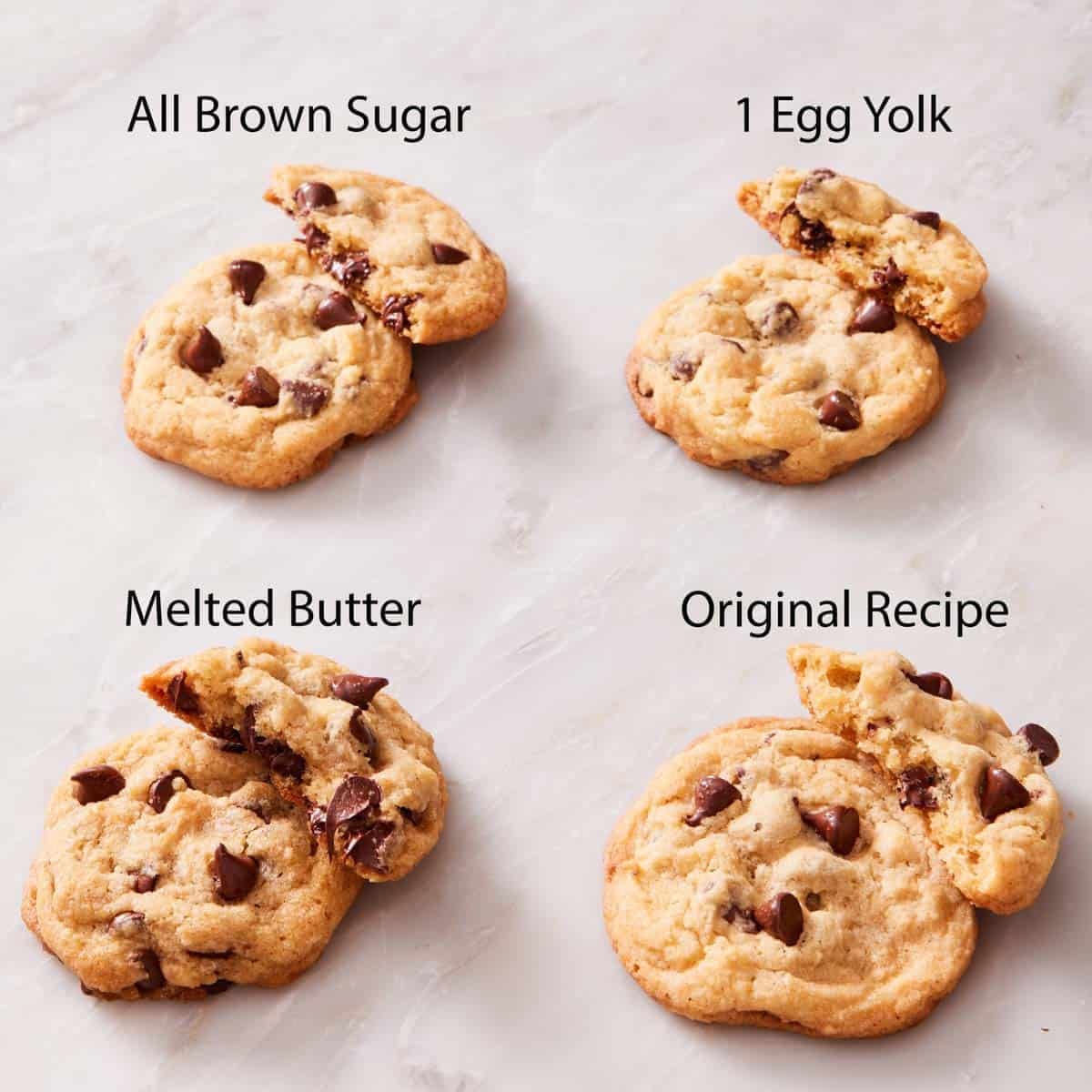
For the ultimate chewy cookie, I changed four elements in the recipe at one time: all brown sugar, an extra egg yolk, half all-purpose and half bread flour, and melted butter. The resulting batch of cookies was supremely chewy and thick, with just the right balance of soft, chewy centers and a slightly crispy edge.
Chewy Variants Worth Knowing
Not all chewy cookies are chewy in the same way. These variants matter because each cookie type and recipe is built differently.
Fudgy chewy cookies: like brownie cookies and chocolate crinkle cookies. They get their chew from melted chocolate and cocoa in the dough itself, which acts as both a fat and binder. They’re chewy because there’s a higher ratio of fat to flour, so the cookie can’t hold as much of a crisp structure.
Bendy-chewy is the chocolate chip cookie ideal: enough flour and brown sugar to hold thickness, low enough white sugar that it doesn’t caramelize into a snappy texture, and an extra yolk for richness. These cookies should literally bend before they break! My brown butter chocolate chip cookies use all of these tricks plus browned (melted) butter.
Thick-chewy (Levain-bakery-style) uses more flour and less spread, often with cake flour cut into the AP flour (less protein = less gluten) and a relatively short bake at a higher temperature to lock the shape before the middle finishes cooking. I haven’t tested this style with my chocolate cookie recipe yet, but if you do, leave me a comment and let me know how it goes!
Brown sugar-chewy is the molasses-cookie profile: heavy on dark brown sugar or with actual molasses added. Molasses cookies and brown sugar cookies sit here.
Crispy: What It Is and How to Bake It
A crispy cookie texture is mostly about getting moisture out—by using less of it to start with or by baking long enough that what’s left evaporates. Also, having a higher fat and sugar to flour ratio encourages more spread and deeper caramelization. Either way, the cookies end up thinner and crisp, with a clean break.
The Crispy Factors
These are the five main ways cookies turn out crispy:
- Sugar: Use more granulated sugar. White sugar crystallizes as the cookie cools, which is what gives crispy cookies their snap. The more brown sugar you use, the chewier the cookie will be since the added molasses will hold onto moisture. Crispy cookies often run 70-100% granulated sugar.
- Fat: More fat relative to flour means more spread, which means thinner cookies, which means crispier cookies after the bake. Melted butter gives more spread than softened butter because there’s no air worked into it.
- Flour: Less of it. Cookies with a low flour-to-fat ratio spread thin and crisp up evenly. The protein matters less here than in chewy cookies because you’re not trying to create elastic resistance.
- Egg: Eggs are fine if originally in the recipe, but you don’t have to add any extra egg white or egg yolk because they add extra moisture (leaning towards more chew than crunch). Some crispy cookie recipes, like shortbread cookies, use no egg at all and lean on the fat and flour proteins to bind the dough.
- Bake: A longer bake at a slightly lower temperature will encourage spreading and drying the cookies out more without burning the edges. 325-340°F for 12-18 minutes is the ideal range; 375°F for 10 minutes leaves the middle moist with darker, crispy edges. Again, you can adjust this factor for most drop-dough recipes without touching the ingredients.
The Crispy Test
I made 3 more batches of my chocolate chip cookie recipe, using the same structure and changing one element in each batch. Using all granulated sugar made the cookies look lighter, but the texture was much crispier since there was no molasses to hold moisture. Reducing the flour by ¼ cup (30g) automatically increased the fat and sugar ratio, increasing spread, so the cookies were thinner and crispier. Keeping the flour reduced and using melted butter encouraged spreading even more; the edge got darker and even crispier.
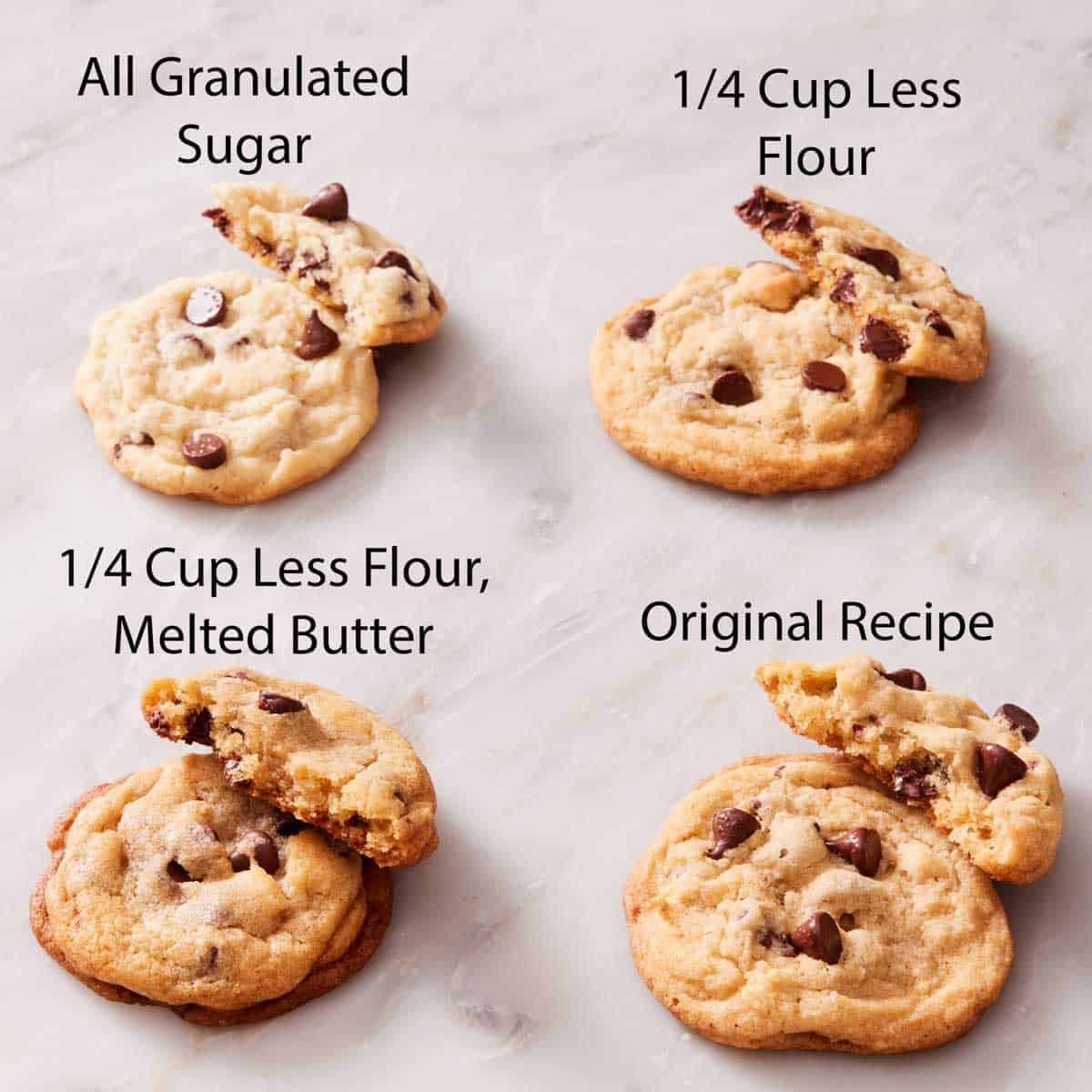
In a final batch, I changed all of these factors in one batch: all granulated sugar, ¼ cup less flour, and melted butter. The resulting cookies spread more in the oven, had browner, crispier edges, and were crispier through the center since they were less thick.
Crispy Variants Worth Knowing
Thin-crispy is the lace cookie profile: high fat, high sugar, almost no flour, baked until evenly golden. My lace cookie recipe is the perfect example of this! Brandy snaps, Florentines, and tuiles are also in this category.
Shortbread-crisp is a fundamentally different recipe structure, but several of the factors still apply. Shortbread cookies and Mexican wedding cookies get their crispness from the high fat-to-flour ratio combined with no leavening (no air or puffiness) and no eggs (less moisture). The crispness is dense and short. They break clean, but they don’t shatter.
Wafer-crisp is the thin and crunchy CCC profile (think Tate’s). It uses melted butter, mostly granulated sugar, and a slightly longer bake.
Meringue-crisp is a completely separate technique. It uses egg whites and sugar whipped to stiff peaks, then baked dry at a low temperature. Meringue cookies get their crispness from moisture removal in a slow oven, not from fat-and-flour ratios. It’s really its own category, but it belongs in the crispy cookie family.
Soft: What It Is and How to Bake It
Soft cookies are the most confusing texture because people use “soft” to mean different things. For this article, soft means tender and yielding without being puffy (cakey) or bendy (chewy). The give comes from moisture retained inside a dense, fine crumb, not from air pockets.
The Soft Factors
These are the five key elements that turn a cookie’s texture soft:
- Cornstarch: This is the soft cookie secret that you have likely seen in numerous “soft chocolate chip cookie recipes” (or in the tips of my own recipes!). Cornstarch essentially acts like flour without the protein—it adds structure without adding the chew of gluten. Two teaspoons of cornstarch added to the dry ingredients in a standard chocolate chip cookie recipe makes the cookie noticeably more tender and short-textured. I include it as an option in my chewy chocolate chip cookies recipe for exactly this reason. It also extends the shelf life of cookie texture because the starch holds onto moisture.
- Dairy: A tablespoon or two of cream, milk, or sour cream also pulls a cookie towards being soft. You don’t add enough to make it cakey, but just enough to keep the interior tender after the bake.
- Cream cheese: Replacing some of the butter with cream cheese (about 25-30% by weight) makes a cookie that stays soft for days. Cream cheese cookies are the classic example!
- Underbake slightly: Soft cookies are often soft because they were pulled when the center was still slightly underdone. Carryover heat from the pan and cookie helps it set as it cools, but the moisture stays in rather than baking out. They also spread a bit less, keeping the cookies thicker and the edges less caramelized. (An overbaked soft cookie is just a hard or crispy cookie.)
- Bake temperature: A hotter, faster bake sets the edges and leaves the middle moist. A slower, lower bake dries the whole cookie through. This one will really depend on the recipe, though. High baking temps also caramelize the dough more, which can turn the cookies hard or crispy.
The Soft Test
I took three of these factors and changed them in a batch of my chocolate chip cookies.
- Replacing some of the flour with cornstarch made the cookie much more tender. They weren’t super soft, but it was noticeably different from the chewier, crispy-edged original recipe.
- Swapping in cream cheese was my favorite! The added fat and moisture made these much softer, and the tanginess of the cream cheese gave the cookies a more complex flavor.
- Slightly underbaking the cookies kept them from caramelizing as much, so they didn’t turn crispy on the edges or bottom. This was the easiest since it didn’t require an ingredient swap—just remove the baking sheet from the oven 3 minutes earlier.
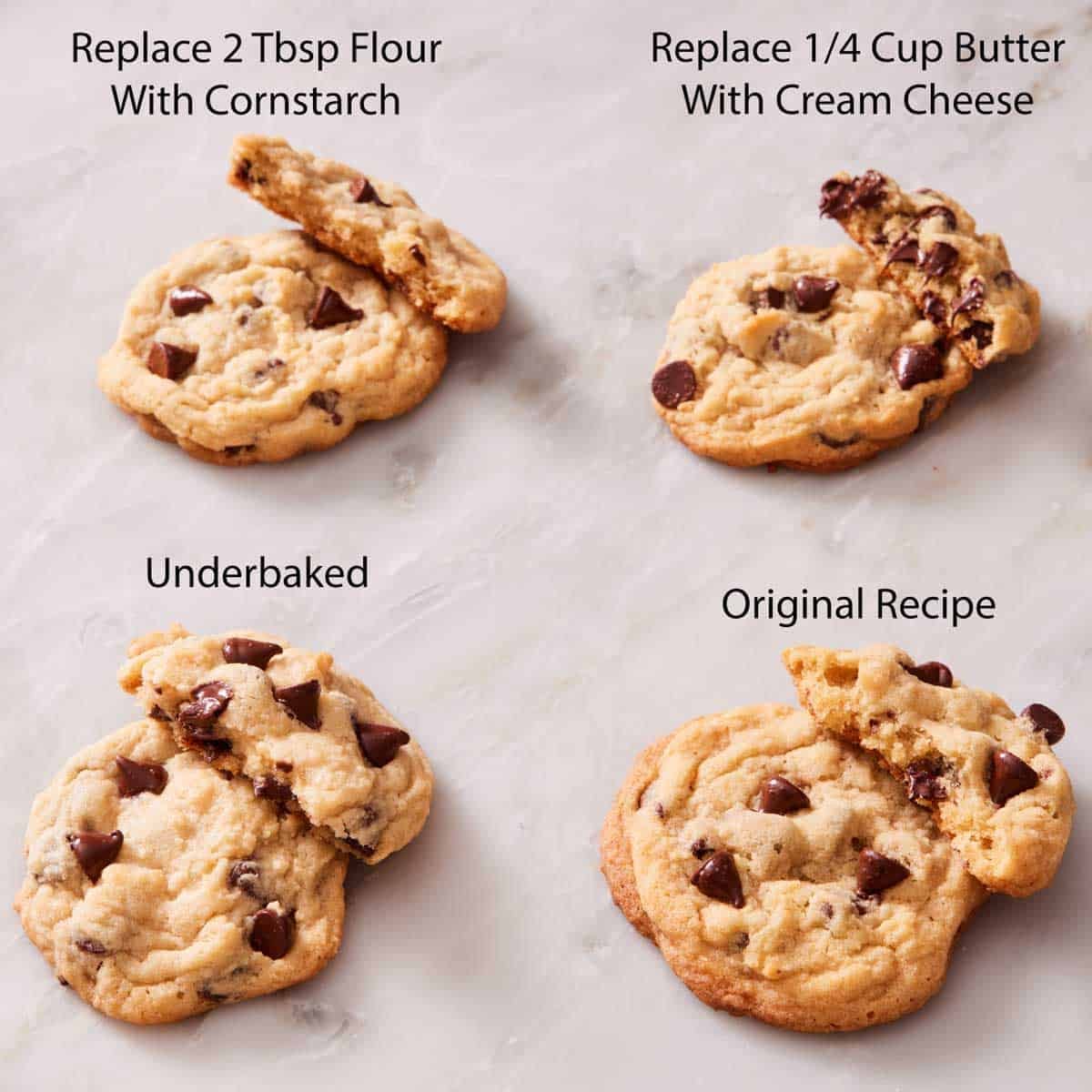
After testing the individual factors, I adapted my CCC recipe to use all three at the same time. I replaced 2 tablespoons of flour with cornstarch, swapped ¼ cup (56g) of butter with 2 ounces (56g) of cream cheese, and underbaked them by 3 minutes. The resulting cookies were thicker, softer, and supremely tender.
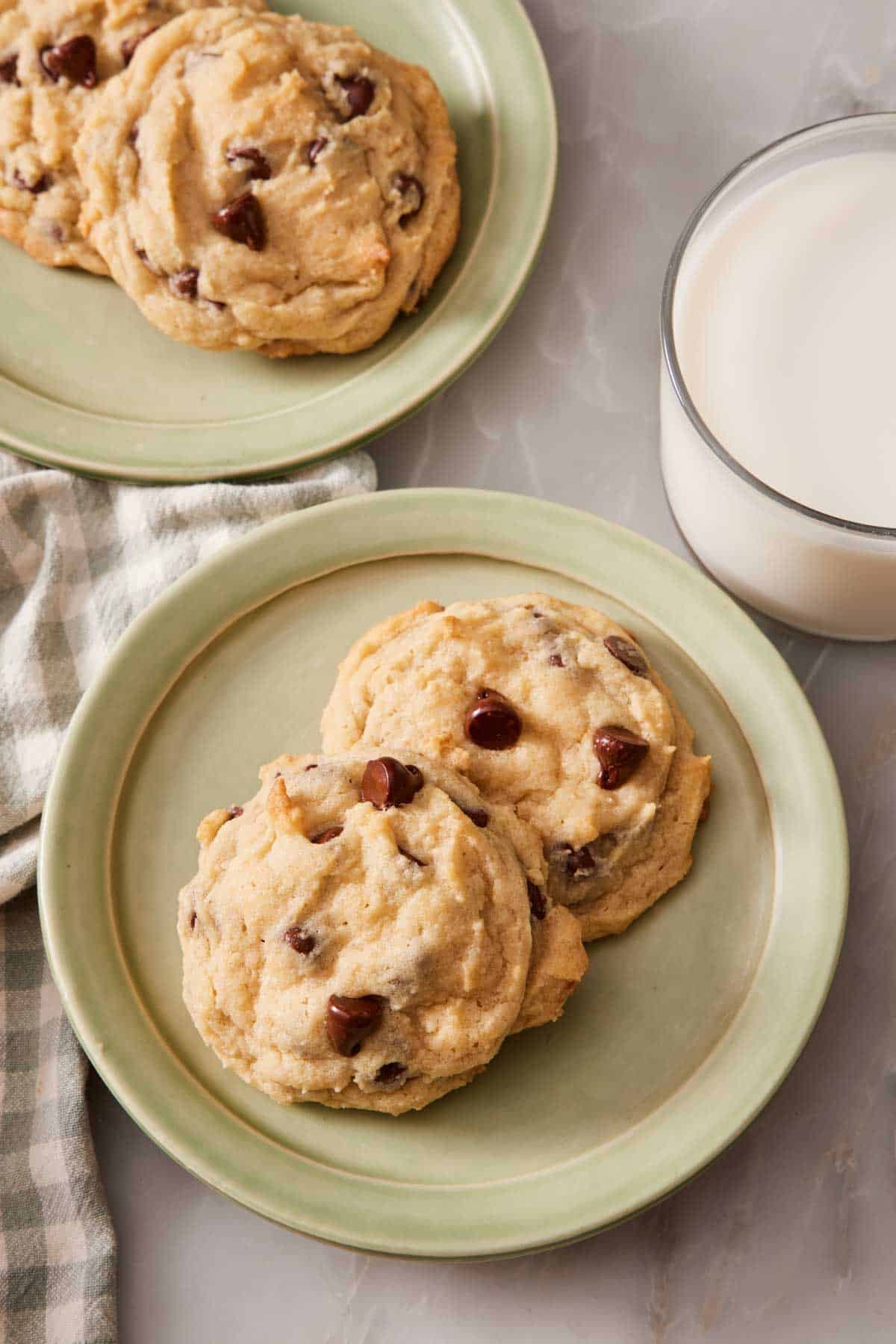
Soft Variants Worth Knowing
Tender-soft is often made with the cornstarch trick. It’s somewhat chewy, but more soft and tender than a chewy-forward cookie. A CCC with two teaspoons or more of cornstarch added, or a sugar cookie made with the cornstarch trick, falls into this category.
Pillowy-soft is a cookie that isn’t necessarily cakey but is puffy and soft. The dough usually has a slightly higher fat content than a cakey cookie and is pulled while still soft. Snickerdoodle cookies and peanut butter blossoms are built this way.
Moist-soft uses dairy or a moist mix-in to keep the cookie wet inside. Lemon crinkle cookies, pumpkin cookies, and banana oatmeal cookies sit here. The trick with these cookies is balancing moisture with the flour, eggs, and leaveners so they don’t tip into cakey—pumpkin and banana especially have a lot of water in them that has to be accounted for.
Cakey: What It Is (and Why It Happens by Accident)
Cakey cookies are a perfectly good category of cookies! The frustrating thing is when the recipe was supposed to produce a chewy cookie and a measurement error made it cakey instead. Cakey is typically the one texture that most people end up with unintentionally. Most bakers aren’t looking for “how to make my cookies cakey” but instead wonder “why are my cookies cakey?” Here’s why cookies turn out cakey.
What’s Actually Happening When A Cookie Goes Cakey
Cakey means the cookie has too much aeration relative to its fat and sugar content, and not enough spread to flatten that aeration out. The structure rises, sets, and then keeps that risen shape because there isn’t enough sugar or fat to collapse it back down. You end up with a puffy, dome-shaped, slightly dry cookie that feels crumbly and somewhat soft.
There are three common causes for accidental cakey cookies:
- Too much flour. This is the most common cause. If you scoop flour with the measuring cup rather than spooning it in and leveling, you can pack up to 20% more flour into the cup than the recipe called for. Extra flour absorbs the available moisture, so the cookie can’t spread, and the result is a puffy, flour-dominant mound. Weigh your flour (120g per cup is standard for all-purpose). A $15 kitchen scale will prevent this issue from ever happening!
- Baking powder instead of (or in addition to) baking soda. Baking soda reacts with acidic ingredients and dies in the oven heat. It primarily helps with spread and edge browning. Baking powder is a double-acting leavener—it reacts with acid but also with heat, so it keeps rising in the oven and produces a much puffier cookie. Bakers sometimes think baking soda and baking powder are interchangeable, but because of their different reactions, the resulting baked goods will also change. Swap in baking powder, and you’ll get puffy cookies. Add baking powder on top of baking soda when the recipe didn’t ask for it, and you’ll have a very similar result.
- Overcreaming the butter and sugar. When you cream butter and sugar, you’re aerating the fat. Some aeration is good—it’s what gives a cookie its initial lift so they aren’t super flat or dense once baked. But if you cream for five minutes when the recipe says two, or you beat it hard after the eggs are added, you’ve whipped too much air into the dough, and the cookie behaves more like a cake batter. Cream the sugar and fat until it looks somewhat fluffy but not like a cloud-like, airy bowl of frosting. When adding any eggs, beat until just combined.
The Cakey Test
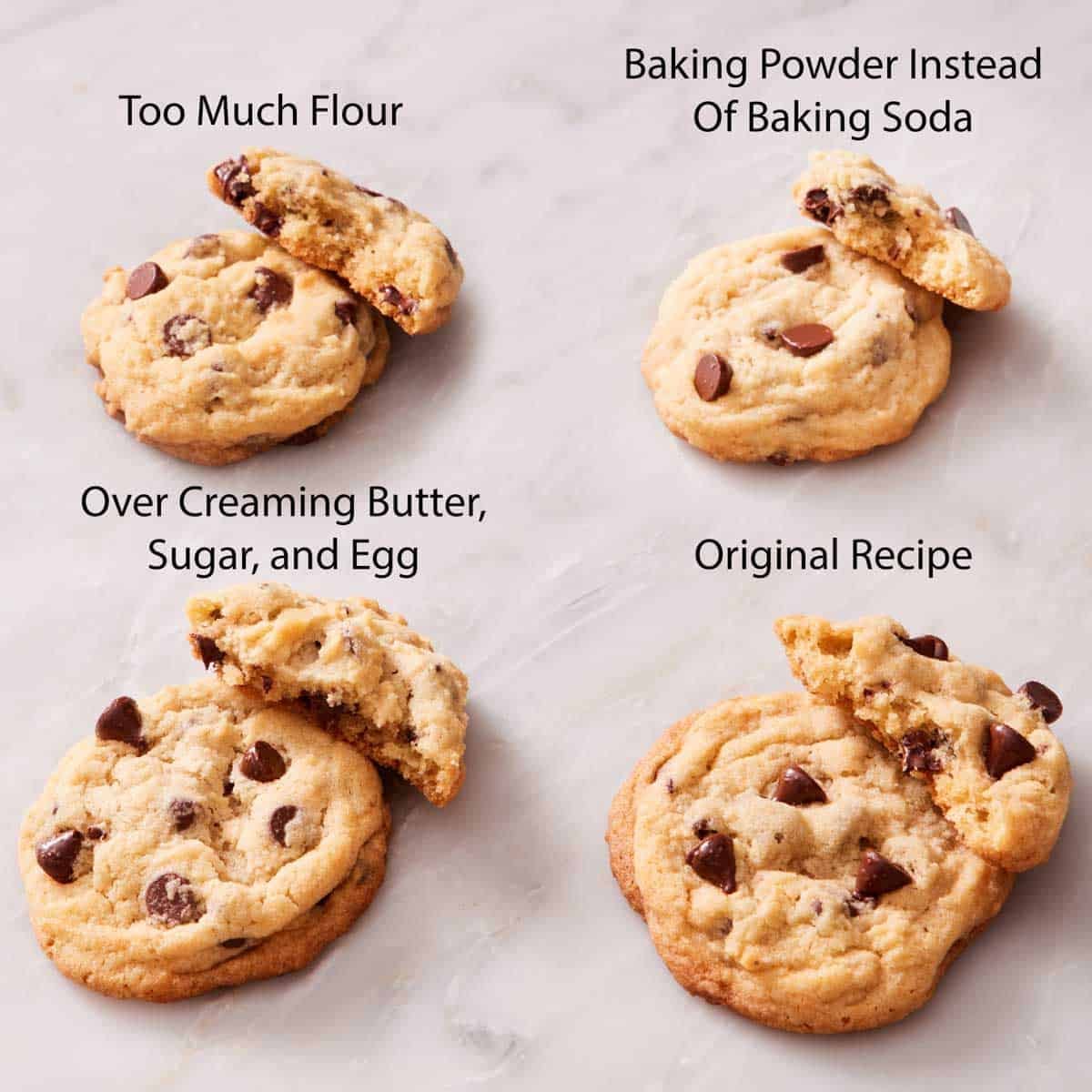
I tested 3 batches of my chocolate chip cookie recipe, making one of these mistakes in each batch.
- For too much flour, I scooped the flour directly out of the container and ended up with 335g of flour (over ¼ cup extra). The baked cookies turned out smaller, thick, and dry.
- Using baking powder made them much puffier! I used the standard ratio for swapping the two based on leavening power (baking soda is much stronger than baking powder, 1:1), and used 2¼ teaspoons of baking powder in the dough. They spread a bit but were very thick and airy throughout. They also had less browning since baking soda increases the pH of the dough and encourages better caramelization.
- Overbeating the butter, sugar, and eggs was the least dramatic difference visually from the original recipe, but the overall texture changed quite a bit. The cookies were a little bit thicker, but they were airier and much more crumbly.
Making Cakey Cookies On Purpose
Cakey cookies are not always mistakes. When the cakey texture is intentional, it’s what makes the cookie at its best. Making cakey cookies on purpose usually involves some combination of liquid dairy (sour cream, cream cheese, milk, yogurt), baking powder rather than baking soda, and sometimes a softer flour (cake flour) or an extra egg white (more lift and no fat).
Lofthouse cookies get their soft and cakey texture by using sour cream and a small amount of cornstarch, with baking powder doing the lift. Ricotta cookies get there with whole milk ricotta cheese and baking powder. Cake mix cookies are more of a cheat—they’re using cake mix, which has baking powder and cake flour built in.
One Factor That Changes All Cookies: Temperature
The temperature of the dough and the temperature of the oven are big factors in how a baked cookie turns out. From controlling spread to changing the actual chemistry of the dough, you can use temperature as a way to modify a cookie without ever touching the ingredients.
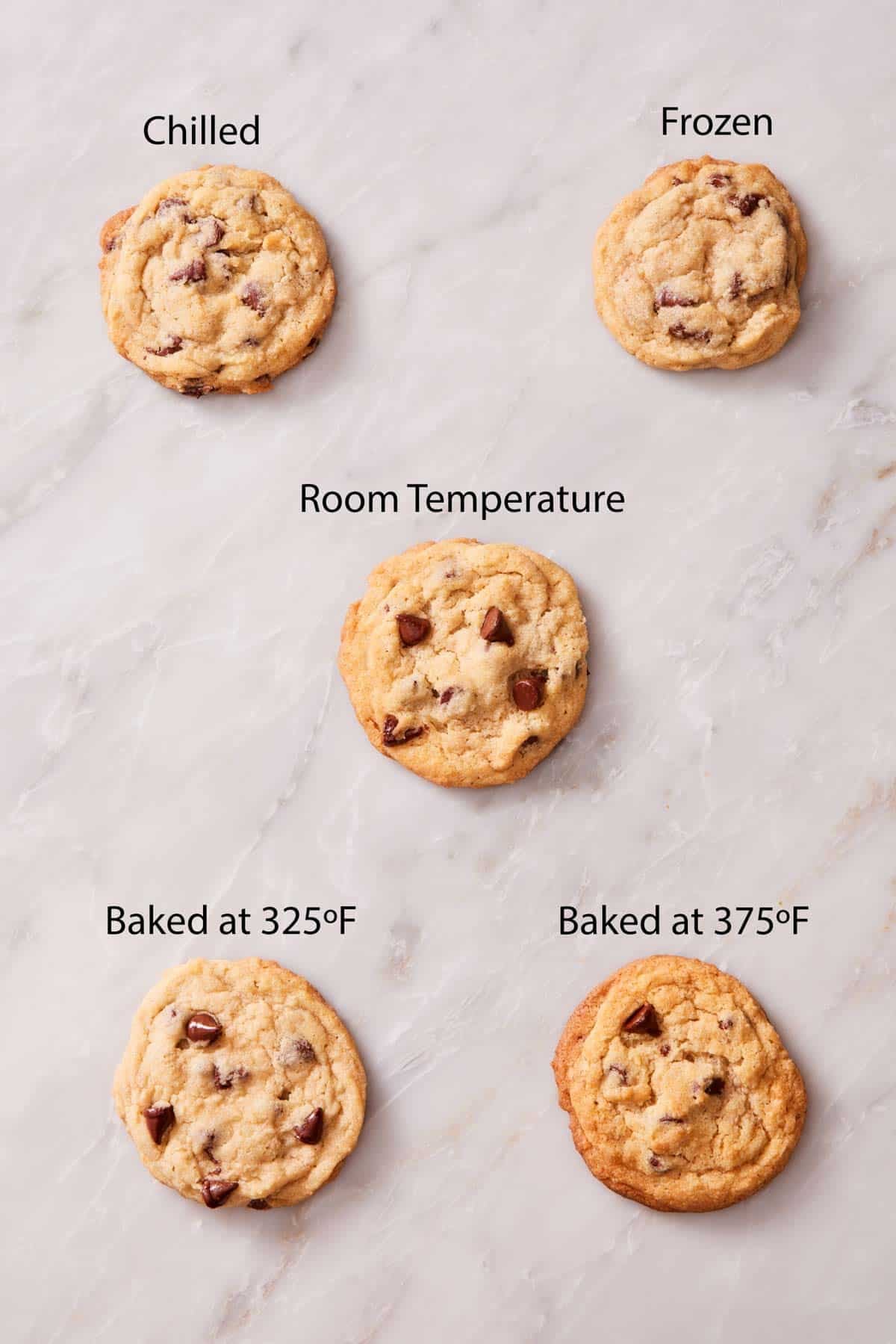
Temperature of the dough: A warmer dough will spread more, and a colder dough will spread less in the oven. I have a whole article about chilling cookie dough (Academy: How Long to Chill Cookie Dough) that covers this in depth, but the short version is that chilling firms the fat (less spread), hydrates the flour (better flavor), and gives the sugars time to start breaking down (more caramelization in the bake). For texture purposes, chilling makes a cookie thicker, chewier, and more flavorful. Skip chilling, and the cookie spreads more and ends up thinner and often crispier.
Oven temperature: How hot the oven is changes how much a cookie spreads and browns. A hotter oven (375-400°F) will set the edges much faster, making the cookie thicker. It also browns more, caramelizing the bottom and edges. This can push it into a chewier, crispier texture. A lower oven (325-350°F) allows the cookies to spread more before the edges are set. It also doesn’t brown as quickly. A lower temperature with a shorter bake time can make soft or cakey cookies. A lower temperature with a longer bake time can make thinner, crispier cookies.
Troubleshooting Your Cookie Texture
This is the section I get asked about most often. You bake a recipe, the cookies don’t look right, and you want to know what variable to change next time. Here are the most common “failures,” the factors that cause them, and some quick fixes for next time:
My cookies are flat and thin
Most likely: butter was too warm or melted when it shouldn’t have been. If a creamed butter recipe calls for softened butter and you use butter that’s very soft, enough to be greasy, the dough is too loose to hold shape and the cookie spreads into a puddle. Softened butter should hold an indent from your finger but not feel oily.
Also likely: too much sugar relative to flour, not enough flour (measurement check), oven temperature too low (the edges don’t set in time), dough not chilled when the recipe called for chilling (butter too warm), or baking on a silicone mat instead of parchment (silicone gives the most spread).
Quick fix on the next batch: chill the dough for at least 30 minutes, add 2 tablespoons of flour, or bake on parchment.
My cookies are cakey and puffy when they weren’t supposed to be
Most likely: too much flour. Second most likely: baking powder was used where the recipe called for baking soda, or both were used when only one was needed. Third: overcreamed butter and sugar whipped too much air into the dough.
Quick fix on the next batch: weigh the flour, double-check the leavener, cream butter and sugar just until pale and uniform, and don’t overbeat once any egg is added.
My cookies are hard or dry
Most likely: overbaked. Cookies continue cooking on the sheet for the first few minutes out of the oven. If they were already fully done when you pulled them, they’ll be overdone by the time you eat them. Chewy cookies should look slightly underdone in the center (a bit shiny or wet). Soft cookies should look dry on top but not be firm in the center.
Also likely: too much flour, not enough fat, or stored uncovered.
Quick fix on the next batch: mind the baking time and check them a few minutes earlier. Storing cooled cookies with a slice of bread or marshmallows in the container helps to keep them soft or chewy.
My cookies didn’t spread at all
Most likely: too much flour. More flour throws off the ratio of fat and sugar, keeping the cookies thick and mounded.
Also likely: shortening used where butter was called for, oven temperature too high (edges set before any spread can happen), or the cookie dough balls were frozen when the recipe called for them to be baked at room temperature.
Quick fix on the next batch: weigh the flour or fluff and level it in a scoop, use the right ingredients, mind the oven and dough temperatures. You can drop the oven temperature by 25°F or bring the dough to room temperature to encourage more spreading.
My cookies are greasy or shiny on top
Most likely: too much butter relative to flour, stored while still warm (condensation made them weep), or melted butter was too hot when added. If the melted butter is hot and not cooled slightly, it can melt the sugar prematurely, and the dough weeps as the cookie bakes.
Quick fix on the next batch: be mindful when measuring the ingredients and add 1-2 tablespoons more flour if the recipe feels off. Completely cool the cookies on a wire rack before storing them in a closed container. Make sure melted butter is given 5 minutes to cool off slightly before it’s mixed with sugar.
My cookies have crispy edges, but the centers are raw
Most likely: oven runs hot (an oven thermometer is one of the best $10 investments in a kitchen — most ovens are off by 25°F+ in either direction), dark pan absorbing too much heat or oven rack in lower position, or cookies scooped too large (larger dough balls often need a lower temperature and longer time to bake through).
Quick fix on the next batch: drop the temperature by 25°F and add 2-4 minutes. Switch to light aluminum pans lined with parchment and make sure the oven rack is in the center, or swap pans between racks during baking if cooking two at a time. Use a smaller scoop or drop the temperature by 25°F to bake much larger cookies.
Frequently Asked Questions
It’s almost always a result of using too much flour or beating too much air into the dough. Be mindful of your ingredient amounts and mix the dough according to the instructions, leaning towards less mixing if the method isn’t very detailed.
A little. Pull the cookies a minute or two earlier than the recipe says (carryover heat will still finish them), and let them cool fully on the pan rather than transferring to a rack. Both of these steps keep more moisture in the cookie. But if you want a significant chewiness shift, you’ll have to adjust the brown sugar, egg, or flour ratios. Bake time alone can only do so much!
Cookies harden as they cool because the sugar recrystallizes and the moisture in the interior continues to evaporate. To slow that down: store cooled cookies in an airtight container with a slice of plain white bread or several marshmallows tucked inside. The bread and marshmallows release moisture that the cookies absorb. They’ll be soft again within 12 hours, and it keeps the cookies soft for several days.
More Tutorials To Try
Advance your baking skills even more with one of my other Baking Academy lessons:
- Academy: How Long to Chill Cookie Dough — the biggest factor in cookie texture that doesn’t require changing a recipe’s ingredients.
- Academy: How To Freeze Cookie Dough — keep cookie dough fresh and ready to bake for 3 months.
- Academy: How To Decorate Cookies — get tips for piping icing onto cutout cookies and decorating cookies with sugar and sprinkles.
- Academy: The 5 Main Cake Mixing Methods — learn the fundamentals of the creaming method, a foundational technique for many cookie recipes.
- Academy: Baking Pan Sizes & Conversions — learn how to change the size of your baking pan for any recipe.