This post may contain affiliate links. Please read our disclosure policy.


This classic French toast cooks up golden on the outside with crispy edges and a fluffy center. Thick slices of brioche, a quick dip in vanilla-cinnamon custard, and a buttered skillet over medium heat are all it takes!

Homemade French toast should be crisp and golden on the outside and soft, custardy, and fluffy on the inside. My recipe takes about 30 minutes from start to finish, and it’s the best way to give a stale loaf of bread a second chance.
Most soggy French toast comes down to three things: the bread choice, the soaking time, and the skillet heat. My team tested sliced white bread against brioche, dipping each slice in the custard for a few seconds per side, and the difference was easy to see. The brioche cooked up soft and custardy, while the white bread had a visible line of plain bread in the center where the custard never reached. I’ve updated this post to walk you through that test, plus how to adjust based on the type of bread you are using, so your slices turn out perfectly cooked every time.
“This was amazing with your optional suggestions. I made this with thick sliced sourdough bread, unsweetened coconut milk, added grated orange zest, and used ¾ tsp of your homemade pumpkin spice blend from one of your other recipes…It was a big hit as part of a guest brunch.”
Cheryl
Key Ingredients

These are the main ingredients you need to make French toast. You can find the full list of ingredients and measurements in the recipe card below.
The Best Bread for French Toast
My first choice is brioche. A soft, buttery slice of brioche soaks up custard in seconds and stays tender in the middle. Other soft, fluffy loaves work similarly: challah, potato bread, Hawaiian sweet bread, or cinnamon swirl bread. Almost any bread will make French toast, but the texture changes, and my test in the section below shows how much.
Slice it ¾ inch thick. If you have a whole loaf, cut it into ¾-inch slices. If you’re buying sliced bread, look for a thick-cut loaf. Thin slices have less room for custard in the center, so they soak through quickly and are more likely to tear when you lift them into the pan.
Day-old bread is actually better than fresh. Slightly stale bread soaks up custard without going limp. If your loaf is very fresh, lay the slices out on your cutting board or a wire rack for an hour to dry a little.
French toast in France is called “pain perdu,” or “lost bread,” a hint at this day-old quality being ideal. In France it’s pain perdu, or “lost bread.” Spain has torrijas, Germany has Arme Ritter, the UK has eggy bread, and Hong Kong-style French toast is fried in oil and often filled with peanut butter. Its dessert cousin, bread pudding, even uses stale bread soaked in custard. Each version brings new life to a loaf that’s past its best.

The Custard: Eggs, Milk, and Flavor
Eggs and whole milk — milk and eggs for the base of the custard. I use a ratio of 3 tablespoons of milk per egg to make a custard that is thin enough to soak into the bread but not so liquidy that the center stays wet. The eggs set as the toast cooks, and that’s what turns the soaked middle custardy instead of wet. I use whole milk for richness. 2% works, but I don’t recommend nonfat milk because the custard needs some fat for flavor. In my tests, one batch of custard coated all 8 slices of brioche when cut to ¾ inch thickness.
Sugar, vanilla, cinnamon, and salt — a little bit of granulated sugar sweetens the custard and caramelizes against the hot pan, which helps the crust brown. A generous amount of vanilla and a bit of cinnamon flavor the bread from the inside out, and a pinch of salt keeps it from tasting flat.
Easy swaps: Use granulated or brown sugar, or replace the sugar with maple syrup. For a richer custard, swap ¼ cup (60ml) of the milk for heavy cream or half-and-half. Add a pinch of nutmeg for more warm spice for added flavor.
Do I Need Flour In The Custard?
Some recipes whisk flour into the egg mixture to thicken the custard into more of a batter. A thicker batter tends to coat the outside of the bread instead of soaking in. I have tested this, and it’s not bad, but the French toast had a trade-off: a crispier crust but a drier center. The goal of my recipe is to have custard in the center for a softer interior, so I stick to a simple milk and egg custard with no added flour.

How Long Should I Soak The Bread?
The soak time depends on the bread. To show you, my team tested sliced white bread (cut about ¾ inch thick) against brioche cut to the same thickness, dipping each slice in the custard for 3 seconds per side.
The brioche turned out soft and custardy in the center. The white bread was golden and crisp on the outside, but it had a visible line of plain bread in the center where the custard didn’t soak through, so it was drier and less fluffy.
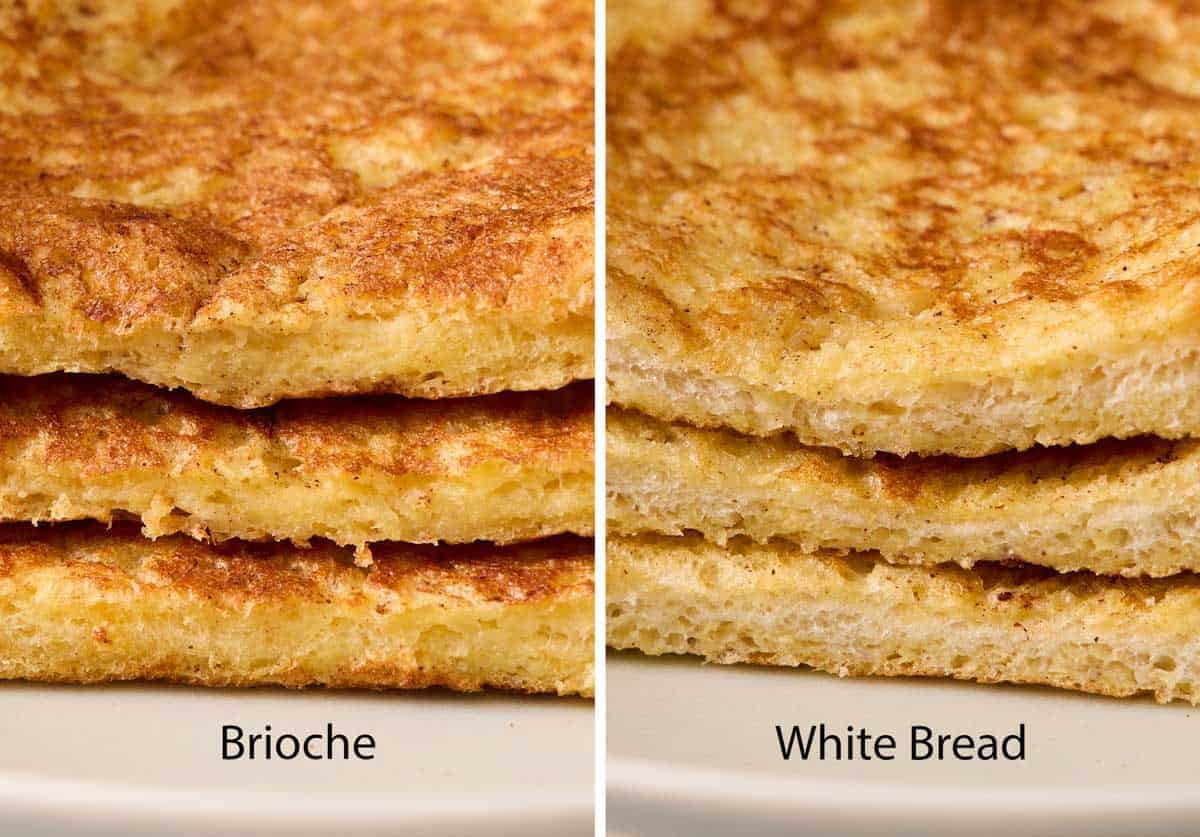
The takeaway: tighter-crumbed breads need more time in the custard than brioche does. If you use sliced white bread, sourdough, French bread, or milk bread, give each side a longer dip (5-10 seconds), and cut into your first slice to check that the custard reached the center.
Pro Tips For Making This Recipe
Soak the bread as you go, not ahead of time. The custard will make the bread soft, so if you soak the slices ahead of time and let them sit for a while before cooking, they may fall apart when you try to move them to the skillet. The custard step is quick, so do the dip and transfer it to the skillet right after.
If you have a large electric griddle, use it! It lets you cook the whole batch at once, so every slice is hot and ready at the same time. Cook on medium heat, or test with one slice first and adjust the heat to how your griddle cooks.
How To Make French Toast
Below, I’ve highlighted portions of the recipe in step-by-step process images along with instructions for making French toast. You can find the full set of instructions in the recipe card below.

1. Make the custard by combining the eggs, milk, sugar, vanilla, cinnamon, and salt in a large mixing bowl.
2. Whisk until the eggs are completely combined, with no streaks of egg white remaining. Set aside while you preheat the skillet.

3. Preheat the skillet over medium heat. A hot pan sizzles as soon as the bread touches it, and that’s what starts the crust, so don’t rush this. You will need 3-5 minutes depending on your pan. Once it’s hot, melt 1 to 2 tablespoons of butter in the pan.
4. Dip one slice at a time in the custard, a few seconds per side, then lift it and let the extra custard drip off. Place it directly in the skillet. With brioche, I find 3 seconds per side is just right. Don’t soak slices ahead of time and leave them sitting, because they’ll fall apart when you move them.

5. Cook the first side. Cook until the bottom is golden brown, about 2 minutes. Depending on your stove, it can take up to 3 minutes.
6. Flip and cook the second side until golden. When it’s cooked through, the center should feel springy when you press it. Cut into one of the first slices to check the soak and the heat. Add more butter between batches. I like to cut into one of the first slices to check that the soak and the heat are right, and the center should feel springy when you press it.
Troubleshooting
Most French toast problems trace back to the bread, the soak, or the heat. Here’s how to identify an issue and how to void or fix it:
Why Is My French Toast Soggy In The Middle?
The usual causes are thin or very fresh bread, a long soak, or a pan that’s too hot, which browns the outside before the custard in the middle sets. Use thick, day-old or dried-out slices, do a quick soak in the custard, and cook over medium heat.
Why Is The Outside Burnt But The Inside Raw?
The heat is too high. Turn it down so the center has time to cook before the outside darkens. Butter can also start to burn after a batch or two. If it does, wipe the pan clean and add fresh butter with a little vegetable oil, which lets you cook longer before the butter scorches.
My stove often cooks quite hot. When I was making a test batch, after the first four slices, my next batch burned very quickly (before 2 minutes). The heat had built up in the pan. I just reduced the flame to medium-low and continued cooking with great results. Start with medium heat, but adjust based on your stove and as you cook, if needed.
Why Does My French Toast Taste Eggy Or Bland?
If the custard isn’t fully whisked, bits of cooked egg white can show up on the surface, forming firm chunks of cooked egg. Beat it until it’s completely smooth. A bland slice usually needs more seasoning, so don’t skip the salt, vanilla, or cinnamon.
Salt in the custard not only adds flavor, but it will help denature the egg proteins so they are less resistant to whisking. If needed, let the mixture sit for a few minutes, then whisk again just before soaking the bread.
Why Did My French Toast Deflate?
That’s normal! The eggs in the custard puff as the slices cook and settle as they cool. It’s more noticeable with some breads than others, like an airy store-bought brioche. I have tested this with homemade brioche and found that it is slightly denser than a store-bought loaf, so it doesn’t collapse much.

Variations and Toppings
The custard and toppings are an easy way to add other flavors to this classic French toast:
- Spices and citrus. A pinch of nutmeg adds more warm spice. I’ve also swapped in ground ginger or pumpkin pie spice, and whisked 1 to 2 teaspoons of lemon or orange zest into the custard.
- Dairy-free. Use a thicker plant-based milk, like full-fat oat milk or coconut milk. Almond milk works in a pinch, but it isn’t as rich.
- Toppings. Warm maple syrup and butter are my go-to. Fresh berries, sliced bananas, powdered sugar, whipped cream, honey butter, strawberry sauce, lemon curd, or toasted pecans are all good.
- Other ways to make it. Cut bread slices into strips for French toast sticks, cook it in the air fryer, or bake a French toast casserole when you’re feeding a crowd and want to prep the night before.
French Toast Recipe

Equipment
- mixing bowl
- Skillet
Ingredients
- 4 large eggs
- ¾ cup whole milk (180ml)
- 2 tablespoons granulated sugar
- 1 tablespoon vanilla
- ½ teaspoon cinnamon
- Pinch of salt
- 8 thick slices bread I prefer brioche
- Butter for greasing the pan
- Warm maple syrup for serving
Instructions
- In a large bowl, whisk together the eggs, milk, sugar, vanilla, cinnamon, and salt, until completely combined.
- Place a large skillet over medium heat. After 3-5 minutes, melt 1 to 2 tablespoons of butter in the hot pan.
- Place one slice of bread in the egg mixture and soak for about 3 seconds. Flip over and soak the other side for about 3 seconds. (If your bread is dense, you may need up to 10 seconds per side.) Carefully transfer the soaked bread to your hot pan and cook until golden brown, about 2 minutes. Cook as many slices at a time that you can fit in your pan without touching.
- Flip over and cook the other side until golden, another 2-3 minutes. Serve warm with additional butter and maple syrup, if desired.
Notes
- Use enough butter. You will likely need to add more butter to the hot skillet in between batches. It adds flavor and helps create the crispy edges for the best French toast recipe.
- How to Keep French Toast Warm: Since a skillet requires cooking the slices in batches, use your oven to keep them warm in order to serve all at once. Warm the oven to 200°F when you start the recipe. Place cooked French toast slices in a single layer on a wire rack (stacking the bread will cause the slices to become soggy). Leave them in the oven until you’re ready to eat them. I recommend holding them no longer than 30 minutes or so for the best texture.
Nutrition
Have you tried this recipe? Tag me today!
Mention @preppykitchen and tag #preppykitchen!
How to Store and Reheat French Toast
Refrigerate: Cool completely, then store in an airtight container in the fridge for up to 3 days.
Freeze: Lay the cooled slices on a lined baking sheet, freeze until solid, then move them to a freezer bag for up to 2 months.
Reheat: I reheat refrigerated or thawed slices in a 350°F oven for 10 minutes, or in an air fryer at 325°F for 5 minutes. When I’ve reheated slices in the microwave, they came out soft instead of crisp at the edges.
More Recipes To Try
Try one of my other popular breakfast recipes next:
- Waffle Recipe — my go-to homemade waffles with crisp edges and a fluffy inside, for the next weekend breakfast.
- Cinnamon Rolls — soft yeasted cinnamon rolls baked in a 9×13 pan and spread with cream cheese icing, for a slower brunch morning.
- Pancake Recipe — classic homemade pancakes, the other griddle breakfast to keep in your rotation with French toast.
- Blueberry Pancakes — fluffy pancakes studded with blueberries, for when you want a fruity spin on a griddle breakfast.
- Crepes — thin, delicate crepes you can fill with sweet or savory fillings.
If you’ve tried this French toast recipe, then don’t forget to rate it and let me know how you got on in the comments below. I love hearing from you!