This post may contain affiliate links. Please read our disclosure policy.


This Lemon Meringue Pie features a silky lemon curd layer topped with fluffy meringue that slices beautifully. With the right amount of cornstarch and chilling the filling before adding the meringue on top, you can make this classic pie without a weeping meringue or filling!

Lemon meringue pie has three things to get right: a crisp crust, a tangy filling that slices clean, and a tall meringue that doesn’t weep. The biggest change in this version is the order the pie is assembled. My original recipe had the meringue added on while the filling was warm, baking it, and then chilling. This worked almost every time, but some readers commented saying their filling turned runny, and then I experienced the same thing when I made it for a new video!
I had my team re-test this pie, and we ended up swapping the assembly order. We chilled the filling before the meringue went on, then added it just before serving, and it stayed sturdy and sliceable with no weeping. That goes against the common advice to pile meringue onto hot filling, so I share exactly what changed, why it works, and how to fix the most common problems below!
“Absolutely wonderful! Zingy, lemony curd with fluffy meringue. Also LOVE your pie crust recipe which turns out beautifully every time.”
Rebecca

Why Chill The Filling Before Adding The Meringue?
Many recipes, including the earlier version of mine, spread meringue over hot filling so the heat helps cook the underside. But one time I made it and when I sliced it, the lemon curd fell apart, the meringue slid off, and a big puddle of liquid ended up in the bottom of the pan. You can see this in the testing image below:
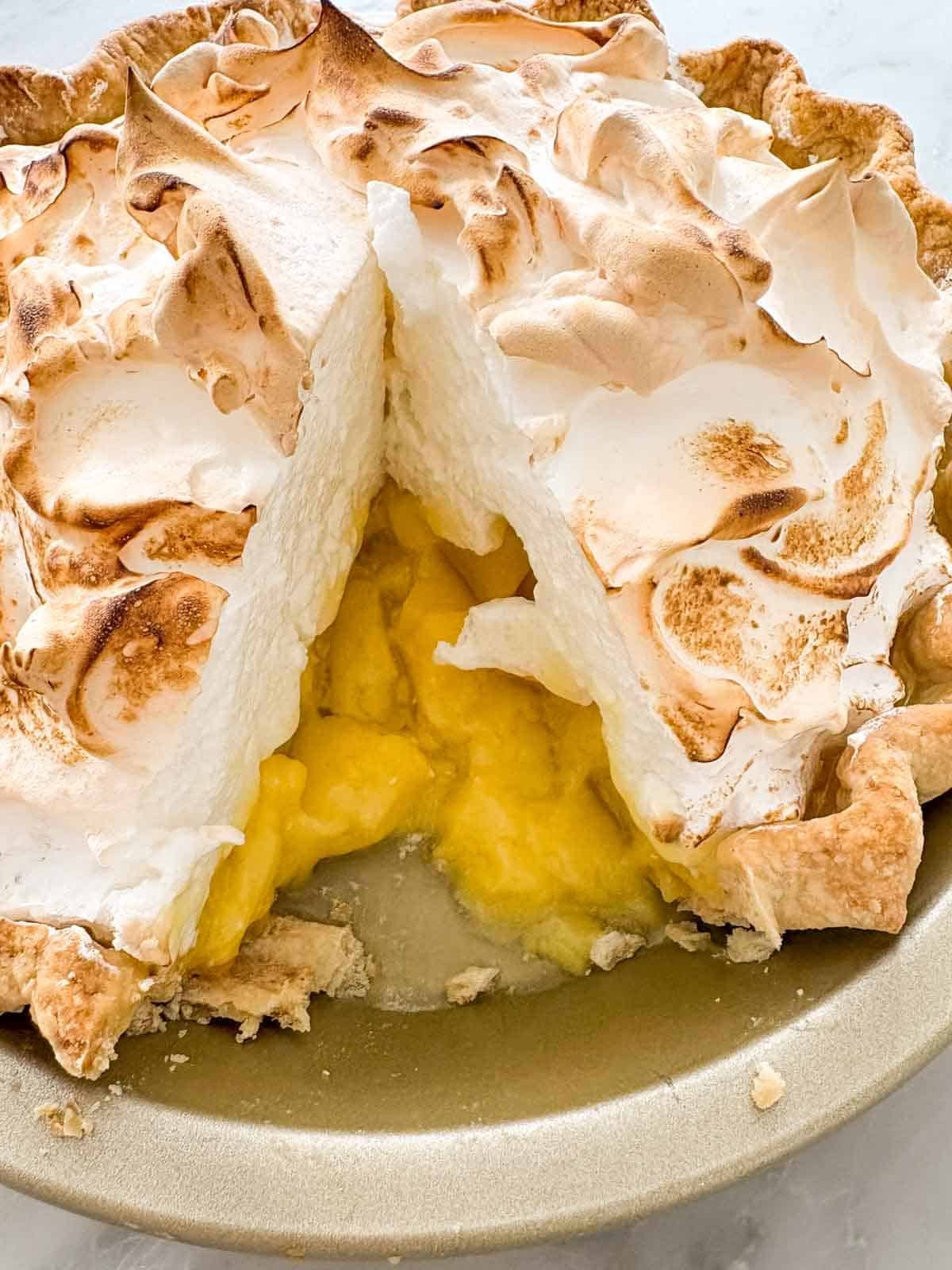
The likely reason: A warm filling is still giving off steam, and that moisture can collect under the meringue. This liquid seeped into the lemon filling since it was fully set, formed cracks, and destabilized the filling. I determined that this didn’t happen every time because sometimes the lemon filling would sit in the pie crust for longer periods or the kitchen was cold, allowing it time to cool off more before the meringue touched it.
When my team re-tested it, we decided to chill the filled pie for at least 4 hours first. The meringue didn’t weep, and the filling was firm enough to cut a clean wedge, so we updated the recipe. Now it sets properly every time!
Key Ingredients

These are the main ingredients you need to make lemon meringue pie. You can find the full list of ingredients and measurements in the recipe card below.
Cornstarch — the filling is similar to lemon curd, but because of the cornstarch, it sets into a thicker, sturdier consistency that is sliceable. You can’t skip it. My lemon tart recipe uses a similar lemon curd filling but doesn’t use cornstarch because it’s thinner and doesn’t have to support meringue on top. And my lemon bars, which are sliced and use an egg-and-lemon juice mixture as well, are baked so they also don’t need cornstarch to set. Since this is a thick, no-bake filling with a mound of meringue, make sure you measure the cornstarch correctly so you have enough for a properly set pie (see my guide on How To Measure Ingredients Correctly).
Fresh lemons — zest the lemons before you juice them. The zest carries the lemon oils, so don’t skip it! I don’t love the flavor of bottled lemon juice in general, but it also means you don’t get the zest, so fresh is best. If you want a perfectly smooth filling, you can strain the custard after it’s cooked to remove the pieces of zest. When I’ve tested it, I never found the zest to harm the texture since it softens during cooking, especially if you use a microplane, which grates it into very small pieces.
Eggs — separate the eggs while they are cold, saving the yolks for the filling and the whites for the meringue. Separate them one at a time over a small bowl, because a speck of yolk (fat) keeps whites from whipping. Bring them to room temperature after you separate them so they whip up faster.
Sugar — sweetens both layers, but it also stabilizes the meringue. Superfine sugar dissolves fastest in the meringue, and I love using it when I have it. With granulated sugar, sift out the big crystals first; they take the longest to dissolve and tempt you to overbeat the meringue.
Cream of tartar — an acid that strengthens the proteins in the egg whites so the meringue holds its peaks. This addition is small, but it’s so important to making a meringue strong enough to hold its structure for several hours. I lean on it in my meringue cookies and pavlova for the same reasons. You can swap it with 1 teaspoon of fresh lemon juice or white vinegar if needed.
Butter — keep it cold so it slowly melts and evenly whisks into the filling for a silky texture.
Pie crust — you need a single 9-inch pie shell, either my homemade pie crust or a store-bought crust. For more on pie crusts, see Pie Crust: The Complete Method.

Does The Pie Pan Matter?
Yes, and more than you’d expect! When I tested the original recipe, I used a ceramic dish. When I re-tested this, I used a metal pan, and the crust baked about 10 minutes faster.
Metal conducts heat quickly, so the crust sets and browns on the bottom before it can turn soggy. Ceramic and glass insulate, so the crust takes longer to set and can shrink during the second part of the bake. In glass or ceramic, expect the uncovered bake to run longer and go by the cues: golden edges and a dry-looking bottom.
You can get more tips for baking the crust in my guide on How To Blind Bake A Pie Crust.
Pro Tips For A Meringue That Holds
Start with a spotless bowl and separate the eggs carefully. Any fat, from a greasy bowl or a broken yolk, stops whites from forming a stable structure that holds air, so they never get stiff. Separate the eggs one at a time using a small bowl. If any egg yolks break while you separate them, set that yolk and white aside for another purpose.
Beat the sugar in slowly, so it fully dissolves. Undissolved sugar draws moisture out of the meringue and forms beads on top or a layer of moisture on top of the filling.
Do the rub test. Rub a small amount of meringue between your fingers to feel for any grittiness. If it feels smooth, sugar is fully dissolved. If it feels gritty, keep beating it and check again after a minute. I check every batch between my fingers before it goes on the pie to be totally certain!
Spread the meringue all the way to the crust. Every edge should be touching pastry, with no filling visible around the rim. That contact is what anchors the topping to the pie.
How To Make Lemon Meringue Pie
Below, I’ve highlighted portions of the recipe in step-by-step process images along with instructions for making lemon meringue pie. You can find the full set of instructions in the recipe card below.

1. Freeze and blind bake the crust. Roll the dough to a 12- to 14-inch circle, fit it into a 9-inch pie dish, then tuck and crimp the edges (see How To Crimp Pie Crust). Dock the bottom all over with a fork and freeze for 20 minutes while the oven heats to 425°F. Line it with parchment paper, foil, and pie weights and bake on a rimmed sheet for 20 minutes.
2. Remove the weights and bake until the edges are golden and the bottom is dry and golden brown, 15-20 minutes. Start checking it at 10 minutes, though, in case your oven bakes faster. If the edges darken too fast, cover them with a shield (see How To Make A Pie Crust Shield). Cool completely.

3. Whisk the egg yolks until smooth in a medium bowl and set aside until it’s time to temper them.
4. Whisk the sugar, cornstarch, and salt in a pot, and add the zest. Mixing the sugar with the cornstarch helps the cornstarch dissolve more easily in the liquid, preventing clumps.
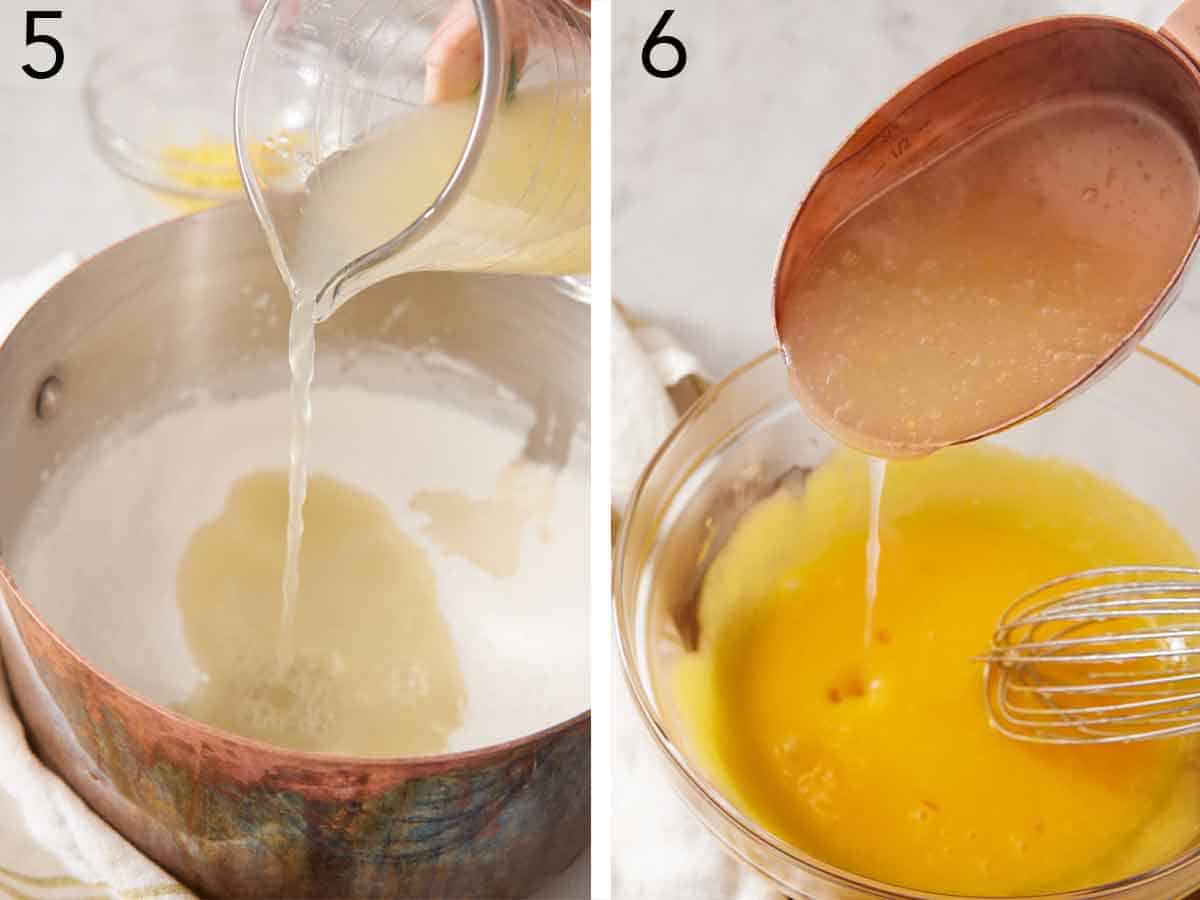
5. Slowly whisk in the water and lemon juice until the cornstarch dissolves. Cook over medium heat, whisking often until thick and starting to bubble, about 5 minutes.
6. Temper the yolks. Slowly whisk about 1 cup of the hot mixture into the whisked yolks.

7. Then whisk everything back into the pot. Tempering warms the yolks gradually so they don’t scramble. Cook until the whisk leaves a trail. Whisk over medium-high heat for about 2 minutes, until the whisk leaves a defined trace and the filling bubbles. Don’t stop early.
8. Add the butter. Turn off the heat, and whisk in the cold butter cubes until melted.

9. Fill the pie crust and chill. Pour the filling into the cooled crust and chill for at least 4 hours or up to 24. For an overnight chill, press plastic wrap onto the surface to prevent it from drying out and forming a rubbery skin.
10. Whip the meringue. When you’re ready to serve, heat the oven to 350°F. Beat the whites and cream of tartar on medium-high until frothy, add the sugar slowly, and beat for about 5 minutes to stiff, glossy peaks. Rub a little between your fingers. If it feels gritty, beat another minute and check again. Spread the meringue all the way to the edge so it touches the crust, then bake for 15 to 20 minutes, until golden. Serve right away or chill for up to 4 hours.
Troubleshooting
A Runny Filling
The usual culprits are mismeasuring the cornstarch (using too little) or not bringing the filling back to a bubble after the yolks go in. Egg yolks carry an enzyme that can thin a cornstarch filling unless it reaches above 190°F, neutralizing it. This is why you need to see the filling bubble!
Wet, Weeping, or Shrunken Meringue
Liquid under the meringue. This is called weeping, and a warm filling is the common cause. In fact, it’s why I changed my recipe. Chill the filling first, and bake the meringue before serving.
Beads on top. This usually happens from undissolved sugar in the meringue or overbaking. Use the rub test to make sure no sugar grains are left, and pull the pie as soon as the peaks are golden.
Meringue pulled away from the sides. The meringue will slowly lose its volume, and if it isn’t sealed to the crust, it will shrink towards the center. Spread it right to the rim, making sure it touches all the way around the pie.
Soggy Bottom Crust
The crust was underbaked or still warm when the filling was added. Bake until the bottom looks dry and golden brown, then cool it completely. Brushing the crust with egg wash (an egg beaten with a splash of cream or milk) after the pie weights are removed, before the final bake, adds a barrier.
Lemon Meringue Pie Recipe

Equipment
- 9-inch pie pan
- Medium pot
- mixing bowl
- Electric hand or stand mixer
- Baking Sheet
- Foil
- pie weights
Ingredients
- 1 9-inch pie crust
Filling:
- 1¼ cups granulated sugar (250g)
- 5 egg yolks
- 6 tablespoons cornstarch (48g)
- ¼ teaspoon salt
- 2 tablespoons lemon zest
- 1¼ cups water (300ml)
- ¾ cup lemon juice (180ml)
- 4 tablespoons cold unsalted butter cubed (56g)
Meringue:
- 4 egg whites
- ¼ teaspoons cream of tartar
- ½ cup super fine or granulated sugar (100g) (See Notes)
Instructions
- Prebake your pie crust before starting your filling. If using a store-bought crust, prebake according to the package instructions. If using a homemade crust, roll the dough into a 12- to 14-inch circle. Place the dough in a 9-inch pie dish, tuck the excess pie dough until, and crimp the edges. Poke the bottom of the crust all over with a fork. Freeze for 20 minutes.
- Preheat the oven to 425°F while freezing. Line the frozen pie shell with foil and fill with pie weights or dried beans. Place on a rimmed baking sheet.
- Bake for 20 minutes. Carefully remove the foil and pie weights and continue baking the crust until golden brown on the edges and the bottom appears dry, about 15 to 20 minutes more. I recommend checking it after 10 minutes in case your oven or pie pan bakes faster. (If the edges are taking on too much color, wrap with a pie shield or aluminum foil to prevent from burning.) Remove and let cool completely.
For the Filling:
- In a medium mixing bowl, whisk the egg yolks until smooth and set aside.
- In a medium pot, whisk together the sugar, cornstarch, and salt. Add the lemon zest, then slowly whisk in the water and lemon juice until the cornstarch is dissolved. Place over medium heat and whisk frequently until thickened and starting to bubble, about 5 minutes. Remove from the heat.
- Temper the egg yolks by slowly pouring about 1 cup of the hot lemon mixture into the egg yolks while whisking. Slowly pour the tempered egg yolk mixture into the pot while whisking. Place over medium-high heat. Continue whisking until the mixture is thickened enough for the whisk to leave a defined trace and the mixture starts to bubble, about 2 minutes.
- Remove from the heat and whisk in the butter until fully melted and combined. Pour into the baked pie shell. Chill for at least 4 hours or up to 24 hours before topping and serving (press plastic wrap to the surface if chilling it overnight to serve the next day).
For the Meringue:
- When you are ready to top and serve the pie, preheat the oven to 350°F.
- Combine the egg whites and cream of tartar in the mixing bowl of a stand mixer fitting with a whisk attachment. Beat on medium-high speed until frothy. Slowly add in the sugar. Continue beating until stiff, glossy peaks form, about 5 minutes. (The meringue should also feel completely smooth when you rub a small amount between your fingers. If it feels gritty at all, beat it for another minute to finish dissolving the sugar, and check again.)
- Spread the meringue over the top of the lemon filling, making sure it goes all the way to the edge and touches the crust.
- Bake for 15 to 20 minutes or until the meringue starts to turn golden brown. Serve immediately, or chill for up to 4 hours before serving.
Notes
- Superfine sugar will dissolve more quickly and easily, so I love using it when I have it. If you don’t, you can use granulated sugar. Some brands of granulated sugar are less uniform, with larger grains mixed with small grains. Those larger bits can take a long time to dissolve, which can lead to overbeating the meringue. I recommend sifting it first to remove any of those bigger pieces.
- If you’d prefer, you can torch the meringue instead of baking it. This gives the meringue a little bit of a toasted marshmallow flavor, which I love!
- Slice the pie with a hot knife. The meringue will slice the most smoothly when cut with a hot knife. Run hot tap water over your knife blade for a few seconds to warm it. Carefully wipe the blade clean and return to the water to clean and warm it again between cuts.
Nutrition
Have you tried this recipe? Tag me today!
Mention @preppykitchen and tag #preppykitchen!
How to Make It Ahead and Store
Make ahead: Bake the crust up to 2 days ahead and keep it tightly covered with foil. Make the filling the day before, pour it into the crust, and chill it for up to 24 hours without the meringue. Whip and bake the meringue the day you serve, then serve right away or within 4 hours.
Leftovers will keep covered in the refrigerator for up to 2 days. (The filling is safe for 3-4 days, but the meringue will lose its shape and texture the longer it is refrigerated.) Place a few toothpicks in the top of the pie and then drape plastic wrap over the top to keep it from sticking to the meringue.
Frequently Asked Questions
No. The egg-based filling will lose it’s texture and the meringue weeps and shrinks as it thaws. I tested a similar custard filling in my guide on How To Freeze A Pie, and the filling collapsed and released a lot of liquid once it thawed.
You can freeze the unbaked crust instead (see How To Freeze Pie Crust) and blind bake it when you’re ready.
Yes. Swiss meringue warms the whites and sugar together over simmering water before whipping, so the sugar dissolves completely and the meringue is more stable. This type of meringue is also denser, but it holds well in the fridge. I have tested it, and the meringue held well for a couple of days! It’s a great option if you want to fully assemble the pie the day before serving.
Follow the first steps of my Swiss meringue buttercream, but stop before the butter goes in, then spread and torch or bake.
Build it in stages. Bake the crust fully and let it cool, chill the filling in it overnight, and add the meringue the day you serve. Serve the finished pie within 4 hours.
More Recipes To Try
For more classic pie recipes, make one of these next:
- Key Lime Pie — a graham cracker crust, a quick 10-minute bake, and decorated with whipped cream on top.
- Coconut Cream Pie — a diner classic with a custard filling packed with toasted coconut and topped with whipped cream.
- Apple Pie — the American classic with cinnamon-spiced apple slices baked inside a butter pie crust.
- Pumpkin Pie — a pumpkin custard filling baked in a buttery pie crust.
- Banana Cream Pie — vanilla pudding layered with sliced bananas inside a blind-baked crust.
If you’ve tried this lemon meringue pie recipe, then don’t forget to rate it and let me know how you got on in the comments below. I love hearing from you!